

Losing Alice Review: A Twisty, Tension Filled Beginning (Episodes 1-3)
Part of what makes AppleTV import Losing Alice so exciting to watch is that it’s hard to pin down what kind of series it actually is. It is a psychological thriller? A dark story of obsession? A cautionary tale about the way we view creativity and female ambition?
The answer is that the show is all of those things — and more. But the fact that it doesn’t pick a lane makes for some uncomfortable viewing in the series’ first three episodes, as the show leaves us uncertain who to trust and unsure how to feel about what we’re seeing.
The decision to release the series’ first three episodes as a group is a smart one, as this story doesn’t exactly unfold linearly, incorporating everything from flash-forwards and flashbacks to fantasy sequences and film scenes in its narrative.
However, by the conclusion of Losing Alice Season 1, Episode 1, “The Encounter,” Episode 2, “The Visit,” and Episode 3, “The Bond”, you’re firmly in the Israeli drama’s grip if only because you’re desperate to know what the heck is going on.
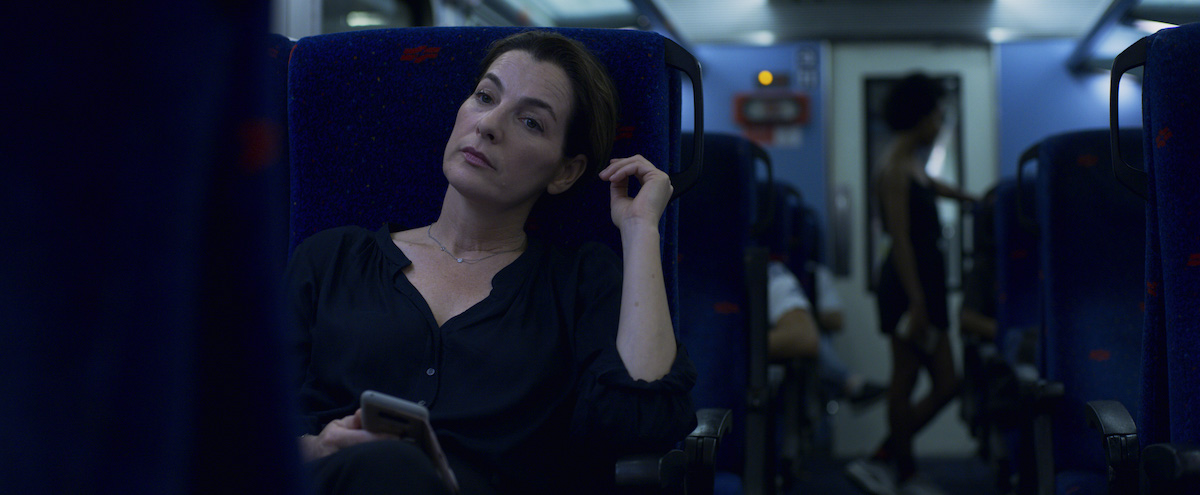
Losing Alice follows the story of the eponymous 48-year-old director (Ayelet Zurer), whose career has stagnated after she’s taken time off to raise her family. Her husband, once a successful actor, is now making middling mainstream movies while she’s directing commercials.
It’s hardly the artistic relevance that either of them has dreamed of.
Even in its initial episodes, the show sharply delineates the many ways that Alice has sacrificed pieces of herself in the name of others: Her own career, her creative moxie, the unfinished script that’s been going nowhere fast for years.
It is straightforward about the inequities of marriage and celebrity, as well as the ways that women have to fear the threat of age and irrelevance in both those arenas that men do not.
But it’s also honest about how much of this is Alice’s own fault: She struggles to carve out time to work on her own project and is constantly grim-faced over her professional prospects. Yet, when she does sit down to write, she accomplishes nothing beyond smoking while staring at a screen.
Alice has become that which she once mocked: A middle-aged bourgeoise woman who has nothing to say, who doesn’t take risks, who has settled for making yogurt commercials instead of making art.

When she meets the mysterious, alluring Sophie (Lihi Koronowski) on a train in she’s reminded of the impact her work once had on others. Sophie’s a huge fan of Alice’s, and she is also everything that Alice herself at the moment is not. (And hasn’t been for some time.)
Daring and risque, she’s written a boundary-pushing script of her own and gleefully tells Alice not only how much she admires her work, but about how she once recreated a sex scene from one of her films in real life.
She crackles with the chaotic energy and possibility of youth and her generally impulsive attitude walks a fine line between carefree and crazy. Is she the voice of her generation or a Fatal Attraction-style stalker?
Because Sophie, it would seem, already knows Alice. Sort of. She sent her script to David, her actor husband, and they’ve been communicating about it. And when Alice reads it, she loves it too and wants it for a comeback vehicle.
The details of the script, titled “Room 209,” are hinted at at various points throughout the series’ first three episodes. And, presumably, we’ll learn more as the story goes on. But it’s capital D dark, so much so that Alice finds herself unable to let go of it.
Obsessed with the question of how much of it is based on Sophie’s own life — the younger woman also has a much-older boyfriend (as the character in her script does), a best friend who’s disappeared from her life (in the script the main character dates her best friends father), and is sexually free in a way that feels familiar.

Sophie, for her part, seems obsessed with Alice right back, and displays behavior that is almost frustrating in its unreadable duality.
Is she constantly showing up at Alice’s house — Season 1, Episode 2 is called “The Visit” for a reason – because she admires her or wants to be her? Does she give her youngest daughter a mirror image makeover for fun or as a threat? Is she flirting with Alice’s neighbor because Sophie flirts with everyone or is there something more sinister going on?
In most shows, the central question here would be whether or not Sophie is trying to sleep with Alice’s husband. But Losing Alice smartly doesn’t go down this road here — at least not yet — though it does show us David fantasizing about the younger woman. Instead, it bases its primary conflict in the messy relationship between them that defies easy categorization.
Season 1, Episode 3, “The Bond,” is full of this sort of duality from both sides. Sophie and Alice’s trip to a workout class together feels like a standard getting to know you activity, at least until it starts to look a lot like seduction.
But does Alice want Sophie sexually, or does she just want the freedom and lack of responsibility she enjoys? And do Sophie’s feelings about Alice have anything to do with the real woman — or the idol that lives in her head?

After three episodes, one thing about Losing Alice is clear: This is a series that counts on the fact that we don’t know quite who we’re meant to be rooting for.
Are we supposed to sympathize with Alice? Feel horrified by her growing obsession with Sophie’s personal life and connection to the violent, erotic script she wrote? Or rage against the inequities of a system that essentially declares her too old to matter anymore?
Should we be afraid of Sophie whose compulsive, manic behavior seems like it could be dangerous in the right circumstances? Or should we be rooting for her film’s success – which would, by extension, be Alice’s success too?
Watching things unfold, you’re never quite sure these two women are meant to be friends or rivals, and the heady mix of jealousy, attraction, and tension that colors their every scene together makes it hard to tell whether they’ll ultimately kiss or kill one another. Maybe both, by the end of this tale.
What did you think of the first three episodes of Losing Alice? Share your thoughts in the comments below!
Critic Rating:
User Rating:
The first three episodes of Losing Alice are available to stream on Apple TV+. Moving forward, new episodes will premiere on the service on Fridays.
 Follow us on Twitter and on
  Instagram!
Want more from Tell-Tale TV? Subscribe to our newsletter here!
Lacy Baugher

Lacy is a pop culture enthusiast and television critic who loves period dramas, epic fantasy, space adventures, and the female characters everyone says you're supposed to hate. Ninth Doctor enthusiast, Aziraphale girlie, and cat lady, she's a member of the Television Critics Association and Rotten Tomatoes-approved. Find her at LacyMB on all platforms.