

All Together Now Review: A Script and Story Not Quite in Harmony
Warning: This review contains some minor spoilers.
Over the past few years, Netflix has quietly become a dominant voice in the teen movie genre, producing films like To All the Boys I’ve Loved Before, Dumplin‘, The Half of It, and The Kissing Booth. Netflix’s approach to teen-centric storytelling tends to be more earnest than the teen films that dominated the 2000s and for the most part, the characters it focuses on are relatively privileged.
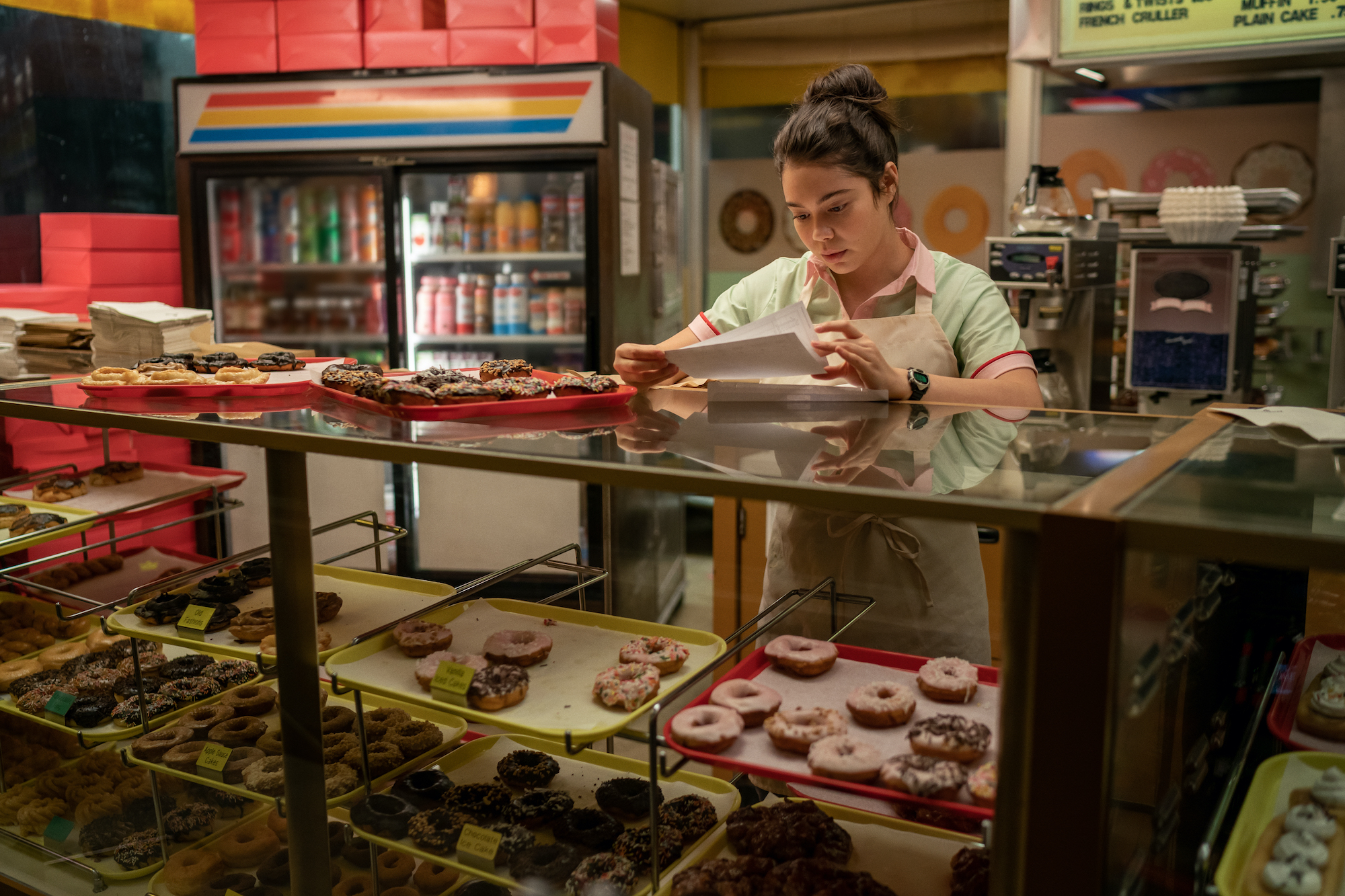
Part of what makes All Together Now intriguing is that while it’s very much in line with Netflix’s tender and earnest brand, its central heroine, Amber (Auli’i Cravalho) comes from a significantly disadvantaged background, a deviation from the relatively well-off (and beautifully curated) lives that other films’ heroes have.
Her struggle to live with and eventually overcome poverty are the focus of All Together Now, and while there is a a romantic subplot, it is very secondary.

Tackling homelessness and being orphaned – on top of all of the other challenges that come with growing up – is ambitious and it’s laudable that All Together Now even attempts to tell a story with such depth and complexity.
The first quarter of the film, which follows the various tactics Amber employs to hide her homelessness and paint a picture of normalcy to her friends and coworkers is promising, even compelling.
In a short amount of time, we get a sense of not only the small signs that someone is struggling with homelessness or poverty but also how easy it is to write these signs off or ignore them.
However, All Together Now fails to keep this momentum and maintain clarity of plot and purpose.
Quickly, it falls into melodrama and its second act is filled with so many convenient, treacly plot points that it loses its credibility. By the time the credits roll, we’re left with an ending that might feel good but doesn’t feel true or earned.
The deux ex-machina ending is a cop-out and is a disservice to the story and the devastation that is poverty and homelessness, rewarding Amber for her pluckiness, talent, and good cheer with a wealthy benefactor.

Not only does the ending make it seem as though homelessness and poverty are far more easily solved than they actually are, but it also sets up an uncomfortable dynamic where Amber deserves to be saved and therefore, she is.
Being lifted out of poverty shouldn’t be a reward for good behavior, a prize for talent, or the result of luckily having rich friends. It’s a basic human right, and while All Together Now shows its ability to handle nuance early in the film, it totally fumbles on the topic by the end.
It also doesn’t help matters that the film doesn’t quite know how to utilize or develop its characters. So much time is spent on and with Amber and even then, she’s still very much a cipher to the audience.
While Cravalho’s charm and gorgeous singing voice bolster the film, they’re also a distraction from the fact that the film paints Amber with large strokes. We get the message over and over again that she’s resilient and kind.
Occasionally, the facade drops and we can detect her desperation or sadness or fear.
Those moments are some of the film’s more interesting ones but they’re few and far between, and by the end of the film, Amber seems very similar to the person she was at the beginning, only financially better off.

Most of Amber’s friends are well meaning, except for one moment during a montage where their insensitivity seems contrary to everything we’ve seen of them prior. Additionally, while the casting represents individuals from a diverse slate of backgrounds (including those that are not neurotypical), the characters themselves are mostly indistinguishable.
Judy Reyes, Fred Armison, Carol Burnett, and Justina Machado all have supporting roles but their characters mostly seem like plot devices not people.
It’s a mystery as to why Netflix would even agree to pay fees for these well known actors when their characters are so one-note anyone else could have easily played them.
The biggest disappointment is regarding Machado’s role. Machado works overtime to become a completely different person than the one we’re used to seeing on One Day at a Time.
Hers is an impressive transformation, as even physically she carries herself differently, but the script gives her very little to work with.
Given the impact of Amber’s mother on her life, both before the film begins and during its events, it’s odd that there’s so little time spent really getting to know or understand her. I’d really like some justice for Justina.
Overall, there will be people that enjoy All Together Now. It’s relatively easy, feel good entertainment, with a dose of decency and connection that so many of us are yearning for these days.
However, there’s a large gap between what it is and what it could have been. Consider this a challenge to Netflix: keep making films with the ambition of All Together Now but work on your execution.
What did you think of All Together Now? Share your thoughts in the comments below!
Critic Rating:
User Rating:
All Together Now is available to stream on Netflix.
 Follow us on Twitter and on
  Instagram!
Want more from Tell-Tale TV? Subscribe to our newsletter here!
Cristina Iskander

Cristina is a Broadway enthusiast, book lover, and pop-culture fanatic living in New York City. She once won a Fantasy Bachelor contest (yes, like Fantasy Football, but for The Bachelor), and can banter about old school WB (Pacey + Joey FTW) just as well as Stranger Things and Pen15. She's still upset Benson and Stabler never got together and is worried Rollins and Carisi are headed down the same road, wants justice for Shangela, and hopes to one day walk-and-talk down a hallway with Aaron Sorkin.