

15 Biggest Ways Carrie Changes The Book, Ranked!
Horror filmmaker and TV auteur Mike Flanagan is a famous collaborator of Stephen King. He’s directed several films based on King stories, and his vampire mini-series Midnight Mass is a spiritual Salem’s Lot.
Now, Flanagan’s sixth TV series has arrived on Prime Video, and it’s the latest adaptation of King’s 1974 breakout novel: Carrie.
As you may already know, the story follows Carrie White (Summer H. Howell), a bullied teenage girl with telekinetic powers, who paints her senior prom red after a cruel prank. Does Flanagan’s King connections produce the most book-accurate Carrie yet? Not quite.
Carrie is a very tight novel, running about 300 pages, with a main story that unfolds over only a couple of weeks. To stretch the story into eight episodes, the series grafts on a lot of extra detail.
1. Carrie brings the story into a modern setting
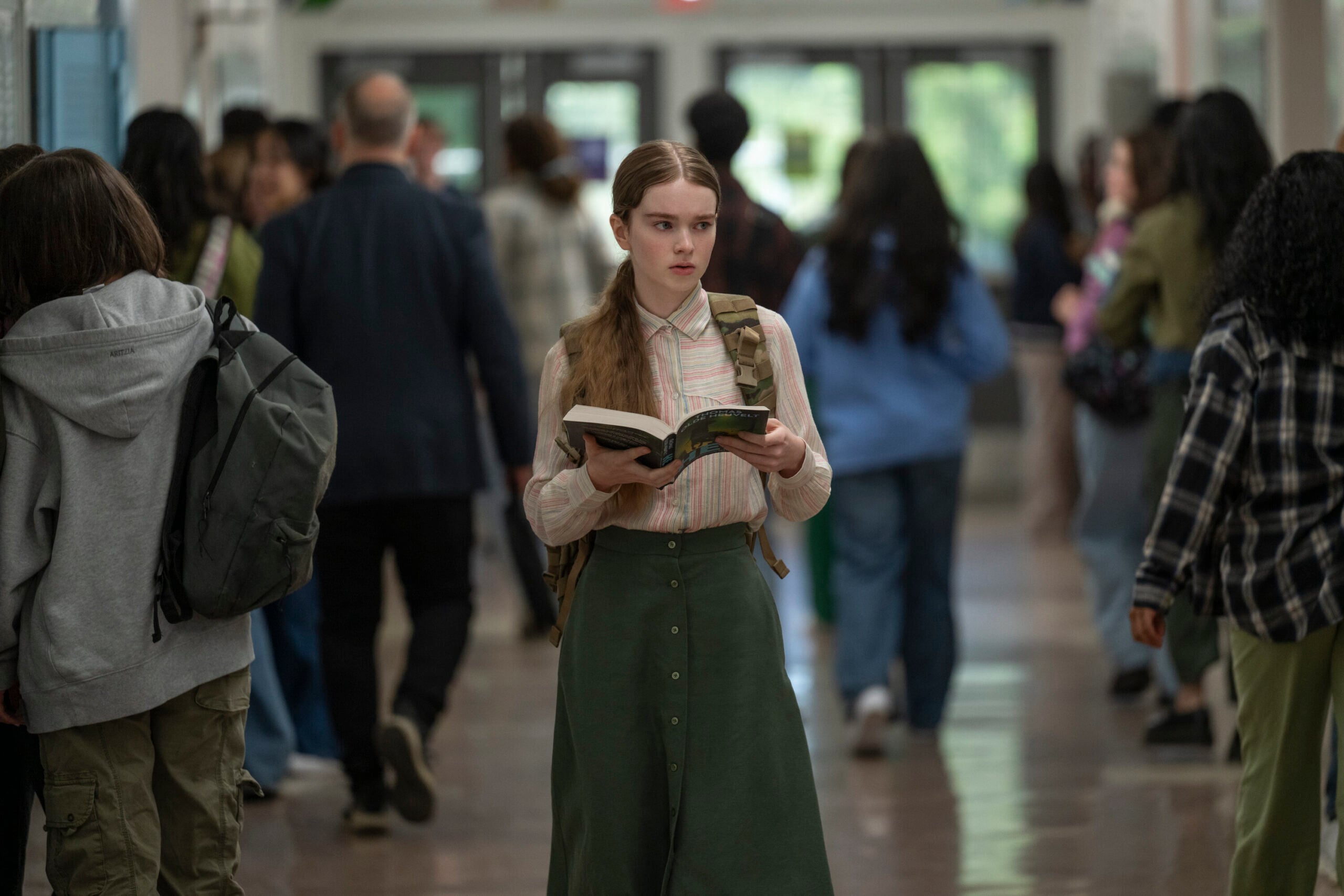
The most obvious, upfront change is that Flanagan’s Carrie moves the story ahead by about 50 years, matching the release dates. The novel was published in 1974 and took place in the near future, 1979.
The TV series, released in 2026, is set in the present rather than as a period piece. That change leads to some new, contemporary themes. On Carrie’s first day of school, there’s an active shooter drill (foreshadowing the ultimate massacre — Carrie White has basically always been a school shooter).
Carrie’s mom, Margaret White (Samantha Sloyan), also uses social media to become a parents’ rights activist. This, along with allusions to censorship of school libraries, brings modern debates about public education into the text.
There are also some pragmatic changes to the plot mechanics. In the show, the Prom King/Queen vote is held digitally ahead of time and is rigged when Chris Hargensen and Billy Nolan use an IP address-swapping VPN to cast multiple ballots for Carrie.
2. Carrie explores cyberbullying
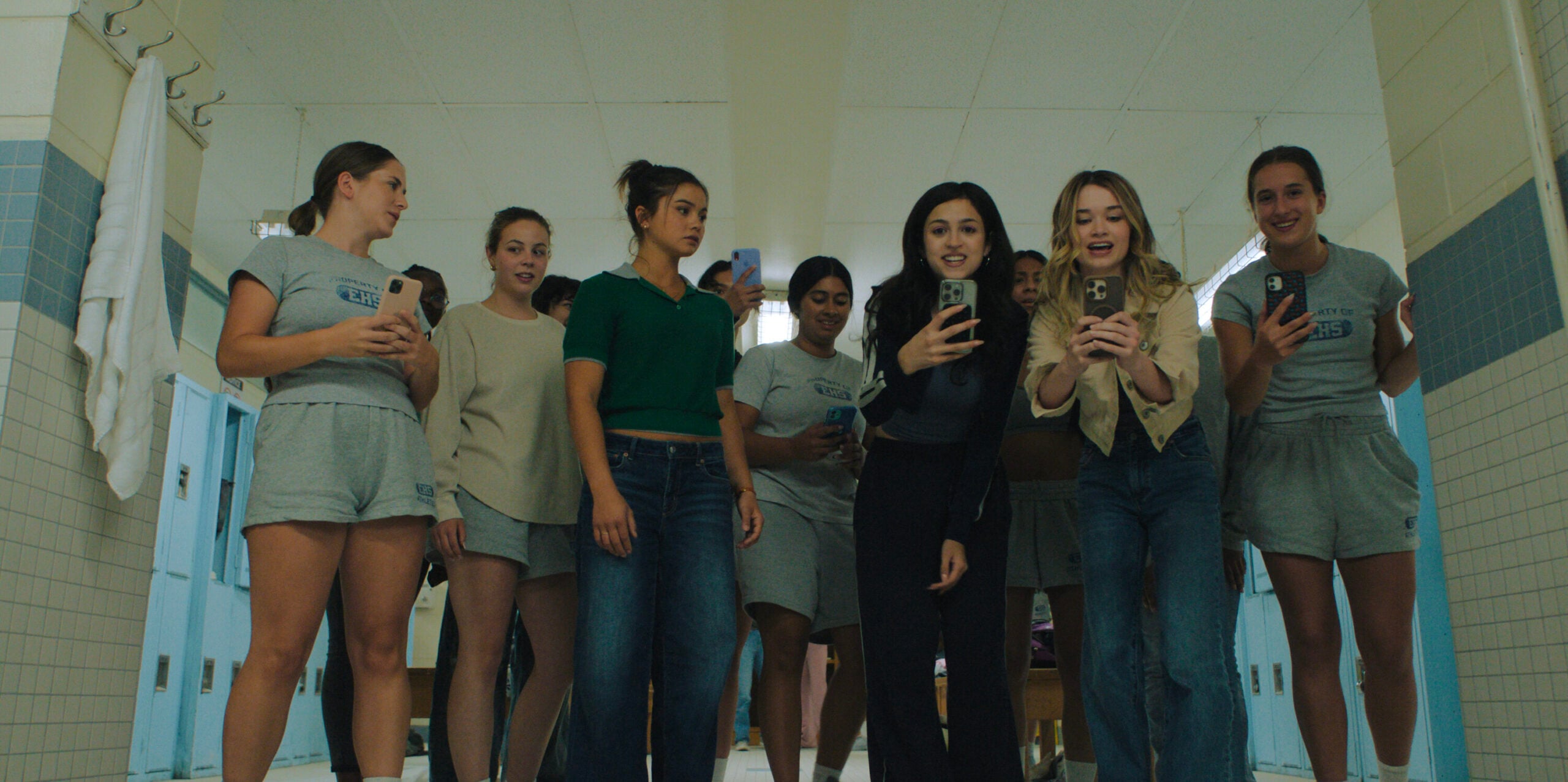
The big change that comes with moving Carrie up to 2026 is that bullying looks a lot different nowadays. Bullies have the insidious new weapons of social media and cell phones, so humiliation can be and often is more pervasive.
Take the famous scene where Carrie gets her first period in the girls’ locker room. Having not gotten any proper sexual education, she believes she’s bleeding to death. Her classmates laugh at her freak-out and pelt her with tampons.
This scene arrives at the end of Carrie Season 1 Episode 1, “First Period.” This time, the girls also whip out their phones, record the humiliating spectacle, and the video (not just word of the incident) spreads around the school. Because, yeah, that’s what would happen today, isn’t it?
It doesn’t end there. One of the main subplots is Chris (Alison Thornton) creating an anonymous Instagram account, “Carrie Red.” She uses it to solicit and spread humiliating photos and rumors of Ewen High’s students and faculty.
3. Carrie’s home life and history is different
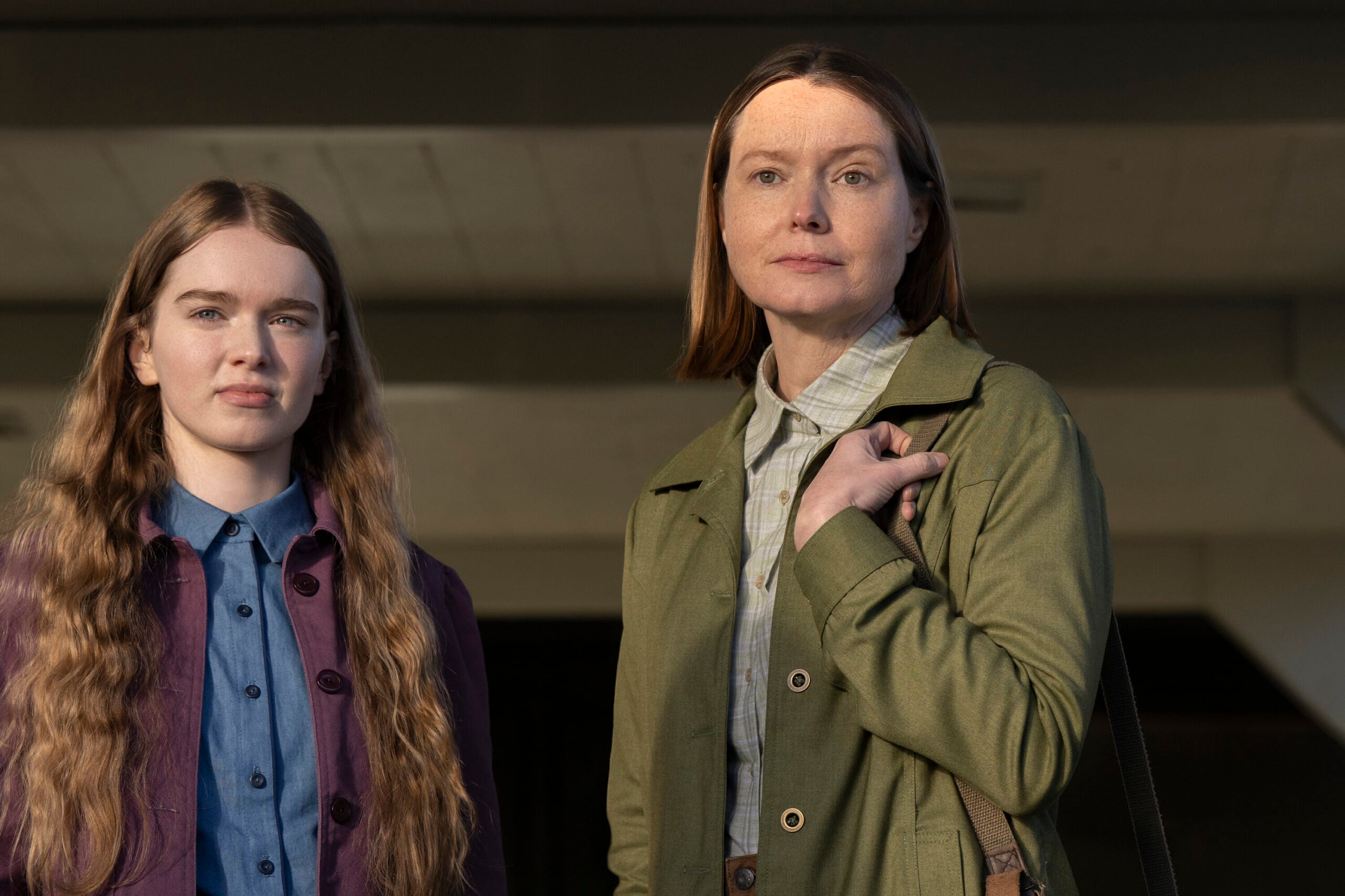
In Stephen King’s original novel, Carrie’s father died before she was born. He left her mother before Carrie’s birth for another woman and then died in a construction accident.
Flanagan’s Carrie adjusts this timeline. Ralph White (Tahmoh Penikett) dies in Episode 1 when Carrie is a teenager. Carrie sees apparitions of him throughout the season. He’s implied to have been a loving father, albeit one who shared his wife’s fanatical views.
Those views lead into the next change. In this version, Carrie has been homeschooled her whole life, and barely ever seen the outside world. She’s only sent to public school after the authorities learn Margaret didn’t register Carrie for homeschooling properly.
Now, in the novel, Margaret has certainly sheltered Carrie from the “sinful” parts of the world. But Carrie isn’t the new kid at the school either. The novel makes references to her having been bullied through grade school by Chris et al. Carrie the series makes its lead more of a naive fish out of water at the beginning.
4. Carrie’s weight
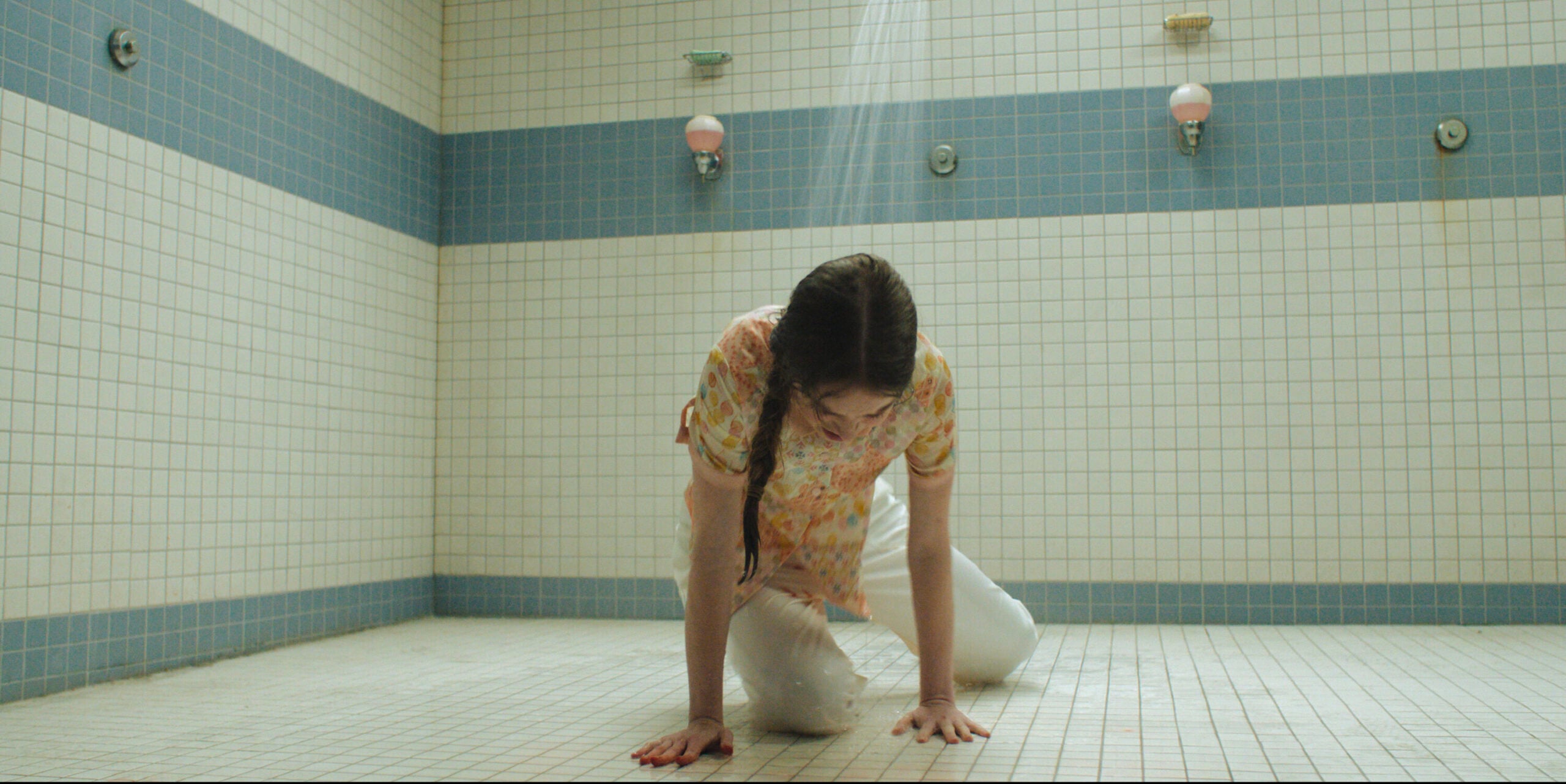
Flanagan’s Carrie isn’t alone here, but no adaptation of Carrie has matched the character’s appearance as described in the book.
In King’s novel, Carrie is described as overweight, which, mixed with her shyness, has made her an easy bullying target. A passage in Carrie calls her “slightly chunky girl with pimples on her neck, back and buttocks. No one would call her attractive.”
The book also makes it clear that Carrie’s looks come down to presentation. At the prom, the narration and characters all call her beautiful.
But none of the adaptations have adapted the character in this way. The 1976 Brian De Palma-directed Carrie cast the waifish, conventionally attractive Sissy Spacek as Carrie. Later film adaptations have modeled Carrie on Spacek, including Angela Bettis, Chloe Grace Moretz, and now Summer H. Howell.
5. Many of the worst characters are toned down

Carrie’s greatest bullies, Margaret and Chris, remain such in this new Carrie. But perhaps inevitably, in a much longer take on this story, both of them get dimensions not seen in the source material.
Sloyan’s Margaret is still a devout Christian who forces Carrie into a closet prayer room, but the Bible-thumping is more subdued. Compare her performance to Piper Laurie in the 1976 Carrie film, and it’s a strong contrast.
Laurie played Margaret like a fire-and-brimstone preacher, theatricality and all. Sloyan’s Margaret is icier but does also care about “protecting” her daughter in her own twisted way.
Margaret is terrified by Carrie’s power as in the book, but here she’s reluctant to actually hurt her daughter. Neither character is really sympathetic, granted. Chris especially throws away numerous chances to reform
6. Chris’ life is much messier, too
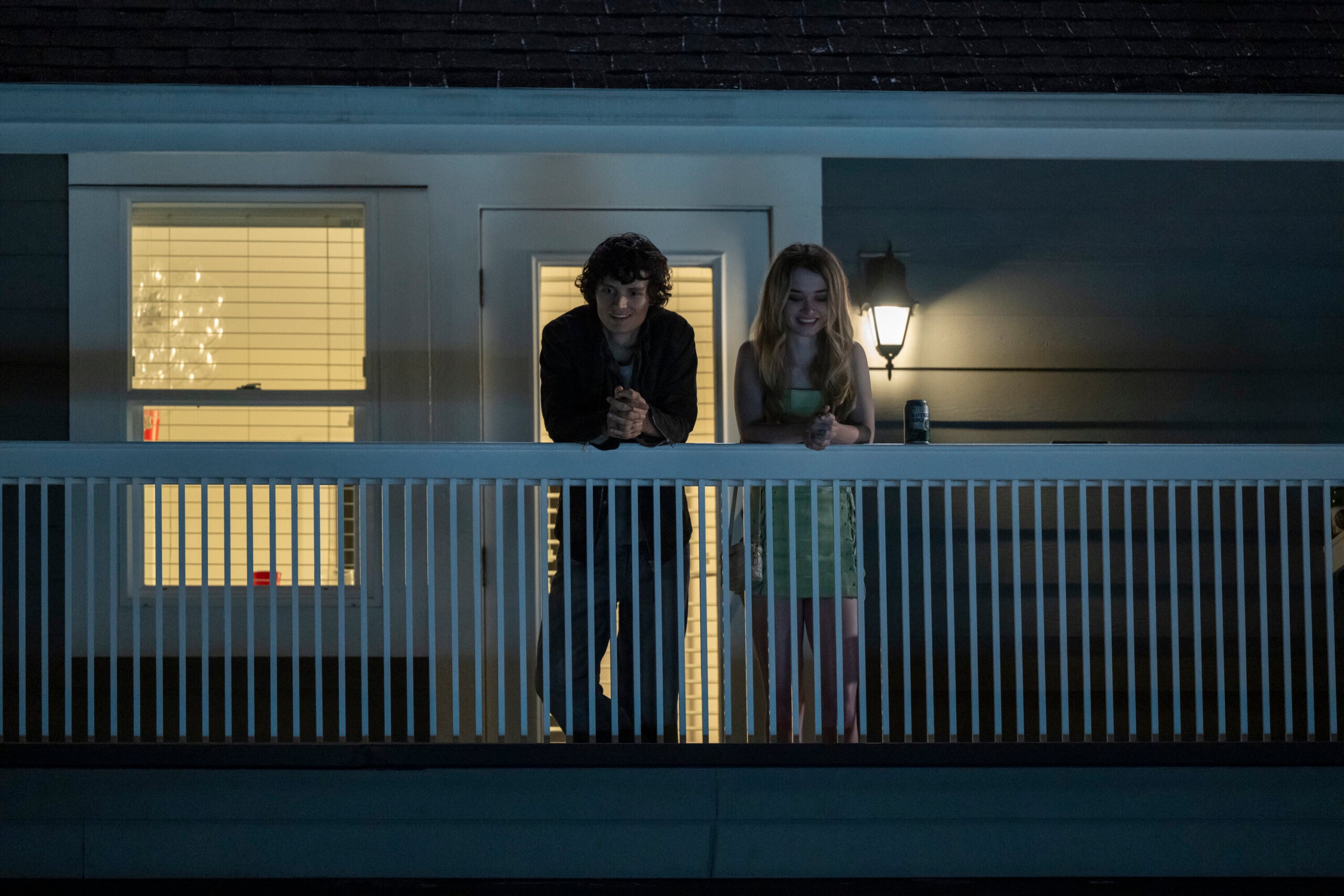
Speaking of Chris, she gets so much focus that she becomes a co-lead. The feud between her and Carrie builds up more in the TV series.
In the novel, Chris is a stereotypical rich mean girl. Chris plans the pig’s blood prank on Carrie because she blames Carrie for getting her blacklisted from the prom.
There’s a scene in the book where her father, wealthy lawyer John Hargensen (Michael Trucco), tries to bully the school into letting his daughter go to the prom by threatening a lawsuit. The show pulls on that thread; John is a neglectful father in financial trouble (and is later arrested for embezzling from his firm).
Moreover, Chris’ parents are in the middle of a divorce. She feels her mother (Heather Graham) is investing more in her new family. Chris slowly falls into the arms of local scum bag Billy Nolan (Arthur Conti) because she feels she has no one left.
Chris is still a villain and a bully, but it feels more like a “hurt people hurt people” situation than a typical vapid, mean-spirited teenager.
7. Before the prom, there’s a riot
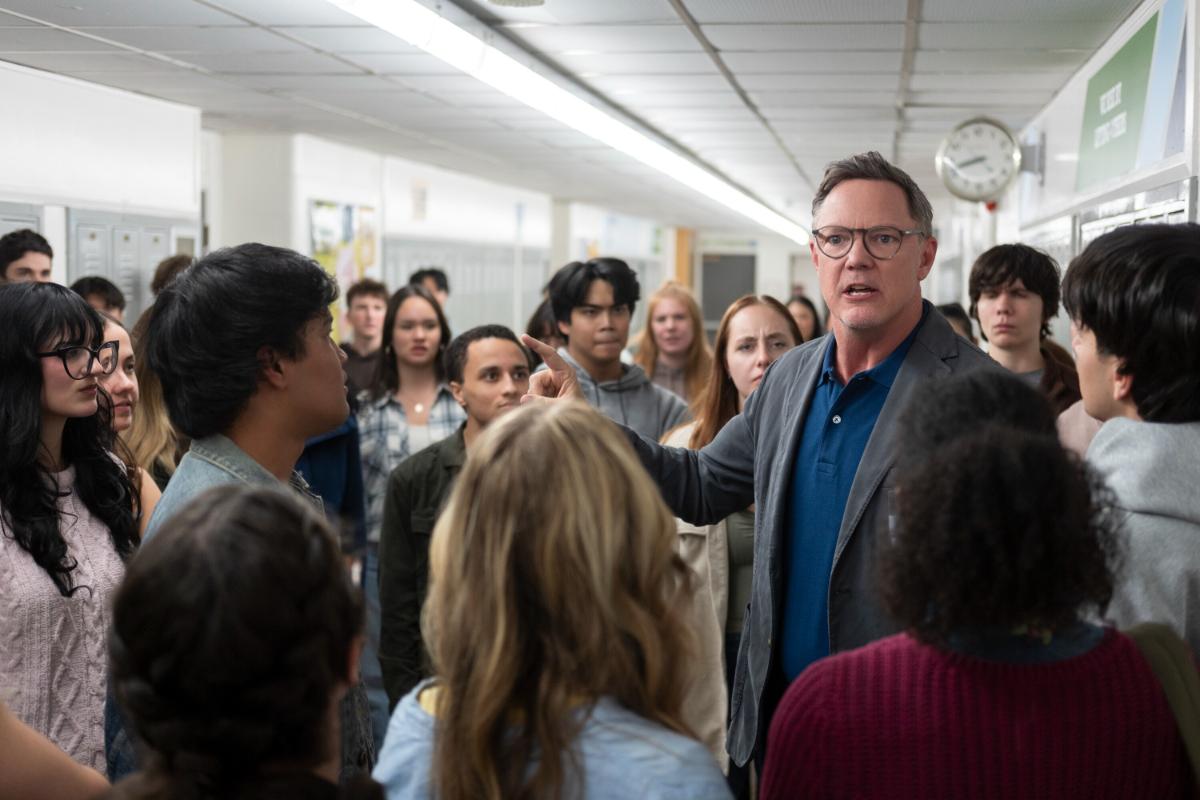
Again, Carrie, the TV series, includes a longer build-up to the prom massacre, with Chris running the “Carrie Red” account providing most of the dramatic meat.
That storyline doesn’t pay off at the prom, but before it. Chris is exposed as the one behind the account and faces suspension or expulsion. On Carrie Season 1 Episode 6 “Home Economics,” a failed “mediation” between Chris and Carrie leads to Chris being expelled when she refuses to take any responsibility or apologize.
Ewen’s students, gathered outside to prevent them from snooping on the mediation, let loose like a pressure cooker. A riot breaks out at school, an event not found in the Carrie novel.
The publicity and effect are so strong that Carrie Season 1 Episode 7, “Romantic Literature,” features a debate about whether the prom, gathering those students who just rioted in a single place, is a wise idea. This is wrapped in dramatic irony, because it would have been better for everyone if they had just canceled the prom.
8. Tommy doesn’t ask Carrie to prom because of Sue
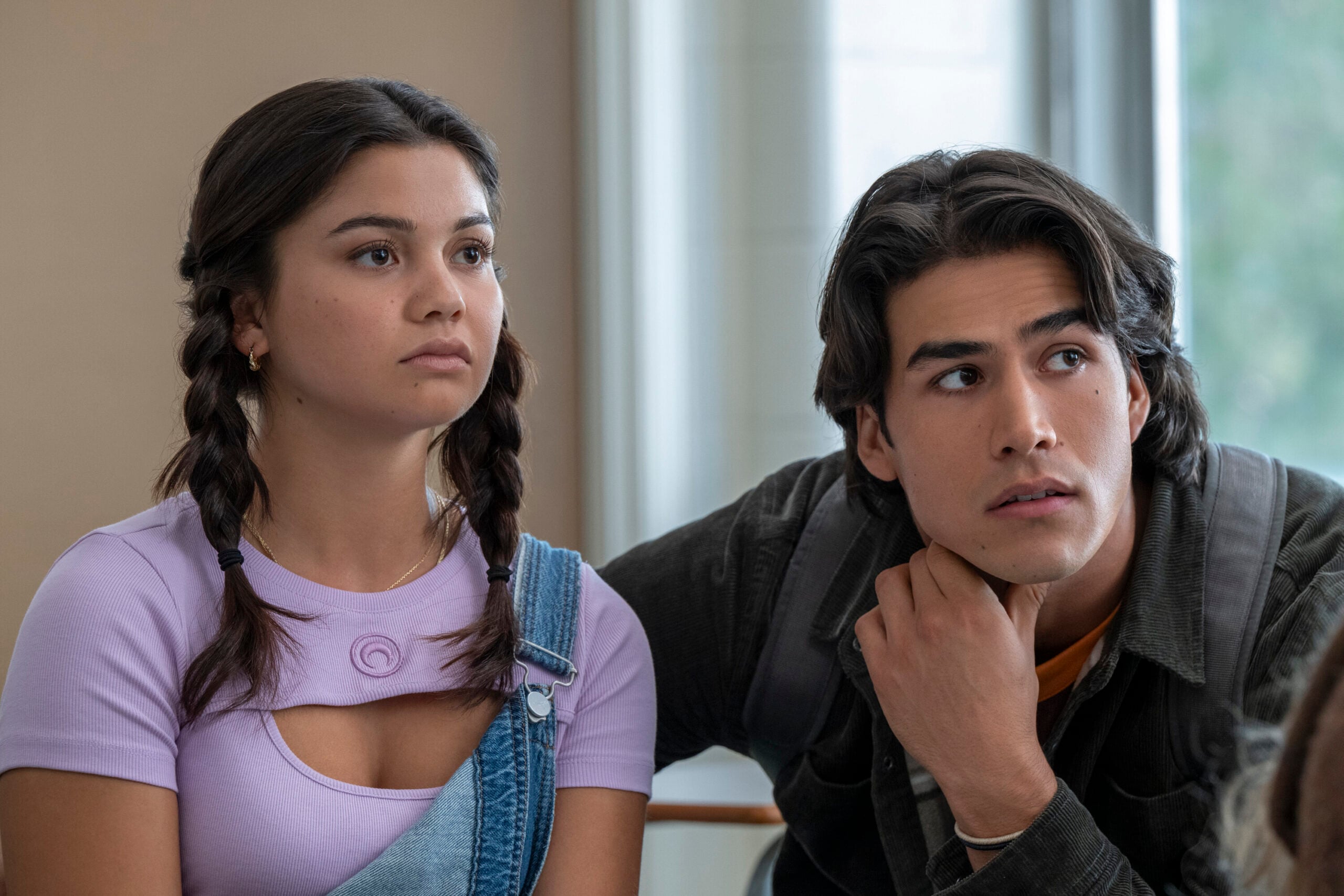
Another essential Carrie character is Sue Snell (Siena Agudong), Chris’ best friend. In the novel and past versions, Sue is one of the girls who join in mocking Carrie in the shower room.
Unlike Chris, Sue feels genuinely guilty about what she did to Carrie. To make it up to her, she convinces her boyfriend, Tommy Ross (Joel Oulette), to ask Carrie to the prom. Sadly, of course, that act of kindness is what puts Carrie in the position to get a bucket of blood dropped on her.
After the locker room incident, Sue tries to take Carrie under her wing. That exacerbates Chris’ feelings about her family separation; she feels like her best friend is choosing someone else over her, too.
Meanwhile, Sue and Tommy amicably break up before the prom even happens. Tommy asking Carrie is his own gesture to make up for the whirlwind year she’s had.
9. Carrie has a new friend, Emaline
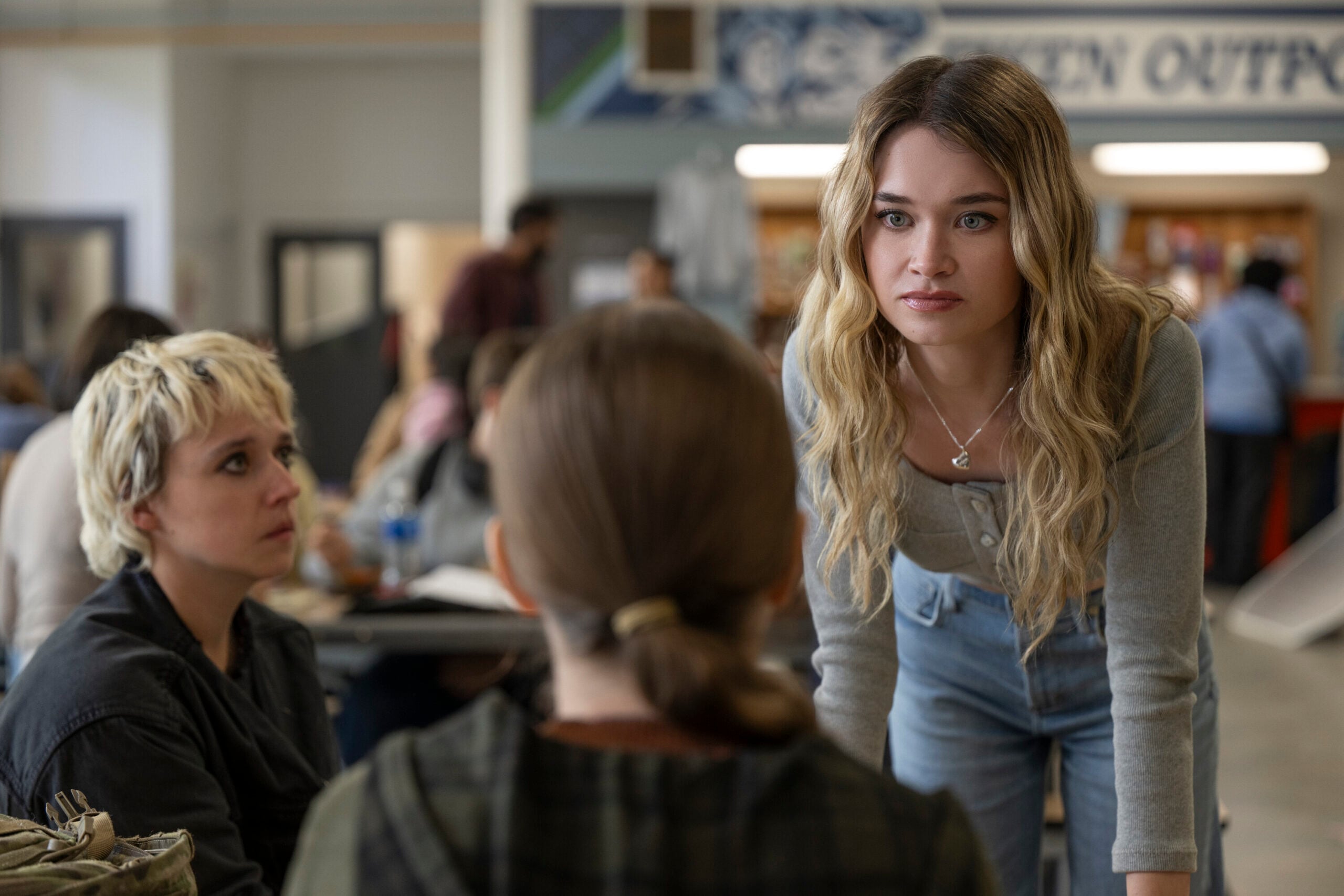
The original material in Carrie feels almost like Mean Girls but a horror story. Complementing that, there’s an original character—Emaline West (Thalia Dudek)—who’s basically the Janis Ian (Lizzy Caplan) to Carrie’s Cady Heron (Lindsay Lohan).
Emaline is an outsider, one who catches on to Carrie’s powers. She becomes the devil on Carrie’s shoulder, like pushing her to use her powers to hold Chris’ head and give her a nosebleed.
She’s also the subject of a double twist. When it’s revealed no one else can see Emaline, it appears she’s a hallucination of Carrie’s, a psychic embodiment of her telekinetic powers. Then, the season finale reveals Emaline is real; she’s a telepath who can astral project.
Either way, Emaline serves as a vehicle for Carrie developing her telekinetic powers. She needs someone to talk to, because a TV series can’t do the inner monologue like a book can.
10. A whole new subplot about teacher Mr. Peist
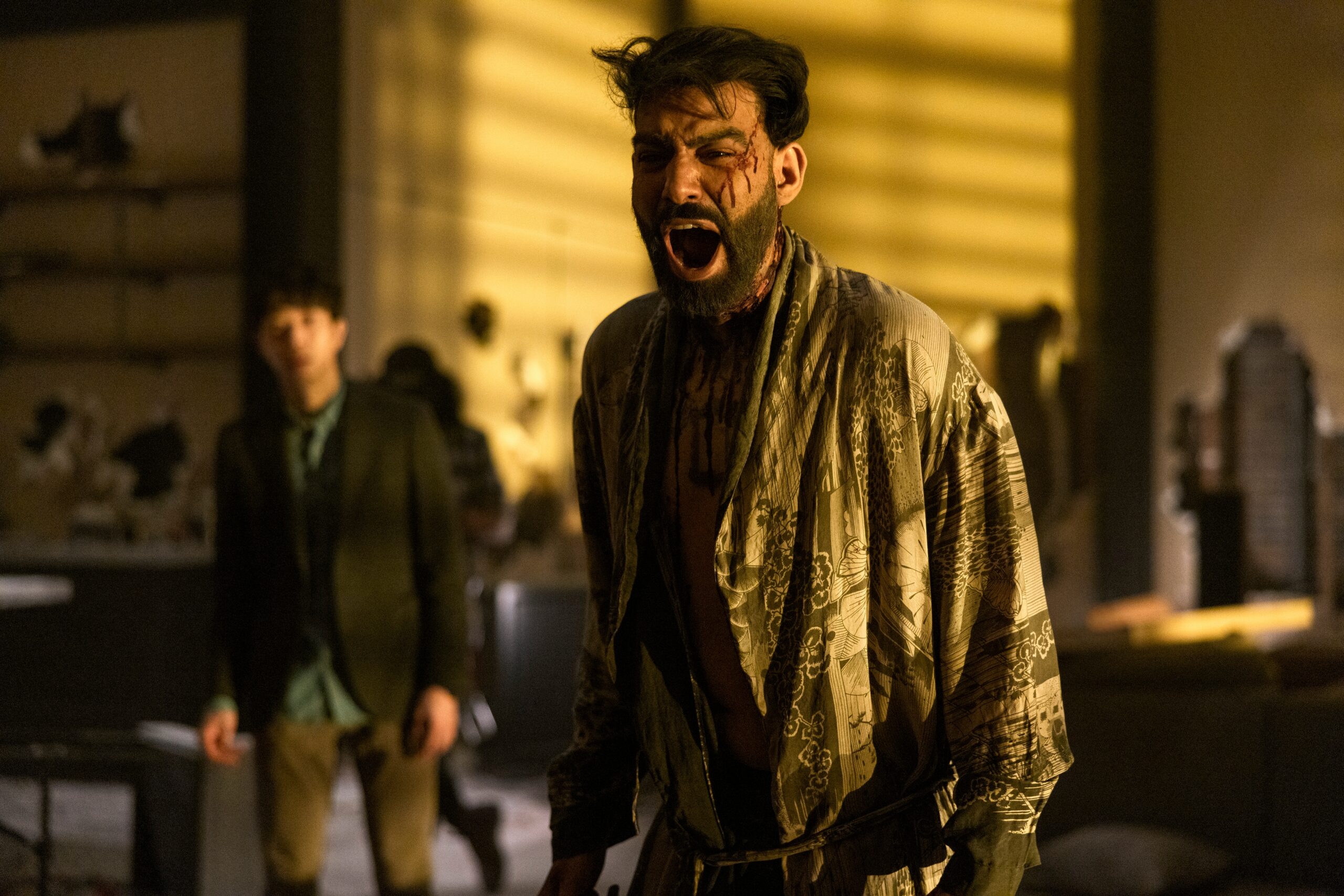
Rahul Kohli is one of Mike Flanagan’s most frequent collaborators, having acted in The Haunting of Bly Manor, Midnight Mass, and The Fall of the House of Usher. Kohli comes along again for Carrie, with a role wholly invented.
Kohli plays Mr. Peist, one of the teachers at Ewen High School. He starts a casual relationship with Carrie’s supportive, first-year gym teacher Rita Desjardin (Amber Midthunder), when they meet in a bar after Peist’s date stands him up.
Remember that detail, because it comes back strongly. The “Carrie Red” account accuses Peist of sleeping with students — and it turns out in this case, there was fire with the smoke. He dies by hanging to avoid the consequences, and it turns out one of the students he was grooming was Chris’ own step-sister.
11. Ms. Desjardin dies (maybe)
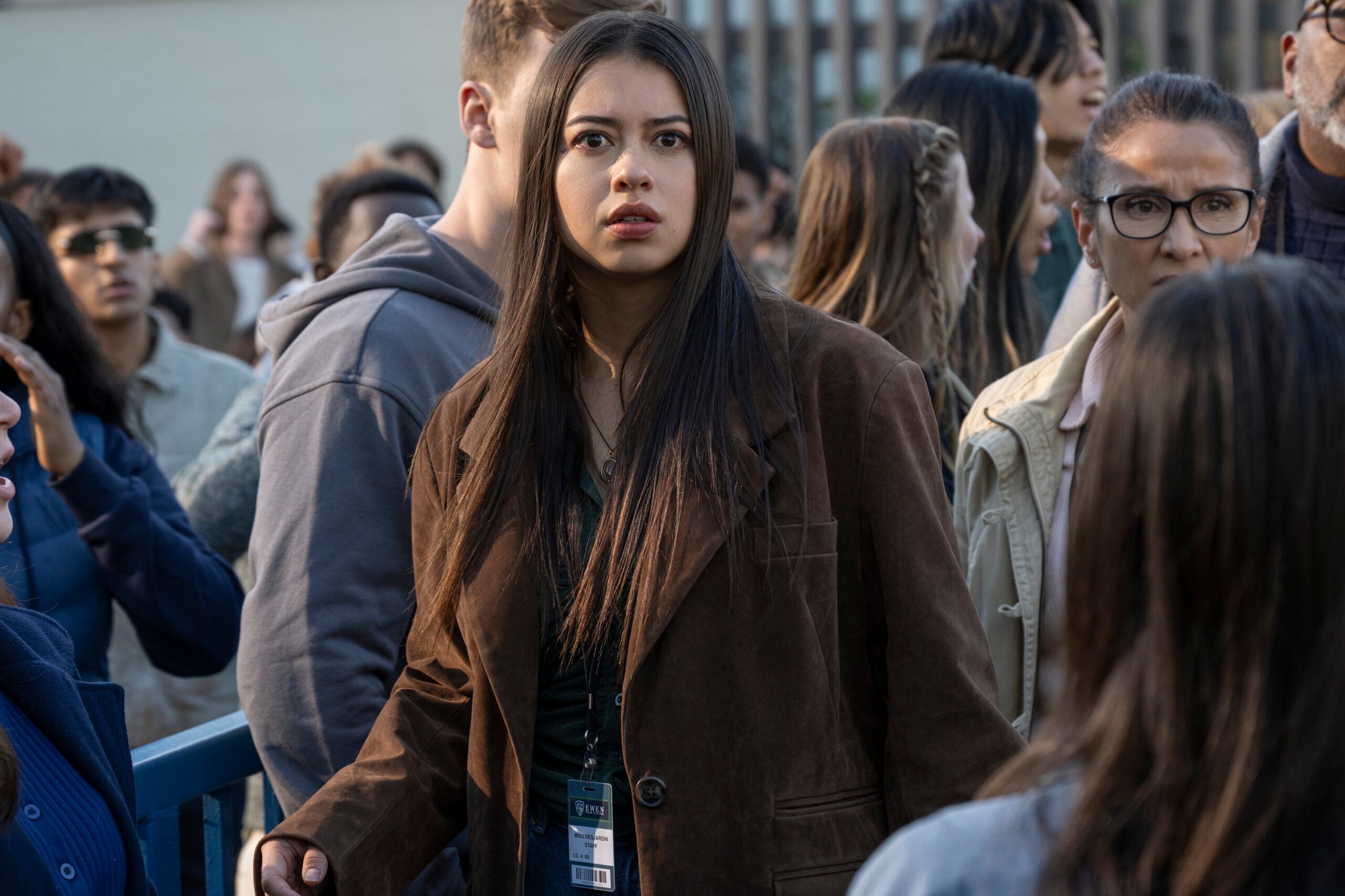
Speaking of Rita, her role is largely the same as in most previous Carrie adaptations. Ewen High’s new gym teacher, she breaks up the locker-room attack on Carrie and, from then on, becomes her self-appointed guardian.
Rita makes the girls run laps in gym for laughing at Carrie, and then asks Sue to watch out for Carrie. Her role largely follows the novel, down to her being present at the fateful prom.
When we last see Rita on Carrie Season 1 Episode 8, “AP Physics,” Carrie telekinetically throws Rita through the air behind the auditorium stage curtains, which are currently on fire. It looks like a killing stroke, but we don’t actually see her body.
Rita’s fate has varied in previous versions. She survived in the novel, but the renamed Miss Collins (Betty Buckley) perished at Carrie’s hands in the 1976 Carrie film. We’ll have to wait and see, but Rita’s ambiguous fate might leave the door open for a possible Carrie Season 2.
12. Margaret has psychic powers too
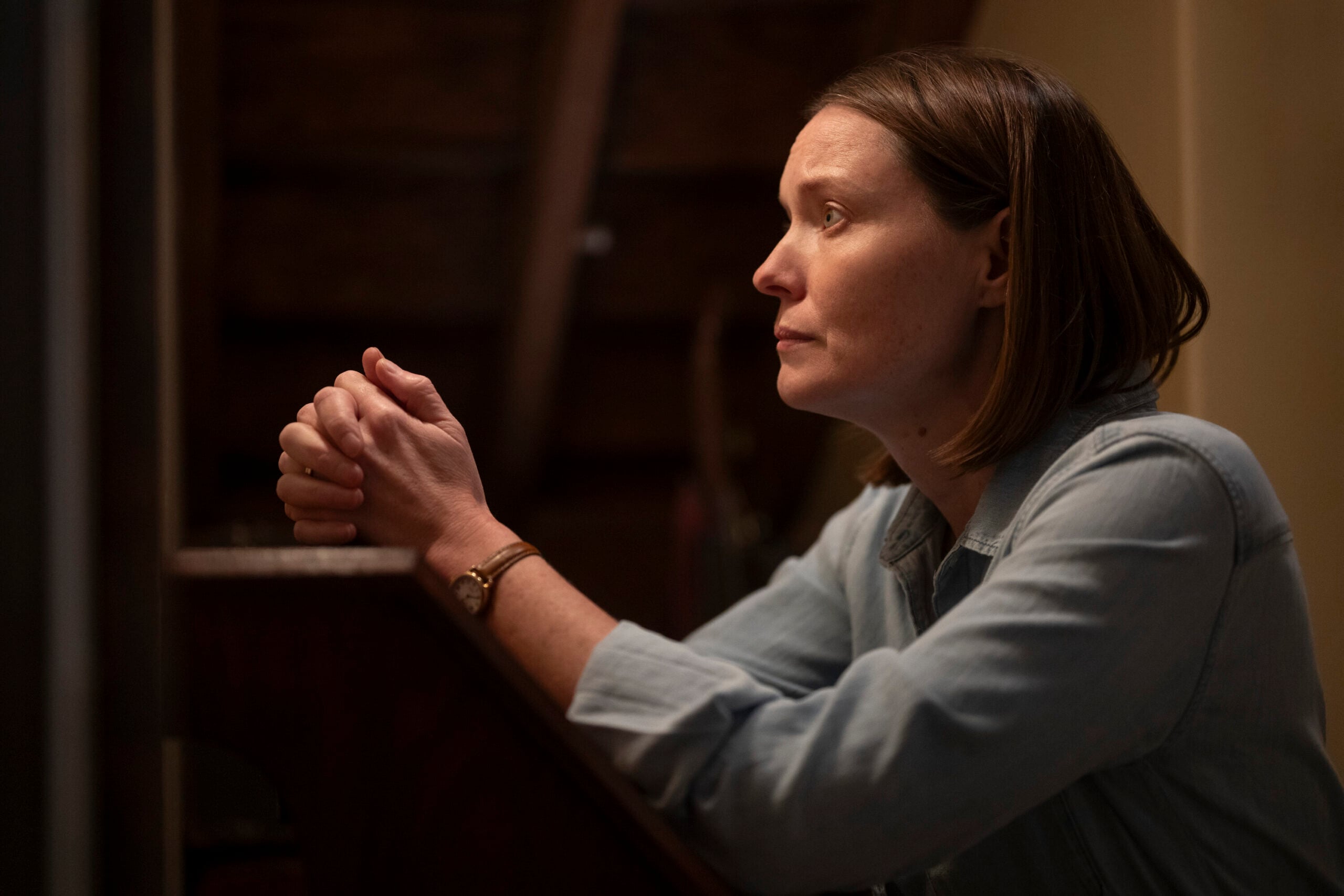
As in every version of Carrie, after the climax of prom night, Carrie returns home and confronts her mother. Margaret greets her as a witch and tries to kill her daughter. Carrie, feeling she is truly alone in the world, kills her mother and then dies herself from a stab wound.
It’s a bleak, brutal ending, and Carrie comes close to following through on it in the season finale. The show specifically borrows from the Brian De Palma movie, when Carrie telekinetically brings the house down on herself and her mother.
But at the last minute, it swerves.
The wounded Carrie walks through the wreckage of the house and sees her mother, almost buried under rubble, telekinetically holding up a piece of the house that should be crushing her. This never-done-before twist on Margaret’s character, making her a latent telekinetic, pays off in her revised fate.
13. There’s a whole organization of psychics
Carrie is an epistolary novel in which the main narrative jumps back and forth between in-universe texts written about Carrie’s prom night massacre. Some passages describe other psychics throughout history, which Carrie adapts into a few scattered cold opens.
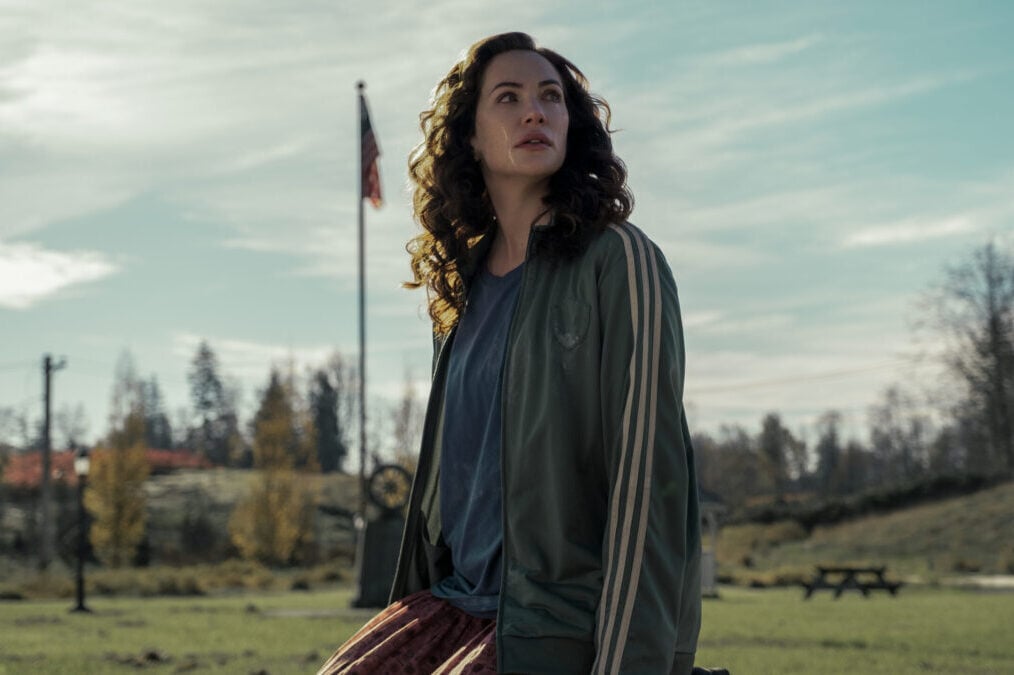
It runs deeper than that. On Carrie Season 1 Episode 7, “Romantic Literature,” Margaret meets with a mother (Katee Sackhoff) who apparently killed her own psychic daughter in fear. The woman warns that telepaths form groups to rule from the shadows, and this turns out to be more than paranoia.
The first and last episodes of Carrie feature a framing device echoing the novels, with survivors (including Margaret) being interviewed. It turns out it’s not journalists doing the interviews, but a group of psychics trying to find Carrie.
It’s worth noting that the lead interviewer (Katie Siegel) describes psychic power as a “shine,” opening up a potential connection to other King works. (For what it’s worth, Mike Flanagan previously directed the film Doctor Sleep, a Shining sequel.)
14. Carrie lives!

It’s not just Margaret who survives. In the book, Carrie explicitly dies and is buried. (Her grave is vandalized with “Carrie White burns in Hell!”) In the show, Emaline, revealing herself as more than a hallucination, drags Carrie from the rubble.
The episode, and first season as a whole, end with Carrie and Emaline driving down an open road. Carrie asks for answers, but Emaline can’t give them. They appear to be trying to dodge the psychic group, though.
Flanagan has said (via Deadline) that his ideal is three seasons of Carrie. This ending sets that up, though it indisputably downplays the novel’s tragedy.
The 2002 Carrie TV film similarly had her survive and flee Chamberlain (in that one, with Sue’s help). The 1976 and 2013 films hinted Carrie could’ve survived, but mostly as last-second jump scares.
15. The epilogue and framing device are shorter
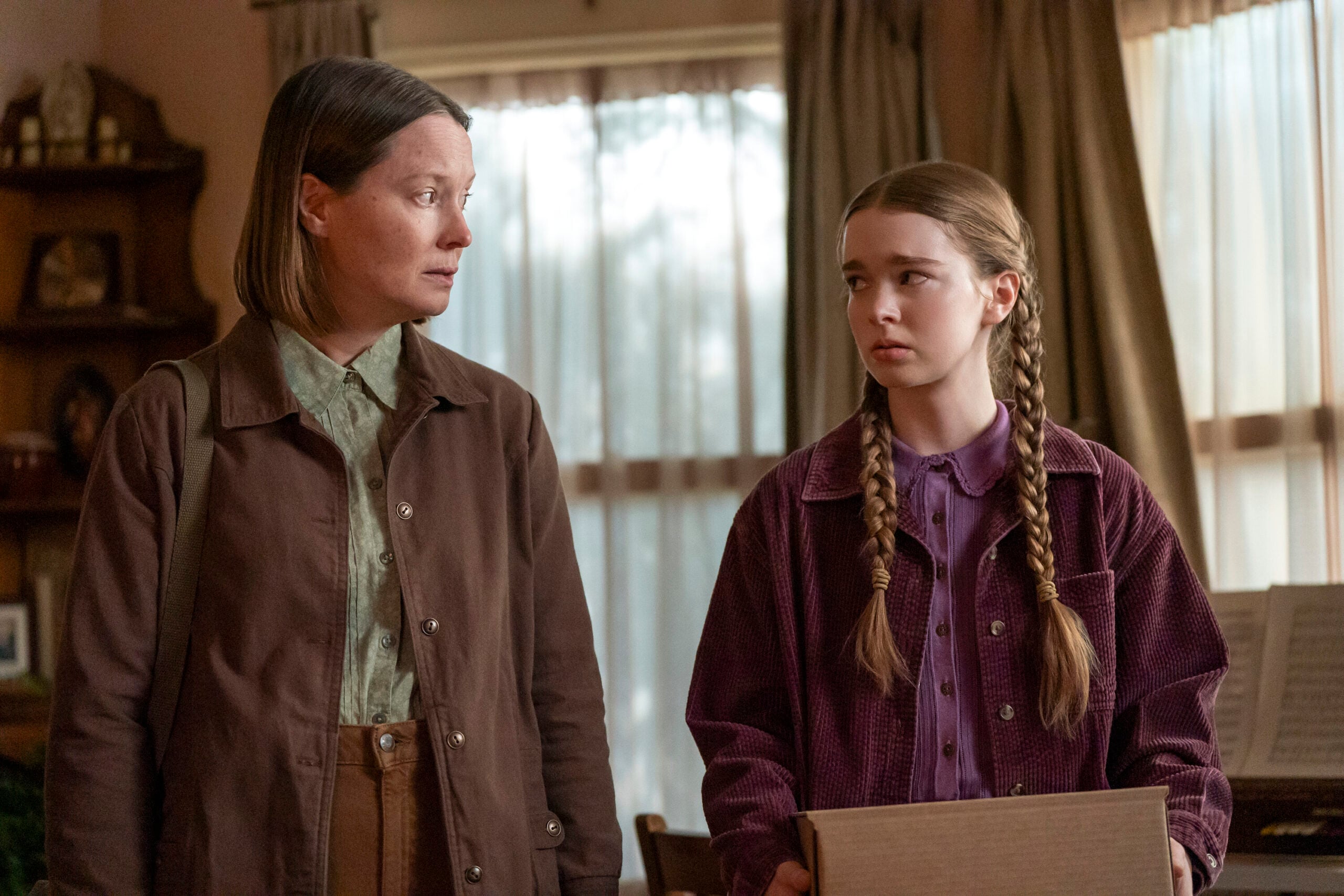
No Carrie adaptation has quite captured the scale of her rampage in the book. She doesn’t just kill her classmates at the prom and then her mother; she leaves a trail of carnage across Chamberlain as she marches home.
In particular, Carrie telekinetically lights up a gas pipeline, burning Chamberlain’s main street down — “AP Physics” adapts that and throws in a scene of Carrie and Emaline dancing through the flames.
The epilogue of Carrie the novel suggests Carrie functionally destroyed the town of Chamberlain, with even the survivors leaving and businesses shuttering. The TV series skimps over the aftermath. Characters being interviewed, like Sue, allude to the destruction, but we get little to suggest Chamberlain is now a ghost town.
After all, since Flanagan is planning more seasons of Carrie, perhaps she’ll have a homecoming later on.
—
Carrie is streaming on Prime Video.
Follow us on X and on Instagram!
Want more from Tell-Tale TV? Subscribe to our newsletter here!
Devin Meenan

Devin Meenan is a freelance entertainment writer, with bylines at outlets including IGN, /Film, Polygon and more. His first love was movies but he found himself writing more passionately about TV, hence him joining the Tell-Tale TV team. His favorite types of TV to sink into include prestige dramas, mystery box thrillers, sci-fi/fantasy, and anime. He can be reached on Twitter @ DevinM626.