
Fallout Season 2 Review: This Postapocalyptic Adventure Doubles Down and Wins Big
Facing the odds were never a worry for the live-action Fallout adaptation. Season 1 had knocked itself right out of the park with its bombastic action, charming new characters, and connectivity to the lore that fans absolutely love. Though Season 1 felt like an isolated journey, Season 2 pushes things to higher extremes.
Given how Season 2 is bringing fans back to the Mojave, some have been wondering how it will branch out Season 1’s ending. Fallout Season 1 left us much to ponder on, from the location of the Ghoul’s family to Lucy’s dad, Hank, heading to New Vegas for his own machinations.
Fortunately, Jonathan Nolan and his creative team deliver a rough and tough second season that’ll make you glad that this nuclear winter came earlier than expected.
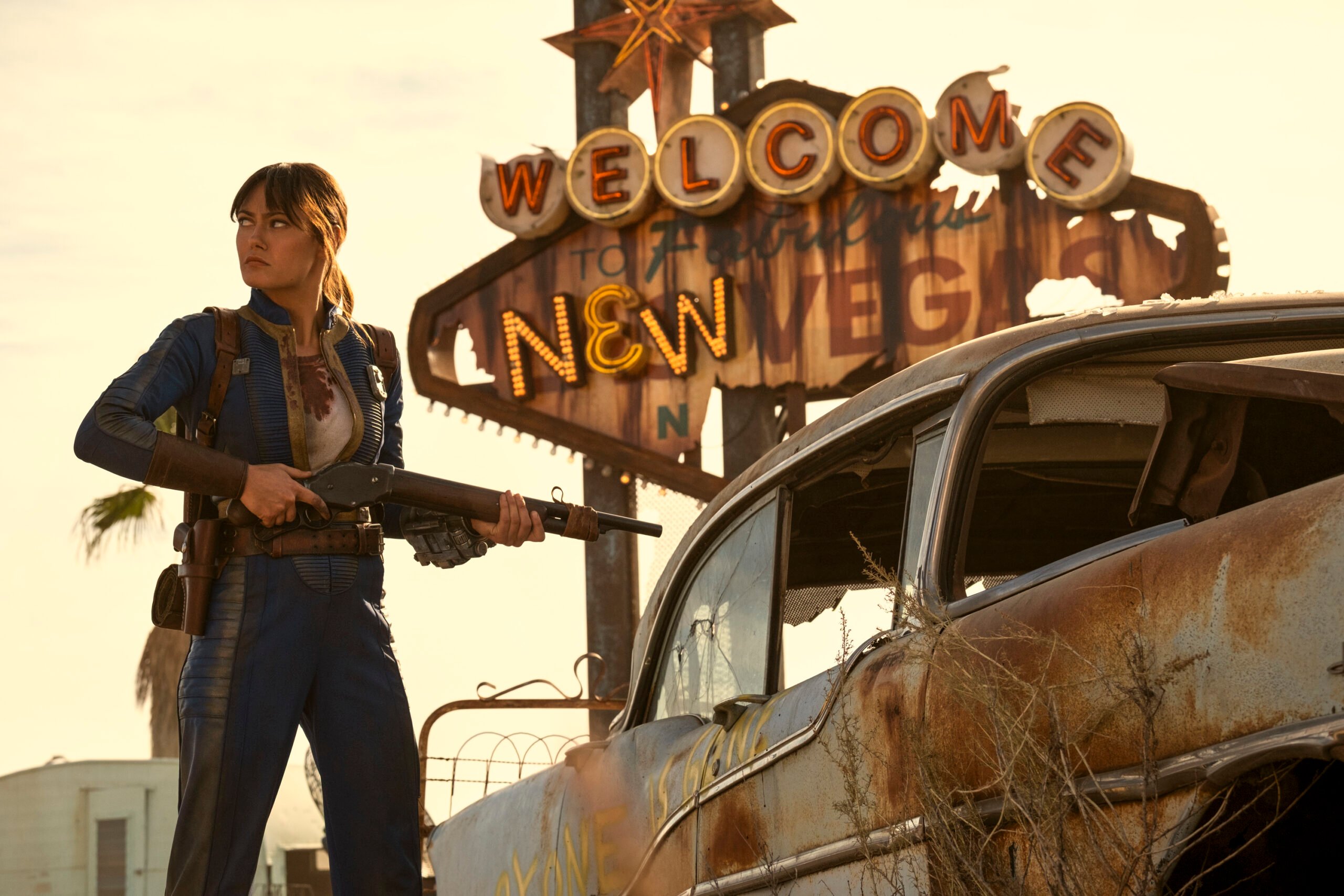
Photo Credit: Lorenzo Sisti / Prime
© Amazon Content Services LLC
If Season 1 was more thematically inclined to changing and understanding different ideologies, then Fallout Season 2 is heavily focused on challenging those hardened philosophies.
Much like Fallout: New Vegas, Season 2 establishes a battleground of opposing beliefs in regards to how everyone wants to rule the Wasteland. However, they’re all partitioned to their own respective storylines.
This mainly shows itself through Lucy and the Ghoul (aka Cooper Howard)’s journey, where their questing throughout the Mojave pushes them to butt heads even more.
Unlike Season 1, where the Ghoul served as a messed-up mentor and teacher to Lucy, Season 2 allows Lucy to stand her own ground at times with her inner optimism for good. This is already felt within the first few moments of Season 2 Episode 1, when Lucy and the Ghoul confront the group of Great Khans.
Lucy wants to continue living by the moral code she was raised by, albeit with a more nuanced understanding of Wasteland politics. Lucy’s moral motivation is what causes their “side-questing” in Season 2 as the Ghoul remains dead focused on reuniting with his family.
The side quests we get between the two hone in on that character-centric divide, especially once Season 1 Episodes 2 and 3 put them in the hands of Caesar’s Legion. Even though Lucy wants to help others, her actions have wider consequences that make you want to sympathize with her, like helping a former slave girl.
It feels almost cyclical to watch Lucy and the Ghoul try and deal with one another’s characteristics. While the Ghoul doesn’t show his appreciation for Lucy’s altruism, it’s the little actions that he does, driven by Lucy being his key, that allows this trait to shine through.
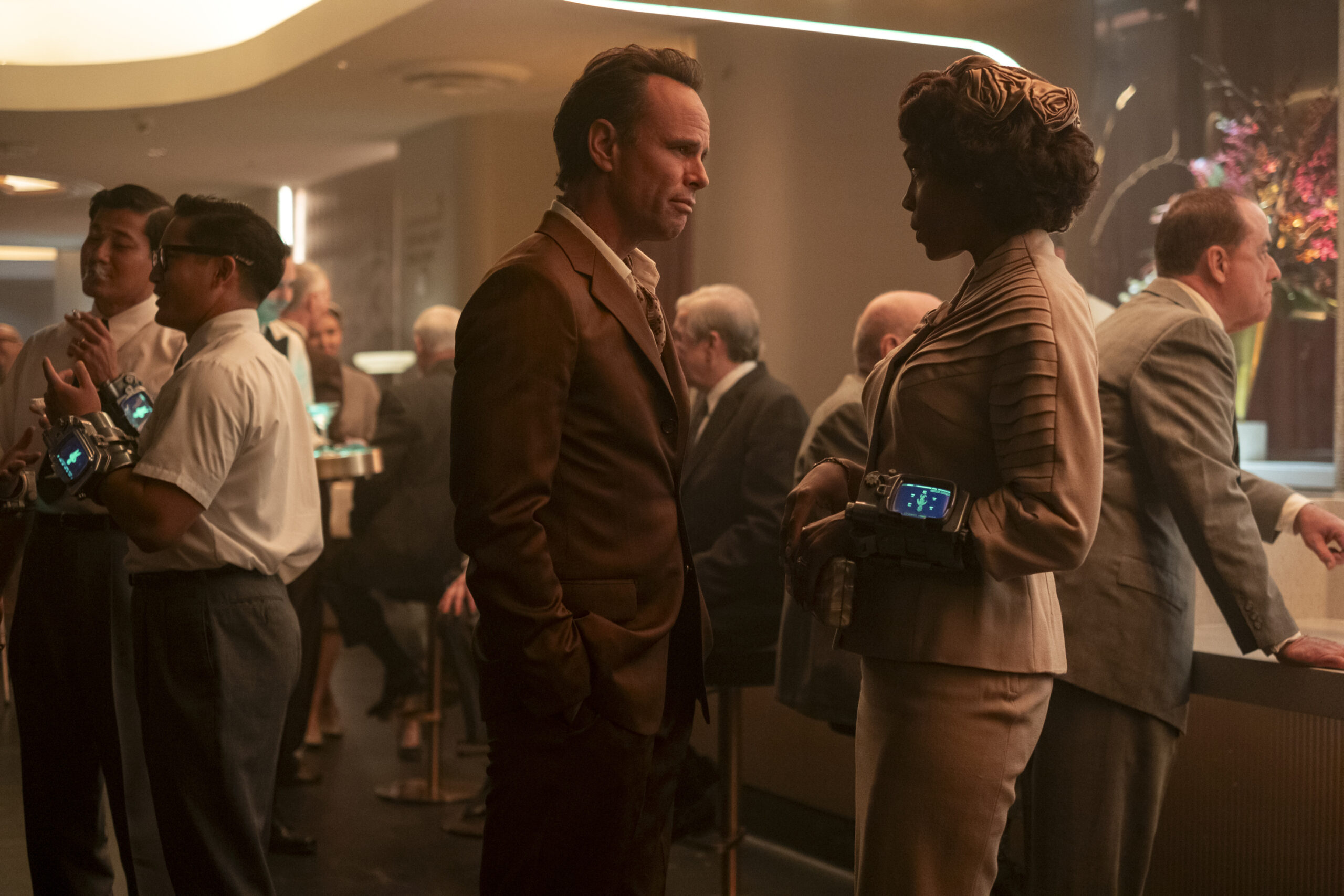
That being said, the flashbacks that we get on Cooper Howard’s life continue to help build his character. While some of these sequences affirm what we’ve expected, there are some that spin what we’ve seen from Cooper and his wife, Barbara. Without spoiling, let’s just say it’ll slowly make you empathize with both characters in the end.
In addition, through his interactions with his friends like Charles Whiteknife and newer characters, Nolan and the team really round out Cooper’s more caring side.
These grounded conversations not only show that Cooper is capable of being a caring figure, but how he’s had to reserve himself because of the present-day circumstances. There’s an innate goodness that Cooper wants to break free from his “Ghoul” persona, but he simply can’t and it’s somewhat tragic.
On the other side of things, Hank is still pretty much as despicable as ever, staying true to the ideals of the old Vault-Tec plans. He’s pretty much treated like a dastardly hilarious side piece to the other stories until Season 2 Episode 6. That isn’t to say that Hank’s arc isn’t impactful. In fact, the way it connects back to everything might be genuinely surprising.
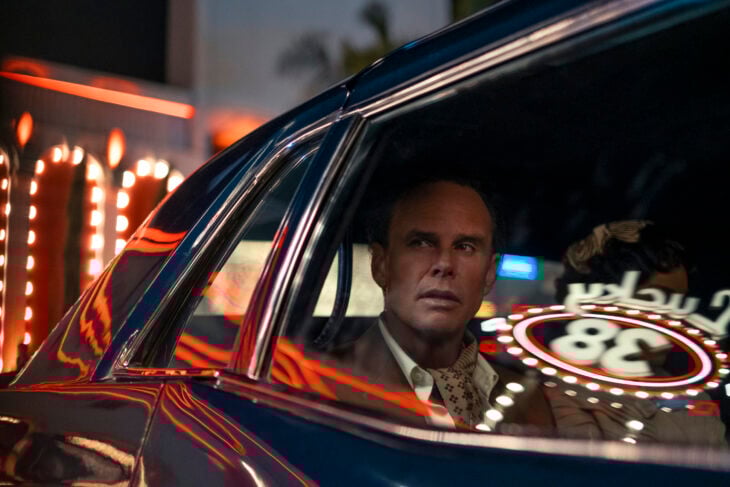
That said, the one person connecting everything together is none other than Robert House, exquisitely brought to life by Justin Theroux.
His performance confidently exudes the strategic eccentricity of the character from Fallout: New Vegas in every way. In every scene that House is in, his dialogue simply provides that needed for Cooper to challenge his own philosophy.
House being the central character of Fallout Season 2 felt right, considering the thematic stakes of believing what’s morally right and what’s “beneficially good”.
Each encounter that Cooper and House have in those pre-War flashbacks, as well as in general, really show how there is no universal answer to everything. It’s just up to how one does good to others. Albeit, in one particular sequence, the cracks in House’s personality begin to show in a way that not even New Vegas had done before.
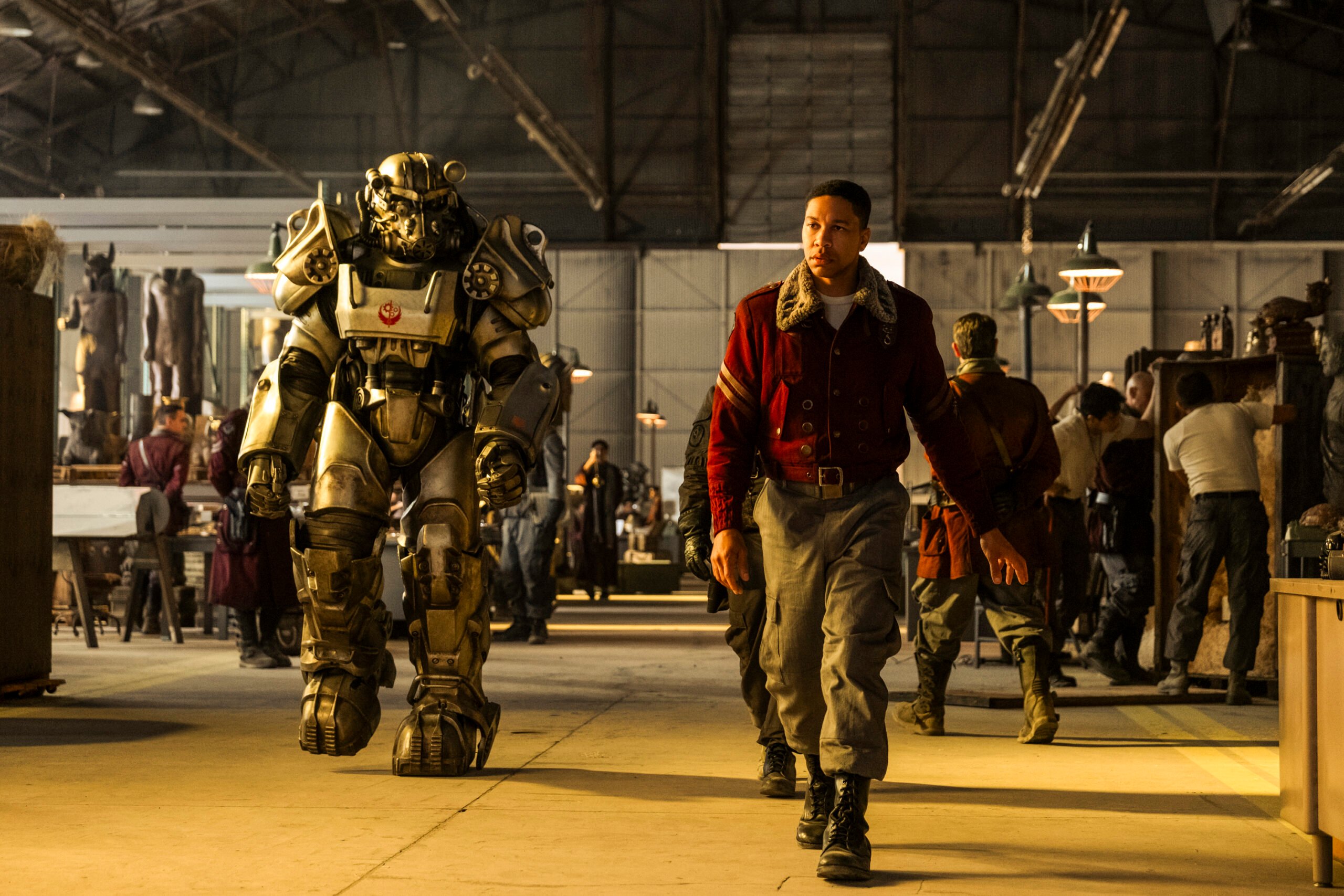
As for Maximus’s arc with the Brotherhood of Steel, Season 2’s main theme presents itself through this philosophical divergence between him and Elder Quintus. Maximus, much like Lucy, wants to uphold the peace the Brotherhood brought, but Quintus and his Mojave brethren want to wage war with the Commonwealth.
Athough it doesn’t seem like there’s hope, Maximus confides with Kumail Nanjiani’s Xander Harkness, a Commonwealth envoy sent to cool things down. While their time together is brief (for one particular reason), Harkness being that center for Maximus similarly to how the Ghoul is to Lucy almost seems like a nice change of pace.
However, when things turn for the worse for Maximus, that’s when things really get wild. Dane also has a much more prominent role in empathizing with Maximus’s cause in addition to adding a bit of depth to their character all the more.
The interconnected Vault storyline is somewhat messy as there’s essentially two going on through Norm, Stephanie, and Betty. While Betty and Stephanie are slowly locked into a resource conflict and politics, which plagued pre-War America before, Norm gets himself a band of disoriented Vault-Tec employees and guides them into some sort of freedom.
While the “Vault Civil War” storyline doesn’t necessarily feel impactful within the first few episodes, Norm’s storyline does have more weight on things.
Sure, Norm may have his challenges, like trying to acquaint himself with those previously under “Bud’s Buds” while building a relationship of his own. It’ll definitely take some time for these two storylines to have an overall hold as Lucy, Maximus, and the Ghoul’s arcs are prioritized.
Of course, it can’t go without saying how the biggest concern for fans is what endings of Fallout: New Vegas are canonized in the grander scheme of Fallout Season 2.
While it doesn’t canonize any particular ending (except, maybe, The House Always Wins), it does canonize pre-War events that feel right. At certain points, it slightly messes with the timeline to account for Season 1 changes, but overall, it stays true to the lore fans have broken down countless times.
Overall, Fallout Season 2 is a bombshell of a success as the show gets bigger, bolder, and gorier with its calculated, connected storytelling to New Vegas. While I’ve only watched six episodes thus far, I’m very confident that the rest of Season 2 will be as moving as these previous episodes have been.
Additional Thoughts:
- The action is still as great as ever and fans will certainly be pleased with the amount of Deathclaws we’re given here!
- There’s also a specific reason why there’s two different actors for Mr. House (which perfectly fits the understanding of the character.)
- I’m also surprised that there were two characters from Season 1 that made their returns, one of which I really didn’t expect considering their involvement with Lucy previously!
- You can also expect those classic Fallout: New Vegas tunes, like “Big Iron” and “Johnny Guitar”, to make a comback!
Critic Rating:
User Rating:
—
Fallout Season 2 premieres on Tuesday, December 16, on Prime Video.
Want more from Tell-Tale TV? Subscribe to our newsletter here!
Chris Gallardo

Christopher Gallardo is an entertainment writer, critic, and member of New York Film Critics Online. While not running his own social channels, Chris can be found writing reviews and breakdowns on all things films and TV for multiple outlets. Plus, he loves Percy Jackson, animated films and shows, and Fallout! You can find him anywhere on social media at @chrisagwrites.