

Manhunt Season 1 Episode 3 Review: Let the Sheep Flee
The search for John Wilkes Booth continues on Apple TV’s limited series Manhunt, with Manhunt Season 1 Episode 3, “Let the Sheep Flee.”
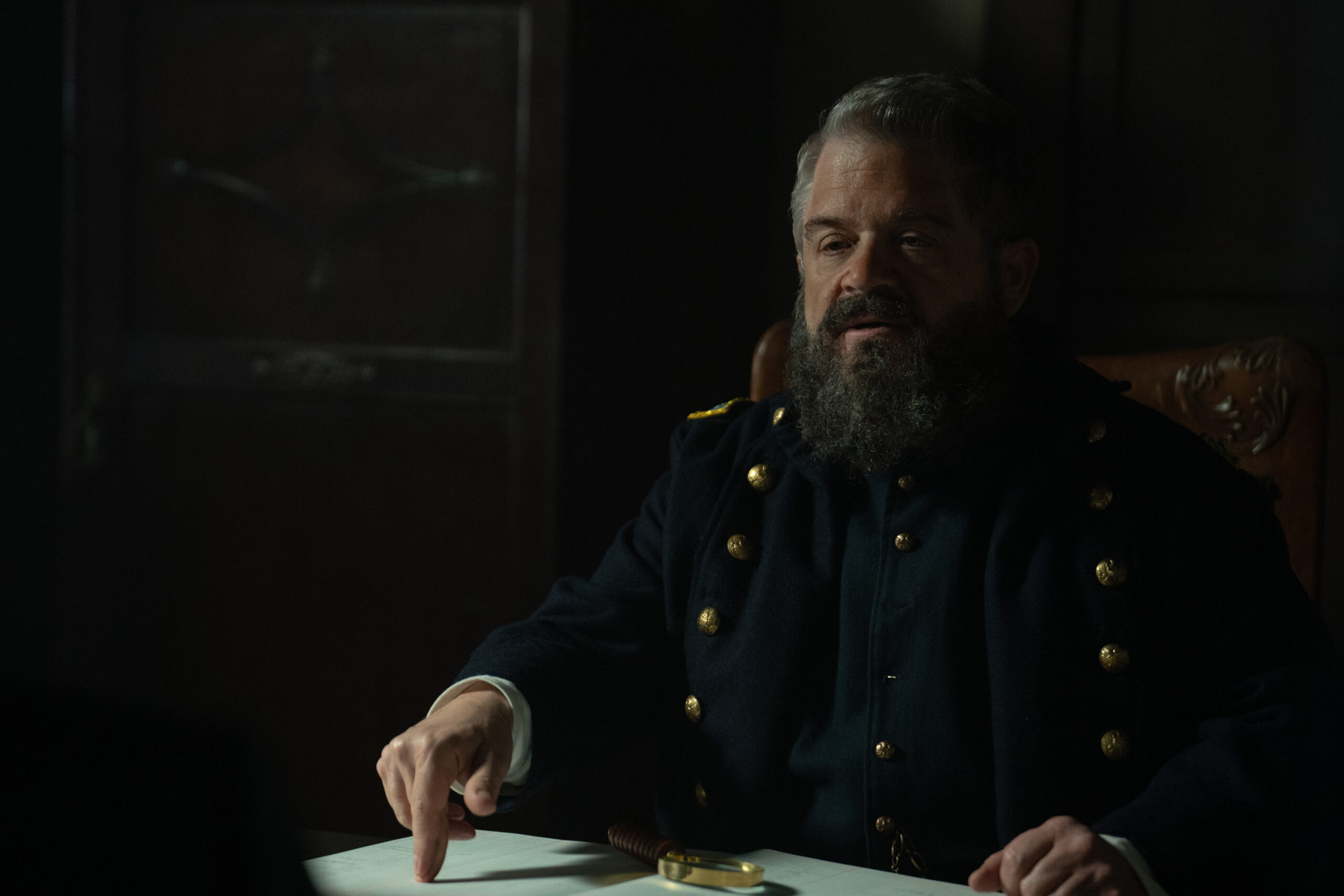
During their first scene together since the confrontation at his inauguration, Andrew Johnson gives Stanton an ultimatum. He tells Stanton to find Booth or forget him because he wants wins in his first days as President.

However, Stanton’s efforts to catch Booth before Johnson cuts off his efforts take a toll on his health. He is remanded to bed rest after a nasty asthma attack, something he, of course, almost immediately disregards.
There is a violent confrontation between Black Union soldiers and some white locals (including some police officers) near Stanton’s home. Hearing the ruckus, Stanton rushes to the scene. When one of the soldiers offers a possible lead, Stanton decides he is done with bed rest.
He jumps full force back into the investigation. Not even a threat from his wife to leave him if he continues at this pace makes him hesitate for more than a moment.
Stanton’s single-mindedness might be reckless, and his methods of questioning prisoners are certainly questionable. Nevertheless, he makes progress on “Let the Sheep Flee,” even at the cost of his health and family.
By the end of “Let the Sheep Flee,” he isn’t really closer to Booth. He is, however, closer to finding another conspirator who could lead to him. His team also cracks the code that should expose the Confederate network Booth needs as a fugitive. The walls are closing in on Booth, even if he doesn’t know it.
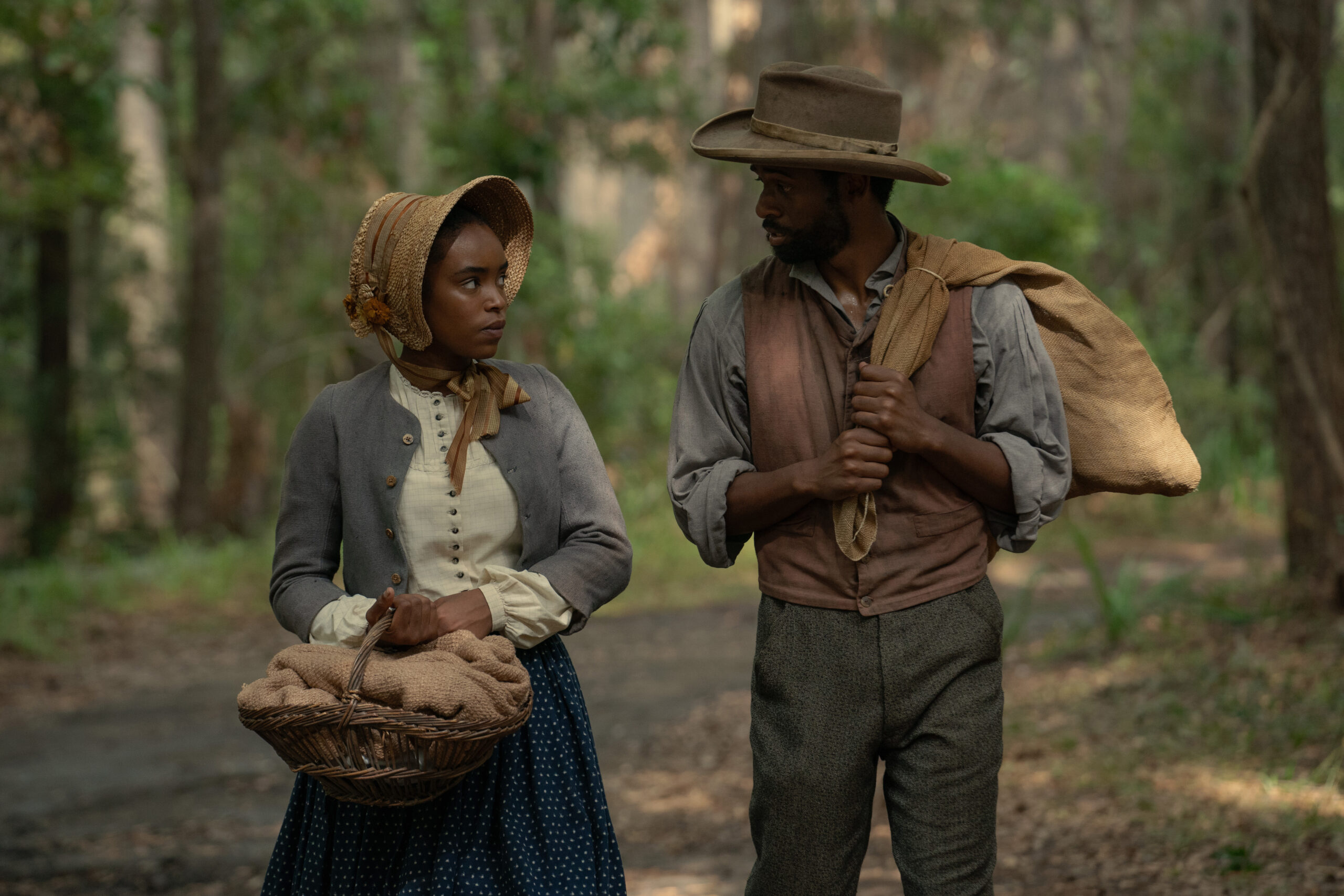
The progress on the search for Booth is the most significant development on the episode. Still, it is just one development of the many that happen on “Let the Sheep Flee.”
“Let the Sheep Flee” is a jam-packed episode. In addition to everything with Stanton’s pursuit of Booth, the episode also starts to explore the political landscape of the early days after the war more fully.
We see some of the racism among non-Confederates that is missing from Manhunt Season 1 Episode 1, “Pilot,” and Manhunt Season 1 Episode 2, “Post-Mortem,” Specifically, we see this in the confrontation mentioned above, which ends with a white resident killing one of the Black soldiers.
It’s good to see the series isn’t going to ignore the racism of the Union, but I’m not sure how believable that whole scene is. It’s not that the events themselves are unbelievable.
White residents and police officers not accepting the authority of Black Union soldiers, someone accusing a Black soldier of stealing, things escalating into violence?
I absolutely believe all of those things could have happened, even if this specific incident did not. However, it all feels a little too modern and on the nose. Plus, the idea that all this happens across the street from Stanton’s house and that he comes running out to help feels inauthentic.
This is an example of one of my biggest issues with the series thus far. Their creative license is too expansive, even for historical fiction.
I’m not naive about these things. You have to take any dramatization of history with a grain of salt. Even ones that claim to be true events. There will always be liberties taken with the facts.
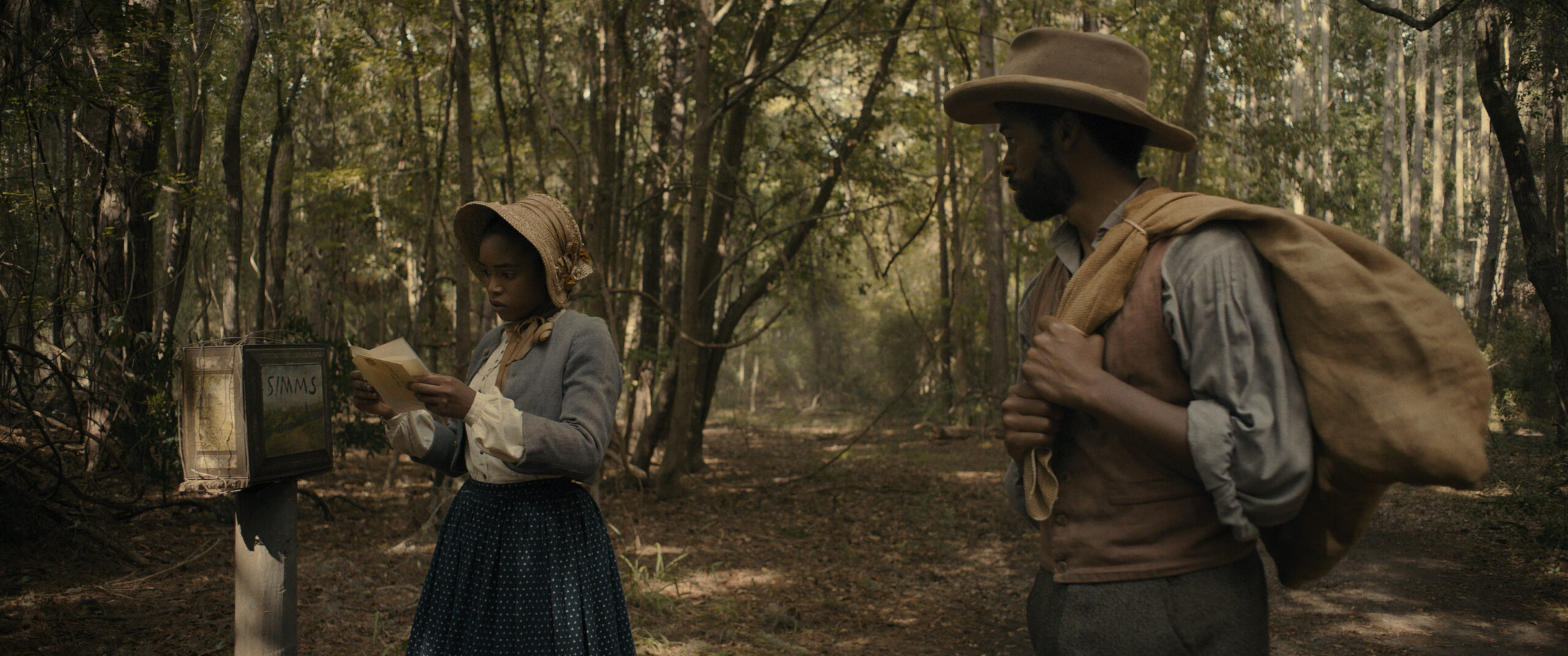
Plus, since Manhunt isn’t claiming to be an accurate depiction, it can wander pretty far from the facts in service of a larger theme or point.
Still, the series is based on actual events—and not just any events. It is based on significant events in US history, events that have shaped who we are today, how we see ourselves, and ones that continue to impact modern politics.
Even if the specific events depicted didn’t happen, how they change things matters. This is especially important given how true but lesser-known facts are woven into the made-up events.
They need to remain faithful to the political and cultural tensions of the time and the people involved. You can say something true about history even though fictionalized accounts of it.
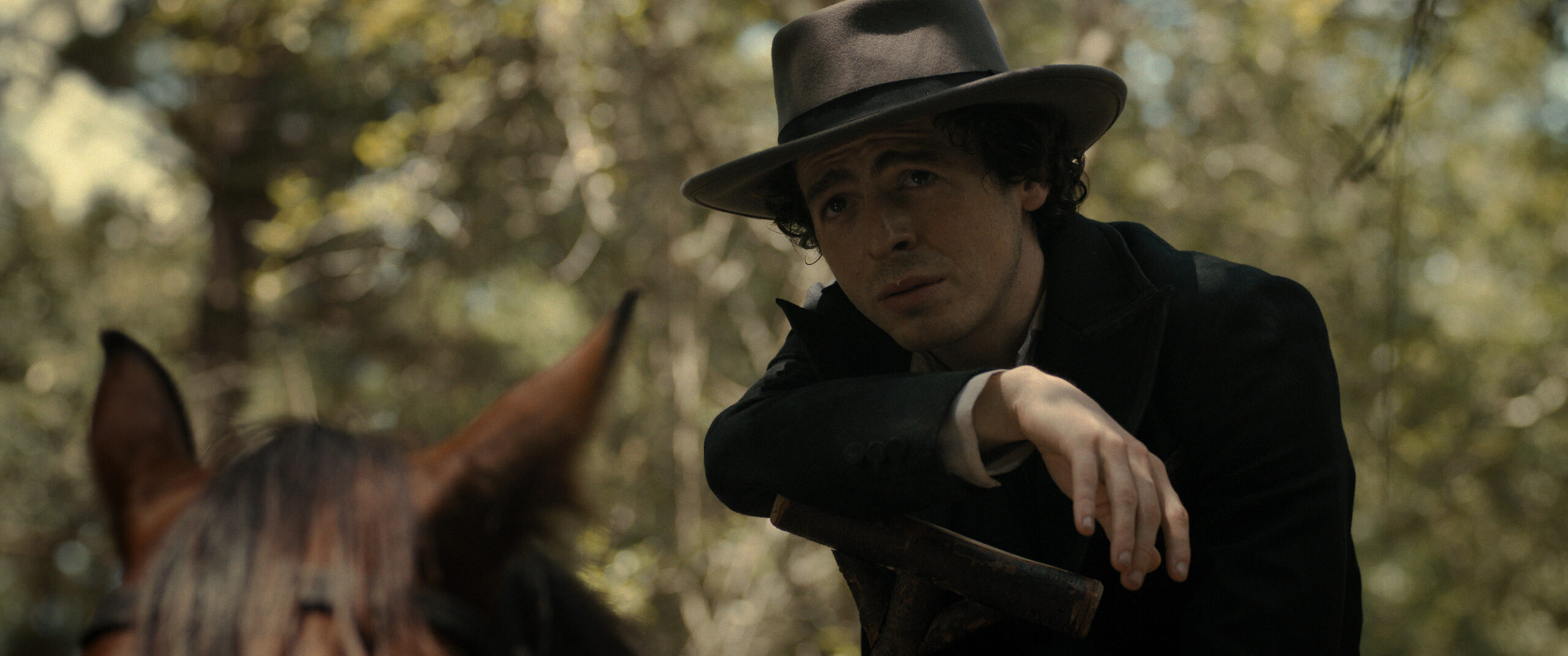
Manhunt walks that line well when it comes to Stanton’s pursuit of Booth and the larger conspiracy that Lincoln’s assassination was part of. It also addresses the increasingly antagonistic relationship between Stanton and Johnson in a way that seems authentic from my admittedly limited knowledge.
However, all that is undercut by scenes like the confrontation with the soldiers and the flashbacks with Lincoln. In one particularly blatant example, the episode flashes back to a meeting with Stanton, Lincoln, and Frederick Douglass, with Douglass serving as an unofficial advisor.
While Douglass was an important influence in Lincoln’s moral and political evolution, as far as I’m aware, the two men only met twice, briefly. Neither of those meetings involved Douglas acting as a loyal advisor to Lincoln.
The insertion of the meeting itself is not the problem. The problem is that it changes the nature of these men’s relationships in a way that doesn’t stay true to the dynamics between them.
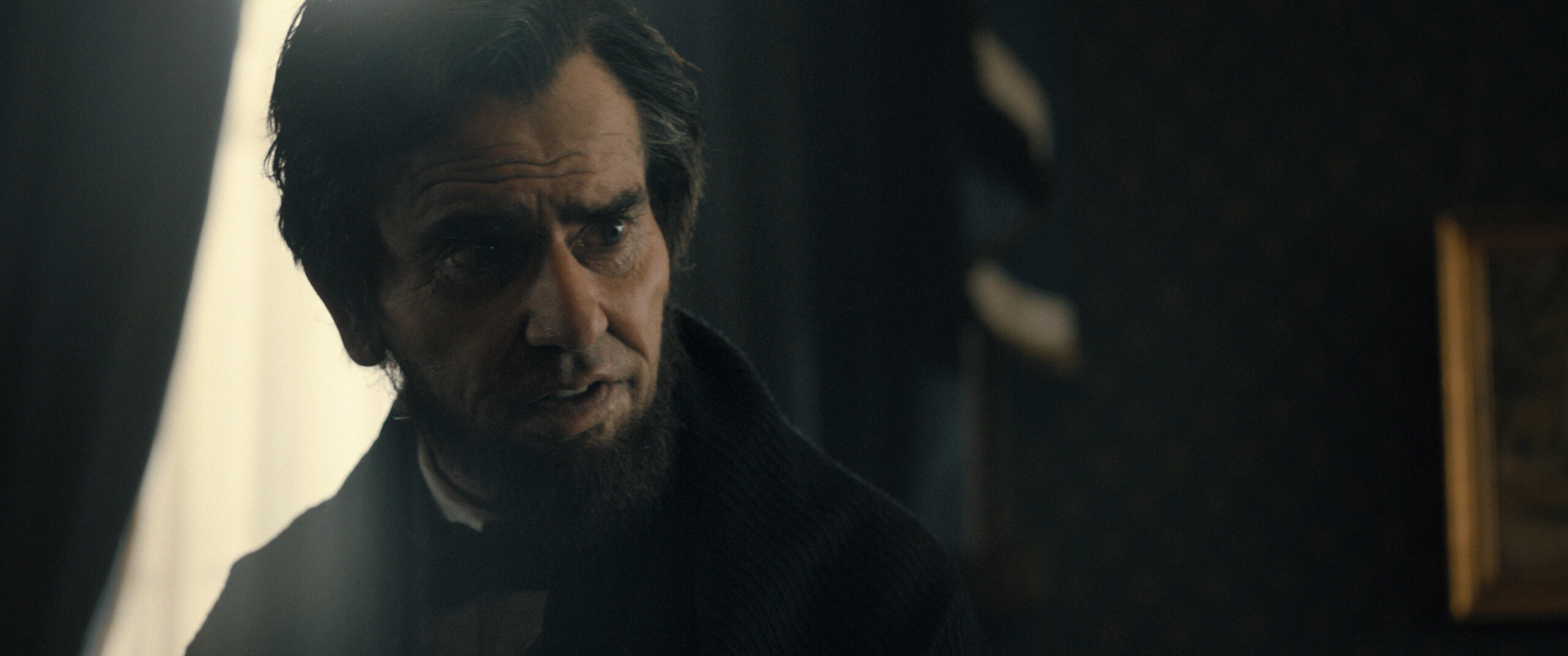
It changes them in a way that may be more comfortable for us as Americans but flattens a more complicated — and, for my money, more interesting — history.
Even ignoring my issue with how the series depicts certain events, the scenes that stray too far thematically from the truth aren’t even as good as the ones that don’t.
The series’ best moments thus far focus on Stanton’s search for Booth, Booth’s time as a fugitive, unraveling the conspiracy, and Stanton’s interactions with Johnson. Those scenes are gripping and excellently executed.
The other scenes, particularly the flashbacks with Lincoln, feel like historical cosplay—well, bad cosplay anyway.
I hope the rest of the series isn’t so egregious with their fictional additions. There is so much to like about this series. Unfortunately, on “Let the Sheep Flee,” those historical fantasies undermine everything else.
What did you think of this episode of Manhunt? Share your thoughts in the comments below!
Critic Rating:
User Rating:
Manhunt streams Fridays on Apple TV+.
 Follow us on Twitter and on
  Instagram!
Want more from Tell-Tale TV? Subscribe to our newsletter here!
Sarah Fields

Sarah is an obsessive geek who likes to get into the weeds and over think things. She is passionate about Sci-Fi and comics and is a giant classic film nerd. Sarah cares deeply about media representation and the power of telling diverse stories. When she's not writing or watching her favorite shows she spends her days working in the non-profit world trying to make life a little better for those that need some extra help.