
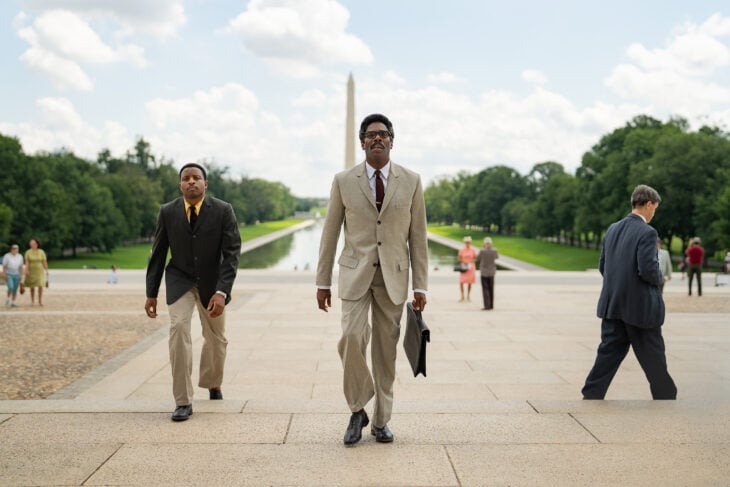
Rustin Review: An Impactful Story of a Life and a Movement
I’m not sure if anyone who worked on Rustin could have known during its production just how timely it would be when released. We’ve always valued stories of peace in the face of violence, but to say we need them now is an understatement.
Bayard Rustin’s name isn’t as known these days as some others from the civil rights movement, yet without him the idea of 250,000 people being organized to gather on the Washington Mall and call for justice would be an impossibility.
There’s a lot of history to unpack in this film, especially of the tensions between key members of the civil rights movement. Early on, Bayard’s deep friendship with Dr. Martin Luther King is waylaid after rumors about their relationship come to a boil.
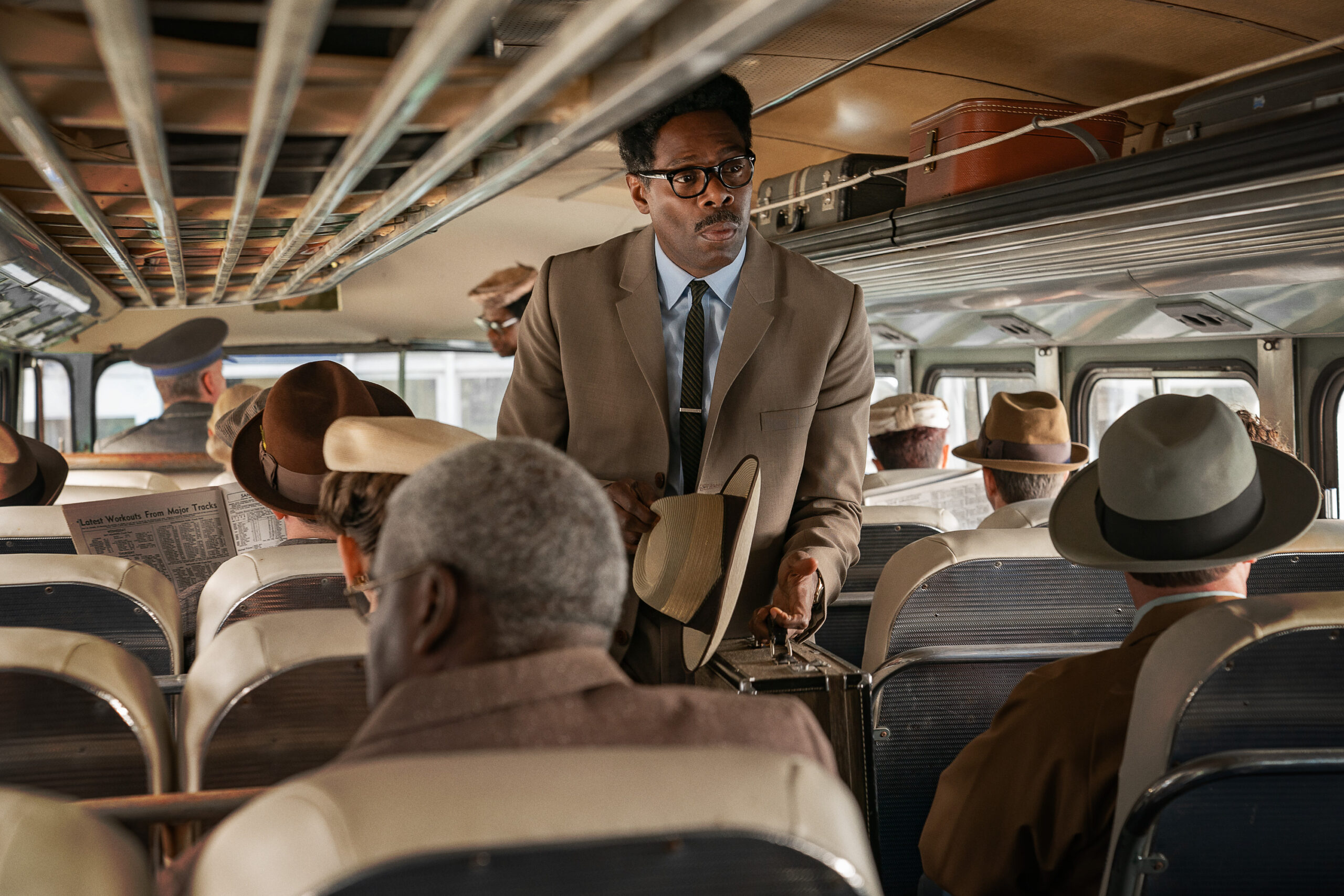
Rustin is as defiant in his defense of his sexuality as he is about the fight against racism and segregation. Seeing it used against him briefly ends his closest platonic relationship and interferes with his ability to maintain a romantic one.
His outspoken and enigmatic nature resonates. Those who look down on it the most, including some fierce advocates for racial equity, also push back against the March—both the general idea of it and that it will be led by someone with his reputation.
As played by Coleman Domingo, Bayard is captivating, as are Dr. King (Aml Ameen) and others. We see him emotional and angry at times, but always dedicated and passionate. It’s an impressive attitude considering what he’s endured.

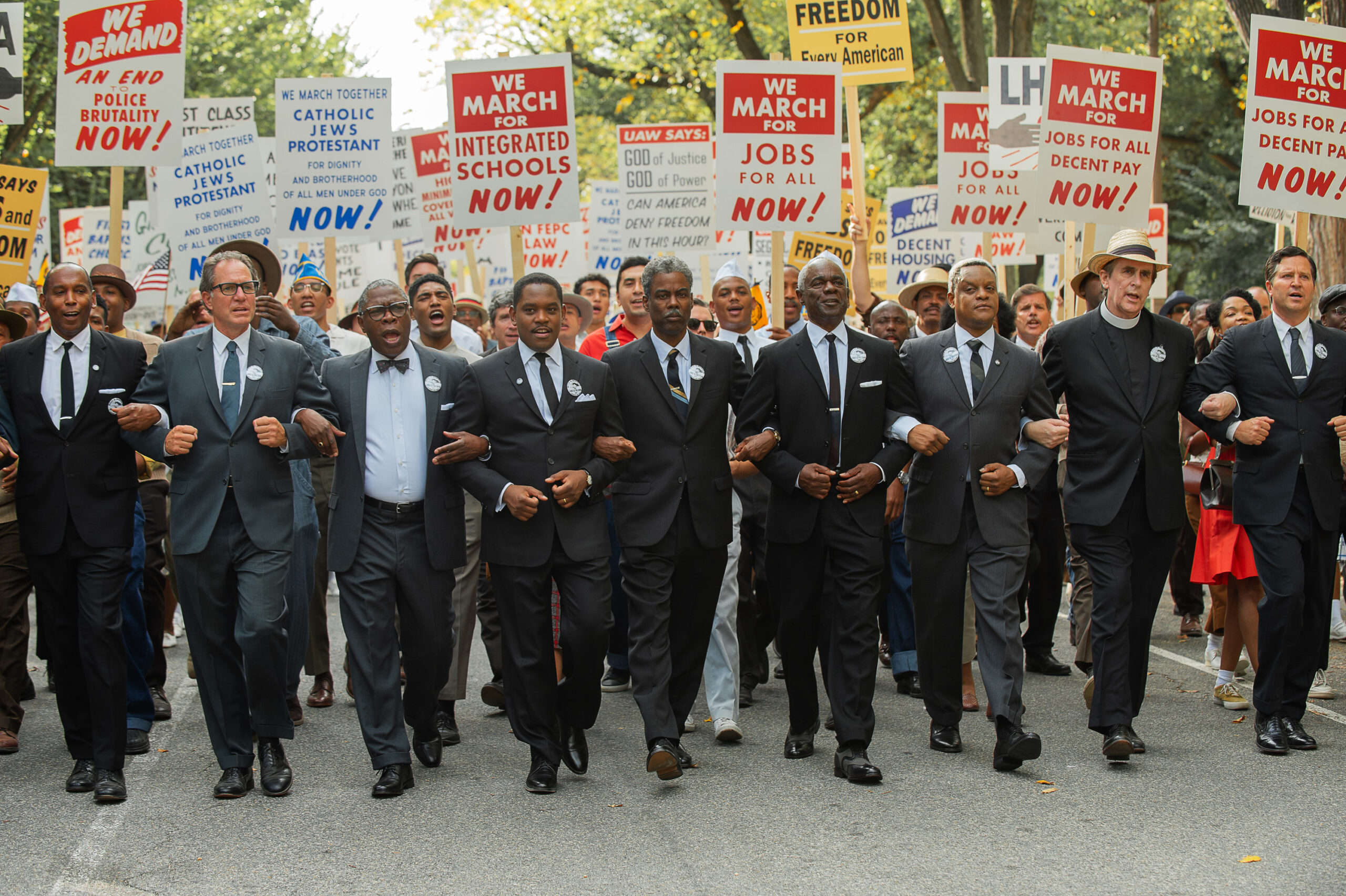
Even more impressive is the sheer scale of the March and the time it’s organized within. Before the days of internet and social media, a relatively small group of people brings to life the biggest instance of peaceful protest ever seen.
Along the way, Rustin gives the kind of impassioned speeches that we believe would motivate them to work 15-hour days, field countless telephone calls, and organize small armies. He steps in himself to educate Black police forces in nonviolence.
The March is best known for Dr. King’s “I Have a Dream” speech, which is as powerful as ever here. But every other element is impactful, too, from sweeping panoramas of the crowd to Bayard picking up a broom and helping to clean up as the sunlight fades.
Above all, despite all the tensions noted above, most scenes in this film are poignantly uplifting. While many films capitalize on the suffering of marginalized groups, Rustin shows only what it must, and uses it as motivation in the greater fight.
Our knowledge of history reminds us that President Kennedy’s assignation will follow a few months after the March, and Dr. King’s in April 1968. Rufin himself will live until 1987. All these come well after the film ends at the end of the day on August 28, 1963.
It’s understandable that most biopics show their subject’s full life through the end. Yet by focusing on the most important fight Bayard Rustin took on, this movie is a true celebration, acknowledging how he and other key figures around him lived.
I’d encourage everyone to watch this film, whether in theaters or through Netflix. It matters not only for its hero, but for how his story is told—by and for those who shared his struggles and still feel their impact the most today.
What did you think of Rustin? Share your thoughts in the comments below!
Critic Rating:
User Rating:
Rustin is available to stream on Netflix.
 Follow us on Twitter and on
  Instagram!
Want more from Tell-Tale TV? Subscribe to our newsletter here!
15 Excellent Documentaries and Docuseries You Can Stream Right Now
Caitlin Wyneken

Caitlin is an elder millennial with an only slightly unhealthy dedication to a random selection of TV shows, from PBS Masterpiece dramas to some of the less popular series on popular networks. Outside of screen time, she's dedicated to the public sector and worthy nonprofits, working to make a difference in the world outside of media.