

Love at First Sight Review: It’s Not Supposed to Make Sense
This piece was written during the 2023 WGA and SAG-AFTRA strikes. Without the labor of the writers and actors currently on strike, the series being covered here wouldn’t exist.
Love at First Sight isn’t your typical rom-com, even though it is heavily loaded with themes of romance and falling in love. However, on the contrary, the movie, directed by Vanessa Caswill and written by Katie Lovejoy and Jennifer E. Smith, reminds viewers that love can occur even in the midst of drama and sadness.
The premise of two characters falling in love at first sight is not new, but the statistics and probability of it happening being explained to the audience seem like quite the innovation. Does it resonate with the audience the way the movie intended?
At times, the numbers help us understand Oliver’s character better. However, there are instances when they don’t really add much to the plot line and only serve as a distraction.

Most romantic movies let the two main characters, the ones falling in love, do all the talking. It is them we follow closely, and by looking into their lives (or into a particular moment in their life), we come to witness them falling in love.
But that’s not the case in Love at First Sight. The viewers not only get to follow Hadley and Oliver as they meet and fall in love, but we also get the story in the voice of the narrator.
At the beginning of the movie, this seems like an interesting tactic and one that allows us to get to know these two characters before they meet each other and confess their biggest fears. As the movie goes on, the interventions by the narrator only feel like a distraction.
Jameela Jamil, who plays the narrator, pops up at different times throughout the movie, playing different characters: another passenger at the airport, a flight attendant, an immigration guard, and a wedding guest, among others.
Every time she shows up, we know there will be another fact or statistic about love and about these two characters recited to us. It seems appropriate at first, but as we get to see Hadley and Oliver interact, the narrator’s voiceover becomes unnecessary.
As interesting as all the statistics may be, it is better to watch them in action than hear them from a character that does not connect with the audience. Even though she is the only character breaking the fourth wall, she is the least favorite one.
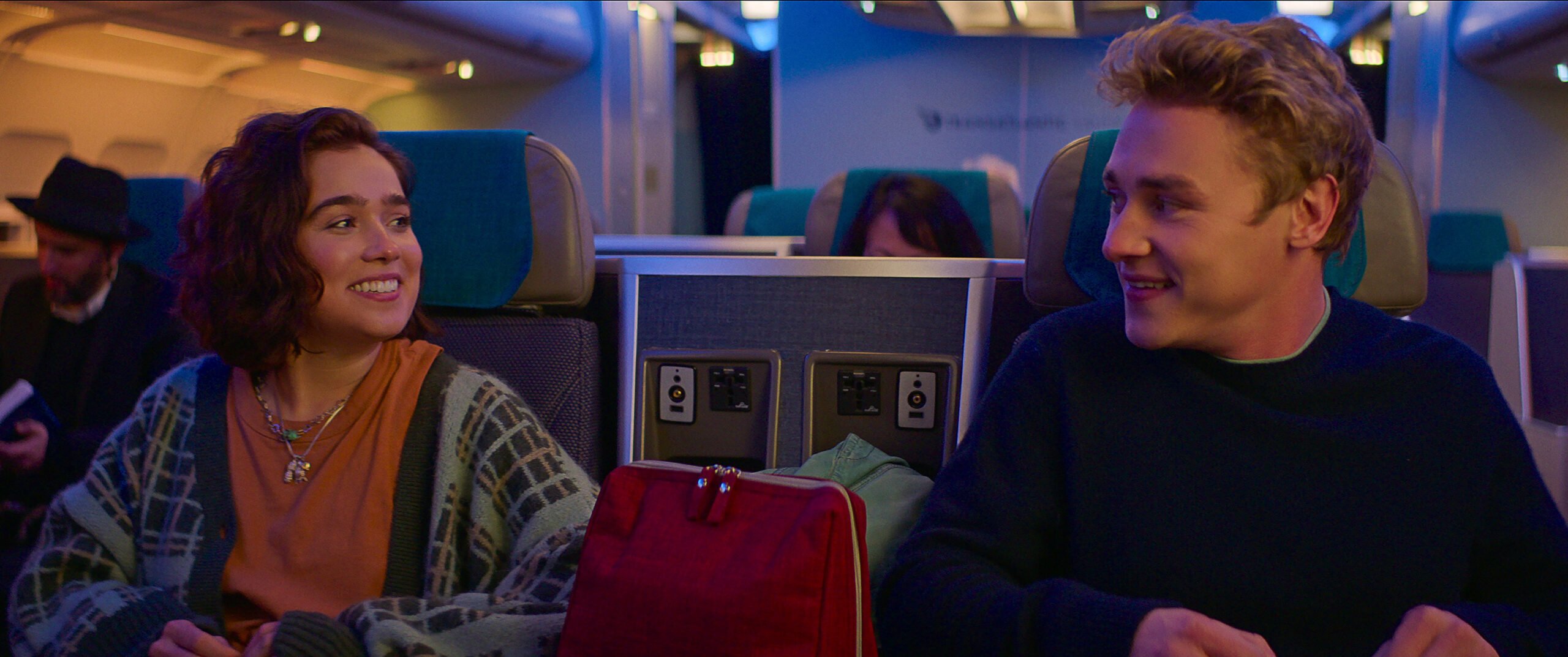
Still, even with the interruptions from the narrator, as viewers, we do witness Hadley and Oliver falling in love. In a short period of time, these two characters seem to learn things about each other that not most people know.
Their sarcasm, the jokes, and their slightly flirty behavior give a glimpse into who these characters are and why they grew up with three specific fears. It is these fears that push them away from each other, but they are also what bring them back together.
By going to her father’s wedding and facing the reality of her parents’ divorce, Hadley can heal the wounds from her past. Wounds that we believe might make her afraid of believing in love at first sight.
In Oliver’s case, it is facing his mother’s memorial that makes him realize he has spent his entire life hiding behind numbers. Statistics are what kept him well aware of his surroundings and prevented any surprises, stopping him from fully letting Hadley in.
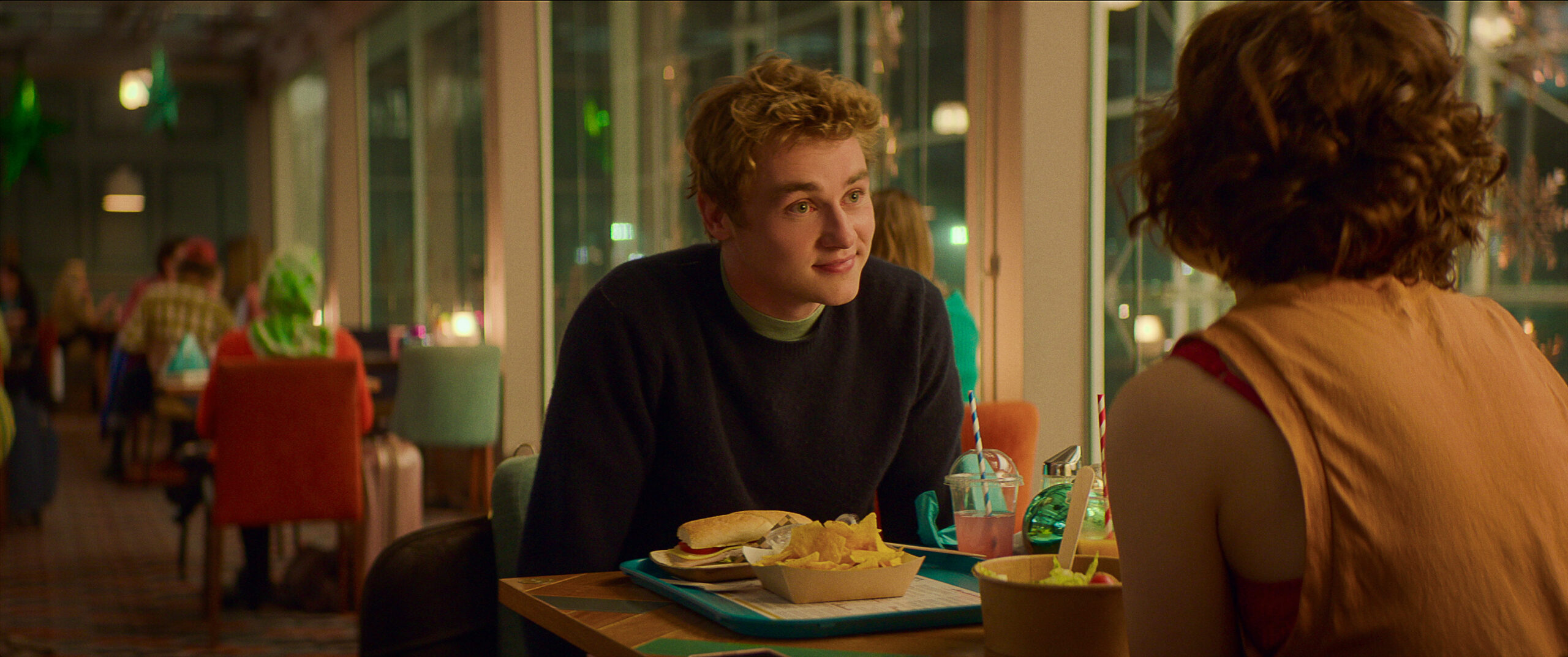
It is because they are so different and find themselves in different situations that they are able to connect and bring out something unique in each other. Hadley makes Oliver forget about the probability of falling in love at first sight while he makes her realize things can be good even if they don’t last.
When watching romantic movies, most people wonder how these stories are possible. How can an actress fall in love with a bookstore owner after meeting at random?
How can two bookstore owners who are enemies fall in love without knowing who they truly are?
It is all those “impossible” stories that keep us coming back to romance. However, Love at First Sight reminds us that love, falling in love, and finding that special someone isn’t supposed to make sense.
This is described perfectly when Hadley says to her dad, “It sounds insane, and it makes no sense,” and his answer is, “It’s not supposed to.” Love isn’t a logical thing.
You cannot predict love as much as you want to believe that a statistic will help you prevent heartbreak. Love happens when you least expect it and in the rarest of places.
In this case, love starts in an airport, develops in an airplane, and comes to fruition between the memorial of a woman who hasn’t died yet and a second wedding.

Love at First Sight might not be the most romantic of movies, but it does what people expect from romance: it delivers a happy ending.
It serves as a great way to remind viewers that love isn’t supposed to make sense and that life will always surprise you and make you confront your fears no matter how hard you try to calculate your way out of it.
And maybe, just maybe, if you’re lucky, your phone’s battery will die, and you will meet the love of your life.
—
What did you think of Love at First Sight? Share your thoughts in the comments below!
Critic Rating:
User Rating:
Love at First Sight is available for streaming on Netflix.
 Follow us on Twitter and on
  Instagram!
Want more from Tell-Tale TV? Subscribe to our newsletter here!
Brie Larson Cooks Up ‘Lessons in Chemistry’ in the Trailer for Apple TV+ Limited Series
Lara Rosales

By day, Lara Rosales (she/her) is a solo mom by choice and a bilingual writer with a BA in Latin-American Literature known as a Media Relations Expert. By night, she is a TV enjoyer who used to host a podcast (Cats, Milfs & Lesbian Things). You can find her work published on Eulalie Magazine, Geek Girl Authority, W Spotlight, Collider, USA Wire, Mentors Collective, Instelite, Noodle, Dear Movies, Nicki Swift, and Flip Screened.