

Candy Season 1 Review: This Candy Is Flavorless
Candy is based on the true story of a gruesome murder, but shockingly the new Hulu limited-series kills all the story’s intrigue, emotion, and horror.
The sad truth is Candy is bland.
Candy fancies itself a horror story akin to the sensation The Shining, which aired the same year as the murder that is the subject of the show.
It’s a good idea. The Shining showcases how being isolated and trapped in a mundane life can lend a person to some serious psychosis.
On Candy, we see detailed depictions of how being a housewife can stifle every ounce of a woman’s passion and verve. Candy has a sexual appetite that we get to know well. She seems too big for the small Texas town she inhabits.

Betty’s story is actually the more interesting one. She doesn’t have any of the social finesse that Candy has. Although it’s not explicitly stated, it seems that Betty struggles with depression, likely postpartum depression, and social anxiety.
Being stuck at home all day with your intrusive thoughts and the expectation that all of the vacuuming and burping and cooking and gardening should bring you happiness is absolutely horrifying.
As I said, the idea is good. The execution is terrible.
One reason this attempt fails is that we don’t get any glimpse into Candy’s psyche. All the repetitive sound sequences in the world can’t creep an audience out if there is no connection to the character. Candy did a horrible, unthinkable thing. She axed her friend to death, using forty-one hits, and then went to see Star Wars with her murder victim’s daughter.
Sure, we see her throw-up and clearly nervous. But we never get an interior view of Candy. At the close of the series we don’t have any idea why she did what she did.

On The Shining, the audience is terrified of what’s going on in Jack’s head. On Candy, we can’t feel terrified or any emotion really, because we have no idea what’s going on in her head.
As the show clearly understand based on Candy Season 1 Episode 3, “Overkill,” the intensity and extreme violence in the murder makes it prone for fictionalization. The other aspect of the story that is most compelling is the courtroom drama where Candy claims self-defense and psychosis as revealed by hypnosis and we only get one measly episode of it.
Instead of spending precious narrative time on understanding what could have brought Candy to do chop her friend’s eyes out with an ax, we get numerous scenes gaining an understanding of the fact that Candy is horny.
But, the show never even connects Candy’s sexual desires with the fact that she has enough rage in her to murder.
Plenty of women are horny and dissatisfied by their ignorant dorky husbands. Very few women take that dissatisfaction out by killing. Candy misses the mark by focusing in on stuff that simply does not take more than a glance to understand.
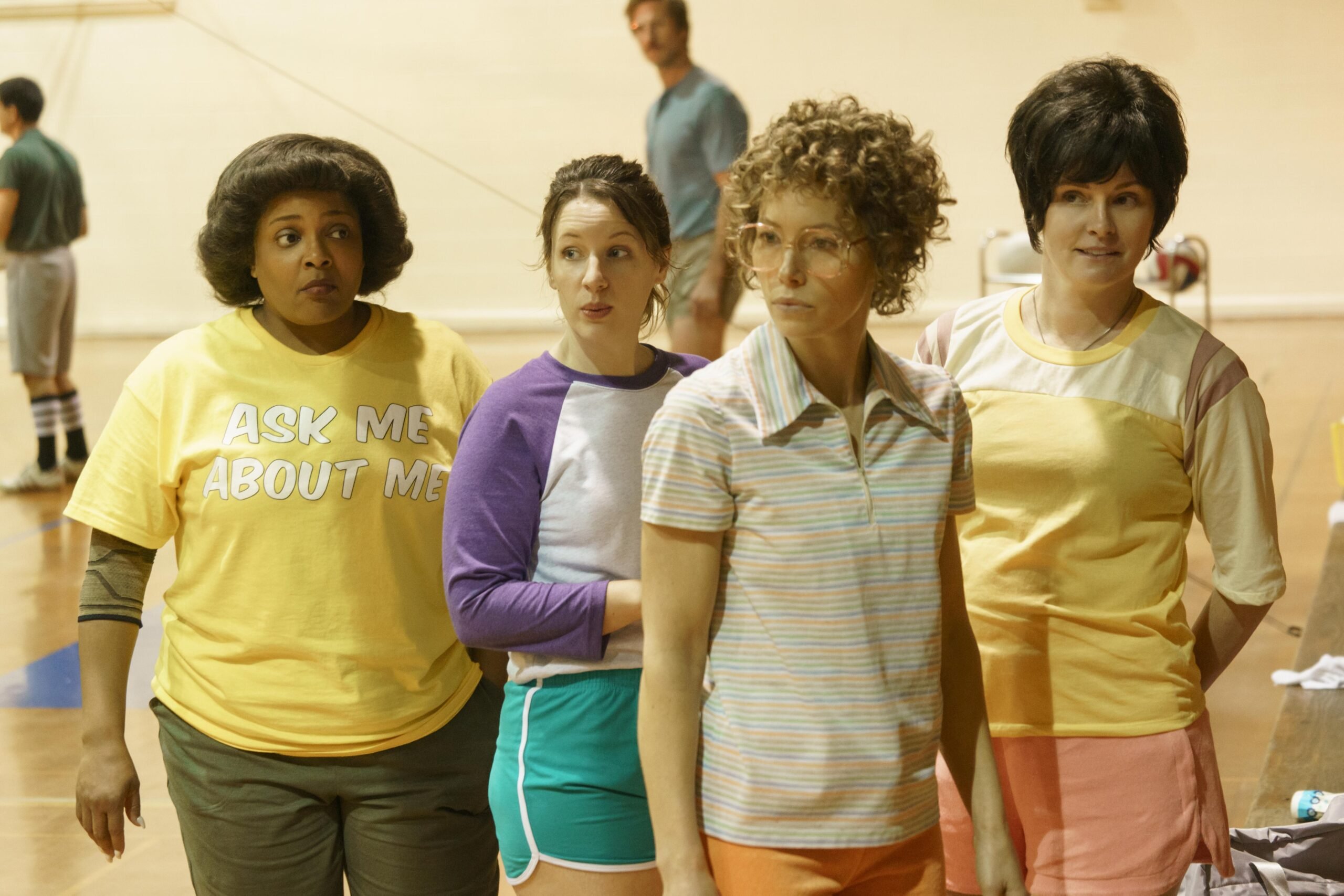
The show also fails by portraying the men as near heroes and the women as empty, duplicitous and grating.
Let’s consider Allen for example. He cheats on his wife. He rolls his eyes and gets upset that his wife wants him to be home because of her crippling fear when he’s away.
He only is turned on by his wife when she’s thin. He testifies in a way that helps Candy get off. He marries someone new nearly immediately after his wife’s brutal murder.
He’s not a great guy. Yet, the show sets us up to believe he is all together innocent.
The child Betty fostered waves a sweet goodbye to Allen and he calmly stops working at the kitchen table to turn to Betty and listen to what she wants. We never actually hear him fat shame his wife, but we are lead to believe that’s what he does based on Betty’s comment and what he says to Candy about her body.
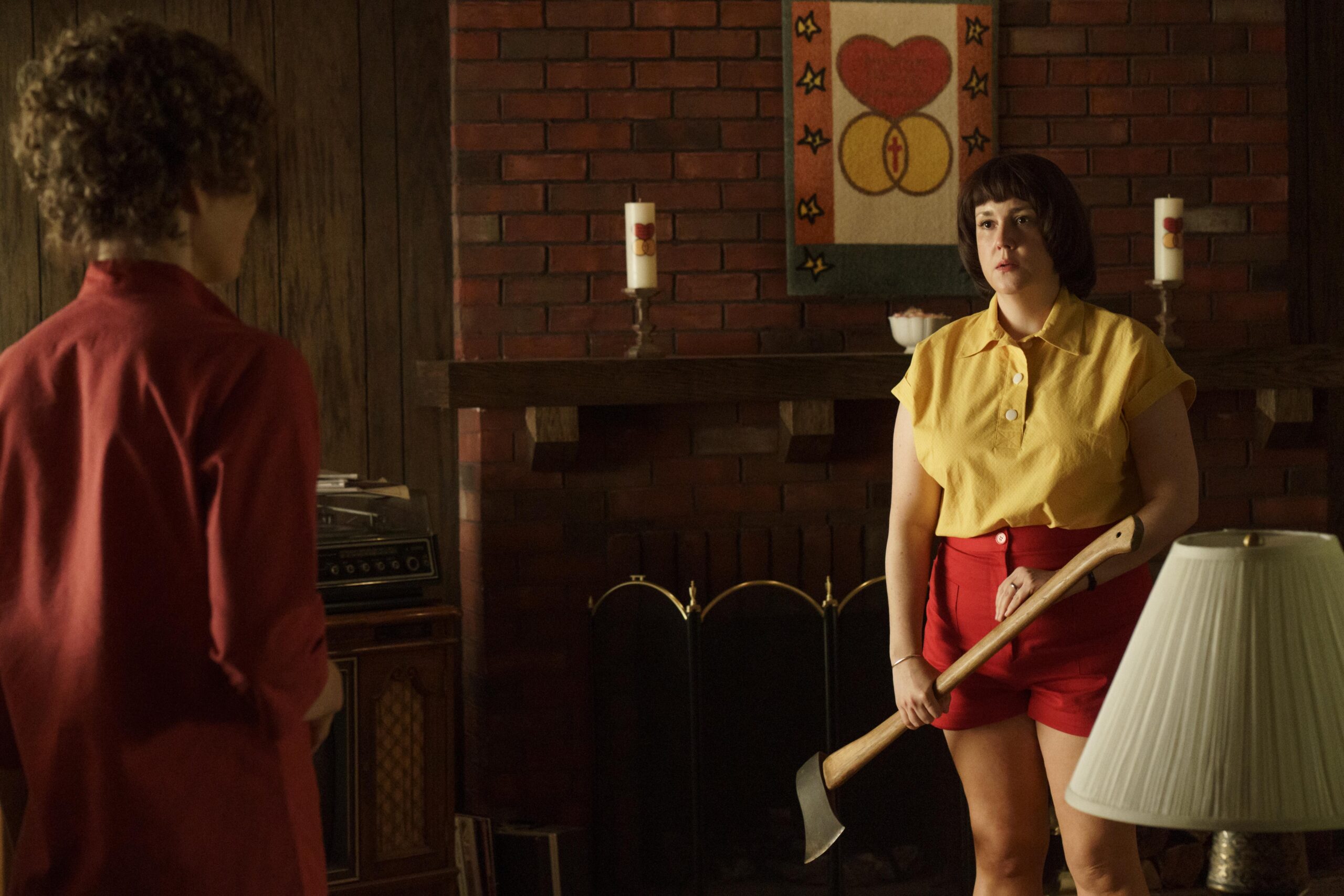
The two women at the center of Candy are controlled, limited, nearly suffocated by the expectations of mothers during this time period. Candy can’t even get herself off without her responsibilities as a wife and mother barging in to interrupt her. But that interesting conflict is entirely overlooked on the series.
Candy isn’t interested in the internal conflict. Instead, it is interested in the look of the show. The way close-up shots and soundtrack can create a story.
The show itself takes Candy’s approach to life of covering it up and moving on.
It is a shame because the actors are phenomenal. All of the performances are incredible and even the supporting characters shine.
Timothy Simons as Pat Montgomery stands out. The scene where he acts out the forty-one chops of an ax is one of the best of the whole series. Candy’s best friend Sherry is also expertly portrayed by Jessie Mueller.

Despite the stacked call sheet and knock-it-out-of-the-park performances, Candy fails to deliver the psychological thrill it should.
What did you think of this season of Candy? Share your thoughts in the comments below!
Critic Rating:
User Rating:
Candy is streaming now on Hulu.
 Follow us on Twitter and on
  Instagram!
Want more from Tell-Tale TV? Subscribe to our newsletter here!
Janelle Ureta

Janelle Ureta is equal parts Veronica Mars, Raven Reyes, and Rebecca Bunch, but she aspires to add some Tammy Taylor to the mix. An attorney turned teacher, Janelle believes in the power of a well-told story. She is currently exploring how to tell short stories, 140 characters or less, on twitter. She loves to talk about TV, and right now she can't shut up about Timeless, Dear White People, Crazy Ex-Girlfriend, The 100, or Younger.