

Pachinko Review: Chapter Four (Season 1 Episode 4)
After the relatively brisk pace of the series’ first three installments, Pachinko Season 1 Episode 4, “Chapter Four,” is a slower, more deliberate affair. And on some level that makes sense. After all, this is the hour that literally changes Sunja’s life forever–and that of her family for generations.
The arrival of kind pastor Baek Isak and his offer of marriage gives Sunja a way out of the shame of her illegitimate pregnancy and a chance for a fresh start. But she’ll have to leave her mother behind and raise her child in a strange land full of people who have hated and oppressed her all her life. It’s a bittersweet moment, to be sure.
But Isak is one of Pachinko’s best characters, just a kind-hearted, good person who wants to live his faith in a real, tangible way, particularly after yet another bout with a severe illness that lands him in the care of Yunjin and Sunja upon his arrival in Busan.
It takes a lot for a man in this time period to essentially volunteer to raise another man’s child, but Isak never hesitates and seems to see Sunja’s misfortune as a welcome chance at a life he’s always thought was out of his reach.
This episode includes a handful of scenes that aren’t in Min Jin Lee’s novel, such as the deliciously tense encounter between Isaak and Koh Hansu in the tailor’s shop that’s full of double meanings and half-truths, as well as Hansu’s rough confrontation with Sunja when he learns she’s set to marry another man.
(We love Sunja’s strident claim that her child is hers and hers alone, even though it should be apparent to everyone whether they’ve read the book or that this is hardly the last time we’ll see her first love.)
To be fair, Pachinko the series is doing a marvelously thorough job in fleshing out Hansu in a way the book simply could not. He is never a POV character in the way that Sunja or her children are, and we usually only see him through the eyes of other characters or hear about his activities thirdhand.
The series still puts his brutality on full display, but it also underlines the genuine nature of his feelings for Sunja herself (and not simply as the mother of a child he can’t claim) in a way the book takes much longer to make clear.
 Pachinko – Photo Courtesy of Apple TV+
It’s really not Solomon’s fault that his section of the story in this episode feels so much less interesting than Sunja’s (either in his own timeline or the 1915 version). But, wow, is it ever.
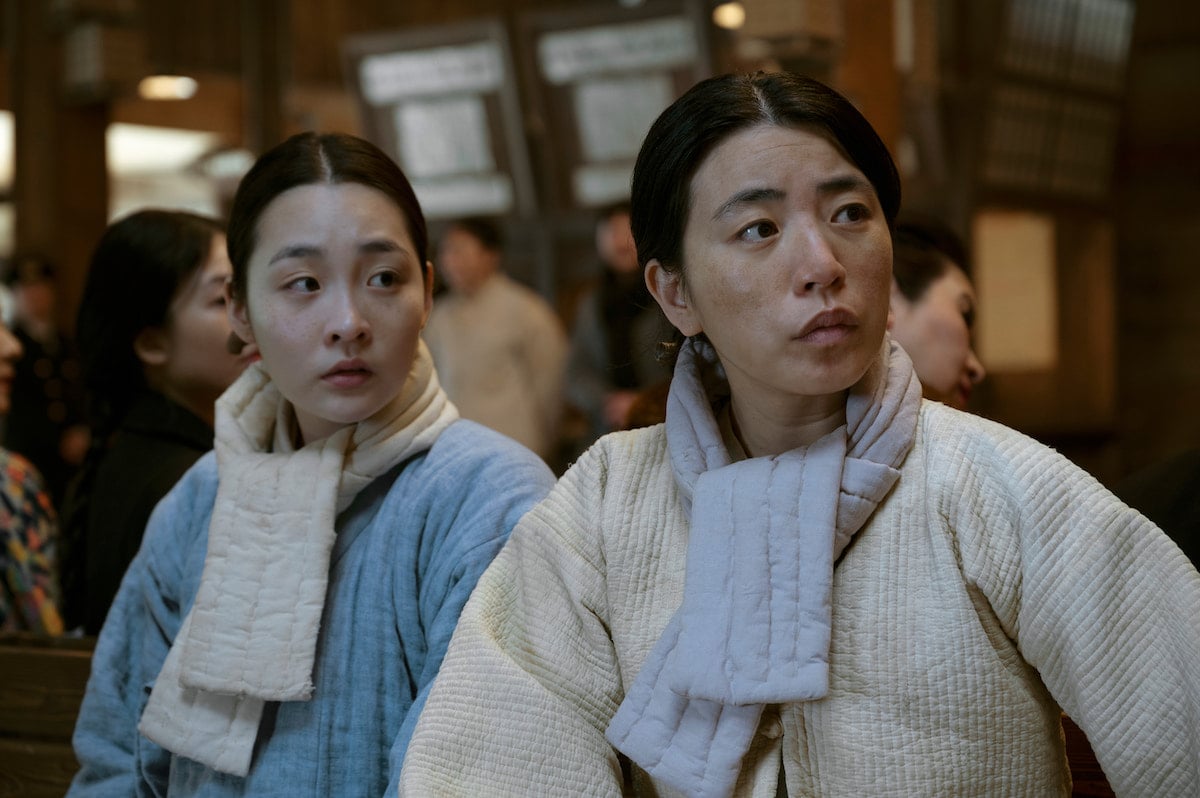
The younger Sunja marries Isak and must prepare for her journey to Osaka with him, including saying goodbye to her mother, boardinghouse servants Bokhee and Dokhee, and all that is familiar to her.
The older Sunja readies to return to Korea for the first time since she left it as a young newlywed, planning to return her sister-in-law’s ashes to their homeland.
Solomon…tries to bully a reluctant old woman into selling her family home so he can get a promotion. It’s difficult to really become but so emotionally invested in that story. (Especially when it’s contrasted with emotional scenes like Yangjin passionately bartering for two bowls of white rice so Sunja can truly taste home before she leaves it. I mean…come on. I”m not made of stone.)

The thing is, Solomon’s story is powerful in its way, but the reason for that has little to do with him, personally, Rather it’s the fact that he has largely been used as an audience surrogate up until this point, a stand-in to help us understand not just the horrific conditions Korean immigrants once faced, but the prejudices they still must contend with, even in the supposedly much more modern late 1980s.
However, the sequence in which Solomon flees his (presumably former) office building after engineering the destruction of the deal he works so hard to land is exhilarating and surprisingly emotional. And the moment we see him dancing in the rain to the music of some random subway buskers feels like maybe the first time we’ve ever properly “met” Solomon in this story.
That it is so deliberately interspersed with Sunja’s joy at finally returning to the shores of her homeland is beautifully done, and just a small example of how Pachinko so skillfully weaves past, future, and present together to create a full and lush picture of what life really means. (I cried, is what I’m saying.)
Stray Thoughts and Observations
- Yanjin is not as central a character in this series as she is in the book, but wow does Pachinko make every moment with her count. Her quiet breakdown into sobs as Sunja’s ship departs for Japan is such a gut punch.
- It’s slightly disturbing how good Jimmi Simpson is at playing a dirtbag finance bro.
- I think it’s interesting that we’re halfway through this first season and the show has yet to mention the fact that Sunja had more than one child. (Book spoiler, sorry!)
- This cast is truly incredible from top to bottom, from its main leads to its supporting cast—the actress who plays the opera singer who kills herself on board the boat to Japan. Just. Wow.
What did you think of this episode of Pachinko? Share your thoughts in the comments below!
Critic Rating:
User Rating:
New episodes of Pachinko stream Fridays on Apple TV+.
 Follow us on Twitter and on
  Instagram!
Want more from Tell-Tale TV? Subscribe to our newsletter here!
Lacy Baugher

Lacy is a pop culture enthusiast and television critic who loves period dramas, epic fantasy, space adventures, and the female characters everyone says you're supposed to hate. Ninth Doctor enthusiast, Aziraphale girlie, and cat lady, she's a member of the Television Critics Association and Rotten Tomatoes-approved. Find her at LacyMB on all platforms.