
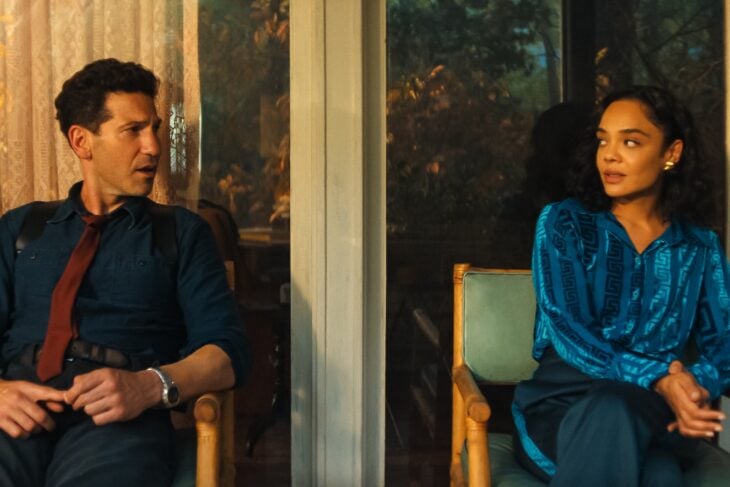
His & Hers Review: Everyone’s Attractive But No One’s Trustworthy in This Overstuffed Thriller
It’s a truth universally acknowledged that sometimes, television isn’t that deep. This is a sentiment that goes double for thrillers like Netflix’s His & Hers, which are often more about twisty vibes and melodrama than anything resembling narrative coherence. And you know what, for the most part, that’s okay.
It’s perfectly fine to watch a show simply because it’s entertaining, or because you simply have to know how it all plays out. And it’s more than fair to say that His & Hers does boast a pair of almost painfully attractive leads and a plot that’s built on mystery, misdirection, and seemingly unreliable narrators. It feels like it should be a great time.

But it’s actually a hot mess, full of plot holes, contrivances, and not one but two cliched endings that pretend to be a whole lot more shocking than they are.
Based on the popular novel of the same name by Alice Feeney, the six-part limited series (all episodes of which were available for review) is technically a murder mystery, in that several dead bodies show up, and the goal of the story is to find out who did the killing.
But not content to be a simple story about death in a small town, His & Hers is also about a dozen other things. There’s a marriage in shambles, a pair of grieving parents, a daughter confronted with the creeping tragedy of her mother’s encroaching dementia, a petty battle for a news anchor position, and a pack of vicious former high school friends who may have sported matching friendship bracelets, but who buried plenty of secrets along the way.
And that’s before we get to all the infidelity, guilt, betrayal, sexual assault, and long-buried rage. As the kids say, His & Hers is simply doing too much.
There are moments when it’s nigh-on impossible to keep track of everyone’s lies, half-truths, and hidden motivations, and there’s so much happening at any given moment that it essentially flattens out the impact of any single revelation or twist. The characters are largely two-dimensional, and their relationships lack anything approaching depth.
It’s doubly unfortunate because the series’s cast is so strong. Alongside leads Tessa Thompson and Jon Bernthal — both performers who know their way around smoldering sexual tension — the ensemble includes the generally talented but extremely underserved Sunita Mani, Rebecca Rittenhouse, and Pablo Schreiber.
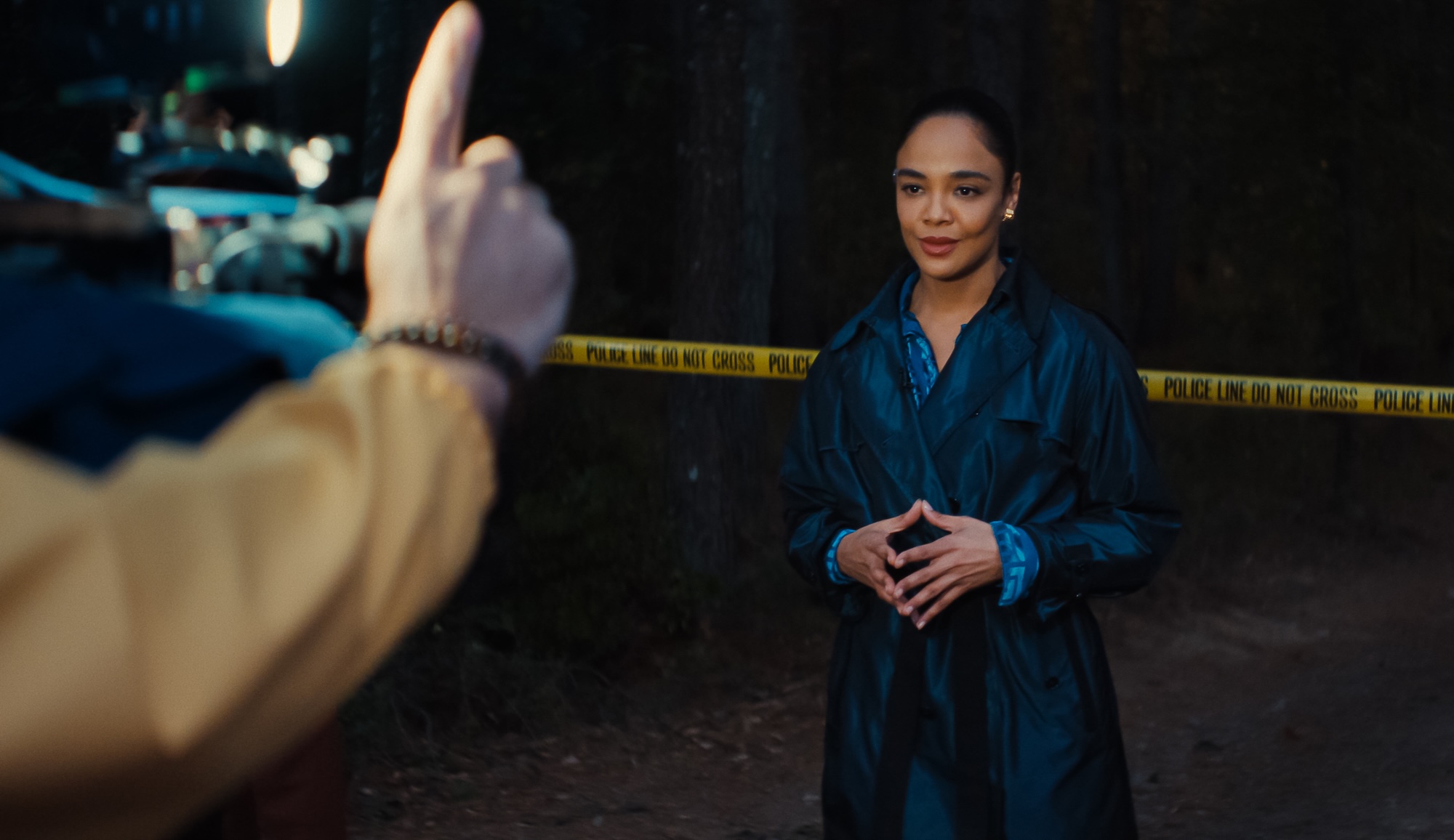
Bernthal and Thompson star as Jack and Anna, an estranged couple whose marriage collapsed following the death of their young daughter. Anna, a well-known news anchor in Atlanta, returns to their laughably nondescript hometown of Dahlonega to cover the murder of a local woman who was stabbed to death, which puts her directly in Jack’s path, since he’s the detective who’s investigating the case.
But because this is set in small-town Georgia, the murder victim is not only one of Anna’s former high school friends (frenemies?), but the partner that Jack had been recently (and by recently, I mean, on the night of her death) having an affair with.
These connections almost immediately make both parties suspects, and although the show occasionally pays vague lip service to the idea that one of them might be guilty of the crime, it never really commits to the idea in any significant way.
Or, at least, in any way that goes beyond making its leads look vaguely distant and untrustworthy.
Feeney’s novel was better at handling the split perspective format that the series seems to want us to believe in and blurring the lines between Anna and Jack’s points of view.
Here, the show frequently defaults to the sort of standard omniscient TV narration that renders the entire “his and hers” two sides of the same story storytelling gimmick virtually useless.
Largely because it can often feel as though Jack and Anna aren’t even in the same story, let alone two distinct halves of a whole.
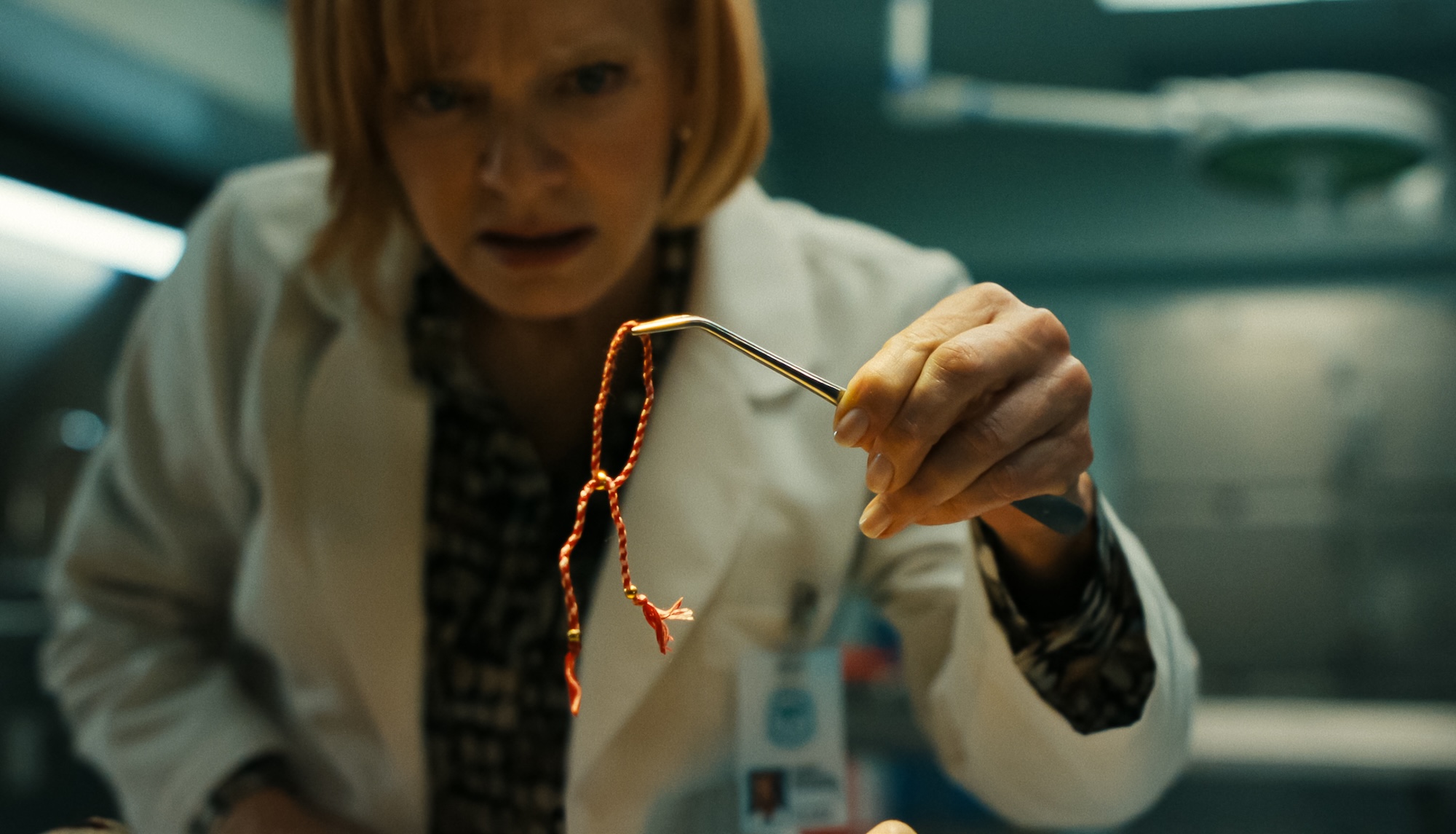
The mystery itself — or mysteries, really, as more bodies turn up as the series progresses — is fairly pedestrian, ultimately tied to the sort of high school bullying plot we’ve seen on countless other series that tries to be timely but ultimately ends up clunky instead.
There’s a sense that the show’s trying to make some sort of larger point about female friendship and competition. Flashbacks to the girls’ time at snooty boarding school St. Hilary’s show off the worst cruelties of youth, and Anna’s present-day crusade to reclaim the job she lost when she disappeared for a year is focused as much on her dislike of the stereotypical blonde woman who replaced her as on her love of journalism.
(She ends up sleeping with her rival’s husband, because of course she does.)
But, like so much else in this show, these subplots are never fleshed out enough to really feel purposeful, but rather another narrative tick-box that must be checked off on the road to the show’s not one but two highly melodramatic (and kind of uncomfortable?) ending reveals.

To their credit, Bernthal and Thompson try their best. Thompson’s star power carries Anna through some truly baffling character moments, and she makes the most of every minute she’s allowed to express a genuine emotion.
Bernthal, for his part, engages in a bit too much of the excessive yelling he was known for on The Walking Dead, but still manages to make Jack’s still-evident love for his estranged wife feel believable (multiple post-split affairs aside).
The pair is at their best when they’re tackling the long-tail impact of grief. Like a lot of other subplots, the fallout from the death of their daughter doesn’t really get the focus it deserves, especially considering it’s the reason their marriage ended in the first place.
But anytime the two are asked to confront their history together, the energy between them is positively crackling with the weight of what has passed between them and all the things they’ve never managed to say to one another.
It’s an intriguing glimpse at what a different version of this show, perhaps one that had a firmer sense of its identity or purpose, might have been.
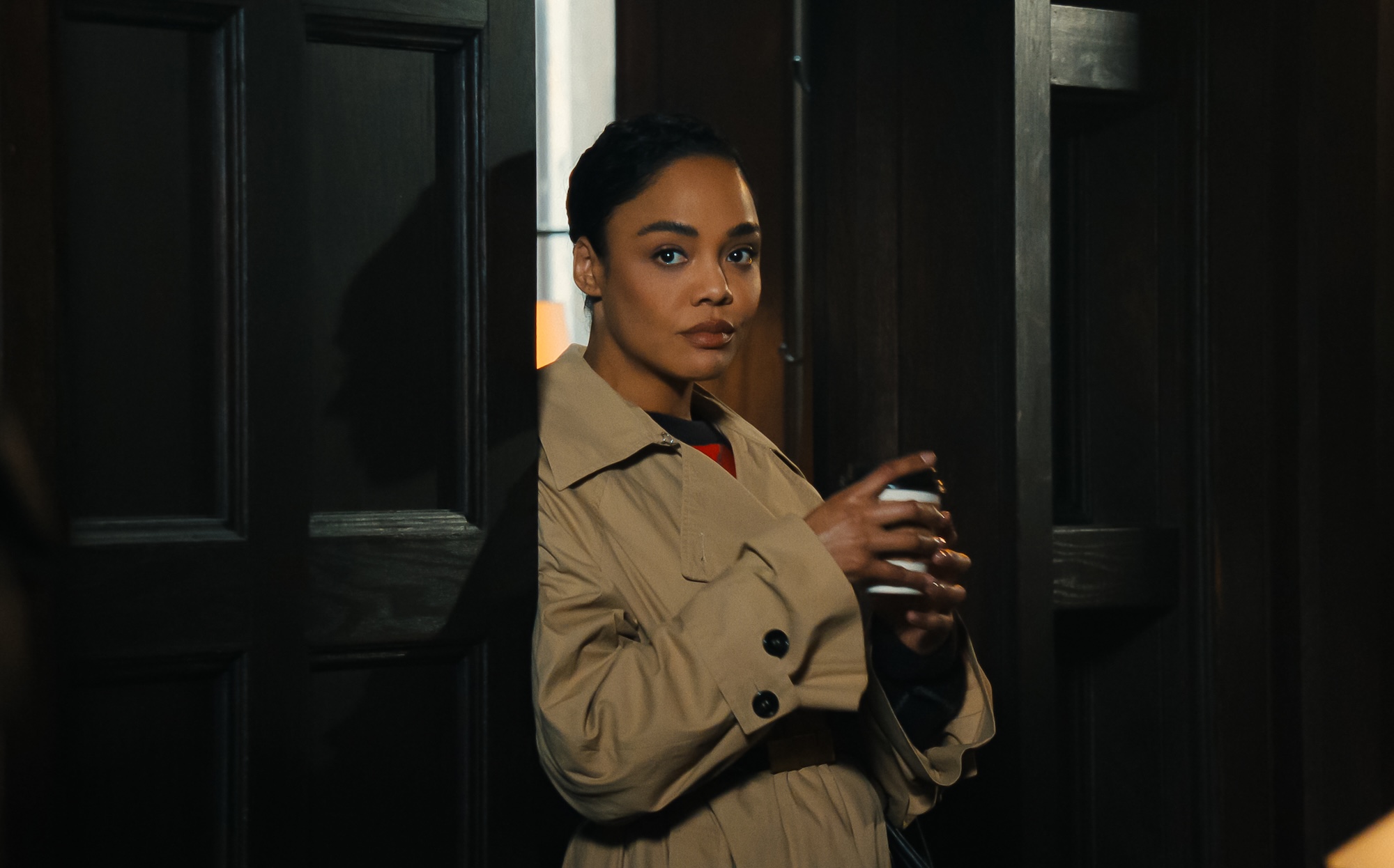
“There are two sides to every story. Which means that someone is always lying.” This is a voiceover we hear multiple times throughout this series, and to be fair, it’s mostly true. Someone is always lying in this show, or telling a half-truth, or retelling a story in a way that’s to their benefit.
But beyond being a means to a particular end — or an ending, in this case, which isn’t powerful or even entertaining enough to be worth the journey — it’s not at all clear what exactly His & Hers is actually trying to say.
His & Hers premieres January 8 on Netflix.
Critic Rating:
Audience Rating:
Check out our latest TV recommendations, updated weekly!
Want more from Tell-Tale TV? Subscribe to our newsletter here!
Lacy Baugher

Lacy is a pop culture enthusiast and television critic who loves period dramas, epic fantasy, space adventures, and the female characters everyone says you're supposed to hate. Ninth Doctor enthusiast, Aziraphale girlie, and cat lady, she's a member of the Television Critics Association and Rotten Tomatoes-approved. Find her at LacyMB on all platforms.