

Pachinko Season 2 Episode 5 Review: Chapter Thirteen
In a series that’s often been full of remarkable imagery, Pachinko Season 2 Episode 5, “Chapter Thirteen,” opens with some of its most striking and harrowing visuals yet.
During an almost fifteen-minute black and white opening sequence, the show provides viewers with a glimpse at Yoseb’s life in Nagasaki during the week before an atomic bomb struck the city, is extremely compelling television — and a great example of adaptation done well.
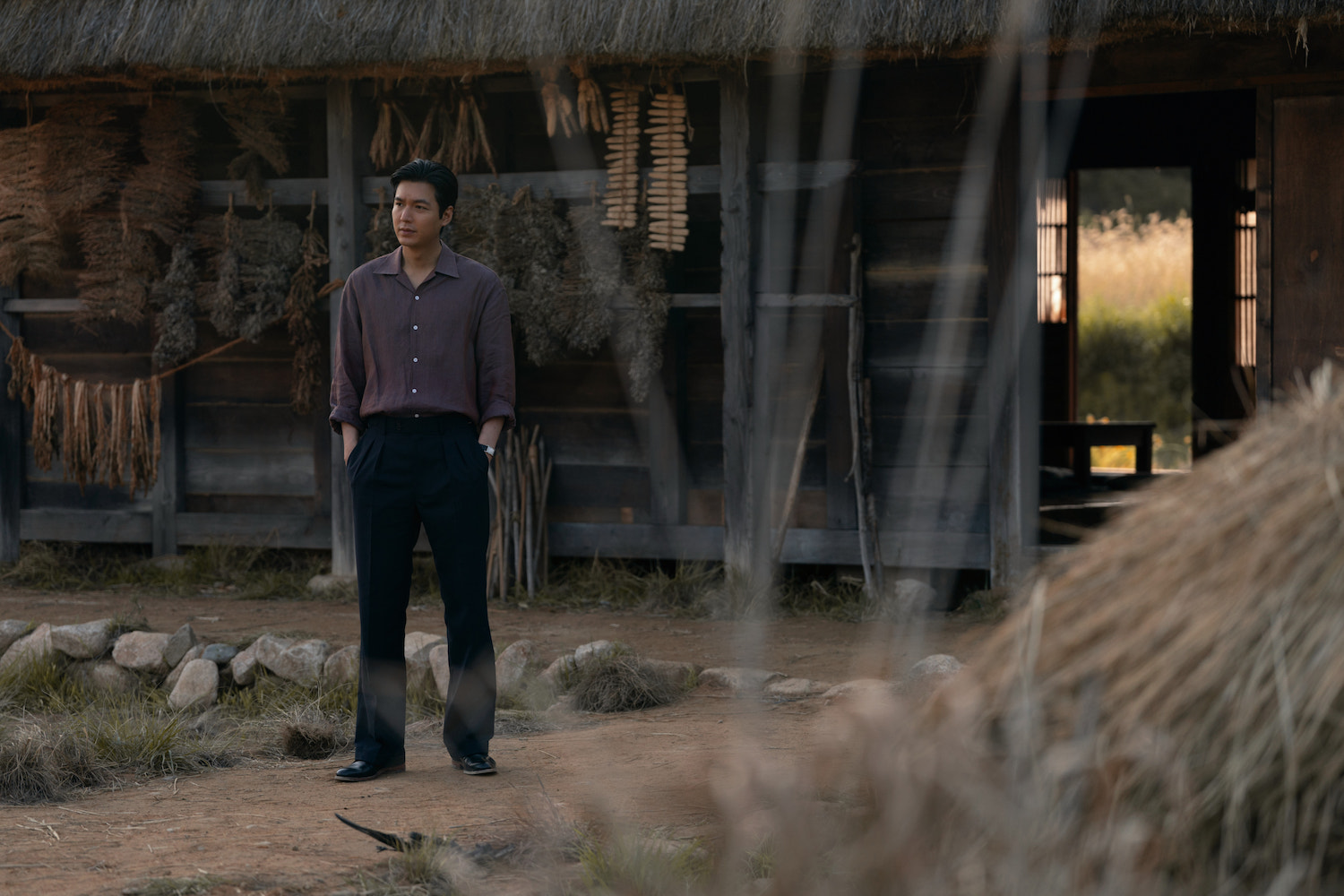
In the book, Yoseb arrives at the farm after the bombing of Nagasaki, and the story does not go into detail about his time there, or what the day of the bombing was like. Here, Pachinko takes the time to show us, in almost excruciatingly tense detail, the everyday shape of his life.
The monotony of his factory work and the constant racism he experiences at the hands of his predominantly Japanese coworkers is leavened by the arrival of care packages from Kyunghee. (They do make it!) He mostly keeps to himself, save when his boss asks him to translate for a new young Korean man, Taehoon, who’s been assigned to sweep floors.
In the background, a clock ticks. Each day is marked with a title card, beginning on August 1, 1945, as the show counts down to August 9, the date American planes dropped an atomic bomb on the city.
Pachinko is content to allow us to view this horror from a distance — Yoseb survives, thanks to being flung inside a truck, taken into custody after interfering in Tahoon’s attempted murder of one of the Japanese advisors. A bright, blinding flash illuminates the screen at precisely 11:02 am, the moment the bomb struck. The rest, as they say, is silence.
We rejoin Yoseb, slowly regaining consciousness in fits and starts in the countryside as he sees brief glimpses of Sunja and Kyunghee. The truck shielded him enough to save his life, but he’s horribly burned, and it’s clear he’s badly injured. How did he get back to his family? The same way that everything else seems to happen in this show — Koh Hansu.
Yoseb isn’t particularly gracious about it, however. He’s resentful of Hansu’s presence in his family’s life and has also figured out that he’s Noa’s father. (Who hasn’t at this point?!?)
The two argue before Hansu shuts everything down by revealing the extent of his burns and injuries to Yoseb — in the cruelest manner possible, by just shoving a mirror in his face.
Hansu also gets more than a little bit possessive over Sunja and Noa, calling them both his and insisting that Yoseb is just going to have to accept that he’s the one in control of the family now. Sigh. And I felt so much kinder toward him after last week’s episode.
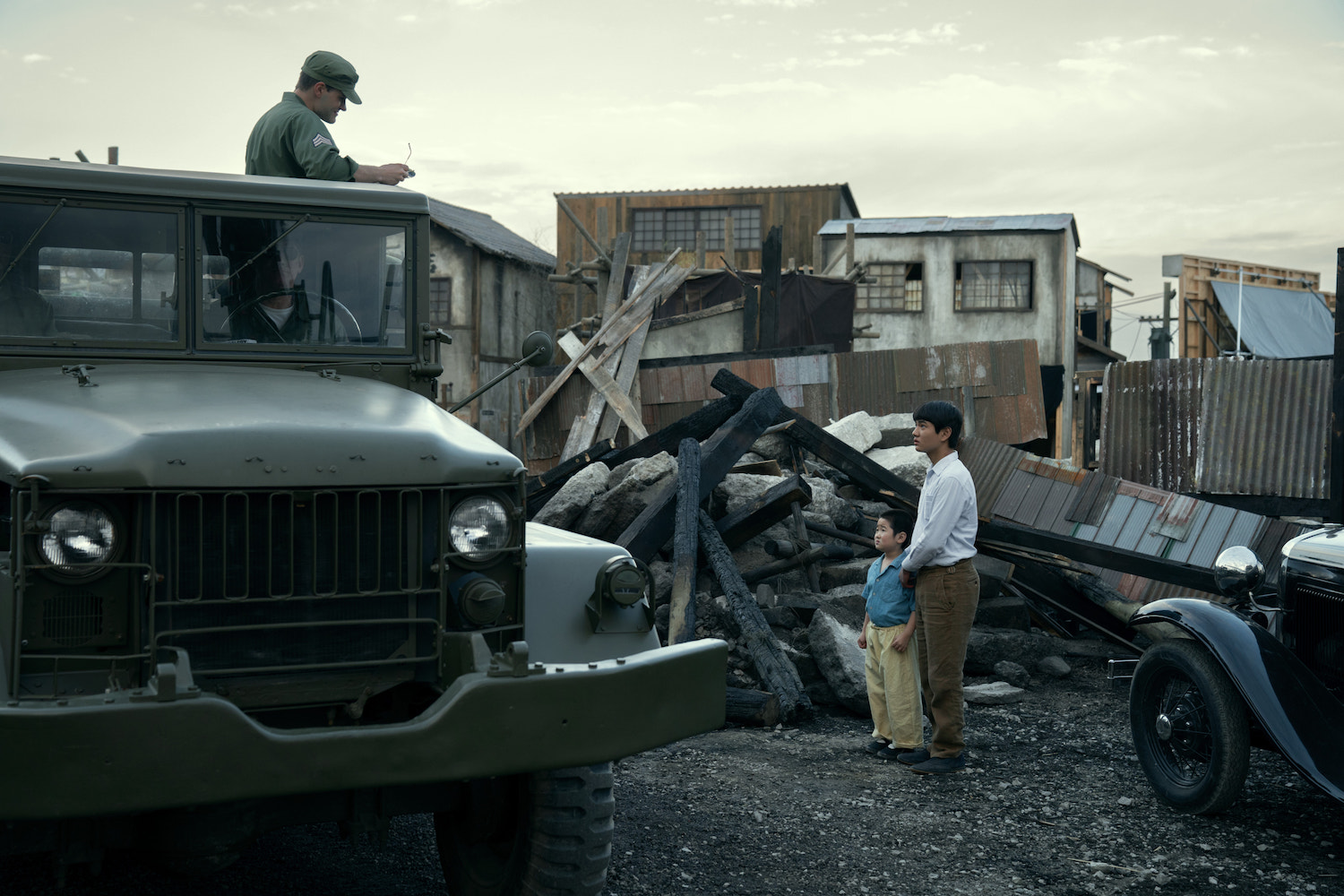
When Hansu decides Osaka is safe, the family returns to the home they left behind. It’s destroyed, of course, as is much of the larger city. (Though Kyunghee’s buried family heirlooms remain where she left them.)
The Baek family is dazed by the destruction — and the presence of the American military. A nice officer gives Mosazu his aviators, though, in a rare moment of kindness.
Following the family’s return to the city, however, Pachinko makes the interesting choice to jump forward five years in time, skipping over plot points both large and small.
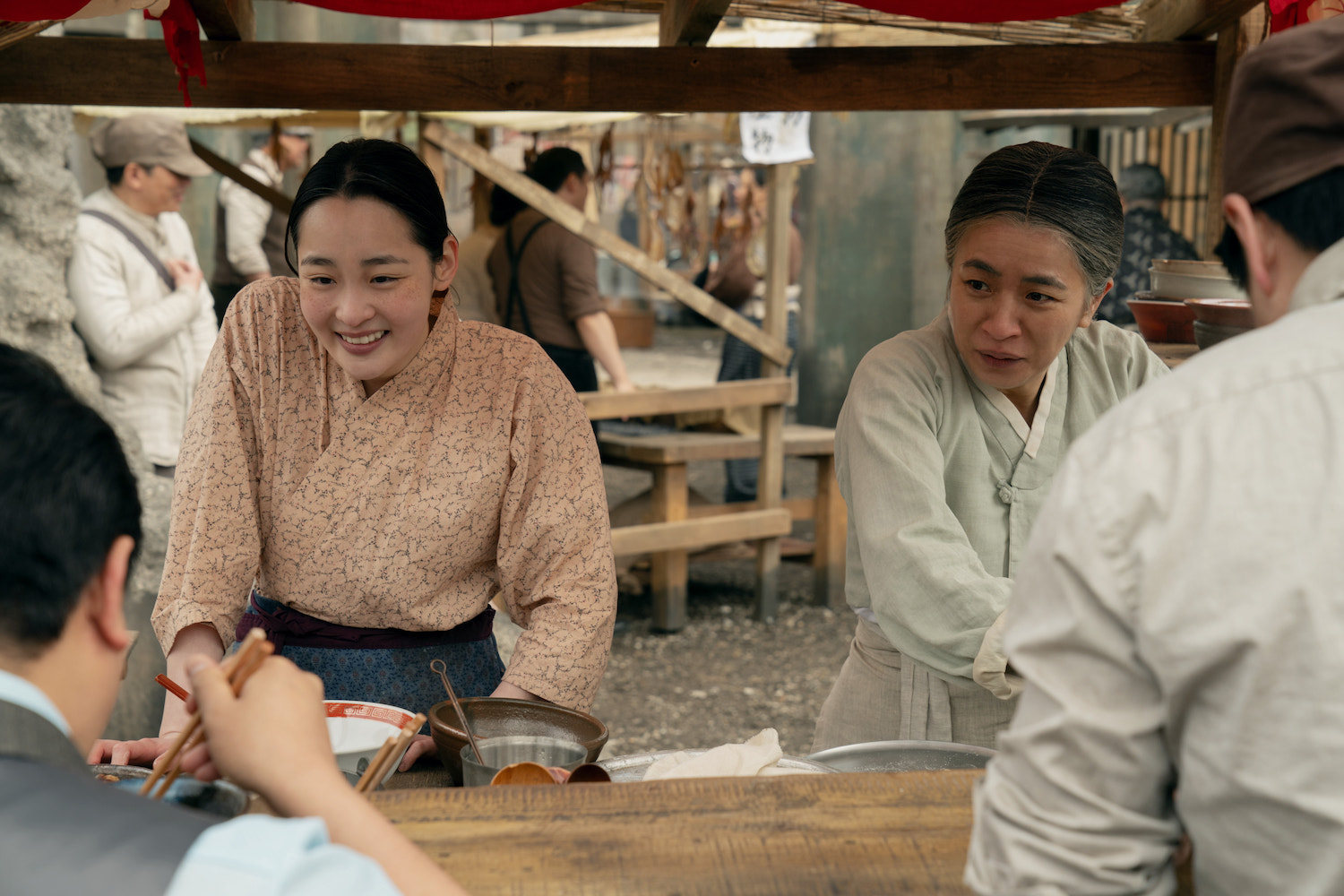
It’s now 1950, Noa and Mosazu have had insane growth spurts (both are now played by new actors) and Sunja’s noodle stand is thriving. She’s hoping to open a proper restaurant if she can save the funds.
We don’t see how Sunja and her family rebuild their lives or how they navigate Hansu’s continued presence in them. (The fact that we’ve never really addressed the fallout from Noa watching him beat the crap out of that rice farm foreman is also…a choice!) The closest we get is the hint that he offered to pay for Noa’s schooling, which the boy appears to have rejected, claiming he “didn’t want to do it that way”.
Yoseb still appears to be an invalid. And Kim is somehow still living with the Baeks, a fact that Pachinko never really bothers to explain, beyond the fact that Hansu ordered him to do so. (How the family navigated Yoseb’s reaction to that is also something we don’t see.)
The air in the house is heavy and tortured, full of looks and sighs between Kim and Kyunghee, and given how fast everyone clocked Hansu being Noa’s dad, it’s almost impossible to believe that no one’s figured out what’s going on between them. (It’s not subtle, y’all!)
Kim, for his part, is desperate to move out, but Hansu says he can’t, at least not until Noa is settled at university. Like everyone else in their Korean neighborhood, Hansu is extremely invested in Noa’s academic prospects, and it’s a tremendous amount of pressure to put on a kid who’s already staying up all night studying in addition to working a day job.
The casting department on this show continues to be among the best on television. Tae Ju Kang, who takes over as an aged-up Noa in 1950, bears a striking resemblance to a young Koh Hansu, and whether this is meant to help illustrate how everyone seems so quick to figure out his parentage or not, it’s honestly uncanny at times.
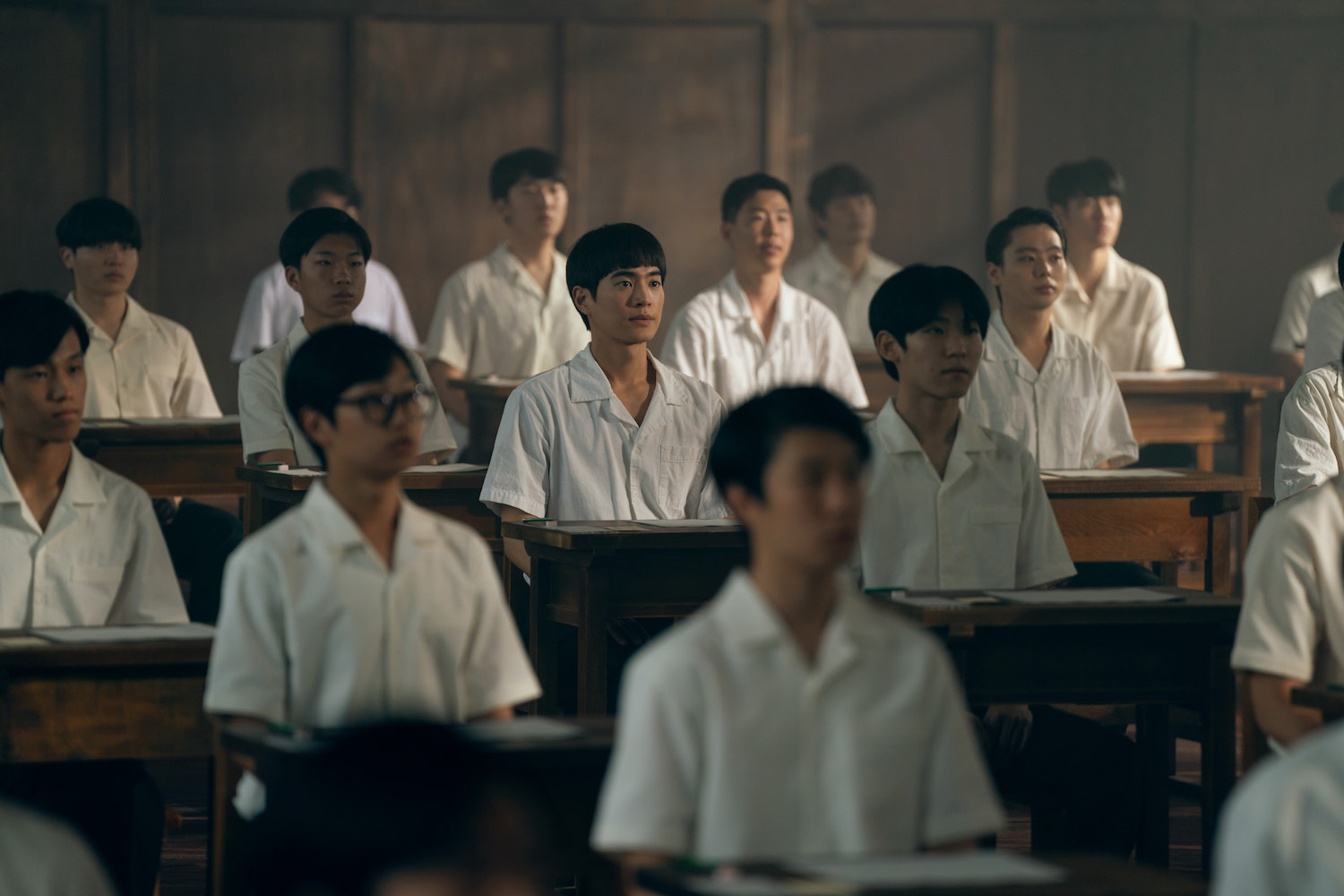
The hour ends with Noa sitting down to take his college entrance exam. Much like its opening sequence, a clock ticks down in the background — complete with the same style of on-screen title cards.
Is this simply meant to mark time until Korea is once again changed forever, divided irrevocably into two countries at odds with one another? Or is it a similar moment of transformation to Noa, who, in all likelihood, is crossing a different sort of divide from his family?
Stray Thoughts and Observations
- In such an episode where the segments set in the past deal with such heavy themes, the 1989 segments with Solomon feel more out of place than ever. Pachinko is doing its best to ground Solomon’s relationships with his grandmother, Naomi, and even Tom in the generational trauma that has followed his family, but it’s hard to take his complaints about getting back at Abe-san seriously when they’re spliced between scenes of Yoseb’s suffering, Noa’s determination to make something of himself on his own merits, or the outbreak of war in Korea.
- That said, Solomon and Naomi’s relationship continues to be incredibly charming, and the best part of the 1989 storyline. (Well, that and Sunja’s meet-cute with the grocery store guy.)
- Somehow, the fact that this episode doesn’t include the show’s upbeat title credits, complete with hopeful dancing and bright lights, makes the hour’s frequently bleak subject matter even more striking.
What did you think of this episode of Pachinko? Share your thoughts in the comments below!
Critic Rating:
User Rating:
New episodes of Pachinko stream Fridays on Apple TV+.
Follow us on X and on Instagram!
Want more from Tell-Tale TV? Subscribe to our newsletter here!
Lacy Baugher

Lacy is a pop culture enthusiast and television critic who loves period dramas, epic fantasy, space adventures, and the female characters everyone says you're supposed to hate. Ninth Doctor enthusiast, Aziraphale girlie, and cat lady, she's a member of the Television Critics Association and Rotten Tomatoes-approved. Find her at LacyMB on all platforms.