

Daisy Jones & The Six Season 1 Episodes 1-3 Review: We Could Make a Good Thing Better
Daisy Jones & The Six‘s first three entries taste like sweet honeycomb regret, each episode a thick haze of intoxicating, dense storytelling more indulgent than the last.
Daisy Jones & The Six Episodes 1-3, “Track 1: Come and Get It / Track 2: I’ll Take You There / Track 3: Someone Saved My Life Tonight,” are concerned with solidifying the origins of a fictional band as we dive into the Greek-god-like lore of this lyrical sandbox.
The introduction to our two ethereal entities — Billy Dunne and Daisy Jones — is contemporary pining at its finest.

Dazed but somehow amazed is how I would describe this first viewing experience.
In the spirit of rock and roll, let’s get straight to the bitterness of this first impression — Daisy Jones & The Six is not binge material.
It relies on so much character-dense, soap opera storytelling that to treat this series as such is a fool’s gambit.
The methodic pacing makes for a profound pilot, but it does not make for a compelling 3-hour movie — which is essentially what this first batch of episodes will be for insatiable fans. With its chaotic rollout, Prime Video deserves some blame for dampening the experience.
The adaptation does change a considerable amount of The Six’s origin, and not all of these modifications will have us singing our praise. Alas, that’s show business.
Honeycomb Homecoming

None of that matters, though, when Billy and Daisy collide in the recording booth for “Honeycomb.”
Sam Claflin and Riley Keough’s chemistry is the character we have been waiting for, and it’s clear that this series shifts gears when that energy enters the room.
Everything about their first run-in, from the actors’ muted reactions to the nail-biting tension, is expertly adapted to feel like a collision course. Billy and Daisy are solid leads in their own right, but together they are this show’s lightning in a bottle.
Daisy Jones and The Six does not tone down the pettiness of the Billy/Daisy tantrums either. I appreciate that because Billy Dunne is an actual child, and this accurately depicts that energy — hall closet argument with Teddy and all.
When they finally agree to sing and hit that first note perfectly in sync, Karen’s shocked reaction says it all. These two are magic.
The Six
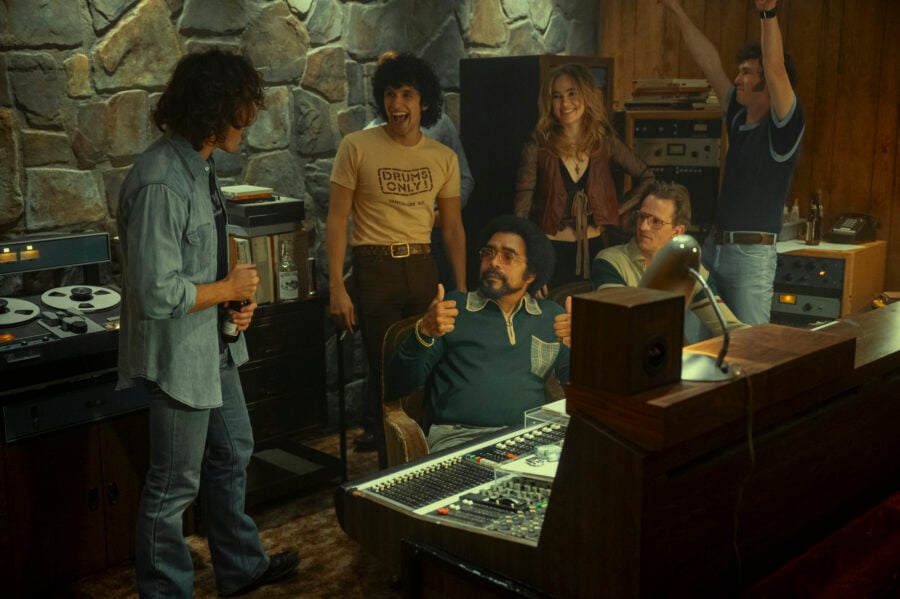
At the heart of this successful adaptation is the band.
The Six could easily fade into a faceless ensemble of this dense contemporary drama, but each character finds a foothold early on. The result is a dynamic rich with individuality and personality, perfect for capturing the seventies groupie aesthetic.
Eddie leans into that bitter “nice guy” act, Karen is the keyboardist goddess of our dreams, and Graham is the rock to his brother’s crashing waves.
Warren stands out for his comedic timing and delusional theories. The cutaways to the present-day documentary help him flourish, and I need more of older Warren clarifying what drugs he was on when asked anything.
And Camila is the glue holding it all together with the silent strength of a woman ready to grab this premise by the neck and steer it to victory.
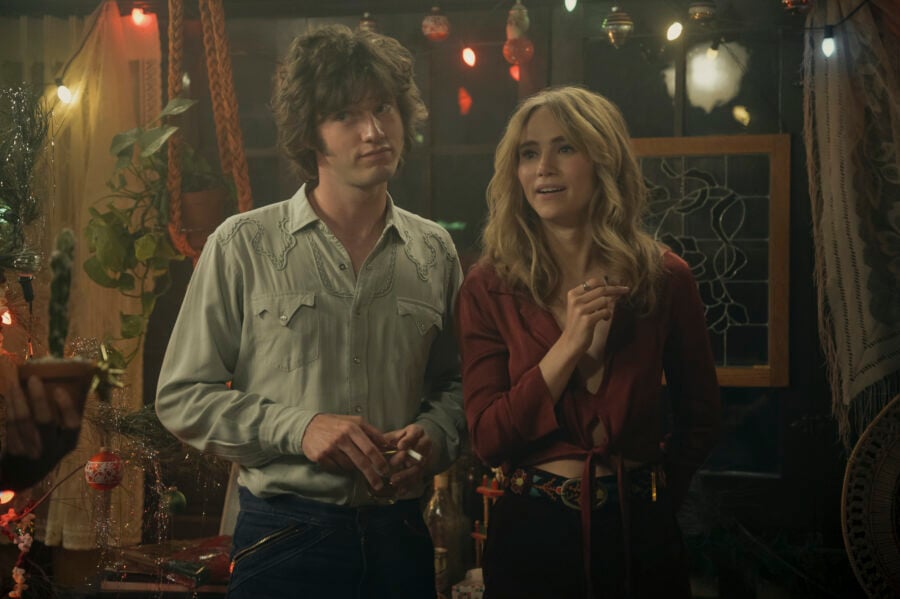
The most significant changes with this adaptation concern The Six and their entourage.
Do these changes work? Not entirely. But despite all the tweaks to this rock group, the essence of their sound stays the same — and the essence of this series does too.
The drawn-out escapades where the band audition singers in Billy’s absence and Eddie nominates himself to take over is uncomfortable. And losing a bandmate to Vietnam, not dental school, would have been more profound to the backstory.
Yet, Camila’s participation in the documentary will keep readers guessing without shaking up the look of the adaptation. Additionally, the absence of bandmates will cut through the noise and give our core four the devotion they deserve.
Daisy Jones & The Six may take a different route, but the destination is just as worthwhile.
No Muses Here

I will tell you what did work in favor of these first three episodes — Tom Wright’s infectious Teddy Price.
He amplifies the hidden layers of Billy’s overzealous persona by cutting through the facade as a stern father figure. Yet, their tender, unspoken relationship effortlessly carries these juxtaposition-heavy episodes with heart and humor.
But Teddy also elevates Keough’s performance, acting as a blunt mentor to Daisy’s effortless talent as he brings out that pure sunshine energy hidden under her defensive facade.
Even so, Daisy has no struggles with striking out on her own to hone this adaptation’s excellence.
The cafe scene is a great example of iconic source material mingling with the right actor as Keough delivers her “upers/downers” and “I am not a muse” lines back to back with addictive allure.

Daisy Jones and The Six‘s opening number gives us a swan-song soap opera through rose-tinted glasses.
Its false sense of calm quickly lulls us into this compelling rockstar study and holds us captive with stellar performances.
This drama isn’t gunning for best series status; something about that content is admirable. It tells a neat, character-centered story and stays true to the essence of the source material with little fanfare for doing what needs to be done.
This first act loses itself in the details a little, but we couldn’t be more on track by that final recording session.
—
What did you think of the premiere of Daisy Jones & The Six? Share your thoughts in the comments below!
Critic Rating:
User Rating:
New episodes of Daisy Jones & The Six stream Fridays on Prime Video.
 Follow us on Twitter and on
  Instagram!
Want more from Tell-Tale TV? Subscribe to our newsletter here!
What to Stream in March: Daisy Jones & The Six, Shadow and Bone, Ted Lasso
Alicia Gilstorf

Alicia is a Rotten Tomatoes Certified Critic and a Critics Choice Association member. She credits her passion for TV to workplace sitcoms, paranormal dramedies, and coming-of-age stories. In her free time, Alicia loves to curl up with a good book and lose herself in a cozy game. Keep a lookout for her coverage of Ghosts. You can also find her work on Eulalie Magazine and Cool Girl Critiques. Follow Alicia on social media: @aliciagilstorf