
Chicago P.D. Season 10 Episode 16 Review: Deadlocked
Every time there seems to be a glimpse of hope for Hank Voight’s personal life, a curveball is thrown, and hope disappears. This happens once again on Chicago P.D. Season 10 Episode 16, “Deadlocked.”
If viewers thought something may happen between Voight and Nina Chapman after she asked him out for a drink, it became a bit more obvious on this episode when he says he’d buy the drink. However, said drink will have to be postponed yet again.
Chapman cannot accept the way in which Voight works and cannot see beyond that to form a connection outside of work. Will there ever be a woman who can accept Hank Voight exactly as he is?

Besides his failed love life, Voight does some of his best work on “Deadlocked,” and it makes perfect sense that Chicago P.D.‘s own Jesse Lee Soffer comes back behind the scenes.
Soffer’s character (Halstead) was the only other character who seemed to fully see and understand Voight exactly as he is. Even though the two rarely saw eye-to-eye, there was a silent understanding that allowed them to co-exist.
This same understanding is transmitted through Soffer’s directorial debut on the show. A Voight-centric episode in which every scene gives us a glimpse of who he is and how he has changed.
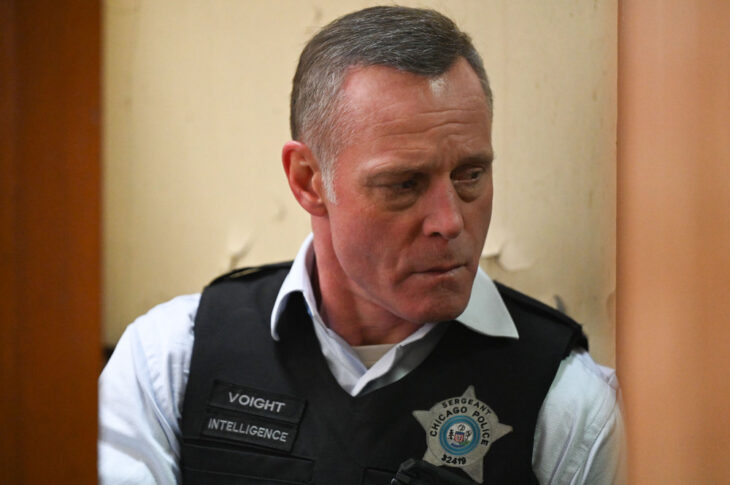
The choice of close-ups on Voight’s face at every relevant moment throughout the episode is excellent. It allows to show that despite what many may think, Voight is a man who acts on emotions and feels deeply for every case.
This is particularly true when he finds Julia Egan and we can tell he is distraught at seeing her injuries, but happy to have found her. That duality is what makes Voight such a complex character.

As soon as Chicago P.D. Season 10 Episode 16, “Deadlocked,” starts, we are able to tell who is the juror that has been tampered with. He is the only one who doesn’t dare look at Hank Voight while he is on the stand.
The same way that we as the audience can see that, is the way in which Voight quickly comes to realize something is wrong. The major difference being he is able to see the juror’s hands (a clear sign that something is wrong) and we can’t until later on.
Because Morales is also on trial for murdering a member of the jury, it is to be expected that he will attempt the same this time around. It is because of his record that Voight decides to conduct the investigation under the table and keep Egan’s wife as safe as possible.
Even though many may think this was the wrong call, it proves to be effective. In the end, Julia is safe and Morales goes to prison for life.
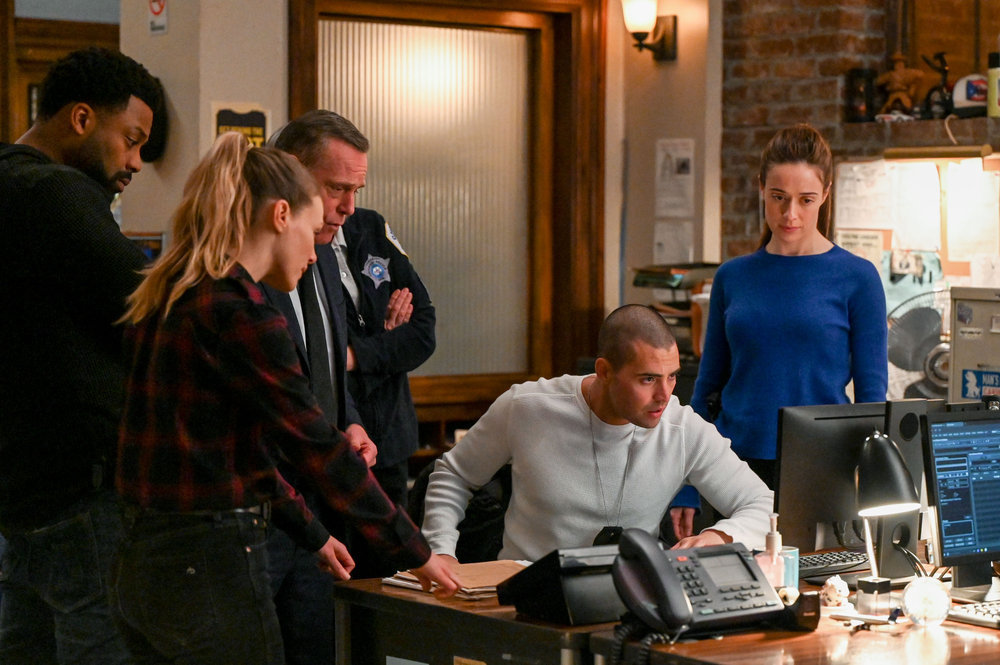
Because most of the episode revolves around Voight, it is clear that “Deadlocked” is showing every aspect and layer to this character.
Chapman asked him before and repeats the question now of who he is as a person and how okay he is with the kind of man he is. Voight says he doesn’t know, but truth be told, Chapman hasn’t seen the character development we have.
She comes from a long line of ASAs and superiors who believe Voight is a dirty cop who bends the rules for his own benefit and is extremely violent. In the past, it was all true, but it has definitely changed.
“Deadlocked” is the perfect example of this. We don’t see Voight roughing up any perps except the ones who punched him and fired their guns at him.
When his famous cage comes into play, he isn’t shown beating up a suspect like he used to. On the contrary, he is having a civilized conversation. He has found other ways to leverage the power and information they have without involving violence.
He may not be the perfect man Chapman expects him to be, but he isn’t the same violent, the end justifies the means kind of cop of previous seasons.

Soffer’s understanding of the show and the characters gives room for a beautifully directed episode in which every scene makes sense and adds to the plot.
The moment Ochoa says he will speak if his brother is released, the shot cuts to Voight’s truck speeding through the streets of Chicago. This transition and how fast the scene moves adds to the sense of urgency we have felt throughout the episode.
It is necessary to get to Julia as quick as possible because she is injured. Voight speeding, the rest of the team saying they are a few minutes away, and him deciding to go in alone are ways to make us as the audience feel how important it is to act fast in this situation.
The sound effects add to this. The moment Voight steps out of his car to go into the warehouse, the music adds to the tension and the worry that we feel for this kidnapped woman.
However, on top of that there is a ticking sound as if it were a clock or a bomb. Once again, the sense of urgency is palpable through the screen.
Chicago P.D. started because of Hank Voight, but it is nice to see that throughout the seasons he has been able to evolve. He will forever do things his own way, but he has learned from past mistakes.
Hopefully, this character development will at some point allow him to find a life partner. If not Chapman (who seems to be the perfect candidate at the moment), maybe someone who will understand who he is and the pain he carries.
Stray Observations
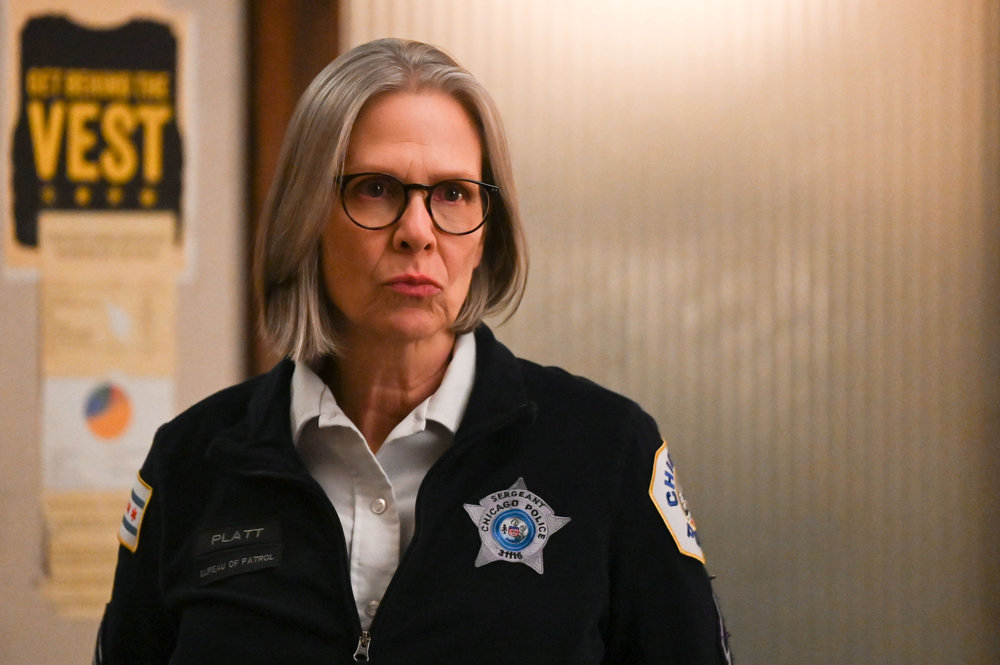
- It is nice to see Trudy involved in the case even when they are handling things under the table. She is a constant in the team who always seems to keep them in line but also guarantees their success.
- Torres definitely doesn’t need to keep proving he belongs in the Intelligence Unit, but it is nice to see him step up and take on a challenge. His undercover work is some of the best we have seen on the show.
—
What did you think of this episode of Chicago P.D.? Share your thoughts in the comments below!
Critic Rating:
User Rating:
Chicago P.D. airs Wednesdays at 10/9c on NBC.
 Follow us on Twitter and on
  Instagram!
Want more from Tell-Tale TV? Subscribe to our newsletter here!
Chicago P.D. Stars Marina Squerciati and Jason Beghe on Jesse Lee Soffer’s Upcoming Exit [Video]
Lara Rosales

By day, Lara Rosales (she/her) is a solo mom by choice and a bilingual writer with a BA in Latin-American Literature known as a Media Relations Expert. By night, she is a TV enjoyer who used to host a podcast (Cats, Milfs & Lesbian Things). You can find her work published on Eulalie Magazine, Geek Girl Authority, W Spotlight, Collider, USA Wire, Mentors Collective, Instelite, Noodle, Dear Movies, Nicki Swift, and Flip Screened.