

Riverdale Review: Chapter One Hundred and Six: Angels in America (Season 6 Episode 11)
The fight of “Good vs. Evil” has officially begun on Riverdale Season 6 Episode 11, “Chapter One Hundred and Six: Angels in America” — and Tabitha Tate is this story’s ultimate hero.
The “evil” part of the fight is Percival Pickins, who is revealed in “Chapter One Hundred and Six” to be, quite literally, the incarnation of all that is terrible in this world.
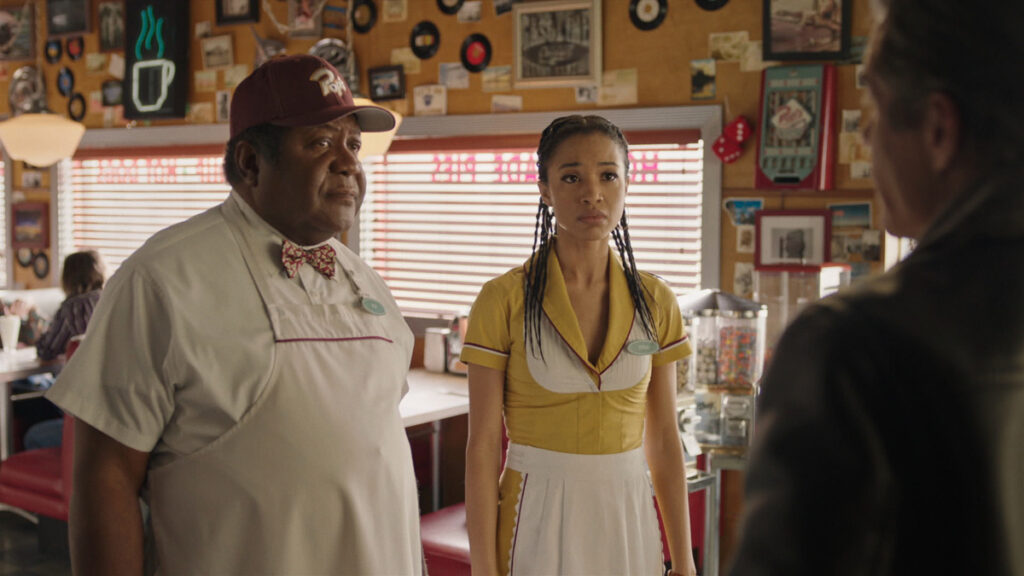
Being introduced to Pickins originally felt a lot like déjà vu — he was, in many ways, a second Hiram Lodge. A younger one with more swagger, maybe, but the two shared the same goals, motives, and the same selfish, maniacal behavior.
But Percival’s true motivations are made clear in “Angels in America,” and they are much more sinister than anything Hiram Lodge ever brought to Riverdale’s table.
He is not simply a mind-reading, land-greedy businessman. He is an abhorrent racist; a person who has traveled throughout time to continuously try and destroy the town of Riverdale, while pushing a horrific white supremacist agenda.
He is more bone-chillingly sinister than any Big Bad Riverdale has introduced before, because the stakes have become very real, very quickly. He may be supernatural, but he is also the manifestation of hatred that continues to hang over our society today.
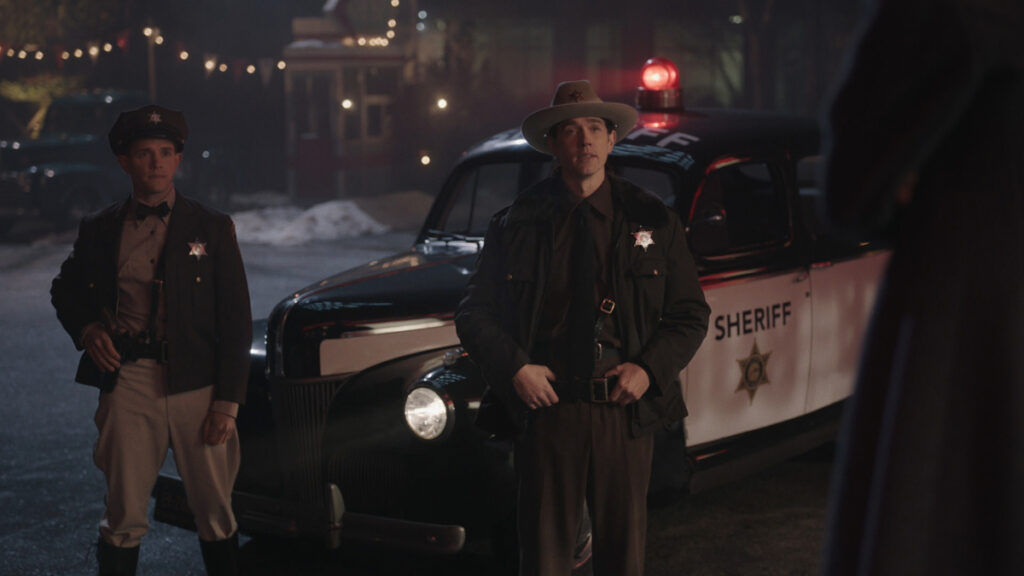
Watching Tabitha Tate travel through to face him feels strangely right for the character, regardless of the unusual circumstances. Time travel should feel outrageous, but connecting it to Tabitha’s life-threatening injury allows for a relatively understandable explanation — trauma unlocks plenty, so why not the ability to jump through time?
We are still in Riverdale, after all.
It works because the strange is weaved in with a surprisingly grounded context. There is history here — real history, not Riverdale history — that proves this show actually has something to say beyond the noise.
That’s not something Riverdale has ever committed to before, but it certainly picked the perfect time to start.
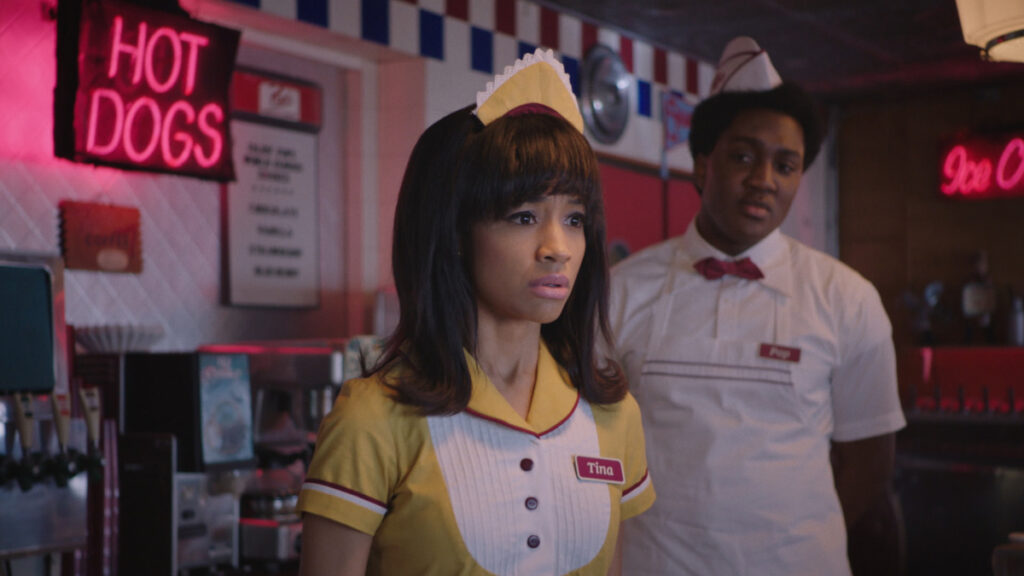
Tabitha’s experience through the decades is truly gut-wrenching to witness. It places her right in the midst of what marginalized communities — but more specifically, Black people — have had to face throughout time.
That includes the Civil Rights movement. There is no moment more heartbreaking in “Angels in America” than Tabitha realizing she’s been placed right before the assassination of Martin Luther King Jr., but is powerless to stop it.
The way everything unfolds — in every decade — is thoughtful in execution. There is an appropriate amount of gravitas, with Westbrook’s performance elevating the episode to be one of the best Riverdale has ever done.
O’Shea contributes to that success. He’s unbelievably good at being a truly detestable character, able to shift into different versions of Pickins with ease, each one equally as loathsome as the one before. Even his more outlandish qualities — like demonic mind control — don’t feel like a punchline, they just feel terrifying.
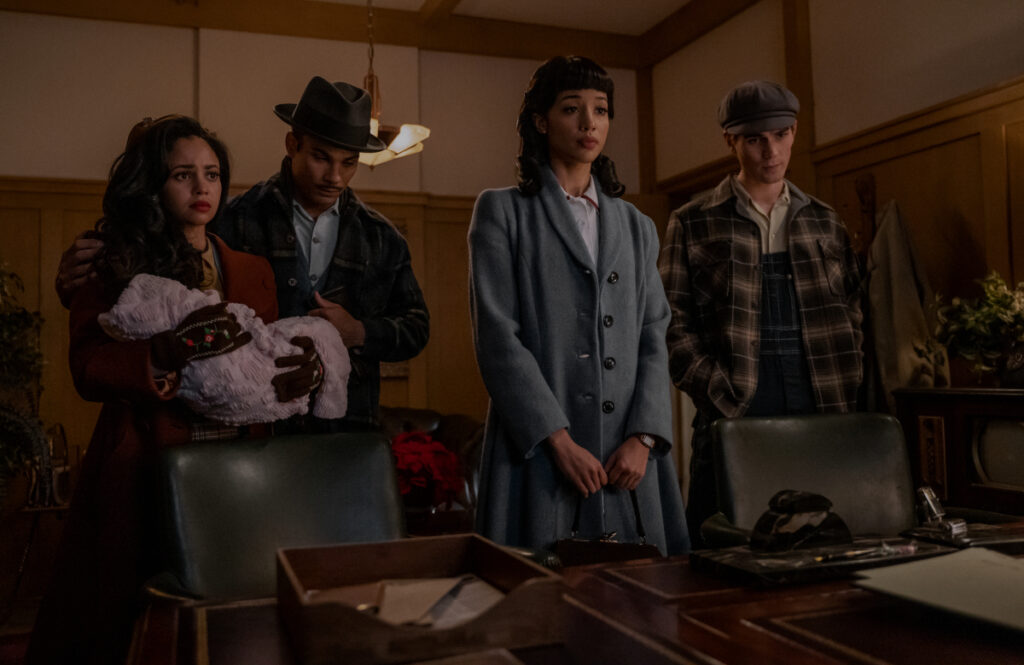
It’s the perfect casting choice for the man who threatens to take down Riverdale, and Westbrook’s Tabitha is exactly who should be facing him in the final battle. Centering her — and her goodness — is an undeniably smart decision; Westbrook brings earnest integrity to the character in a way no one else ever could.
Riverdale Season 6 is firing on all cylinders, with a deluge of solid storytelling unveiling itself with every new installment. Fresh couples, bigger threats, stronger heroes — new life has been breathed into what briefly felt like a dying series.
The most compelling aspect of “Angels in America” — and Riverdale Season 6 as a whole — may be creating a storyline that streamlines every individual character arc into one.
Watching characters work together — not just for a few seconds, but over a multitude of episodes — is enthralling, and gives actors who haven’t had many scenes together over the years, a chance to play with new dynamics.
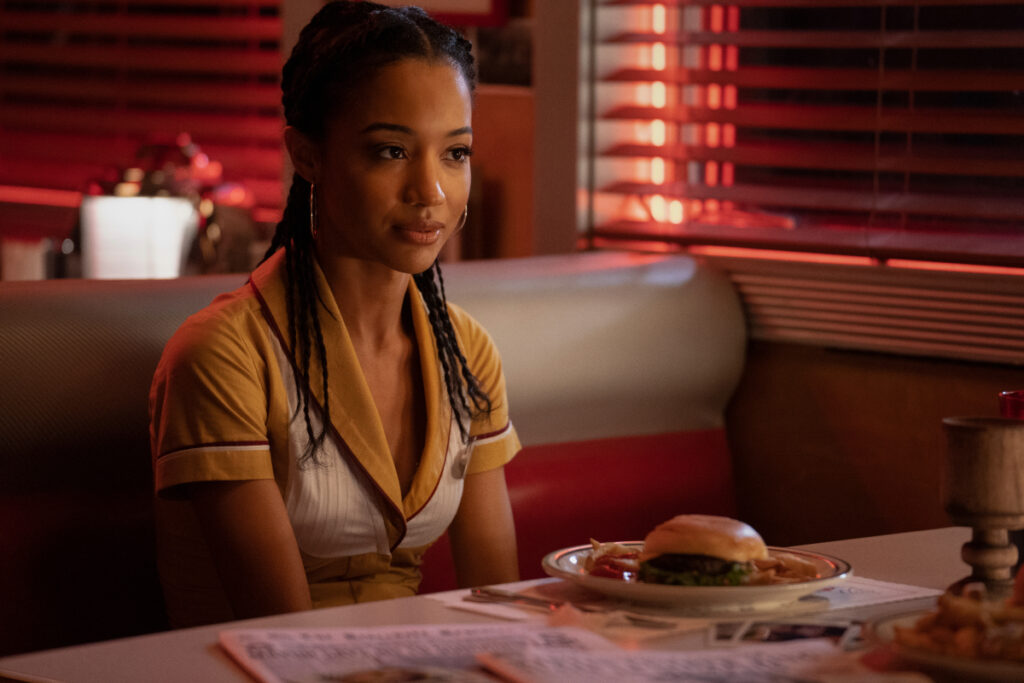
If there’s one flaw in “Chapter One Hundred and Six,” it’s Tabitha just now finding out about everyone’s powers — especially Jugheads. It doesn’t quite make sense considering the couple’s solid foundation. Luckily, Jughead’s commitment to supporting her makes up for the small plot hole.
Looking at the relationship between Jughead and Tabitha, the two feel like they were always destined to find each other, somehow. She is the heart and soul of Pop’s, a place that has always felt like home for Jughead, a place that has always felt safe.
“Safe” is relative, of course, considering how often people get shot there. But Tabitha and Pop — despite whatever threat may loom — keep Pop’s feeling warm and familiar. Tabitha’s determination to make the diner a beacon of hope, proves she is the right character to lead the charge against all that threatens to destroy Riverdale for good.
Now let’s get Veronica involved, shall we?
What did you think of this episode of Riverdale? Share your thoughts in the comments below!
Critic Rating:
User Rating:
Riverdale airs Sundays at 8/7c on The CW.
 Follow us on Twitter and on
  Instagram!
Want more from Tell-Tale TV? Subscribe to our newsletter here!
Kat Pettibone

Kat Pettibone is an aspiring TV writer, artist, and poet. As a Pacey Witter Fan Club lifer who never missed a TGIF, she has dreams of becoming your generations small screen Nora Ephron. She's also an avid lover of coffee, dogs and all things spooky.