

Dickinson Review: The Future never spoke (Season 3 Episode 7)
First off, let me just say that on its own Dickinson Season 3 Episode 7, “The Future never spoke,” is one of the most engaging, entertaining episodes this series has dropped in the course of its lifetime. It showcases exactly what made Dickinson one of the most imaginative series on television/streaming.
And yet, this week where the plot has barely inched forward. To be fair, I’ll give this week’s episode a little more credit than last week’s filler storyline, but I’m still finding myself frustrated at how the final season has progressed.
Part of my frustration stems from the Apple TV+ release strategy of releasing only one episode per week after a three-episode premiere. The larger part, though, is due to the fact that Dickinson only has three episodes left and these characters have been stuck in the same rut for over half the season, rehashing the same issues week over week.
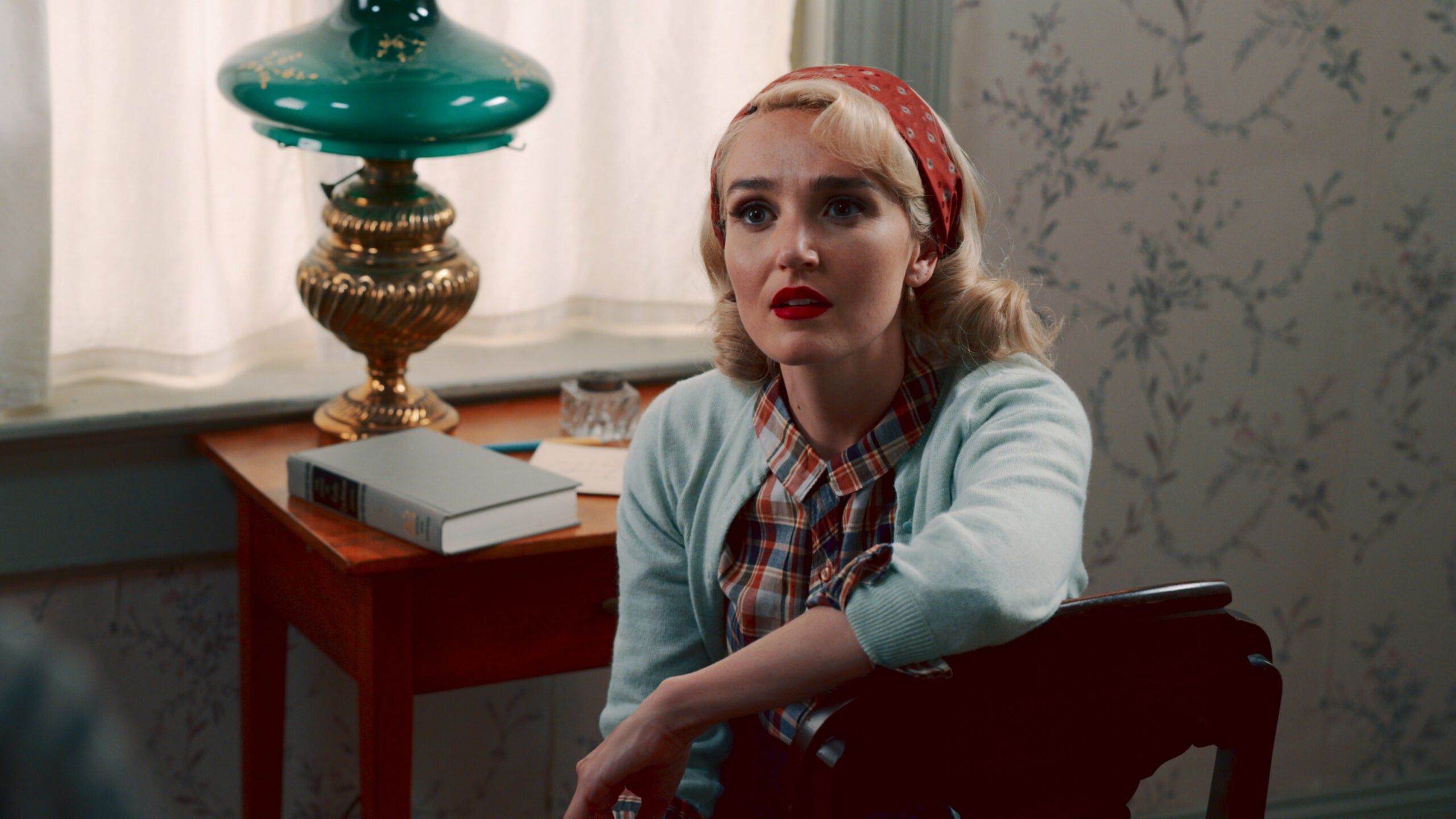
On its own “The Future never spoke,” is a half-hour of Dickinson at its best — a whimsical look into one of history’s greatest literary figures. It’s another episode where Emily imagines an encounter with another major literary figure (played by a genius comedian) and we get to see how two geniuses would interact with each other.
In this case, we meet Sylvia Plath, played by the ultra-talented Chloe Fineman. Earlier this season, Emily dreamt up an imaginary meeting with one of her contemporaries, Walt Whitman, while reading a volume of his works. In Plath’s case, Emily somehow imagines the future, jumping from 1862 to 1955.
Side note: Dickinson has done well to keep its timeline fairly vague throughout the entire series, instead just using general time periods as points of reference. Though it was easier to surmise the year this season was set in due to Sue giving birth, the year 1862 puts Emily Dickinson at 32 years old. We’ll just have to believe she looked great for her age!
Regardless, Emily transports her and her sister off into the future via Gazebo time machine landing smack dab in the middle of the 20th century. As fun as these fantastical episodes are, Emily’s premonitions, or whatever you’d like to call them, have always seemed a bit out of place in Dickinson‘s three seasons.
Are they representative of Emily’s vivid imagination? Sure. I just wish we had more context surrounding them, or more acknowledgment of them from the poet herself. Towards the end of this episode, when Emily gets the sad news that Fraser Sterns, aka the “Nobody” from her visions, has died at war, she does say “I guess I did see the future.” I’m hoping she does a little more soul-searching on that in the next episode.
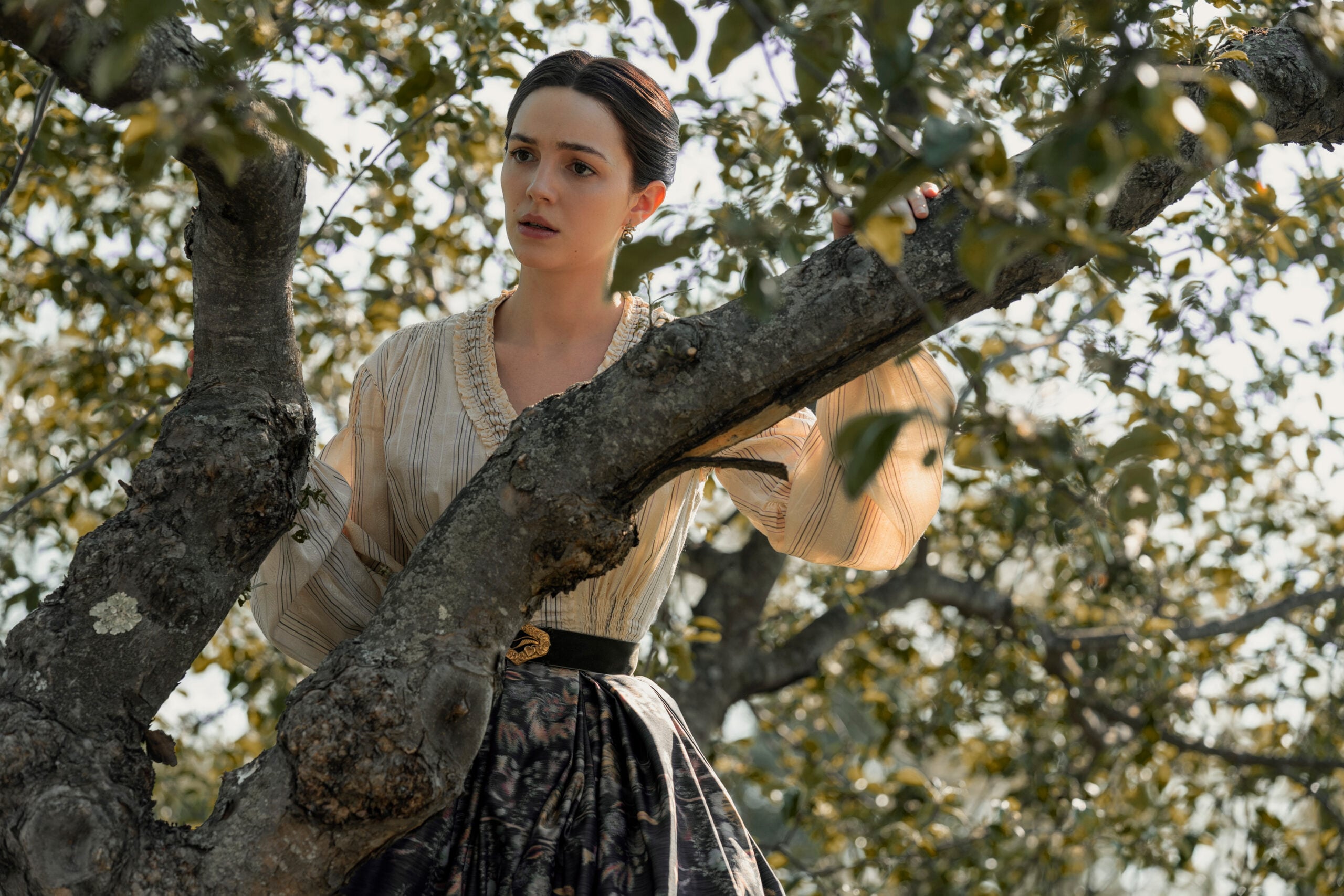
Again, I think Dickinson is at a disservice this season having to deal with only dropping one episode at a time with only a 10 episode run. It’s made Emily’s overall season arc seem disjointed, taking one step forward and two steps back. Just two episodes ago she was declaring her love for the other woman, and now we’ve done a 180-degree flip, yet again.
And as much as I understand that during the Civil War, Emily Dickinson had a pen-pal type relationship with Colonel Higginson, it just seems strange to me that Dickinson Season 3 has once again put Emily’s professional self-worth in the hands of another man when we already saw that in Dickinson Season 2 with Sam Bowles.
So while it makes sense to me why Emily would seek out strangers to “peer review” her work, instead of relying on her family (who, as I’m sure we all know, can sugarcoat things) I wish we had moved on to something different this season.
It’s definitely manufactured some drama between Emily and Sue though. Both women are right and wrong in their arguments on this topic, and if they would actually just communicate with each other, it would solve so many problems.
Emily needs to express to Sue why she can “write only for her” without literally only writing for her. Sue, the notoriously wishy-washy one in the relationship over Dickinson seasons 1 and 2, has sorted her feelings out since the season 2 finale and has done better to express said feelings. Since then Emily’s has somehow become the wishy-washy one.
It was especially poetic (pun intended) that the pair hashed it out in front of that apple tree, the same tree that Emily first declared her feelings for her best friend back on Dickinson Season 1.
All that’s to say, I thought we had resolved most of these issues at the end of last season, then again earlier this season once Emily had her Walt Whitman fueled fever dream, and then honestly again when she told Sue she was “her husband” when the new mom was exhausted in her room.
It’s no wonder that history has remembered Emily Dickinson as a sad loner when the poet herself seemed to have a lovely life. She may have been good with writing words on paper, but she needs to step up her game when it comes to in-person conversations.
I’m thinking her little “trip” to the future will help her with that. Imagining her legacy and hearing from Plath that she’s remembered as America’s “first sad girl” (*cue Taylor Swift’s RED (Taylor’s Version)) while asserting her reality isn’t actually depressing at all might finally knock some sense into the woman.
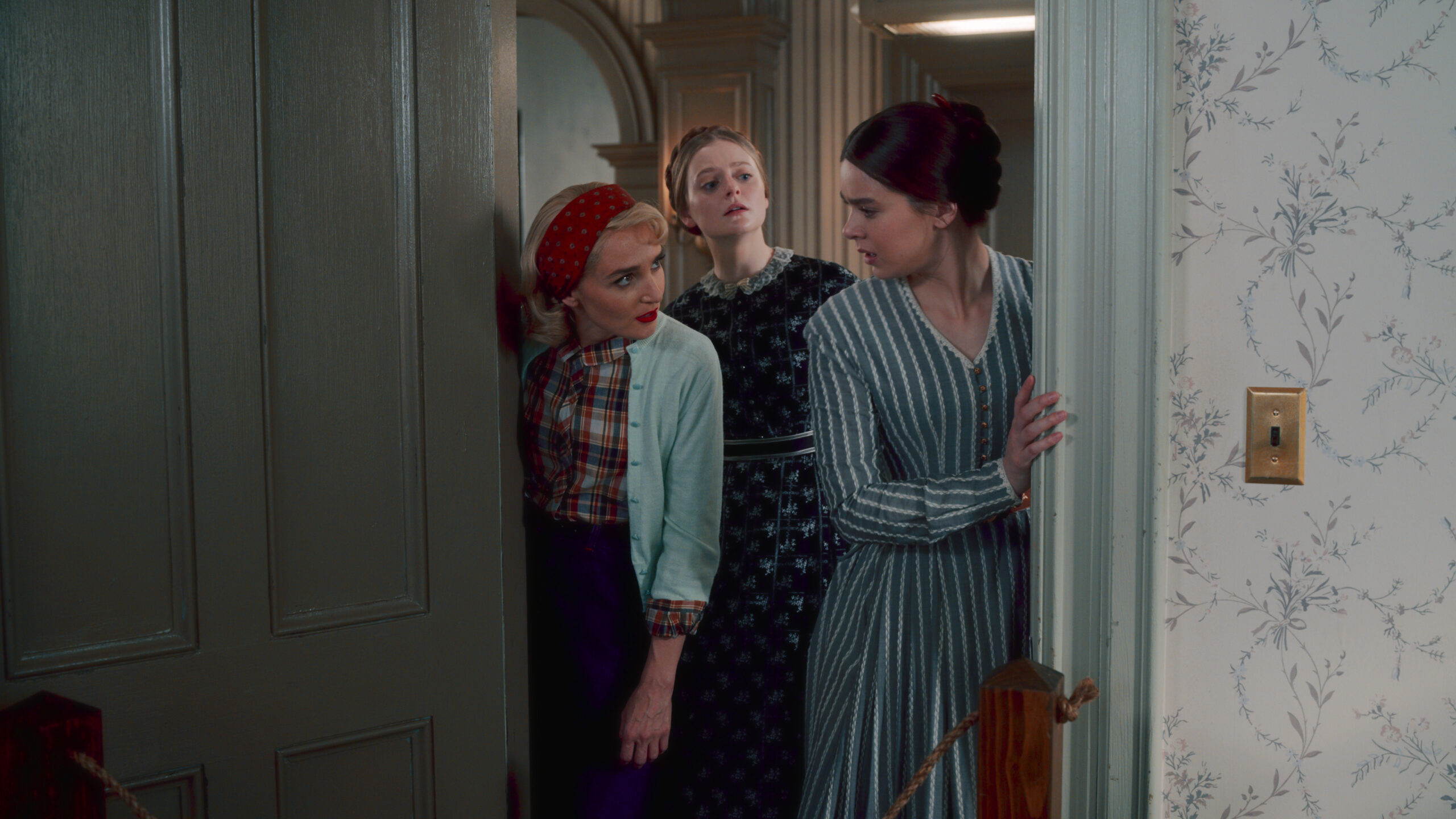
The entire “Back to the Future” segment was really just a guise for Emily and Lavinia to have a non-traditional heart-to-heart, and I’m glad we got a nice Vinnie/Emily focus this episode.

Anna and Hailee have such an authentic sisterly dynamic, and it was nice to see Vinnie’s joy at the legacy Emily leaves in the future, especially knowing that it was the irl Lavinia who helped get Emily’s works published posthumously.
I’m rooting for Vinnie to trap her sister and sister-in-law in a room and make them reconcile now that she’s privy to Emily’s feelings, but with only three episodes left before the series finale, I’ll settle with Emily and Sue just finally laying it all on the table and moving forward in whatever fashion
Though much of Dickinson Season 3 Episode 7 focuses on Emily, Vinnie, and Sylvia, we did get to visit with Henry and Betty again. Their joint storylines have really grounded this season of Dickinson in reality especially when Emily’s story can get a little whimsical.
After coming to terms with Higginson’s lack of action with the North Carolina volunteers, Henry finally takes matters into his own hands and confronts the Colonel. I’ve ragged on Higginson since we was introduced earlier this season, clocking him as a performative ally to the abolitionists and then after doing some research on the real man, slightly warming up.
It’s on this episode that we finally see his true colors – he is performative in his own way, promising these free men more than he intends to deliver because at heart he’s caught up in the system. But after this episode it’s clear that he does want change, he’s just not going to radically fight for it.
I’m glad Henry was brave enough to advocate for his soldiers and glad that they were able to make some movement on their struggle to finally access weapons. I’m still mad that he hasn’t contacted his family and that Betty had to hear from Freddie the mailman, that he was in Beaufort.
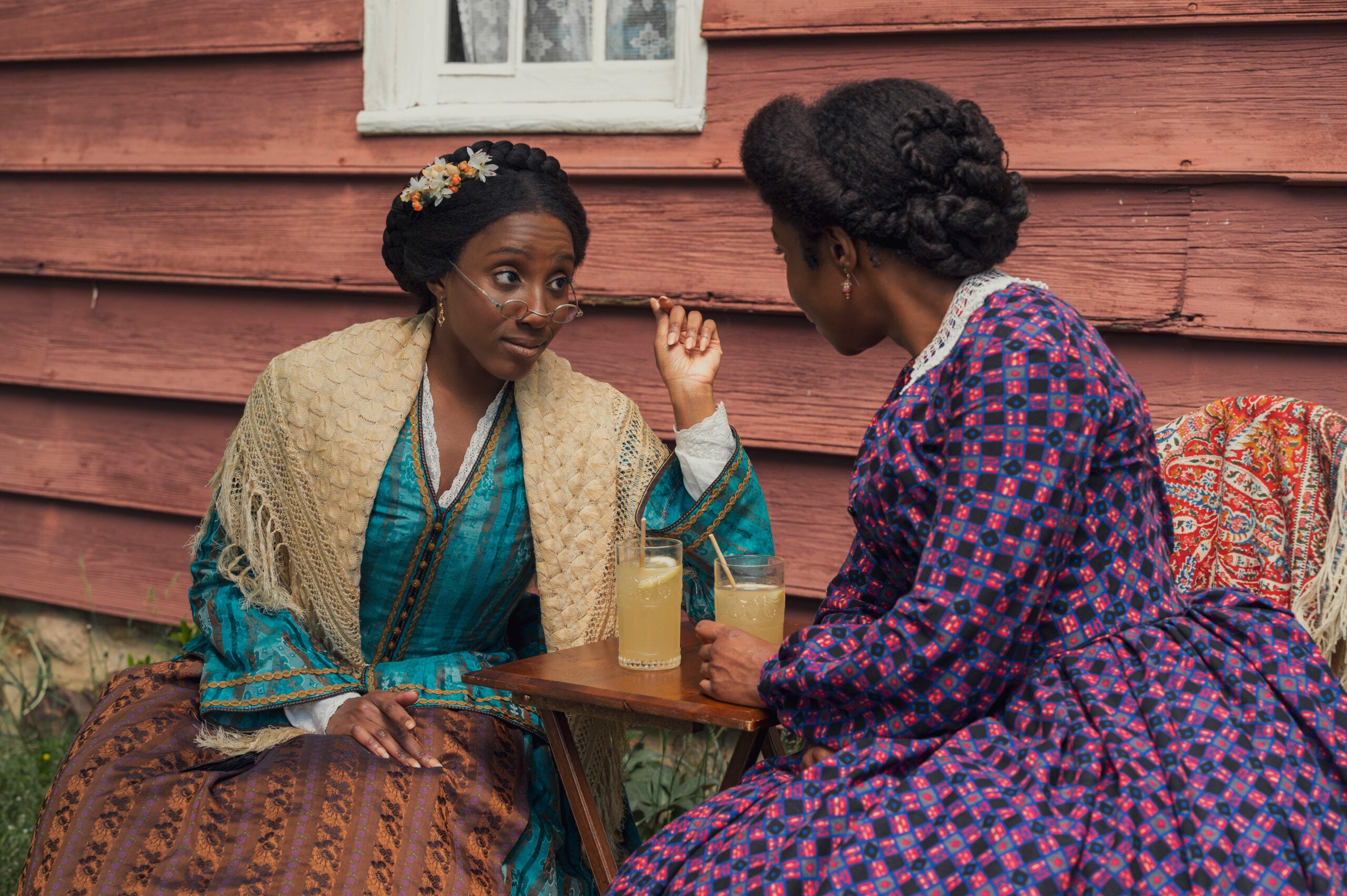
Betty, for what it’s worth, seems devoted to her (ex?) husband, though not for lack of trying from her guest Sojourner Truth. Glad to see more of Ziwe on this show. I have a feeling that wasn’t her last appearance but one can never be too sure with the limited time we have left.
“Rich people can do whatever they want. That’s like the first law of America.”
When Dickinson Season 3 Episode 6 ended on the cliffhanger that Austin had been called off to war, moments after he and Sue had come to a tepid stalemate, I had hoped that would spur more action from the Dickinsons to reconcile.
It seems like that major life-altering event is going to be swept under the rug since Austin is rich enough to pay someone else to assume his identity and go to war in his stead. The real-life Austin did indeed evade the draft, but I’m assuming that with the sad Frazer news, Austin is going to have some sort of internal reckoning that will ultimately resolve the Dickinson family drama.
Did I mention there are only three episodes to wrap this all up?
Stray musings from this episode:
- They should have renamed the episode Gazebo Time Machine à la Hot Tub Time Machine
- I’m really curious to know if Emily knew she was growing weed in her garden or if Mrs. Dickinson was right that she just thought it was a pretty plant
- Mrs. Dickinson quote of the week: “Before I just felt sad, now I feel sad, hungry, dizzy, and paranoid.”
- I mentioned this a few episodes back, but there are a ton of Dante’s inferno references this season. Especially, in this episode
- All of the literary “guest stars” have been top-notch throughout the entire series, but I think the female ones have really stood out the most. Zosia Mamet as Louisa May Alcott and now Chloe Fineman as Sylvia Plath have both been excellent additions.
- Is anyone else thinking mailman “Freddie” is actually Frederick Douglass? The hairstyle is eerily similar, and along with Sojourner Truth’s appearance, I wouldn’t be surprised if Henry’s abolitionist paper in Amherst is being set up to launch the greater abolitionist movement.
- I personally can’t believe Vinnie didn’t know about Emily and Sue with how obvious they’ve been and with how mad Austin has been at them both
- Also, the whole, “[she] was a lesbian.” “No, she was American?” is a 10/10 joke no matter how many times I hear it and Anna Baryshnikov continues to deliver best-in-class comedic timing.
- I… wouldn’t say no to a poet anthology series. Maybe Plath as the follow-up to Dickinson?
What did you think of this episode of Dickinson? Share your thoughts in the comments below!
Critic Rating:
User Rating:
 Follow us on Twitter and on
  Instagram!
Want more from Tell-Tale TV? Subscribe to our newsletter here!
Marissa Crenwelge

Marissa is an avid pop-culture enthusiast and "daylights" as a digital marketing manager for sports and entertainment brands. When she's not writing or watching new TV and movies, Marissa enjoys spending time with her Australian Shepard, Luna, and spending too much money online shopping. Find her on Twitter at @marissacrenwlge