

Midnight Mass Review: A Gripping Character Study Gets Lost in the Bigger Story
It’s religious fanaticism, bleak hopelessness, and darkness this time around on Mike Flanagan’s latest dive into horror. Midnight Mass is ambitious, chaotic, and slightly muddled.
Flanagan’s latest limited series tells the story of the small, relatively isolated island town of Crockett Island as a young man returns in the face of a misdeed and an unfamiliar face comes to spread the Good Word and promises of salvation.
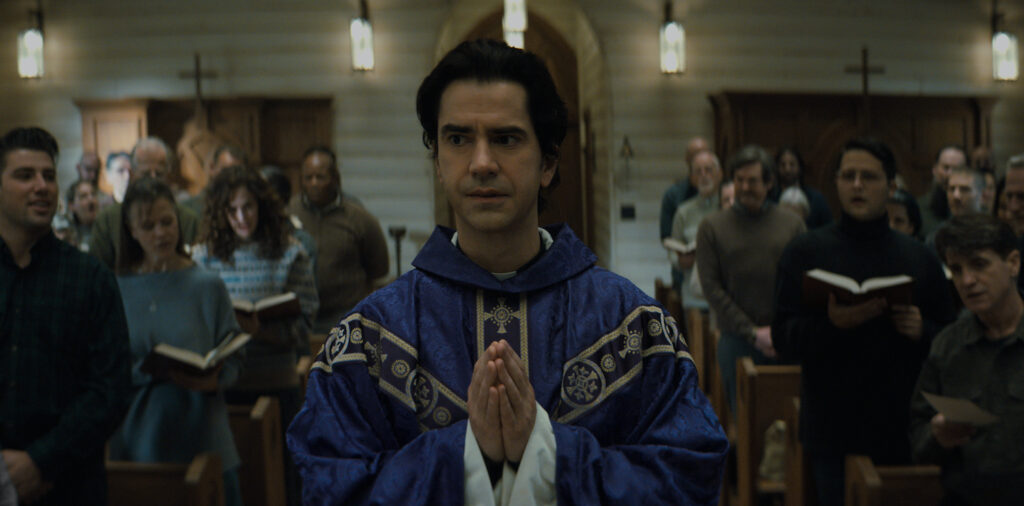
Midnight Mass holds a lot of promise with a gritty sense of grounded reality in the ensemble’s stories. It begins to lose steam when the focus shifts from the individual arcs to the “angel” and his presence.
When It’s Good, It’s Really Good
It should come as no surprise that with Mike Flanagan helming the limited series, the emotional beats for the entire ensemble strike all the right notes. From the moment we’re introduced to Riley Flynn (Zach Gilford), you can’t help but feel some mixture of empathy for his search for forgiveness and path through the guilt while also not understanding how forgiveness for such an act could be given.
There’s a darkness that looms over every resident of the town. Some of that darkness stems from tragic events, some of that dark and heavy feeling stems from a lack of empathy, understanding, and some measure of evil in the hearts of the town (looking at you, Beverly Keane).
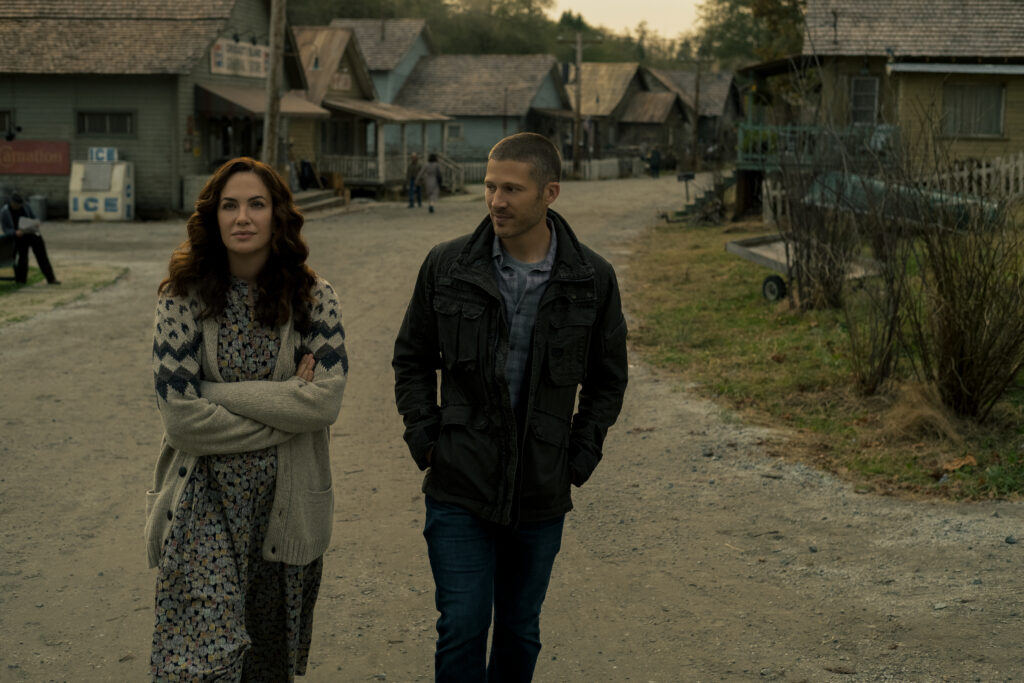
The characters are the story’s soul and keep you emotionally engaged throughout in such subtle ways that leave you in a puddle of tears as the final scene plays.
The Characters Keep You Captivated
Riley’s journey towards a sense of peace and forgiveness starts from a different place. From the opening moments, we see precisely how his reckless drinking causes the death of a young girl. Unsurprisingly, despite what he’s done, you can’t help but hope he finds that peace that he seeks.
It’s what makes his moments on the boat with Erin on Midnight Mass Season 1 Episode 5, “Book V: Gospel,” essentially re-enacting the dream he has the night before more agonizing and beautiful.
Riley: I did my best.
In Riley sacrificing himself to convince her of the truth to save those he loves, he also receives the grace and forgiveness he’s looking for. The absolution he finds in Tara-Beth reaching out to take him away.
Zach Gilford does a beautiful job conveying the understated pain that comes with Riley’s situation and the utter calm that takes over as he takes Tara-Beth’s hand.
Kate Siegel’s Erin Greene is as heartbreaking as she is a beacon of strength in the face of death. A definite departure from her more cynical Theo from Hill House. Your heart goes out to her, and you hope that she’ll find her happy end, which makes her fate deeply felt.
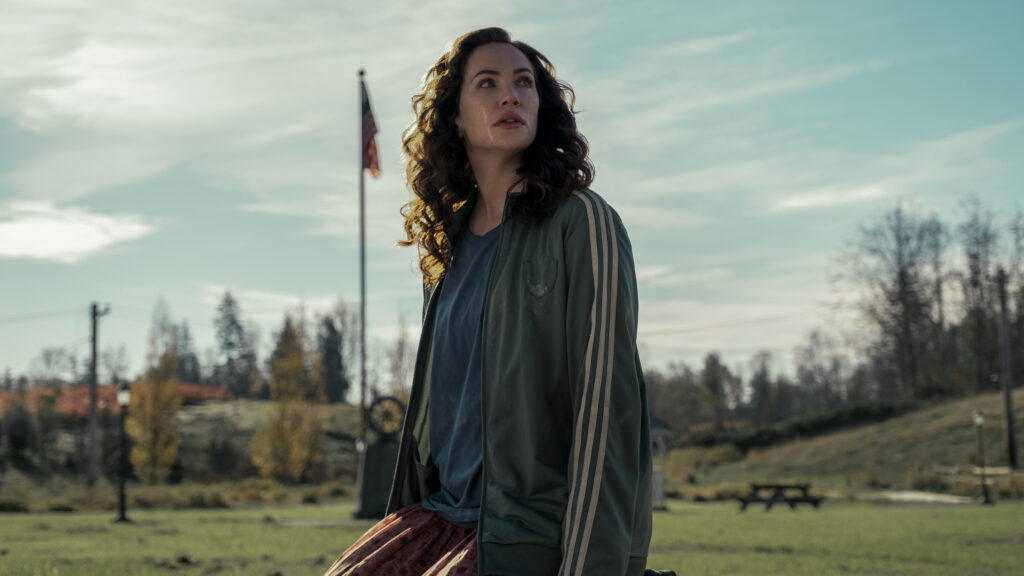
Erin and Riley’s conversation about what happens when someone dies after Erin loses the baby during “Book IV: Lamentations” highlights where they are mentally, spiritually, and emotionally in a way that resonates. Both the clinical explanation from Riley and Erin explaining that Littlefoot lives in her version of paradise underscore their belief system.
It makes the revisiting of their moment in the end even more tear-inducing.
Erin: I was before them, and I will be after them. The rest is just pictures…We are the cosmos dreaming of itself. There is no time. There is no death.
Meanwhile, the Gunning family’s story is not without its own soap-operatic drama as we get a third act reveal that puts Millie and John’s interactions in context. Sarah’s unexpected demise puts Millie and John’s final decision in perspective as bereft parents who lost so much time, and forgiveness is all they have left.
Sheriff Hassan and Ali’s last moments are devastating after their conflict and Ali choosing to be “saved.” The pair praying on the beach before succumbing to their wounds just compounds the tears.
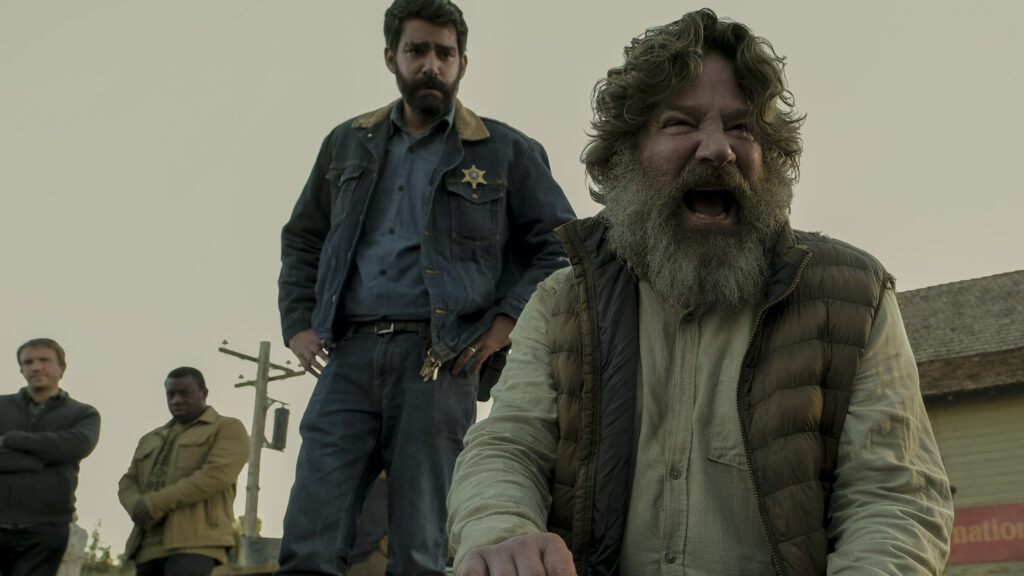
The more contemplative, reflective arcs become the emotional focal point and showcase the talents of the whole cast, including Kate Siegel, Zach Gilford, Rahul Kohli, Annarah Cymone, Annabeth Gish, and Hamish Linklater.
The Righteous Fanaticism Is Way Too Real
Midnight Mass, while offers some insightful commentary, leaving you with the idea that everything will come together, does the opposite, making an excellent point about the dangers of religious fanaticism and blind faith without much of a cohesive theme tying every character’s arc together.
It’s this lack of cohesion that at times feels a bit like watching two different shows.
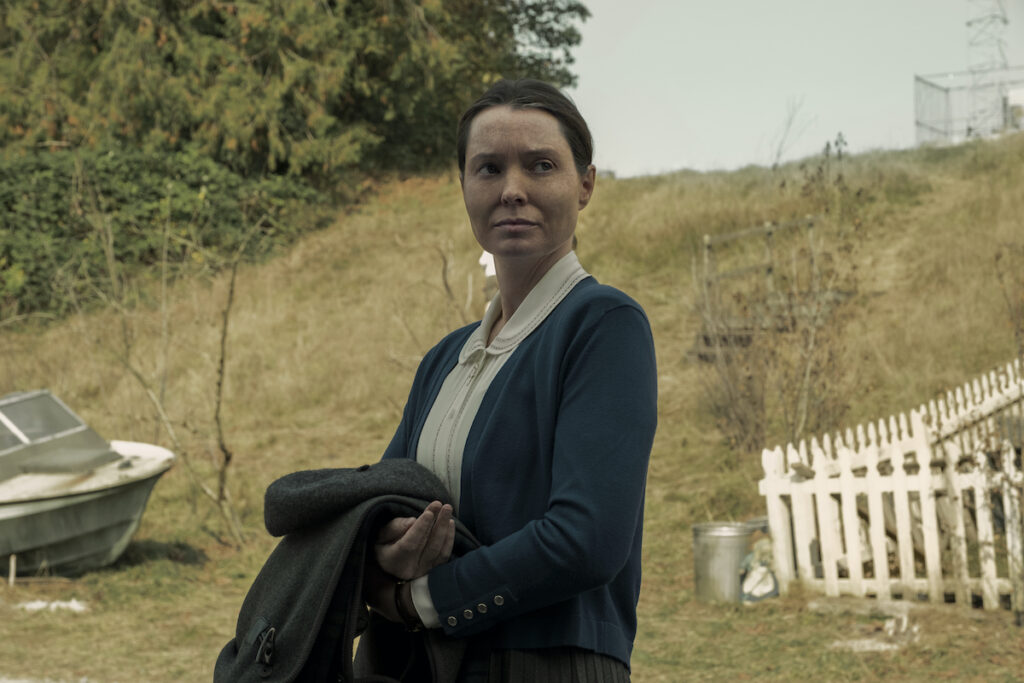
That’s not to say that commentary falls flat. On the contrary, Midnight Mass portrays the sycophantic fanaticism from Beverly Keane, willful ignorance from Sturge, the Scarboroughs willingness to go along with everything Paul/John and Beverly ask of them frighteningly well. The St. Patrick’s arc highlights how frustrating and terrifyingly real this behavior can be.
Worse still, knowing what’s happening and doing nothing about it, just manipulating it to fit the narrative they believe in, is liable to strike a chord with a large part of the audience. It shows how easily belief can be weaponized.
John: That’s the thing about the priesthood. It’s never supposed to be about them. It’s supposed to be about God.
This is what makes the last moments, the realization that it was all for nothing, there’s nothing left for anyone in the face of Crockett Island’s destruction and dawn soon approaching, a devastating and stark reminder of these dangers that stays with you after the final notes are sung and the quiet sunrise sees Leeza and Warren just floating in a canoe out at sea.
The Monster Gets in the Way
Sure, we’ve got ghosts and haunting monsters that follow characters around on The Haunting of Hill House and The Haunting of Bly Manor. Still, those were usually the essence of those we’ve seen before or resemble some measure of humanity or at least offer a more direct tie to the characters we follow.
This monster, this “angel,” as Monsignor John Pruitt calls it, is given too much screentime for my taste. The quick glimpses feel more par for the course for the kind of horror Flanagan’s Netflix fare, which makes this complete immersion of this horrific vision jarring.

It becomes a detractor from the grounded emotion played out throughout the series in a disappointing way. The “angel” almost becomes an absurd addition to the story, which may be intentional on Flanagan’s part as it connects to the deep-seated religious beliefs of everyone on the island, save for a few that were open to questioning the provenance of it all.
Is the “angel’s” presence meant to be examined on a deeper level that may have gone over this reviewer’s head? Anything is possible.
But the moment that the “angel” attacks Riley at the end of Midnight Mass Season 1 Episode 4, “Book IV: Lamentations,” just takes the whole scene to a strange place that I can’t necessarily emotionally follow.

However, the resulting fifth hour, “Book V: Gospel,” makes up for it, basing a large part of the hour on Riley and Paul/John’s time in the rec center, as Linklater and Gilford deliver a compelling exchange as more information is revealed about this monster and John’s goal.
Ultimately, while the performances and the story on the character level are heartbreakingly superb, this angel’s chaotic and creepifying introduction brings Midnight Mass down. Though not an instant re-watchable favorite, it’s another solid Flanagan-verse entry.
Random Observations:
- Spending most of your viewing trying to puzzle out what allegory or metaphor is meant to be conveyed using this monstrous angel is not ideal, and I would highly suggest against that impulse.
- Riley reminds me a bit of Luke from Hill House as he spends pretty much his entire arc carrying around that never-ending guilt and darkness with a fate like Nell’s to save the people he loves.
- “Remember we are dust, and to dust, we shall return” is an intelligent way to not only book-end Monsignor Pruitt’s mission from God but also elevate the bleak ending without underscoring the value of forgiveness in the face of an inevitable end.
- The persistent quoting of scripture, the heavy focus on Paul/John’s sermons, and the psalms become grating after a while but do an excellent job reinforcing the religious themes of the series.
- Beverly’s character is the only one that does not get any kind of growth, grace, or forgiveness, and it’s clearly done intentionally.
- Sarah’s description of the blood that combusts in the sun as “batshit, hold-the-phone, padded-room, clozapine insane –fucking bonkers” is the best way to summarize the whole angel plot point, honestly.
- The amount of animal death on screen in the first 2 episodes is a lot to get past.
What did you think of Midnight Mass? Share your thoughts in the comments below!
Critic Rating:
User Rating:
Midnight Mass is out now on Netflix.
 Follow us on Twitter and on
  Instagram!
Want more from Tell-Tale TV? Subscribe to our newsletter here!
What to Watch on TV: Doom Patrol, One Chicago, Midnight Mass
Brianna Martinez

Brianna spends her time away from briefs, legal research, and pleadings, watching TV and writing about it. She generally has a lot of feelings about TV, which you can read about here and on Twitter.
4 comments
I completely agree that the actual supernatural plot was sometimes at odds with the character journeys. Unlike Bly it doesn’t fully add up at the end. I did still really enjoy it though and appreciated Flanagan trying something different than ghost stories.
Yes, that is exactly it. It was definitely a departure and there was still a lot to appreciate about the series. Thank you for reading!
Trying to balance too many elements.
Which was the most important… the developing idea of God’s intentions for the Human race, or the characters’ reactions to what appeared to be happening ?
Of course the entire concept of angels being vampires, essentially, was pretty absurd. First, you have to get past that. I couldn’t I’m afraid.
So you are left with the people and how they dealt with the unfolding realisation that the future looked bleak for them all.
The final twist, due to the zealot second-guessing God’s apparent intentions, demolishing the only shelter they had from the sun, was very predictable, unfortunately.
I’m left with the same questions I had from the revelation that we could all live for ever, but would we ever get to go out during daylight ? Who knows, as clearly the full details of God’s plan were somewhat obscured by the few extremists that nted ‘to take charge’ of the narrative.
Overall, I’d have been relieved whn the sun rose !
How did Beverly know Father Paul was a vampire?
Comments are closed.