
Come From Away and the Case for Broadway Recordings
The relationship between Broadway musicals and film is long and storied. Broadway musicals have long been a source of inspiration for movies with hundreds of musicals undergoing big and small-screen adaptations, all to varying success.
Additionally, over the last few years, live, televised musicals have come back in vogue with more to come.
Several stage musicals, including Falsettos, She Loves Me, Company, Into the Woods, Legally Blonde the Musical, Newsies, Shrek the Musical, Rent, and most notably, 2020’s Disney+ release of Hamilton, have been live-captured for wider distribution.
However, thinking through the number of musicals that have run in theatre strong-holds New York City and London – let alone other locations – their ranks feel incredibly small.
So why then, if there’s a clear audience for musicals, has there continued to be such a dearth of live recordings of Broadway musicals available for wider release on streaming services, television, or on the big screen?
The answer to that is a complicated one.
One barrier is undoubtedly financial viability; professional recordings are expensive and Broadway producers are often understandably hesitant to release material that will make people less likely to purchase tickets for a show’s run.
Another barrier is a concern for artistic integrity and how a show will — or even worse, will not — translate from stage to screen.
Theatre and film/television are distinctly unique mediums. Visual tricks, acting choices, and tonal changes that work in the confines of a dark proscenium theatre can fall flat up-close, and when you pull away, the suspension of disbelief that goes hand in hand with seeing a live performance.
After all, can you imagine Wicked‘s big “Defying Gravity” moment, reliant on fabric and lifts, play as exciting in a recording? Of course not.
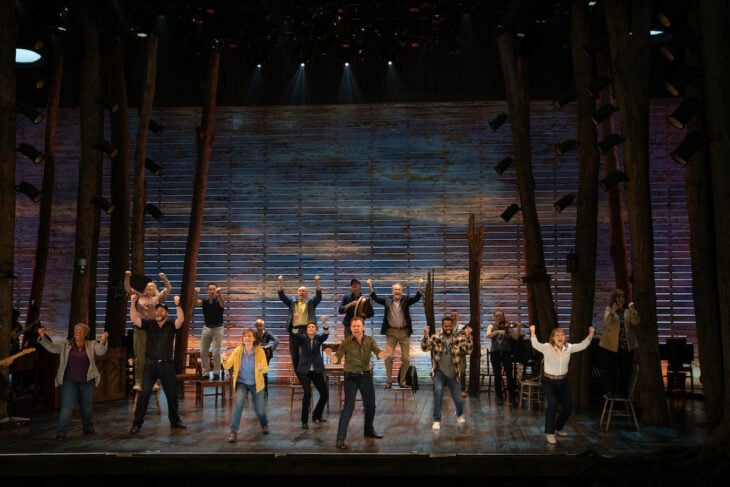
All of this is what makes Apple TV+’s presentation of Come From Away all the more miraculous. Its strength and success as a live capture of a Broadway musical should be a template for others to follow. (Yes, it’s even better than the Hamilton recording!)
A Closer Look at Come From Away
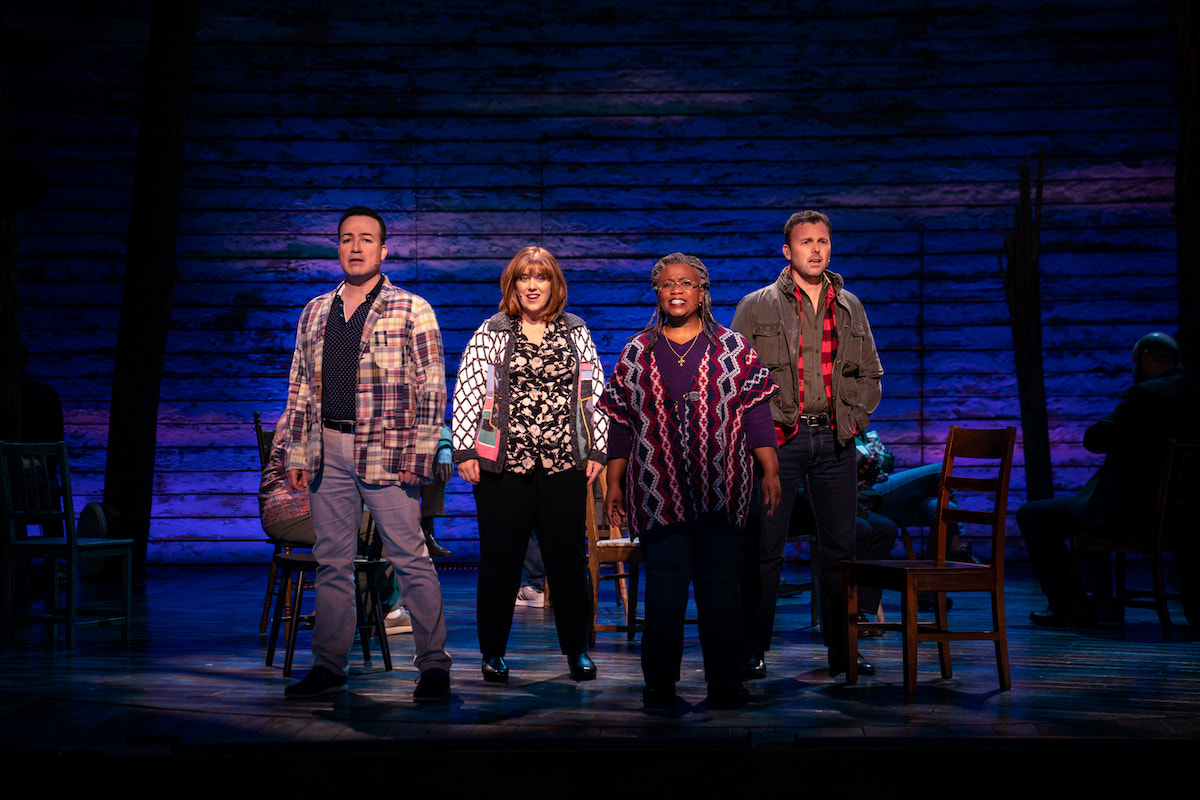
Come From Away, the tale of a Newfoundland community’s hospitality and kindness toward stranded airline passengers after the 9/11 attacks, was the sleeper hit of Broadway’s 2017-2018 season.
In an interesting bit of dramatic irony, it lost the Tony Award for Best Musical to Dear Evan Hansen, whose big-screen adaptation debuted recently at the Toronto Film Festival to extremely mixed reviews.
While Come From Away is considered a successful musical, its lack of inclusion in the general pop-culture zeitgeist works in its favor and makes it a prime candidate for a live-recording especially compared to a filmed adaptation.
Its lack of notoriety comes with fewer expectations, for one, but it also means that a live-recording release gives it the opportunity to find a larger audience (as it should; its message of resilience, healing, and community is one the world desperately needs now).
Netflix’s upcoming release of Diana the Musical is likely hoping to take advantage of this as well.
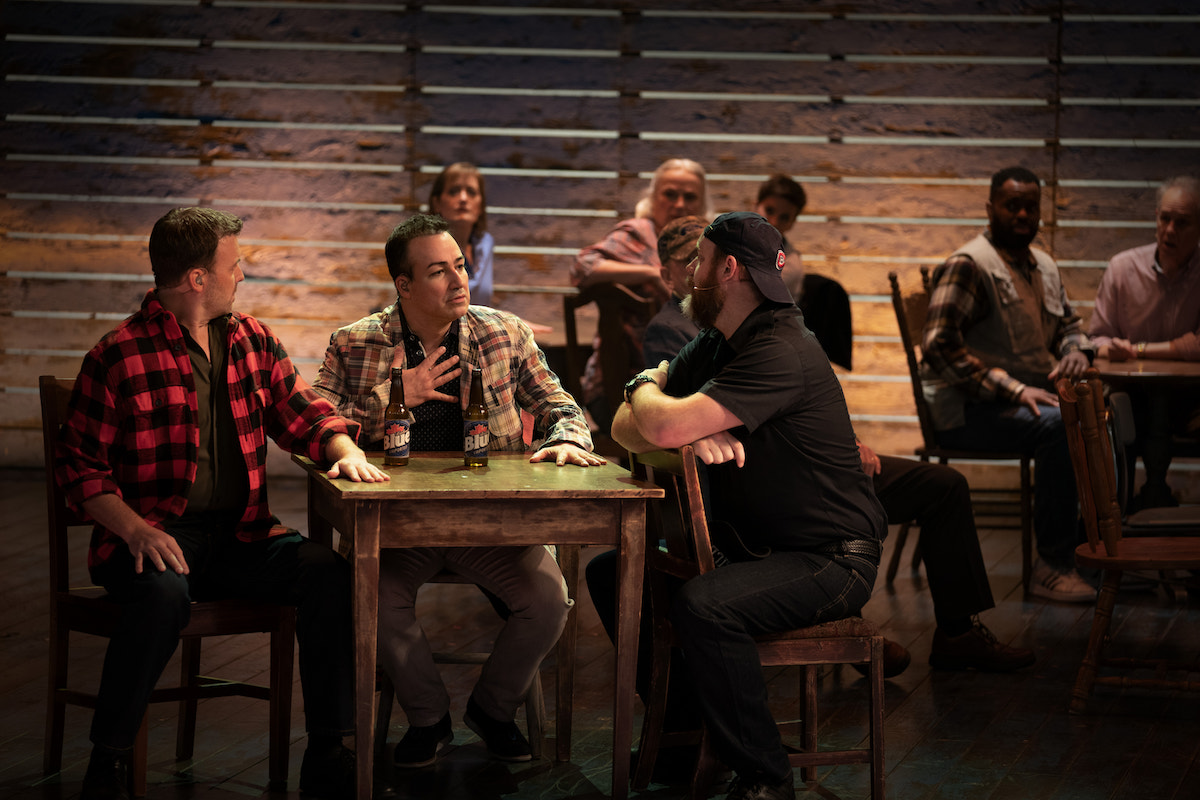
Plus, while it boasts a large cast, part of Come From Away’s charm lies in how it utilizes its ensemble in multiple roles and its vignette-style storytelling.
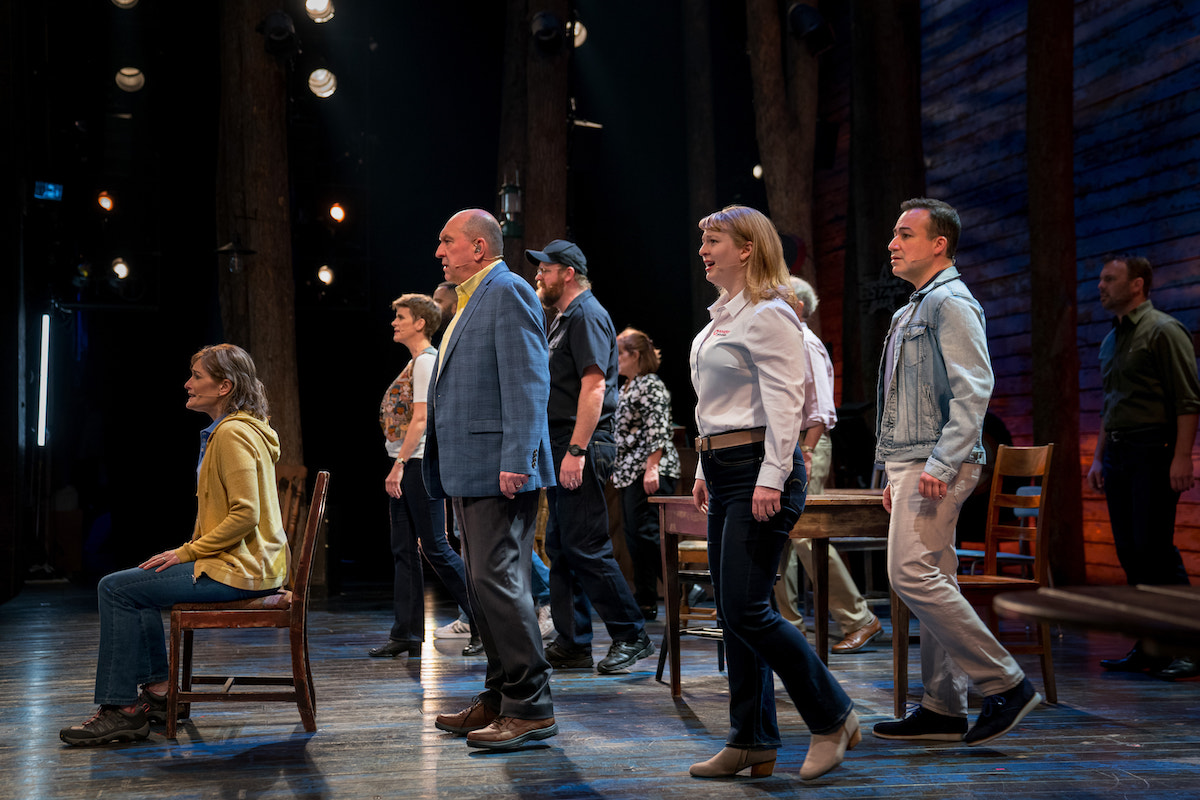
The nature of the show rests on individual performances, not stagecraft or production tricks. Director Christopher Ashley understands this well and his approach to this recording is intimate.
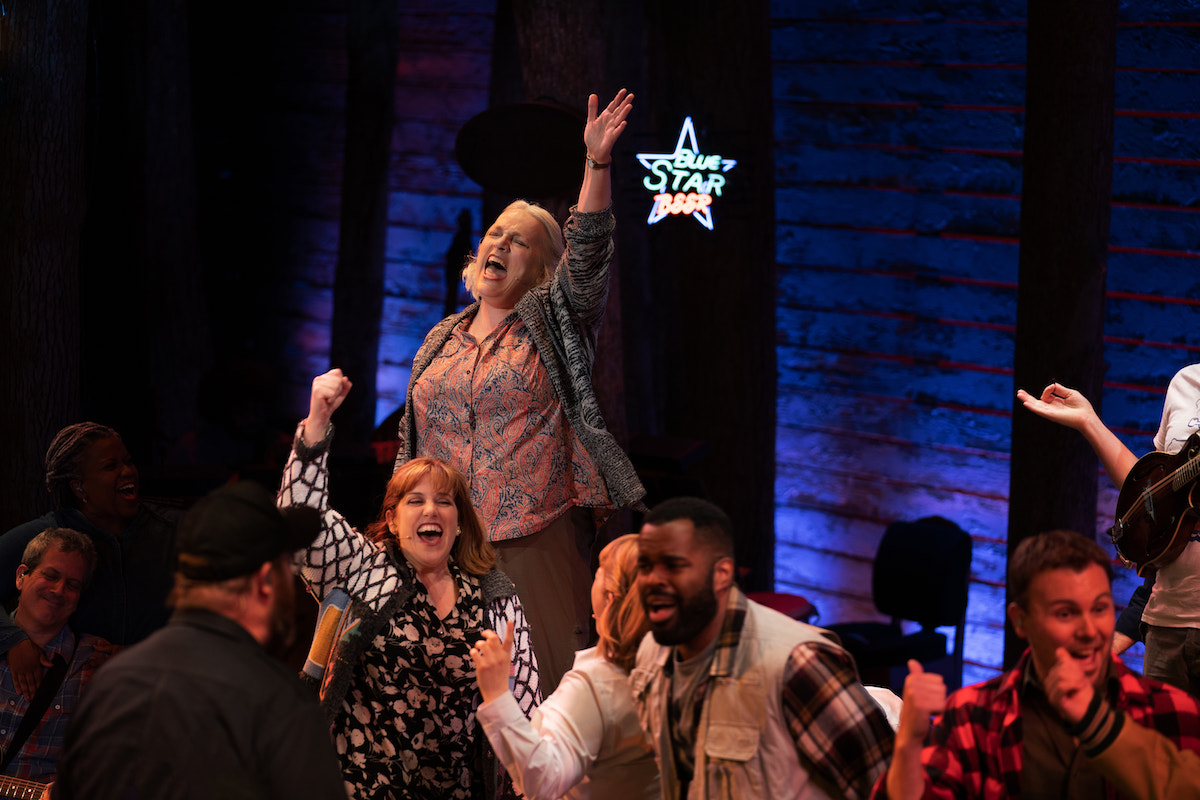
As a result, we’re gifted with multiple close-ups, often from the audience’s perspective as though the best seat in the house is literally just an inch away from the performers.
This intimate approach ensures that key emotional points still tug at us even though we’re not in the same room living the experience with the performer.
Most powerfully though, the recording’s largest strength is its ability to reflect some of the experience of viewing Come From Away in a theatre and translate it on screen.
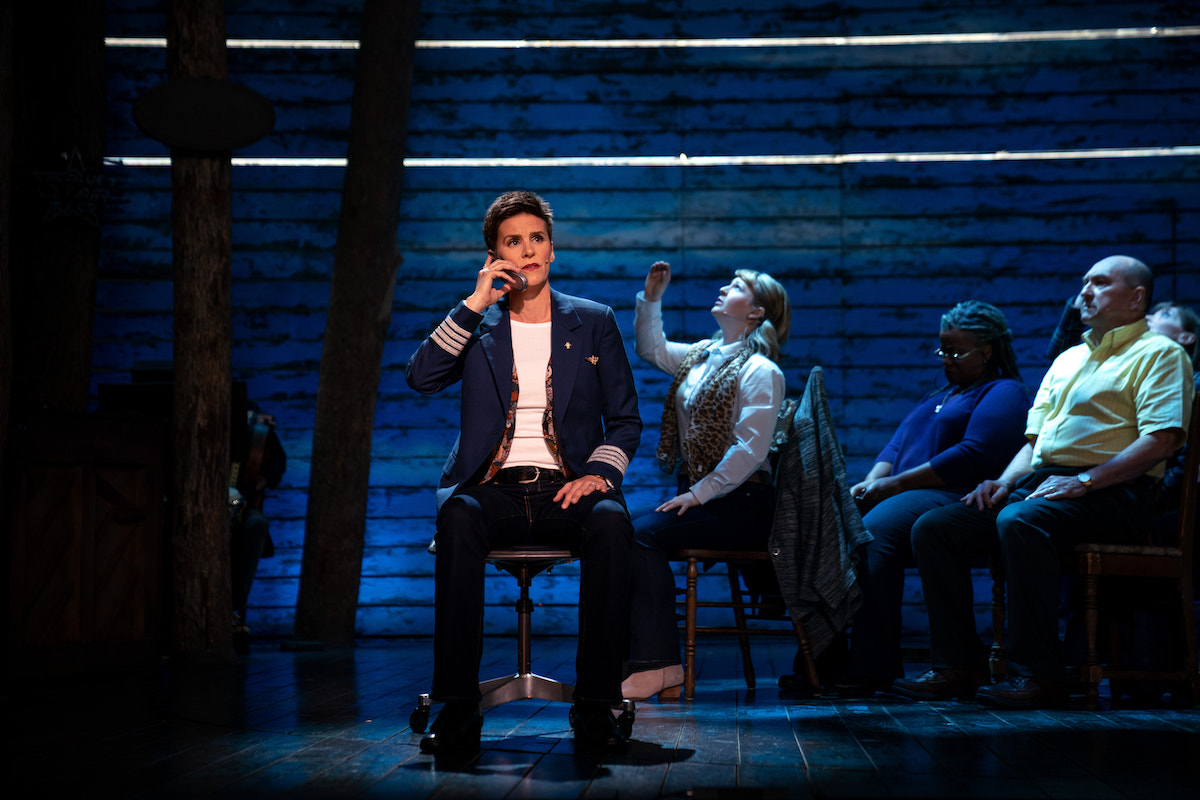
One of the more reeling moments of the show involves the brilliant Jen Colella as Captain Beverley Bass. In “Me and the Sky,” she confesses her love of flying has been corrupted by the weaponization of planes in the attack on the World Trade Center.
The camera tightly focuses on her face the moment she drops this emotional truth before quickly zooming all the way out, a visual representation of what it might feel like for an audience to collectively gasp and lean back in their seats.
There are other moments that you can imagine would leave the in-person audience totally silent, still, and unmoving.
For example, when Hannah (Q. Smith) slowly realizes her son has likely died in 9/11 and when a Muslim man (Caesar Samayoa) recounts his shame when facing prejudice and mistrust after the attacks, the air feels heavy.
Ashley understands that the camera should be still in these moments and lets them marinate. There’s no heavy editing or moving back and forth. He also uses camera movement strategically to draw our focus.
Rather than try to show us everything that’s happening on stage at all times, the production deliberately hones in on what and who it wants us to pay attention to at any given time, making the through-line of stories and character development more clear.
This works most effectively in numbers like “28 Hours/Wherever We Are” and “Something’s Missing.”
While this might mean we as an audience miss small moments, because this isn’t a show with grand production numbers, altogether there’s not a huge loss.
So About That Other Recent Broadway Recording
For comparison, watch Hamilton’s recording. (To be clear, to have a recording of the Original Broadway Company of Hamilton is a gift, and while it is excellent, it doesn’t work as well as Come From Away’s does).
There are fewer close-up shots, and even when exist, there’s a physical distance that also creates an emotional distance between us and the characters.
On top of that, because there is so much happening at almost any given point in Hamilton — visually, character-wise, etc — it often feels like you’re missing something amidst all of the cross-cutting of shots… because you are.
That concern mentioned earlier about whether something playing less well on screen than it does live on stage? Hamilton falls into this category, likely because of the very nature of the kind of production it is — big, elaborate, and with a heavy reliance on space and complex staging.
The Road Ahead
So what does this all mean?
The reality is, the more accessible Broadway shows are, the better. The realities of price, location, or simply exposure mean too many of these shows end up being seen by a restricted few.
With the changing landscape of live entertainment and the rise of on-demand home streaming experiences, there’s potentially even more of a market for recordings of stage musicals than before.
With that said, some Broadway properties are better suited for this than others.
Smaller, character-driven shows that can invite audiences in and immerse them in the show, much like Come From Away did, might be the most translatable shows for live stage recordings (assuming, of course, they’re as thoughtfully filmed as Come From Away is!)
What do you think of Come From Away, and what musicals would you be interested in seeing recorded?
Come From Away is available to stream on Apple TV+.
 Follow us on Twitter and on
  Instagram!
Want more from Tell-Tale TV? Subscribe to our newsletter here!
Cristina Iskander

Cristina is a Broadway enthusiast, book lover, and pop-culture fanatic living in New York City. She once won a Fantasy Bachelor contest (yes, like Fantasy Football, but for The Bachelor), and can banter about old school WB (Pacey + Joey FTW) just as well as Stranger Things and Pen15. She's still upset Benson and Stabler never got together and is worried Rollins and Carisi are headed down the same road, wants justice for Shangela, and hopes to one day walk-and-talk down a hallway with Aaron Sorkin.