
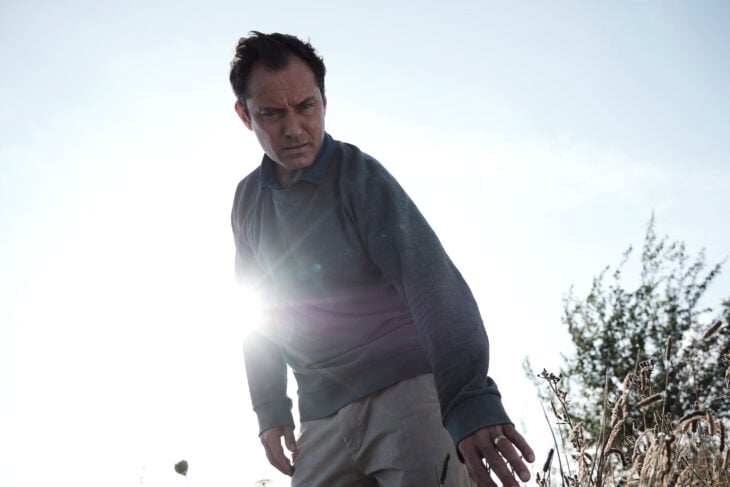
The Third Day Review: Friday – The Father (Season 1 Episode 1)
Not everything is as it seems. On The Third Day Season 1 Episode 1, “Friday – The Father,” Sam finds himself both running from something while running into something else entirely.
The Third Day plays at something deeper than a mysterious community with secrets that aren’t meant to be exposed. There’s a psychological angle to it that provides even more wealth to its story, where its main character is a rubber band near to snapping.
His motives may not be revealed yet, but Sam is certainly an enigma over this episode.
The premiere plays at misdirection quite well, lulling us into a false sense of security before revealing that not everything is as it seems.
At first, we don’t know why Sam is so broken up and letting a child’s shirt float down the creek. We can assume it’s a tragedy, but can’t go beyond that just yet.
That it’s in tribute to his murdered son makes the scene even more devastating, realizing its context. He has lost so much, and so his worry and frustration after losing his business and even his home is justified. Loss is a deep-seated fear for him. It feels like he is trapped in an unwinnable situation.
Sam’s visions of ritualistic sites and bloody massacres evoke pangs of guilt in his subconscious, and the mind immediately goes to the idea that this child only he can see may be the child he has lost. He’s chasing a ghost he can never truly catch, leaving him to search forever.
The fact that he’s the one who steals the money, and that he’s willing to pass blame on someone else when Mr. Martin plants the idea in his head, completely changes how we will look at Sam for the remaining episodes.
We think we know him, and now we may not.
The way Sam’s smile fades the moment he looks in the mirror, and falls into his vision, speaks to some sort of guilt or self-loathing that he has not dealt with yet.
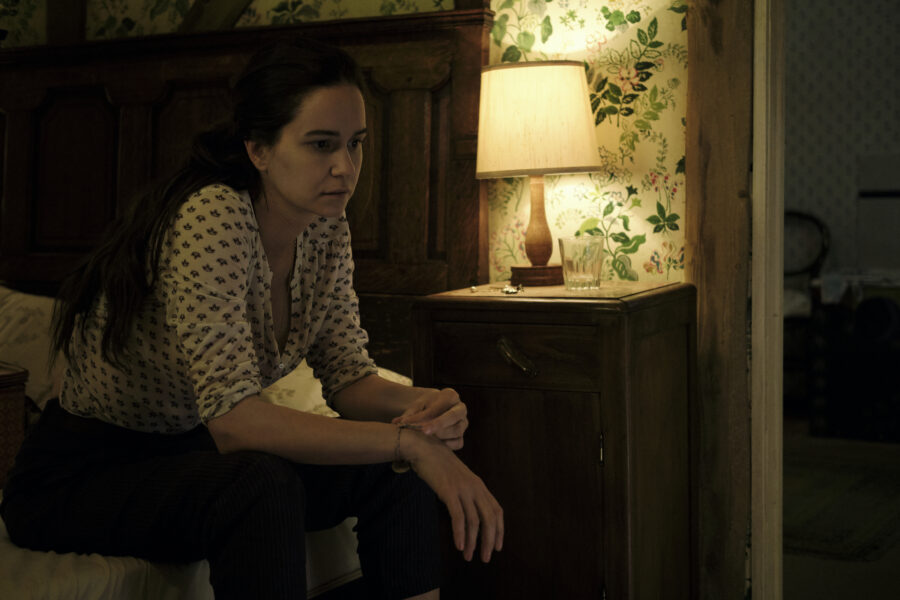
The village’s population are a bit odd, as well. Jess (Katherine Waterston) is hard to pin down at first, as she appears to be out of place but manages to fit in so well at the same time.
She breaks the ice for Sam, and essentially acts as his introduction to the real people of the town. We need those scenes, Sam and Jess enjoying their time there, as it keeps the other problems at bay and shows there is goodness here.
Showing everyone in the town as always shady or secretive does not get us anywhere; showing them as regular people who happen to have shady and secretive business goes much further.
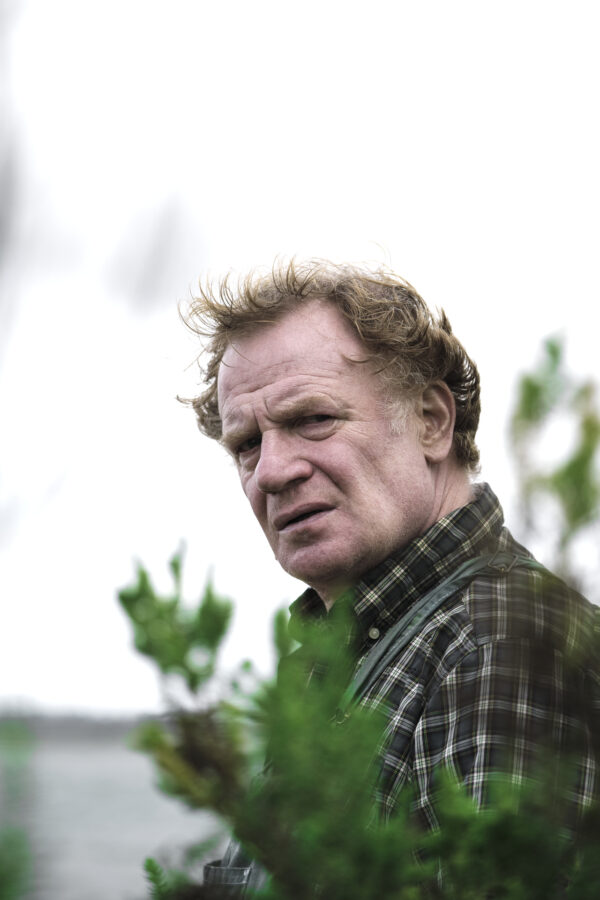
There’s a positive air that hangs over the island and its inhabitants, and it can prove a little disarming at first. Mr. Martin (the always great Paddy Considine) is the epitome of good cheer, but it’s to the point where it is hard to tell if it’s an act or he genuinely is this charming.
Mrs. Martin (the equally great Emily Watson) definitely counteracts that cheer, but she does so with sharp, biting commentary. It’s not out of disdain, per se, but rather out of annoyance. She may be the most honest out of everyone we meet on the episode.
Her moment with Sam, where she reveals she knows him from his pleas on TV about his child, helps to reveal Sam’s pain, but it does so much more, as well. It’s Mrs. Watson recognizing someone else who sees pain not as something to run away from, but something to embrace.
There’s also a hint toward racism, where she comments on his chance to turn the conversation towards the otherness of those who killed his child, but Sam chooses forgiveness. Given the state of the country as this airs, it’s a loaded statement that could tip this is about otherness and outsiders, or it is simply a piece of Mrs. Martin’s personality. It’s hard to know yet.
It’s a moment that feels like it will be significant to The Third Day as a whole, though.
Mr. Martin reciprocating the inverted cross to Jason’s friend in the back, and the eerie photos of dead children (they look almost like Memento Mori portraits), not to mention the three-day chaos that Jess mentions, all paint a picture that we may not be ready for what is coming over the next few episodes.
There’s a general unease that settles over the entirety of the episode, as though Sam is stumbling into a place that will do anything and everything to survive. There are more than a few mentions of the town hitting hard times and that the upcoming festival may be their big chance to strike back.
But perhaps they have turned to the old ways, or maybe the old ways never left. The inverted cross signal gives off pagan potential, especially with the dissected animal Sam finds as he walks the island.
The image of Epona walking down the road when Sam is about to leave feels like a major message. Sam has the chance to save this girl from whatever is hurting her, and maybe it’s his attempt to save her in lieu of being unable to do the same with his own son. He sees this as his second chance.
That haunting image could easily be a vision of his, much like other times, as we do see a quick instant where it looks like he runs after her. But instead he drives on.
We don’t know why Epona is almost successful in hanging herself, but there’s clearly something she is trying to escape from, and this town may be the root cause of that feeling.
These loose threads easily could slip into becoming frustrating; on the contrary, they’re riveting. Writer Dennis Kelly (who has co-created the show with Felix Barrett) is letting the show breathe and for it to unveil itself in its own time.
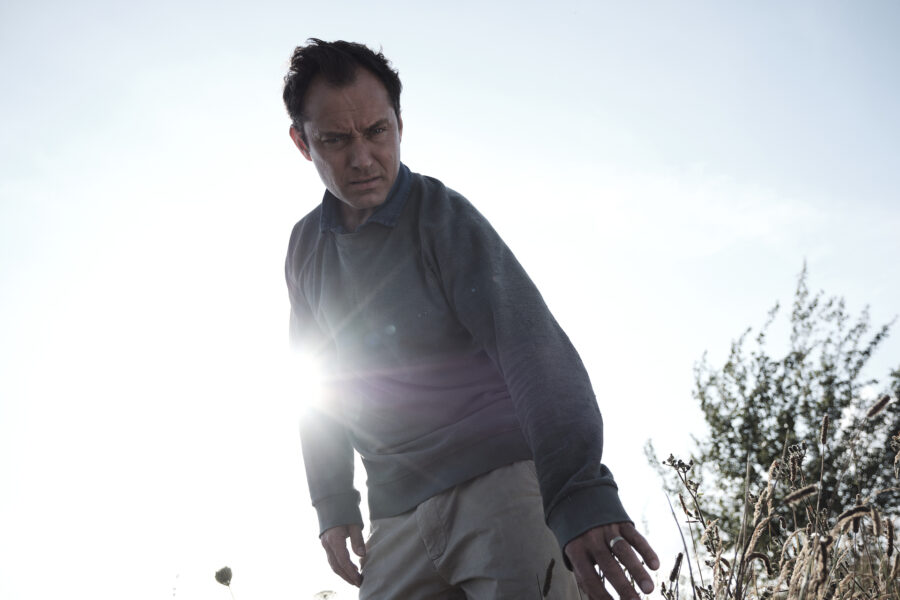
Jude Law is impeccable on the premiere, playing to Sam’s fears and insecurities as he clearly struggles not only with this pressing concern for his business, but also something deeper inside himself. That internal fight and external pressure give Law a lot of great moments to show that Sam may be a good person, but he may have done something bad.
The way Marc Munden directs the episode is one of the most integral parts of its success. There’s a sharp focus on people, especially their faces, where the world around them is blurred while their visage is focused on tightly and intensely.
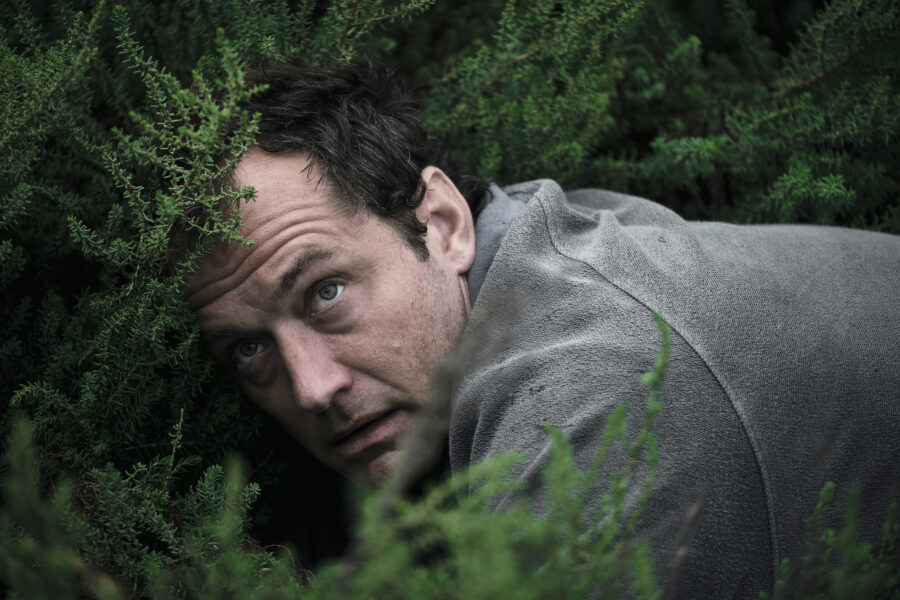
But it’s also in Munden’s way of creating tension through stillness. When Sam hides in the bushes and is nearly caught, it’s downright terrifying, given what we see Epona’s father do with the wrench only a moment before. It’s that tight framing, combined with the fear of the unknown, what this man is capable of, that work so well in tandem.
There’s also the great island of Osea itself, which gets a lot of fantastic shots to show off its beauty. The causeway taken away by the tide is an ominous image, almost like an exposed vein being buried underwater; but there is also the gorgeous, windy beaches and the village itself that add so much atmosphere to the episode.
The Third Day starts great, where its psychological angle may grow more malleable and introspective as it goes. Combined with the great cast and its mesmerizing direction, the show really is onto something fascinating here.
Some stray thoughts on the episode:
- The use of Florence + the Machine’s “Dog Days Are Over” is a great juxtaposition to the harrowing pain Sam experiences at the edge of the water.
- It’s doubtful the show will go down the same route, but there’s this parallel to Alfred Hitchcock’s Psycho. Someone steals money, ends up in a bad situation, and the money is lost forever. Based on the troubles of the town and Sam’s guilt, a similar outcome could be a great set-up for the character shift coming up.
What did you think of this episode of The Third Day? Share your thoughts in the comments below!
Critic Rating:
User Rating:
The Third Day airs Mondays at 9/8c on HBO.
 Follow us on Twitter and on
  Instagram!
Want more from Tell-Tale TV? Subscribe to our newsletter here!
Kevin Lever

Kevin Lever has been following television closely for most of his life, but in starting to cover it, he has grown a further appreciation. He strives to give the blockbusters their due, and give the lesser known shows a spotlight to find more fans.