

How ‘The 100’ Waged a War on Women
The 100 began as a captivating apocalypse drama with a diverse cast, a powerful female lead, and a compelling story about who we become in survival situations.
The series lured in fans with interesting, dynamic characters in complicated situations that bring forth questions about the way we treat each other, what we’re willing to do to survive, and what that does to our humanity.
Yet, as many fans will tell you, the series has traded most of these staples for flashy, shock-value based narratives that sell their characters short and undermine what so many fans fell in love with in the first place.
One of the biggest victims of this insidious decline is how the show has come to treat women. The 100 hit its peak in Season 2 and hit its obvious decline with the death of Lexa in Season 3. While there have been highlights since then, there’s a clear delineation from that moment to where we are now.

Over the course of its run, The 100 has gone from giving its characters hope and a reason to keep fighting, to gratuitously torturing them along with the audience, because well, that’s life.
Arguably, every character is a victim of this, but while I can point to a few male characters who have had reasonably decent stories and, by comparison, are doing alright, I can’t say the same for any of the female characters.
Every fan experience is different and valid, but I want to bring to light a trend that I’ve noticed in The 100‘s writing that makes me uncomfortable and disappointed in a series that I once believed held a deep well of potential.
Heads up: this article contains spoilers for all seasons of the show.
“War makes murderers of us all.”
Let’s start with the show’s most hated character. Echo has been inconsistently written pretty much since her introduction. She has essentially been reduced to a prop to further Bellamy’s narrative in a direction much of the audience has been opposed to and to wreak havoc in various storylines as an agent of chaos and destruction.
Echo is introduced in The 100 Season 2 to give a face to the captured grounders inside Mount Weather. Then she makes her return in Season 3 as a spy for Azgeda, and throughout Season 4 and into Season 5, she is used to drive a wedge between Bellamy and Octavia.
Her role in Season 6 is minuscule, aside from a single episode of backstory that comes too little too late.

In Season 7, her arc has been the devolution of what little growth she was given in the quest to get back to Bellamy — who is also no longer himself. Any growth she’s had over the years in learning what it means to be a part of a family went out the door the moment she resorted to a killing spree in Bellamy’s memory.
Echo rarely gets moments of personal growth or character development. Her primary purpose is to either further or delay Bellamy’s story. It’s a bit sexist to dislike Echo simply because she’s dating Bellamy, but it’s much more sexist for her to be written as a prop for the show’s male lead instead of a person in her own right.
“I am not afraid.”
Octavia is one of the best characters from The 100‘s early seasons, and next to maybe only Clarke. She’s had the clearest arc among the women, but that doesn’t exempt her from being a victim of the sexism ingrained in the show’s writing.
Her story for much of the series centers on finding a sense of belonging and repeatedly having that security ripped away from her.
Octavia suffers not from narrative failures like many of the others, but from inconsistencies similar to Echo’s, premature villainization for her girlhood, and the way her existence is written as a burden that Bellamy must carry.
The relationship between Bellamy and Octavia turns toxic pretty quickly into the series, which in the long run does a disservice to both characters.
From the pilot, Octavia is portrayed as an albatross that weighs on Bellamy. He’s overly protective and resentful of her for making his life harder. “My sister, my responsibility” is Bellamy’s mantra for the first half of the series, and it puts the guilt on Octavia for forcing him to sacrifice everything for her when she never asked him to do so — their mother did.
In Season 1, Octavia is one of the first characters to be given a love interest in Lincoln. When Lincoln is killed, Octavia isn’t given the space or the tools she needs to grieve him. Her initial reaction is to lash out at Bellamy, beating him within an inch of his life.
This reaction was an abrupt turn towards violence in Season 3 Octavia, and it heightened the show’s existing problem of having white women inflict violence on people of color.
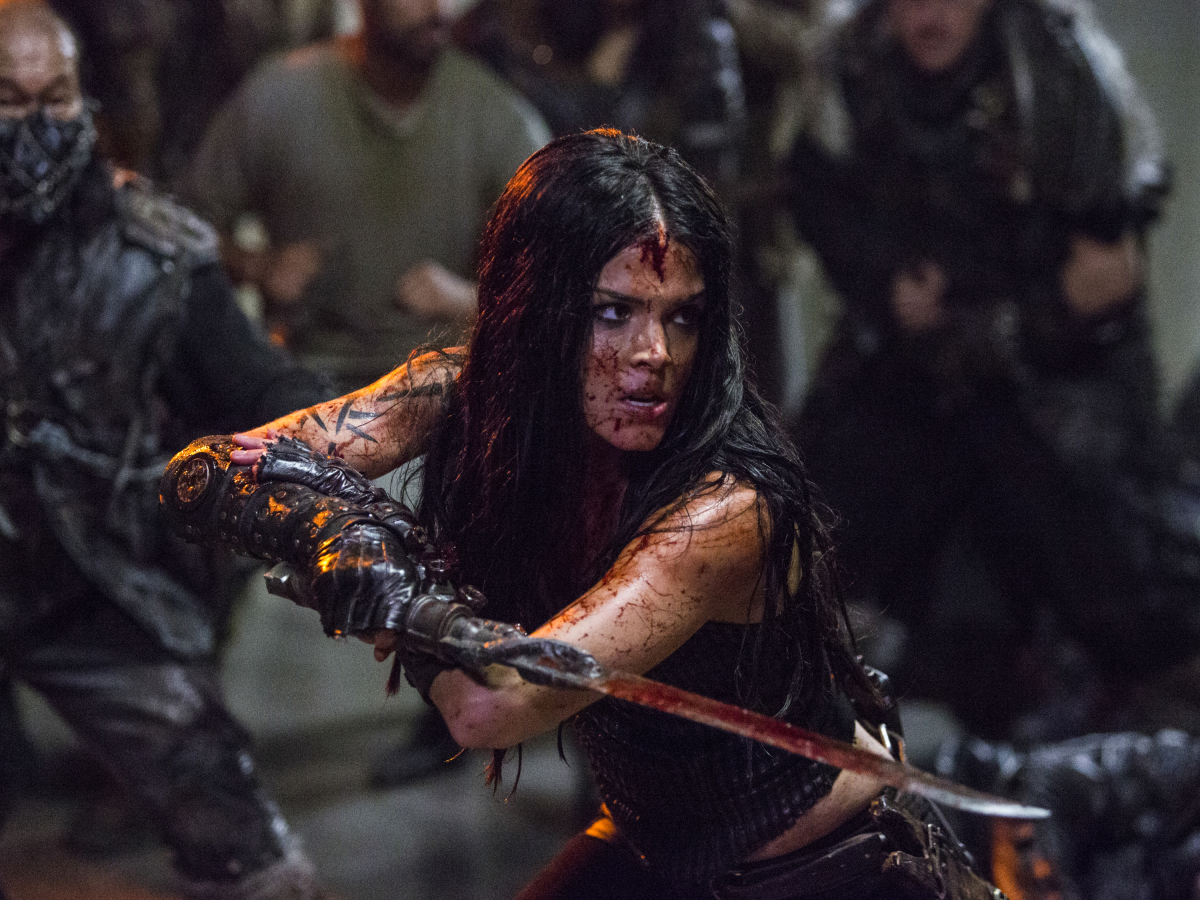
After this outburst, Octavia internalizes her grief (and all of her other feelings), turning her mind and her heart into a powder keg of violent unprocessed emotion bound to break at any moment.
It’s what leads her to murder Pike and what we are supposed to believe is the root of her turn to violence in the bunker. She’s a warrior now, and warriors don’t grieve; they fight.
In the season following Lincoln’s death, Octavia is given another love interest — as if that will solve all of her problems. Illian is little more than a bandaid for Octavia’s pain before he becomes another person that she loses.
The 100 Season 7 sees Octavia go through losing Bellamy twice, essentially, once while she’s stuck on Penance/Sky Ring where she can’t return to Sanctum and must let him go emotionally. Then on Bardo, she’s made to believe that she’s watching him die moments after being reunited with him following ten years of separation.
In the days after this loss, Octavia is once again forbidden from showing real grief or processing her feelings in any way. Instead, she is tortured with a mind-probing device and then written into a sexual relationship with the man probing her memories.
She is also made to comfort Echo in the wake of Bellamy’s death rather than being allowed to show any sort of emotion for her own brother.
Octavia’s arc as a villain is compelling, especially when compared to the show’s other “big bads,” but the blame for her evolution in the narrative rests primarily on her shoulders and the shoulders of the women around her, rather than the wildly difficult life she was born into.
Octavia is punished from the minute she’s born, made to hide in the floor out of fear of condemning her entire family to death. When she lands on Earth, it’s hardly the salvation she’s earned or dreamed of as she falls in love with the enemy only to have her brother turn against her.
She then loses her lover and descends into madness before being forced into a leadership role she did not ask for. Once in that role, Octavia has to mandate cannibalism through violent means or let everyone die.
The choice to force Wonkru into cannibalism is placed equally on Octavia and Abby. Both women are framed as villains for the choice even as it is the only option they have in the face of complete starvation. Octavia is forced into more out of character violence as she shoots a member of Wonkru in the middle of the mess hall.
This moment is particularly strange for Octavia as it’s likely she wouldn’t even be comfortable using a gun with her primary knowledge of combat being hand to hand or with a sword.
Abby is also unjustly framed as the puppeteer behind Octavia’s actions, while she never told Octavia to just start murdering people to get Wonkru onboard with cannibalism. Both women were failed by this storyline and neither of them ever fully recovered.
Octavia is currently on a redemption arc through her relationship with Hope. However, she continues to be robbed of the opportunity to process her grief, forced into sexual relationships with men who play a part in the destruction of her life, and made to be the source of emotional healing for anyone but herself.
“We all have battle scars, Finn. Suck it up and build a brace for yours.”
I’m going to be honest: I miss Raven Reyes. She’s not gone; she just hasn’t been herself for the last three seasons.
Like Octavia, and many of the other women named in this article, Raven began as one of The 100‘s most fantastic characters. She remained so through Season 4 as she brought herself back literally from the brink of death after suffering brain damage and a leg injury, both of which attacked her very sense of self, rooted in her usefulness and her abilities.
There’s a lot to unpack with Raven.
Raven is first introduced as both a brilliant mind and “the other woman” in the Season 1 love triangle between Clarke, Finn, and herself. Her intelligence is undermined by her emotions, having her play the fool as her boyfriend cheated on her and then chooses Clarke instead of her.

Aside from playing part three of an adolescent love triangle, Raven makes a name for herself outside of that as one of the smartest and most innovative people on the show, time and time again, solving problems that no one else can figure out.
She becomes one of the shows best characters, determined to overcome her circumstances in spite of what the world gives her.
Raven overcomes the loss of her first love, the loss of one of her legs, and then the loss of her own autonomy in Season 3. In Season 4, after all of this loss, Raven suffers brain damage, and she almost succumbs to it before she saves herself in one of the most triumphant moments in The 100 history.
After that, Raven comes back in Season 5 almost unrecognizable from the heroine she had become.
In the fifth season, she is made to be a prop first in Bellamy’s story, then in Abby’s. Then in Seasons 6 and 7, Raven is turned into a cynical shell of her former self, used to shame other characters acting out of emotion and then to shame herself for actions she would have once understood.
In Seasons 5 and 6, Raven is used as a foil to Abby for all of Abby’s failings. Their relationship had previously been one of the show’s most interesting dynamics as they fought together for the survival of the human race in the face of men that would see them both powerless given the opportunity.
Raven from the first four seasons of The 100 knows exactly what it’s like to make dark decisions in the name of saving the people that you love. That Raven understands that loss is a part of life and all that we can hope for is to save as many people as we can by doing the best that we can in the face of impossible odds.
The Raven that we are given in Seasons 6 and 7 appears to serve one purpose: making the Griffin women feel guilty.
This is a disservice to both the Griffins and Raven herself. Raven is more than just a bouncing board to make other people feel shame. The Raven from Seasons 1-4 could’ve easily been written as sympathetic towards her friends while also leading them back into the light.
Instead, The 100 chose to completely change Raven to have her call out both Clarke and Abby from a place of unearned moral superiority. I feel like I’ve said this over and over, but this writing does a disservice to all of the characters involved.
In The 100 Season 7, Raven has had about two episodes of screentime. In those two episodes, she’s forced others to their deaths and then mourns them as if this is the first time she’s played a part in the loss of another’s life. It’s a disappointing retcon to the complaints about Raven’s characterization in the previous seasons.
Raven also suffers from a similar love interest issue as Octavia; frequently, Raven is paired with a love interest only to have that love taken away from her the minute she feels safe in it. This is such a terrible message to send. Don’t fall in love girls — it only ends in death and heartache, and it’ll always be your fault when it ends.
“New world, same problems.”
It’s important to discuss the ways that The 100 has failed women of color, and I encourage you to also read content from non-white fans on this issue.
Black and brown women on The 100 are treated as badly — or worse — than their white women peers.
Women of color have been killed for shock value, like Maya and Anya from Season 2. In Season 7, of the women of color that remain on the series, Indra and Emori have actually gotten pretty decent arcs, but it plays a bit too little too late.

Meanwhile, Raven has been mostly absent, and Gaia has gone missing entirely with no answers for her return on the horizon.
The show also dabbles in its fair share of cultural appropriation. From Lexa’s commander bindi and the darkening of her skin tone to make her look more “savage” to Clarke and Octavia’s dreadlock hairstyles, The 100 frequently dresses white women up in things that don’t belong to them.
Treating people from marginalized communities like their looks and culture are a costume is harmful and willfully ignorant.
“Maybe there are no good guys.”
Let’s talk about how Abby Griffin was written out of The 100 because the actor that played her male love interest wanted to leave, and the show didn’t know what to do with her without him.
In an interview after Abby’s death, Paige Turco shared that she was essentially written out of the series because the writers didn’t know what to do with Abby without Kane. Women are more than a love interest for a male character or a mother for a protagonist, yet that is all that Abby was reduced to on her way out of The 100.
While this is the final sexist act taken out on Abby, it’s far from the first. During Season 1, Abby is presented to the audience as a secondary lead — the heroine of the space storyline — while Clarke leads the show on the ground.
Every character on The 100 is flawed when we first meet them, Abby included, but over the course of the series, in spite of her obvious intelligence, Abby is handed the idiot ball in order to prop up the characters around her, primarily Clarke and Kane.
Abby is the only chancellor on the show to lead her people into peacetime and maintain it during her time in the position, yet she’s forced to hand the role over to Kane just a few months later under the pretense that she can’t handle both of her roles.
While being one of the only successful leaders on the show, Abby’s authority is constantly undermined and invalidated to lessen her effectiveness to service other characters.
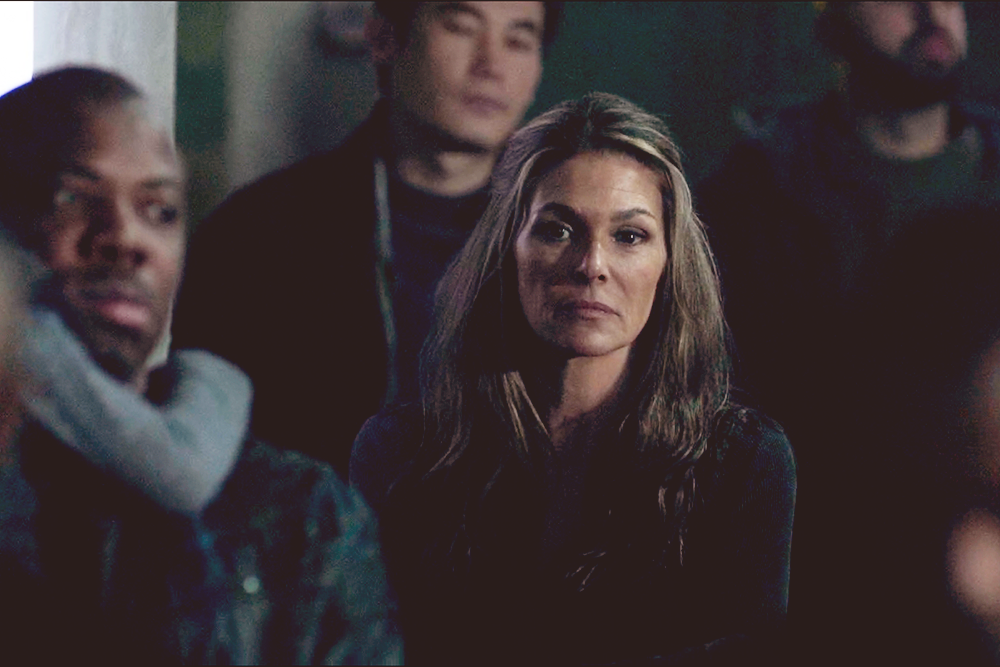
Season 5 sees Abby become a drug addict, this storyline had been Turco’s idea, centered in the goal of humanizing addicts. But as with many of The 100‘s serious issues, the execution of that goal falls short in the writing.
Abby is villainized through her addiction, and through her relationship with Octavia when she is framed as the source of Octavia’s madness late in the season.
By The 100‘s sixth season, Abby is reduced to a shell of herself, still reeling from her addiction (and being punished for it), as she trades painkillers for saving Kane and loses herself in the process. The narrative has Abby so wrapped up in a lost cause that she doesn’t even notice that her daughter has been body-snatched.
Only after losing Kane does Abby come to realize that she’s also lost Clarke. Then, moments after she’s reunited with her daughter, Abby sacrifices herself in a way that nullifies the sacrifices that both she and Kane made in the name of morality.
Abby was introduced to the audience as a bright and rebellious doctor, determined to do whatever it takes to save as many people as possible, and she died for nothing more than causing Clarke more pain.
“Mama bears don’t think. They just protect their young.”
While we’re on the subject of Abby, let’s talk a little bit more about how The 100 treats mothers and mother figures. Moms are frequently villainized for the sake of the plot, killed when they are no longer useful, or erased entirely from the narrative.
I noticed a pattern after Hope became directly responsible for the death of her mother on The 100, Season 7 Episode 10, “A Little Sacrifice.” At least four times now, The 100 has made children bear the weight of either accidentally killing their mothers or intentionally having to make that choice after their mother has been turned into a villain against her will.
In Season 1, Bellamy is responsible for getting his mother floated after he takes Octavia to the masquerade dance and they get caught. In Season 3, Monty has to kill his mother twice in order to save his friends from ALIE. In Season 6, Clarke has to force Abby out of an airlock — the same way her father was killed — because she’d been body-snatched by the enemy.
Hope and Diyoza are the latest victims of this repeated narrative, as Diyoza sacrificed herself to keep Hope from killing all of the people on Bardo. Once is a heartbreaking character moment, four times is a pattern of violence against women designed to traumatize their children.
Meanwhile, if not removed from the narrative via a gruesome death, some mothers are swept out of the story entirely. Harper is an equal parent to Jordan as Monty, and yet she has rarely been mentioned since she died. Monty is brought up in probably 75% of Jordan’s scenes, but if you came into the series at Season 6, you might not even know he had a mother.
Additionally, mothers are consistently shown as the worse parent or portrayed as a villain in their child’s life. Indra is framed as the aggressor when her daughter is introduced, and the blame is placed on her for their broken relationship. Roan’s mother is a vicious leader bent on murdering pretty much everyone.
Both Raven and Murphy had alcoholic mothers who took advantage of them and abused them as part of their tragic backstories. Jake is praised as a hero while Abby is framed as a bad mother in spite of her doing the actual work to save Clarke in the early seasons.

Clarke becomes a mother figure to Madi in Season 5 and then is forced to choose her child over her friends in increasingly reckless ways implying that her judgment has been impaired by motherhood.
The 100 has also used motherhood as a means for rehabilitation.
Instead of personal growth or introspection, Octavia’s redemption arc relies on the shortcut of a time jump and isolation with a child that she helps raise. It’s written that the only reason Octavia has grown from her past actions is that now she’s a mother and can finally understand the positions that Clarke and Bellamy had been in when they were in opposition with her.
While many of my favorite characters from The 100 are mothers, their motherhood is rarely used in a positive light in the narrative. Bad moms do exist, of course, but every portrayal of motherhood shouldn’t be negative.
“I’m not a child anymore, Clarke. I’m the commander.”
In the same vein, children aren’t treated much better. Madi is the youngest character to be a part of the series in a regular capacity, and she’s been used and abused by those around her for the sake of the unrelenting plot since her introduction.
In The 100 Season 5, Madi is a pawn in the war for her own home. She is used by both Blake siblings to take or assert power from or over the other before being tortured by her own mother figure as Clarke goes too far in her quest to keep Madi safe.
When Madi gets to Sanctum in Season 6, after being burdened with the flame with no preparation, her mind is overtaken by a dead man with evil intentions. Sheidheda whispers dark thoughts into her head until he can control her and turn her against the people she loves for his own gain.

While we haven’t seen Madi much in Season 7, we’ve still been forced to watch her tortured at knifepoint in what I can only assume is The 100‘s way of meeting some kind of gratuitous violence quotient.
Madi isn’t the only child to be the victim of such gore. In Season 1, Charlotte murders Wells (a racist death thrown in for shock value) and then kills herself. In Season 3, Aiden is beheaded, and it is implied that several other children were slaughtered in their sleep.
Violence is an inherent part of The 100, and I’m certainly not asking for it to be cut out entirely. But there’s something incredibly dark about the way that violence is used against kids.
“Life is about more than just surviving.”
When all is said and done, Lexa’s legacy will likely be the thing that most of the general public remembers about The 100. Unless you’ve been living under a rock, you know that Lexa’s death in 2016 sparked massive outrage and a campaign against the “bury your gays” trope.
Thousands of LGBTQIA+ fans spoke out against the dangers of killing gay characters in the way that Lexa was killed and the harm that her death caused.
Even before her death, Lexa’s lesbianism is framed as a weakness that she must avoid in order to be a good leader. In order to be a good commander, she has to ignore her feelings for Clarke.

Then, in the very same episode where Clarke and Lexa decide to embrace their love for one another and have sex, Lexa is killed by her advisor (who had been trying to kill Clarke).
In general, the LGBTQIA+ representation on The 100 is deceptively bad. While there are a handful of canon queer characters, the relationships between women are typically fetishized while those between men are sanitized for the audience.
Niylah’s purpose as a character has been to sleep with Clarke, while Miller and Jackson have shared little more than chaste kisses on screen.
Having Lexa, a fierce warrior, killed in such a careless way right after she slept with Clarke by the character who disapproved of their relationship sends a horrible message to young queer women: don’t fall in love, love is a weakness, and it will only end in pain.
“Love is weakness.”
While that message is most heavily associated with Clarke and Lexa, the message that love is a weakness is one that The 100 has repeated over and over especially for its female characters.
With the exception of Emori and Harper, every major female character on the show has had to watch one or more of her love interests be killed in front of her, some of them being made to feel directly responsible for their deaths.
Raven watches Finn die at Clarke’s hand after she gives Clarke the weapon and then loses Shaw shortly after she lets herself love someone again for the first time in over six years. Abby is blamed for the death of her husband Jake.
And in Season 6, after going to exhaustive and extreme lengths to save him, Abby’s made to watch Kane kill himself to teach her a lesson about doing the right thing before she’s ultimately killed as well.
Octavia watches Lincoln sacrifice himself after her agency is taken away in her attempt to save him, and it sends her into a path of darkness and violence. Then she has to watch her rebound die in a brutal bloodbath.
Similarly, Echo loses Bellamy and then goes on a murderous rampage after being told that he’s dead. When they’re reunited, he’s become a member of the cult she was trying to save him from.

Then there’s Clarke, whose love life is seemingly cursed. Clarke has a 3 out of 4 track record of being punished for having sex with someone. In Season 1, the day after she sleeps with Finn, Raven comes down from space and reveals that he had a girlfriend he didn’t tell her about.
We’ve covered Lexa.
In Season 6, similar to Raven, after letting herself have a night of romance with someone for the first time in over 6 years, Clarke watches him die and then has her body immobilized and ultimately stolen by the body-snatcher royalty of Sanctum.
For being the first bisexual lead on a network series, the quality of Clarke’s experiences with sex and love is pretty devastating. Young bi women who find representation in Clarke, myself included, have had to watch her love life bring her pain and trauma over and over again.
“I bear it so they don’t have to.”
Where do I begin with Clarke? For me, it’s the implication that the hero must suffer endlessly in order to do what’s right. Clarke is inarguably the hero of this story, and it is often part of the hero’s journey to make sacrifices for the greater good and go through trials before ultimately saving the day.
Not every hero gets a happy ending and that’s okay, but the trauma and suffering Clarke has had to endure are enough for 20 heroes, and any chance of even a satisfying ending seems impossible for her with less than a handful of episodes left to wrap up her journey.
For unknown reasons, Clarke’s role has been dramatically reduced on The 100 Season 7. We’ve only seen her a few times and from what I can discern, her arc this season has been planet-hopping.
With such little time left in her story, I can only hope that this will change. It looks like “the last war” of The 100 will end with Clarke taking the test that determines the fate of humanity.

Well, at least it’s a test she’s been studying for the past 130 years.
Clarke has had to choose between everything she loves and all of humanity pretty much every season of The 100. Close the door on her friends and kill 300 people or die in a war you didn’t mean to start at 18.
Kill 300 people or watch everyone she loves die at their hands. Let an AI kill her mother and lose the love of her life to save everyone or let humanity become mindless zombies.
Save her friends and nearly die before spending 6 years wondering if she’ll ever see the people she loves again or get them all killed by Praimfaya. Save her daughter or save her friends but not both. Die in the mind-space or let her friends die without her.
Clarke has never had a real choice. She bears the weight of humanity on her shoulders, and she doesn’t give up even when it seems like the most reasonable choice.
Even when she has saved everyone else, Clarke isn’t allowed to be happy.
Her relationships and feelings are used against her as people she loves are killed to hurt her and add to her trauma every single season. The lessons I want to take away from Clarke Griffin are very different from what The 100 is telling me is the moral of her story.
The 100 says that if you give everything you have, lose everyone you love, then maybe you’ll have a chance to be deemed worthy by a glowing ball of light.
Clarke is brave, strong, compassionate, and brilliant, and I admire her in spite of everything the show has put her through. She really is a hero; she deserves so much better than she’s been given and so does the audience.

If you are a woman watching The 100, you are told over and over that love and leadership end only in pain, your choices are out of your control, and no matter what you do, you will always hurt others with your actions no matter how noble you intend to be.
The 100 is a show that was once filled with women worth looking up to, but it has since become a graveyard for those women and their ambitions.
If you are a woman watching The 100 and your primary interest in the show is relationships, you’re told over and over that you’re watching for the wrong reasons.
The 100 has not done right by any of their female characters or their female fans, and while the men don’t fare much better, there is a clear negative bias in the way women’s stories are told.
You are stronger than your fears, love is not a weakness, and you are worthy of a good and happy life. The take away from this story is higher standards. We all deserve better, both in our lives and in the stories we consume.
—
The 100 airs Wednesdays at 8/7c on The CW.
 Follow us on Twitter and on
  Instagram!
Want more from Tell-Tale TV? Subscribe to our newsletter here!
Samantha Coley

Samantha (she/her) is a social media specialist by day and a sci-fi junkie by night. As a freelance writer and podcaster, she also enjoys live-tweeting, blogging, good music, and better television. Her current favorite television shows include Star Trek (yes, all of them), Riverdale, and Stranger Things and there will always be a place in her heart for Battlestar Galactica, Leverage, and The West Wing.
14 comments
Sorry but this is total bs.
The 100 waged war on women? The 100 is the only show I know in which women are strong leaders! They are allowed to still have feelings when they lose someone they love. Echo was a bit** before but now she turned into a human! Now she can show her feelings and still be the strong Echo she is…..
And Lexa’s death had nothing to do with her liking women. It just helped develop the story! There’s still a story behind aaaall the love and drama and deaths!! And I loved the moment the flame was “introduced”.
Anyway I don’t think The 100 treats women bad or worse than other shows. Some shows USE women just to boost their ratings but The 100 is different imo.
What a garbage review.
With the exception about lexa, all other points were pulled out of context just to build this flawed image. Dont make this a sexist issue when there is none.
I was super excited about a the 100 article this long, then it was just a bunch of bad opinions framed as fact I couldn’t even finish this nonsense 🙁
Even though I wish the points you have made are not true, Jrat and his crew whether intentionally or not are sexiest, racist, homophobic assholes. The amount of suffering these women face is disgusting. All of them are just shells of what they once were and even then they could have been much better. How good would this show be if they stuck with the Grounder arc and didn’t kill characters for mindless shock factor? I still haven’t gotten over Wells, Anya, Lincoln and Lexa. There was seriously no point for any of their deaths expect it being your bury the gays trope or just plain racism. I hate this show with a passion because at one point it helped me overcome my issues with my sexuality but now I just feel used and degraded by it.
I can’t believe I read this till the end…the writer mentions all the male deaths and sacrifices a frames it like them dying is to make the female characters look bad…. The feminism in this piece is palpable
Thanks for this! Exactly sums up my feeling towards the show. So glad it is finally ending.
All that you have said is 💯% true. Cw shows are notorious for demeaning characters and never optimizing a character’s full potential.
I do hope they have a good ending for the 100 and tell us what truly happened to Gaia.
When it comes to s7 I feel they stretched out the storyline for no obvious reason.
Against all odds and telltale signs I’m HOPING I don’t end up disappointed as I was with GOT, TVD and the Originals.
CW better redeem themselves this time round.
This is a poorly written article that does not reflect what the show is about. If this article had any research done into it, you would know Eliza had a miscarriage, which means she probably isn’t as active as she used to be. She was meant to direct an episode this season as she completed the WB Director course, but Raven’s actor ended up Directing instead, as Directing involves more time commitments during the production.
Without going into details, this article fails to mention Echo’s relationship with Roan and Queen Nia. I’d be happy to talk about this show in detail, but I really think you’re pouring gasoline on something that isn’t trying to create issues. The 100 is applauded for many of the reasons you are criticizing. Not every story needs to create representation cater towards a specific group of people _just_ to appease them.
Thanks for putting it all together. It was heartbreaking and cathartic to read this, to take that journey again of why I fell in love with this show versus how devastated I feel at what it’s become. This is a great piece and I just really appreciate being able to read this and not feel so alone in my disappointment.
A few things I didnt agree with (I.e. the white women with dreds as cultural appropriation???…I mean realistically? I don’t think the chaeacters were taking a lot of showers there for awhile and plenty of white gals wear dreads in different areas regardless). But overall I agree with the sentiment and its why I stopped watching the show. Yes Lexa had to be written off the show because the actress was leaving but that could have been handled SO much better. The Queer Coding in that third season was just absolutely ridiculous. The writing have done dirty to the majority of the characters but when they started villifying a lot of the strong ladies with the choices they made, I was done. It came across as a “women are vicious” theme and there’s a difference between making tough choices like Abby did in season 1 with Jake and then what she did in her last couple season. Like so many CW shows (especially those showcasing women) so much potential ranked by shitty writing and terrible tropes.
This is the dumbest thing I’ve ever read. I could easily write the same article but make it about how they stomp all over men’s rights. You’re just pulling random things to for the narrative you want to portray. I was just talking to my husband the other day about how I really like what they’ve done with Indra’s character, a black woman. Her story is one of inspiration. Born and raised a warrior she’s now turned into a leader. And a great leader. Unlike many of the others they’ve had, she’s truly selfless in her leadership. She’s come a long way from just following orders. But if course this doesn’t fit the narrative you’re going for. Echo is another woman who’s overcome a lot. She’s worked hard to prove to herself that she’s worthy of love and being part of a family and that’s a far cry from where we met her. It sucks that there are people out there trying to push this agenda off women constantly bring treated as less then instead of focusing on where women shine, it makes you as a writer seem childish, petty and unable to think outside the box. I agree the show has lost some of its awesomeness the last few seasons but sorry, these reasons have squat to do with it!
awful reflection. of course women will bare the weight of violence as they are the majority. all the leaders are also women. once
Seriously, why have you not written a 10,000 word essay on how badly the men have been treated, to the point where the are hardly any in it by the 6th season. Bellamy is the only alpha left, surrounded by ‘kickass’women. How about that agenda that ruined it for me.
funny how genders see their own as misused. as a dude, I see this show as nothing but women with every potential, skills, looks, leadership and practically 0 weaknesses. I have seen the female characters choices move the story from A to B to C, and the men are mindless things meant to cause chaos that the women have to fix. the men have little to no effect on the story. monty was the electrical guy…until raven came along, bellamy was the leader of the 100 until clarke took it. we see a black man as a leader in jaha, then it goes to kane. we see both of them make bad choices, even after decades in space but now abby has to take that. there are no male leaders of the grounders. hell the dudes in charge of mnt weather are the bad guys, but the female doctor is in charge of everything. it’s great to have strong female characters, but unless you want to seen as a hypocrite…spread the wealth. make women be strong but have weaknesses, have mean be aggressive but empathic.
Comments are closed.