
Tracey Ullman and John Slattery Discuss Mrs. America and Playing Real Life People on the Divisive Frontlines of 70s Feminism
Mrs. America stars Tracey Ullman and John Slattery recently spoke with reporters about their roles on opposite sides of the ERA fight. The limited series examines the clash between conservatives and liberals on the issue of women’s rights, focusing on the leader of the anti-ERA movement, Phyllis Schlafly (Cate Blanchett).
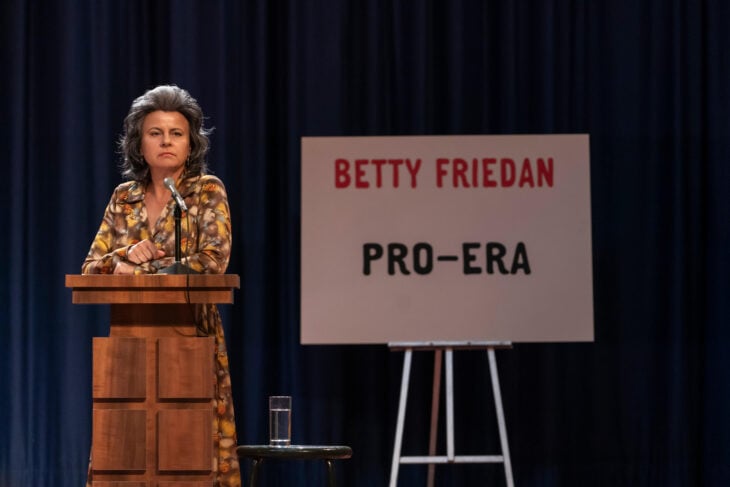
Ullman’s iconic career spans decades and is mostly comedic. On Mrs. America, she plays the mother of the feminist movement, Betty Friedan, giving her an opportunity to tinker with dramatic subject matter but still inject humor with acerbic wit.
Slattery is no stranger to period dramas having portrayed the memorable Roger Sterling on AMC’s Mad Men. On Mrs. America, he plays Fred Schlafly, the complicatedly supportive husband of Phyllis.
On separate conference calls with reporters, Ullman and Slattery discussed what it was like to play these real life figures who were at the center of the feminist debate during the turbulent 70s.

Doing a historical dramatization requires a lot research. Both Ullman and Slattery were able to watch footage and study transcripts in preparation for their roles, which became especially helpful for their big debate scenes.
Ullman read up on the debate that Betty had with Phyllis at the University of Illinois which was the focus of Mrs. America Season 1 Episode 4, “Betty.”
“It wasn’t televised,” she said. “But I read all the transcripts of it. […] And it was great. It went on for, like, two and a half hours, and interesting things were said, and lots of people were present who were, I think, fans of Friedan.”
Slattery often had less to work with, but he was not completely in the dark. “The producers, Stacey [Sher] and Coco [Francini] and Dhavi [Waller], gave us a lot—as much research as they could dig up on everybody,” he recalled. “Certainly, with regard to Fred, there was less archival footage, and being that he wasn’t a public figure there was a little less.”
He was fortunate, however, to be able to see Fred during a particularly tense moment that was recreated on Mrs. America Season 1 Episode 5, “Phyllis & Fred & Brenda & Marc.”
“[The debate] was cobbled together from the Good Morning America interview that Fred and Phyllis did and the Tom Snyder scene with Brenda and Marc and Phyllis and Fred,” revealed Slattery. “Where Fred says that he finds Phyllis submissive was actually on Good Morning America.”
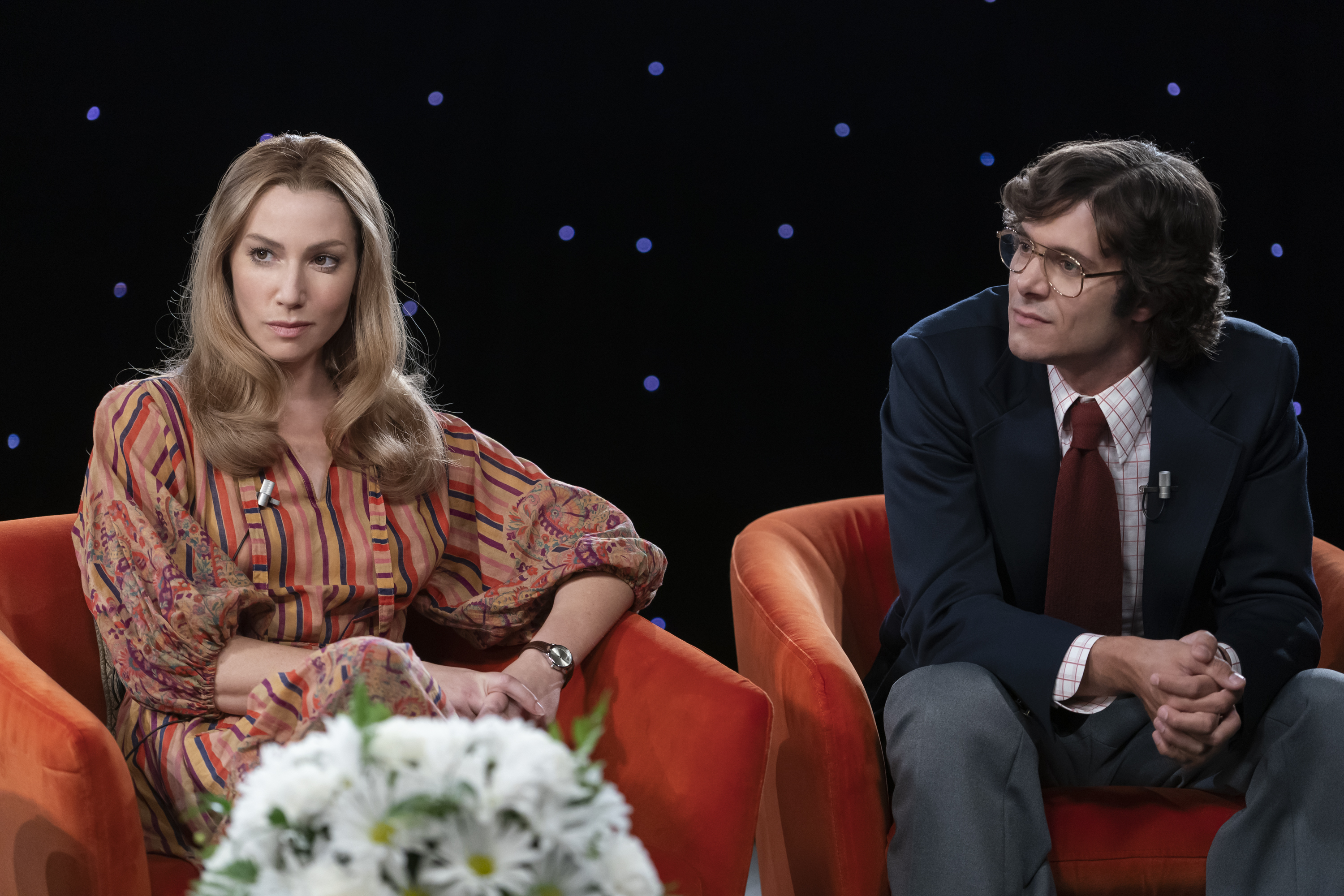
“That, for me, was great because we had footage to look at,” he impressed, adding, “There’s endless Phyllis footage so Cate had a field day. I had a little less to pick from. But that was really fun to watch and break down, and just the subtleties of who’s looking at who when and when you decide to say what, especially with that “submissive” line—it was just really well-considered.”
Ullman also had Betty’s book, The Feminine Mystique, as material from which to pull.
“It’s a wonderful book,” she praised. “I think I read it in my 20s. But to read it again, and just the starting line, ‘Are we living a half-life?’—it’s really worth reading. I mean she wrote the book. And I think that the movement really acknowledged that.”
Ullman had other feminist influences growing up, having read Simone de Beauvoir’s The Second Sex before The Feminine Mystique. She also credits her mother.
“My mother was a very, you know, a very strong woman and never felt inferior to any sort of men. And, you know, she was a great role model in that respect.”
On Mrs. America, Ullman’s Betty has a bit of a rivalry with Gloria Steinem played by Rose Byrne, however, she recalled the impression the famous feminist had on her personally.

“I remember Gloria Steinem just like, you know, any young girl in the 70s and how she was stunning to look at and interesting and, you know, eloquent.”
Ullman described the difference between the idea of feminism back then and how it’s perceived now. There was a stigma surrounding the term.
“Men ridiculed feminism as being somebody sexless and humorless,” she remembered. And she stated that “Now it’s much easier to say, ‘Oh yes, I’m a feminist.'”
But Ullman acknowledged that there is still work to be done.
“You realize that there’s the same things to be fought for. I mean, there are hard won rights that we have that women have been so incredibly brave and bold to get for us. And we can’t let them slip away. And we have to keep coming together and getting out and having our voices heard still.”
On the other side, Slattery said he was able to relate somewhat to Fred’s vulnerability and the unique position he had in the zeitgeist of the period.

“He knew that Phyllis was a natural. […] She’s incredibly telegenic and great off the cuff, incredibly well-prepared. She was just really good at what she did, so there was no holding her back,” he remarked.
“But I think as far as her going to law school, he felt that encroached on his arena more than he would’ve liked.”
Slattery continued, “Policy-wise, they were in unison. I think it probably gets difficult to be in a supporting role where Phyllis gets all the ink and all the play, and it’s probably a kick in the ego. He was a traditionalist and didn’t want to be left at home in Alton, Illinois with six kids while Phyllis went to D.C.”
“There’s a lot about Fred that I guess I didn’t find too difficult to relate to,” he stated.
Ullman talked a bit about Betty’s struggle with the others in the movement, particularly Gloria.
“They didn’t have an easy relationship, unfortunately,” she said.
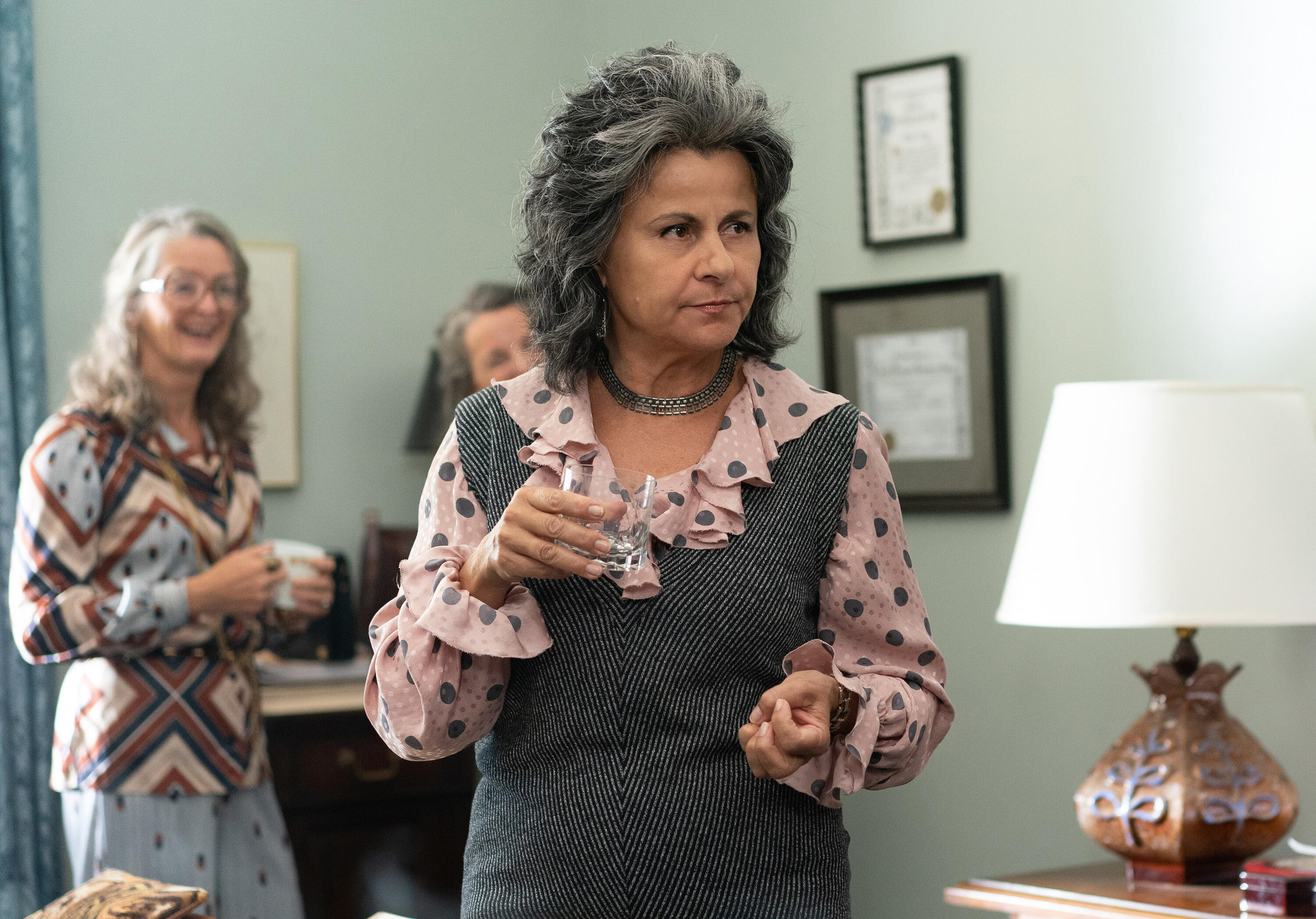
“I think Betty was a little abrasive with quite a few people. I think maybe [Gloria] was…she came along and she was younger. She could wear tight jeans. [Betty] does say in my episode (Mrs. America Season 1 Episode 4, “Betty”), ‘What is it with her? It’s all about hair!’ They had a tough time.”
Ullman added, “You know, just because they’re all women together doesn’t mean they all get along.”
She expressed that age and ego played a part. “[Betty] was a little older than the rest of them and she, I think, had an ego and wanted to be the leader. So, there was a little friction amongst her and the others. But she kept going. She was an extraordinary woman.”
Both actors applauded the atmosphere of the set.
“It was a fantastic experience, this job,” recounted Ullman. “To be with such a great group of women. I’ve never been on a show with all females, you know, pretty much. And our DP was a woman and lots of directors were women.”
Slattery had a similar appreciation, particularly about the production’s preparedness. “By the time we started shooting, they had scripts for six or seven episodes, and scenes from further down the line, so we had a chance to go over a lot of the material.”
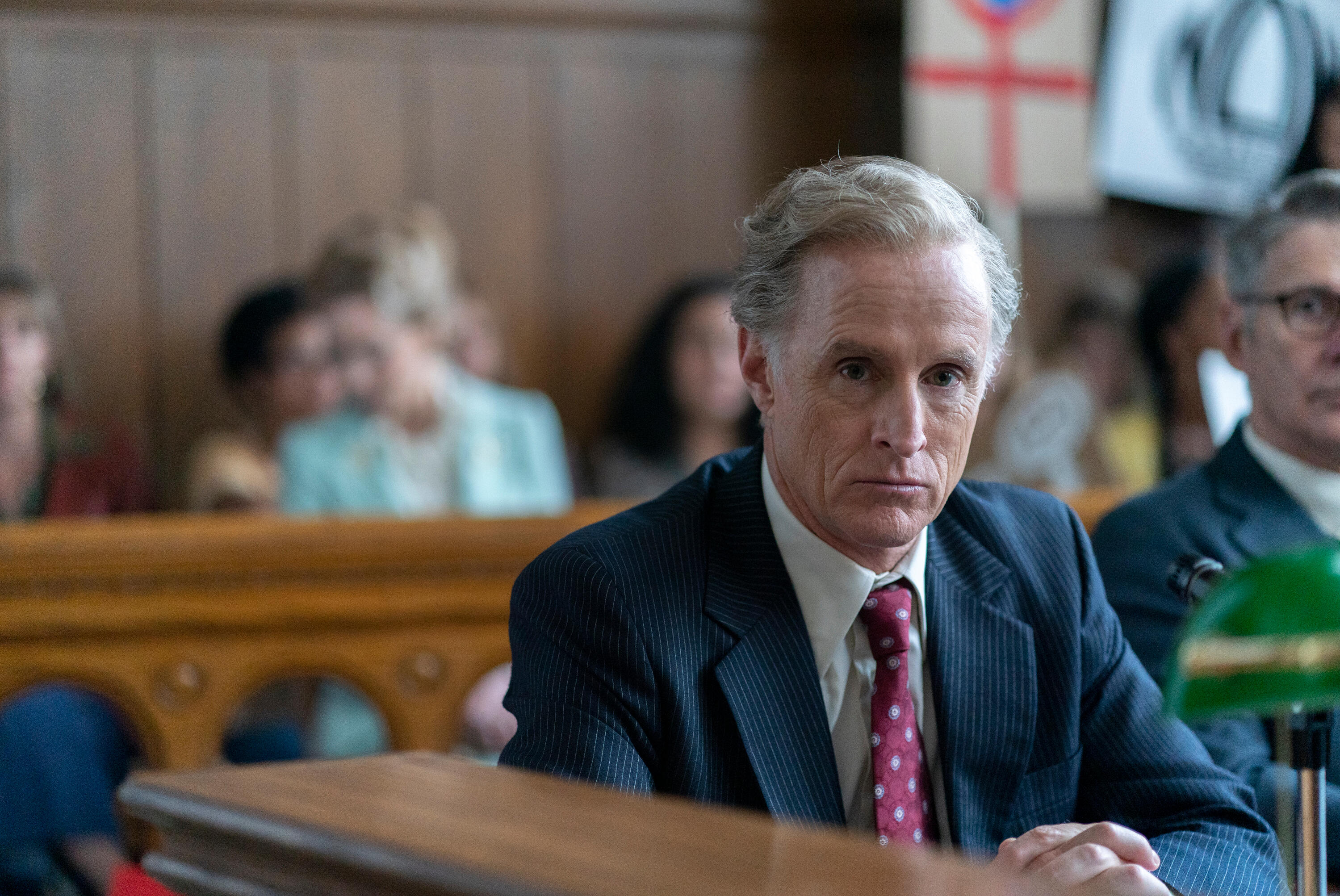
“It was one of those experiences that you hope every one from then on will be like that,” he said.
Slattery and Ullman had high praise for Blanchett who is also an executive producer.
He described Blanchett’s comportment as “open, prepared, and enthusiastic, and willing,” adding, “you know, everything you could hope for.”
Ullman enjoyed the long hours with her while filming the debate on Mrs. America Season 1 Episode 4, “Betty.”
“I got to work with the great Cate Blanchett for 18 hours. And we never stopped—constant—we had to really focus and remember the lines,” she recalled.
“That was a great scene to play. And it was a hard, long day but one of the greatest days for me in my acting career, may I say, I enjoyed it enormously.” Although, Ullman did elaborate, “Wearing 70s shoes and pantyhose for 18 hours—I ached.”
When asked how they were doing during the pandemic and sheltering in their homes, both Ullman and Slattery remarked on how fortunate they are to be with family.
Ullman said, “There’s not much comedic quality to what’s going on right now, I don’t know. I mean, I am so lucky, I’m here with my daughter’s son, my grandson. And I just think toddlers are an asset because they have no sense of the pandemic and just no regards to social distancing. So, I have had the joy of my grandson to distract me and I just feel very fortunate.”
She also talked about her friendship with Meryl Streep. “We both became grandmothers this last year. We both became mothers at the same time. We always, you know, seem to parallel each other.”

Having stated that the process of getting the role of Betty was challenging, Ullman said that she feels a part of the group.
“They gave me a bloody hard time giving me this part,” the actor mused. “I was the last one to be cast. They kicked their tires. They were, like, talking to me, and making me read, and they made me fly in, and they made me wait weeks.”
“And in the end, I was like, ‘Oh, you know, look, don’t worry about it. […] So it was tough. I mean, I really wanted it. And I feel vindicated and happy that it’s worked out so well,” remarked Ullman.
“It’s an amazing group of women and I’m very privileged to be amongst them, really, it’s great. We’re all good friends. We all Zoomed last week. We all Zoomed…and had cocktails, and yes, it was great.”
Of his time in isolation, Slattery said, “Staying home with my family is a good thing, actually.”
“My son is here, my wife, my wife’s mother, there are a couple of dogs—it could be a lot worse. And it is a lot worse out there for so many people. I’m just trying to, you know, do my bit.”
He also mentioned that he’s reading and watching movies. “I watched Double Indemnity last night.”
When it came time to end the call, Ullman offered a comforting farewell, singing, “We’ll meet again. Don’t know where. Sorry. Don’t know when. Bye, everyone.”
Mrs. America airs Wednesdays on FX on Hulu.
 Follow us on Twitter and on
  Instagram!
Want more from Tell-Tale TV? Subscribe to our newsletter here!
The Tracey Ullman phone conference interview took place on April 21st, 2020 and John Slattery’s on April 27th, 2020.
Erin Allen

Erin is a former script supervisor for film and television. She's an avid fan of middle aged actresses, dark dramas, and irreverent comedies. She loves to read actual books and X-Files fan fiction. Her other passions include pointing out feminist issues, shipping Mulder and Scully, and collecting pop culture mugs.