

Lost Girls Review: Amy Ryan Shines in a Dark Film
Lost Girls, based on the very real (and still very unsolved) murders at the hand of the Long Island Serial Killer, isn’t your typical true-crime film. Amy Ryan, as the mother of one of the victims, is our guide through the hellscape that is the case, which likely claimed the lives of over 16 people over a period of two decades.
Unlike many true-crime films, it doesn’t focus on long extended shots of crime scenes and dead bodies. No, showcasing the grotesque natures of these crimes isn’t the point.
Rather, the film is far more interested in the victims themselves and the families they left behind, not necessarily how they died. Why were these particular women ignored and deprioritized by the authorities? Was it because most of them were sex workers? Or because they came from a lower socioeconomic class? Or some combination of both?

If a neat resolution is what you’re looking for, look elsewhere. The Long Island Serial Killer is still at large and worse still, Mari (Amy Ryan) doesn’t live out her days with a sense of closure or the satisfaction of seeing any police procedures change or greater advocacy for sex workers like her daughter. I’ll save that spoiler for you to fully discover on your own.
Lost Girls is a difficult watch and much like Netflix’s Unbelievable, it’s unlikely to be a film that you can stomach seeing more than once.
With all of that said, it is a solid movie, though imperfect, and Ryan is revelatory.
To some extent, this shouldn’t be surprising. Ryan manages to ace nearly everything that’s thrown at her — comedy or drama — but this role is uncomfortable and ugly.
While she’s fighting a flawed criminal justice system, Mari’s deeply flawed herself, and Ryan wisely doesn’t try to soften any of her edges. She’s awash with anger, shame, and a messy peroxide job. She’s not trying to be a hero; she’s simply trying to get someone to take responsibility.
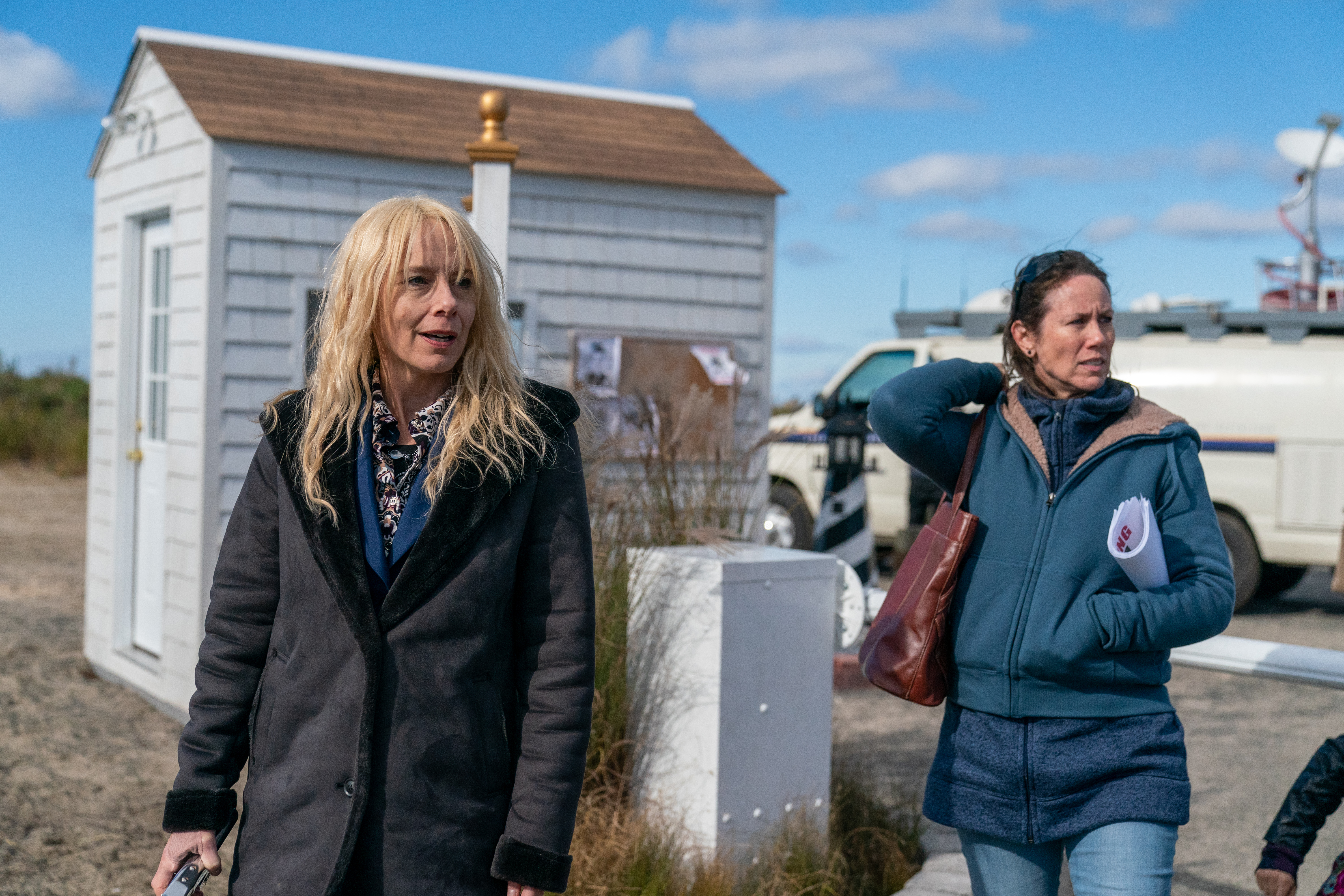
Therein lies one of the points though: the inherent “goodness” of Mari and her daughter, Shannan, (or perceived lack thereof) doesn’t matter.
Their messiness and their mistakes don’t outweigh their basic humanity. Because they are people, they deserve justice, fairness, and attention to their plights. And dammit, they’re denied at almost every turn.
Ryan’s isn’t the only performance that stands out. Both Oona Lawrence as Sarra and Thomasin McKenzie as Sherre excel in their roles as Mari’s daughters, despite not having much devoted screen time.
Lawrence’s performance is imbued with just enough discomfort and anxious energy that the coda makes sense and McKenzie is fascinating. Her performance is layered and all of her emotions aren’t easily decipherable. Keeping with the theme of the film, it’s not an obvious, straightforward performance.

While there is ambiguity about what ultimately happened to Shannan, one thing the film is decidedly clear on is how it feels about the police.
Much of our pop culture venerates law enforcement. Hell, arguably the most famous and beloved detective currently on TV, Olivia Benson, works in a sex crimes unit.
That love and admiration isn’t present here. The law enforcement working on Shannan’s case (and the case of the other missing and/or murdered women) are portrayed as incompetent and uncaring.
The two main characters that represent this group, Dean Bostick (a characteristically brash and slimy Dean Winters) and the flat Richard Dormer (Gabriel Byrne) feel almost too cookie-cutter and lack nuance.
It also doesn’t help matters that we’re not really given an opportunity to see what the police are actually doing behind the scenes.
It would have had more impact to see behind the scenes shots of them actively making choices that undermine and impede the case. Instead, we’re simply left to connect the dots that they lack any proactivity or interest based off of how Mari responds to them.

That’s indicative of the biggest issue within Lost Girls. Despite some strong performances and a compelling message, it does come off a little underbaked at times. There are key things, like the actual choices of the police, that would have been helpful to see.
The same thinking applies to Mari’s home life and the emotional and financial consequences of her pouring all of her time into pursuing justice for Shannan.
Plus, there’s a performance from Lola Kirke, as a colleague of Shannon’s still in the industry, that’s bordering on riveting. We just never quite get enough time or fleshing out of some of these things, and the result is a tinge of dissatisfaction.
I suppose that dissatisfaction and unease isn’t altogether a bad thing. The essence of Mari (and Shannan)’s actual story is that so many things lack the closure and information we want. Why would the dramatized version of their life be any different?
Despite some of its limitations, the film does succeed in making a point about how those on the fringe of society are treated compared to their wealthier, or more socially acceptable, counterparts. In a time where conversations rage constantly about the “haves and have-nots” that’s a topic worth exploring, especially from a viewpoint we don’t typically see.

What did you think of Lost Girls? Share your thoughts in the comments below.
Critic Rating:
User Rating:
Lost Girls is currently streaming on Netflix.
 Follow us on Twitter and on
  Instagram!
Want more from Tell-Tale TV? Subscribe to our newsletter here!
Cristina Iskander

Cristina is a Broadway enthusiast, book lover, and pop-culture fanatic living in New York City. She once won a Fantasy Bachelor contest (yes, like Fantasy Football, but for The Bachelor), and can banter about old school WB (Pacey + Joey FTW) just as well as Stranger Things and Pen15. She's still upset Benson and Stabler never got together and is worried Rollins and Carisi are headed down the same road, wants justice for Shangela, and hopes to one day walk-and-talk down a hallway with Aaron Sorkin.