
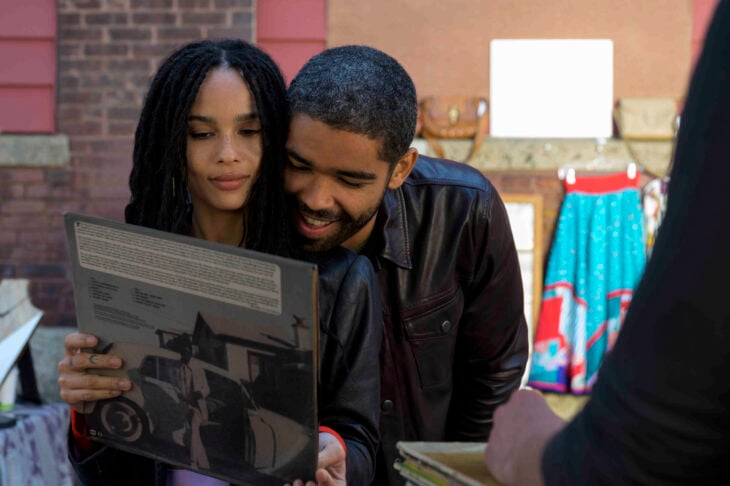
High Fidelity Season 1 Review: Remake Finds Its Own Rhythm
(Warning: This review contains spoilers for the first season of High Fidelity).
Nick Hornby’s book, High Fidelity, is a beloved property (my own well worn copy is inches away as I type). Plus, it has already inspired multiple adaptations, including a Broadway musical.
So, it really begs the question…did we need this adaptation? And would this fare any better than the rather dismal Hulu reimagining of Four Weddings and a Funeral last year?
I don’t think the world was clamoring for another version of High Fidelity but nevertheless, it has one. And fortunately for us, it’s…good, or to steal one of Cherise’s phrases, dope as shit.
It would have been easy for this version to rest on its laurels and cheap gimmicks. Look, the protagonist of the story is a black woman now, instead of a white man! It stars Zoe Kravitz, daughter of Lisa Bonet, who was one of the stars of the original film! Instead of The Boss, Rob imagines Blondie in her apartment!
Yes, there are some clever callbacks and references to the book and the original film. But dare I say, this High Fidelity doesn’t just reimagine the original story. It improves upon it and by the end, becomes its own separate thing.

This starts with Rob. The beating heart of High Fidelity, in any of its versions, is lead character, Rob. A stand-in for the audience, Rob is a deeply flawed character: sensitive, passionate, opinionated, but sometimes a grade-A asshole.
The gender flipping in this version allows for some of the more ick misogynistic moments of the original to be easily rewritten but it’s Kravitz that’s the true revelation.
Kravitz, luminous and often a highlight in everything she’s in (even material that’s otherwise abysmal), is effortlessly cool and beautiful. High Fidelity takes advantage of this but goes a step further. Kravitz’s Rob is equal parts acerbic and vulnerable.
Rob is charming and magnetic but also deeply, deeply frustrating. It’s to Kravitz’s credit that Rob can do some terrible things and we still ultimately want her to find some sense of happiness. Plus, unlike other versions of Rob, especially John Cusack’s iteration, this Rob actually seems to grow up and mature, albeit very slowly.
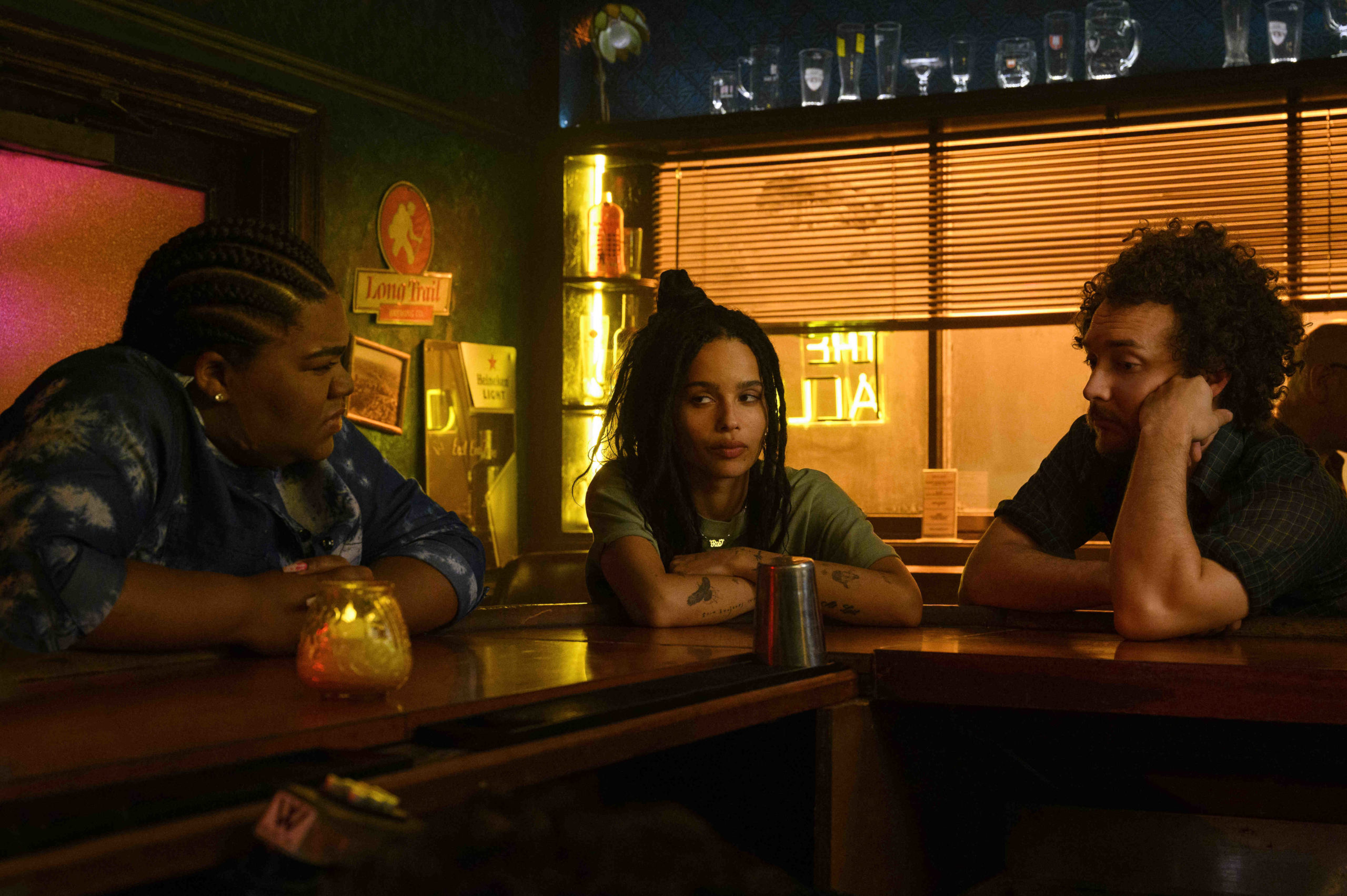
Da’Vine Joy Randolph and David H. Holmes round out the main cast as Rob’s best friends and record store employees. The trio shares a believable chemistry but both Randolph and Holmes are interesting in their own right.
Holmes takes centerstage on High Fidelity Season 1 Episode 8 “Ballad of the Lonesome Loser,” easily one of the strongest episodes of the season. (It’s almost so strong that I wanted to follow him for the rest of the season, but I suppose it’s not a terrible problem that your supporting characters are compelling).
Randolph, most known for her recent appearance on Netflix’s Dolemite is My Name, runs away with the funniest lines of the series, but also shows Cherise’s hidden depth. Despite her bravado — of which there is a significant amount — Cherise carries her own securities and shame.
The biggest issue with Cherise’s character is simply that she’s not given more to do. There are moments where you might worry that she’s veering too much into “sassy black friend” territory, and fortunately, the show steers away from that just in time. Nevertheless, she doesn’t get the kind of spotlight moment that Holmes does.
If High Fidelity is renewed for another season, which I suspect it will be, she simply has to front her own episode like Holmes did.
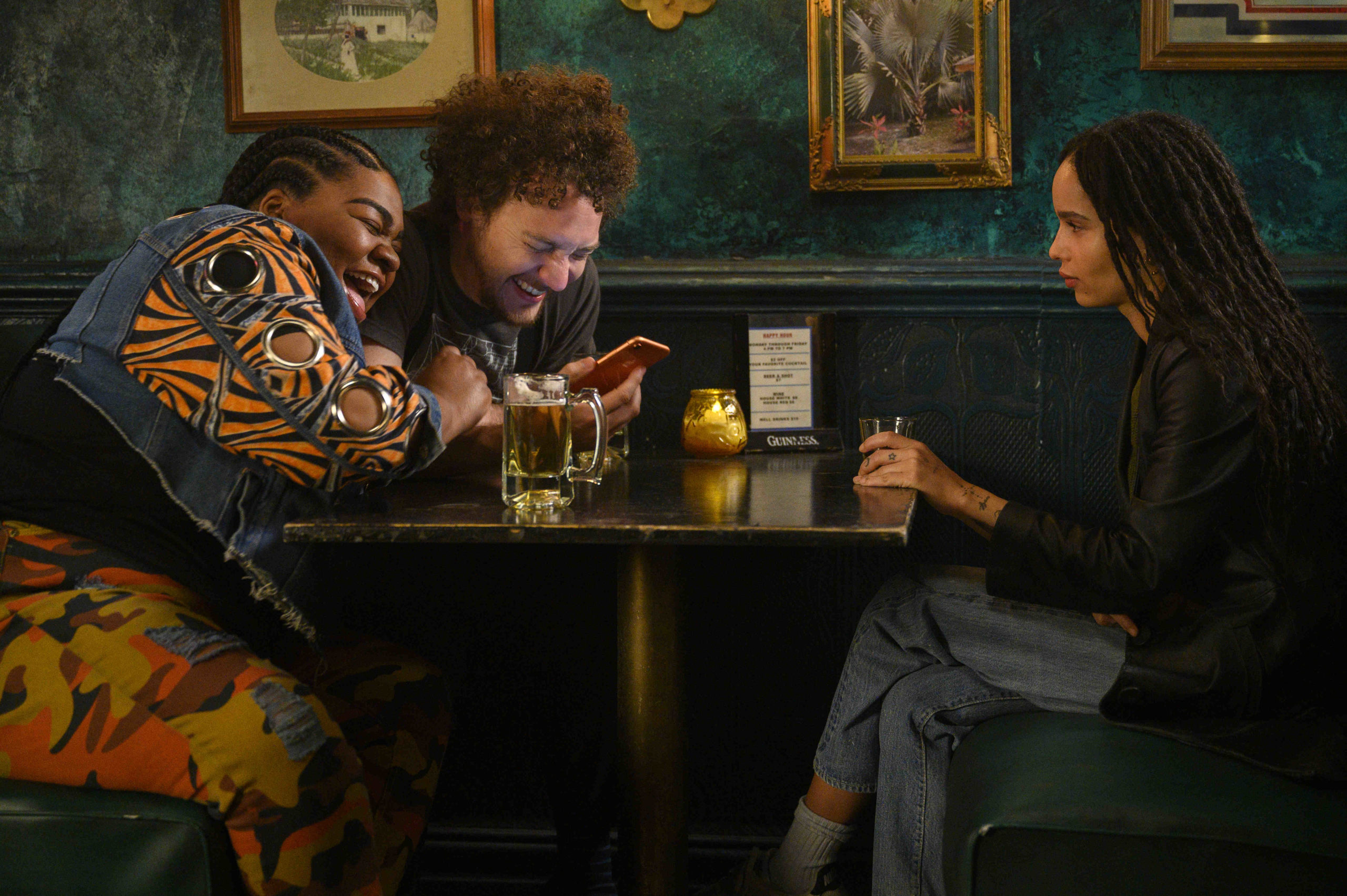
Furthermore, there’s a lot more to mine when it comes to the relationship between Cherise and Rob. How did Cherise even come into the fold and become friends with Rob? How do they navigate the differences in their experiences as women, namely the difference in their skin color and size? They have to walk through the world very differently.
High Fidelity is nothing without its love interests. Rob’s journey down memory lane demands that a variety of different paramours roll through, but the two most important ones are Mac (Kingsley Ben-Adir) and Clyde (Jake Lacy, perpetual nice guy of Obvious Child, The Office, and my favorite Netflix Christmas film, A Christmas Inheritance).
Neither Ben-Adir or Lacy serve as mere window dressing, which could have been an easy thing to do given that this is really Rob’s story. They’re both positive representations of men: emotionally available, present, and thoughtful.
The twist at the end of the season — that it’s Clyde that Rob ultimately wants to pursue and not Mac, which would have more closely followed the original plot — doesn’t feel like such a crazy plot point.
As audiences, we can be easily programmed to expect or want the original couple to find its way back to each other. Here though, it’s completely understandable why Rob would be ready to move on to Clyde. The way the show is written, and the way Lacy plays Clyde, makes it easy for that revelation to go down.
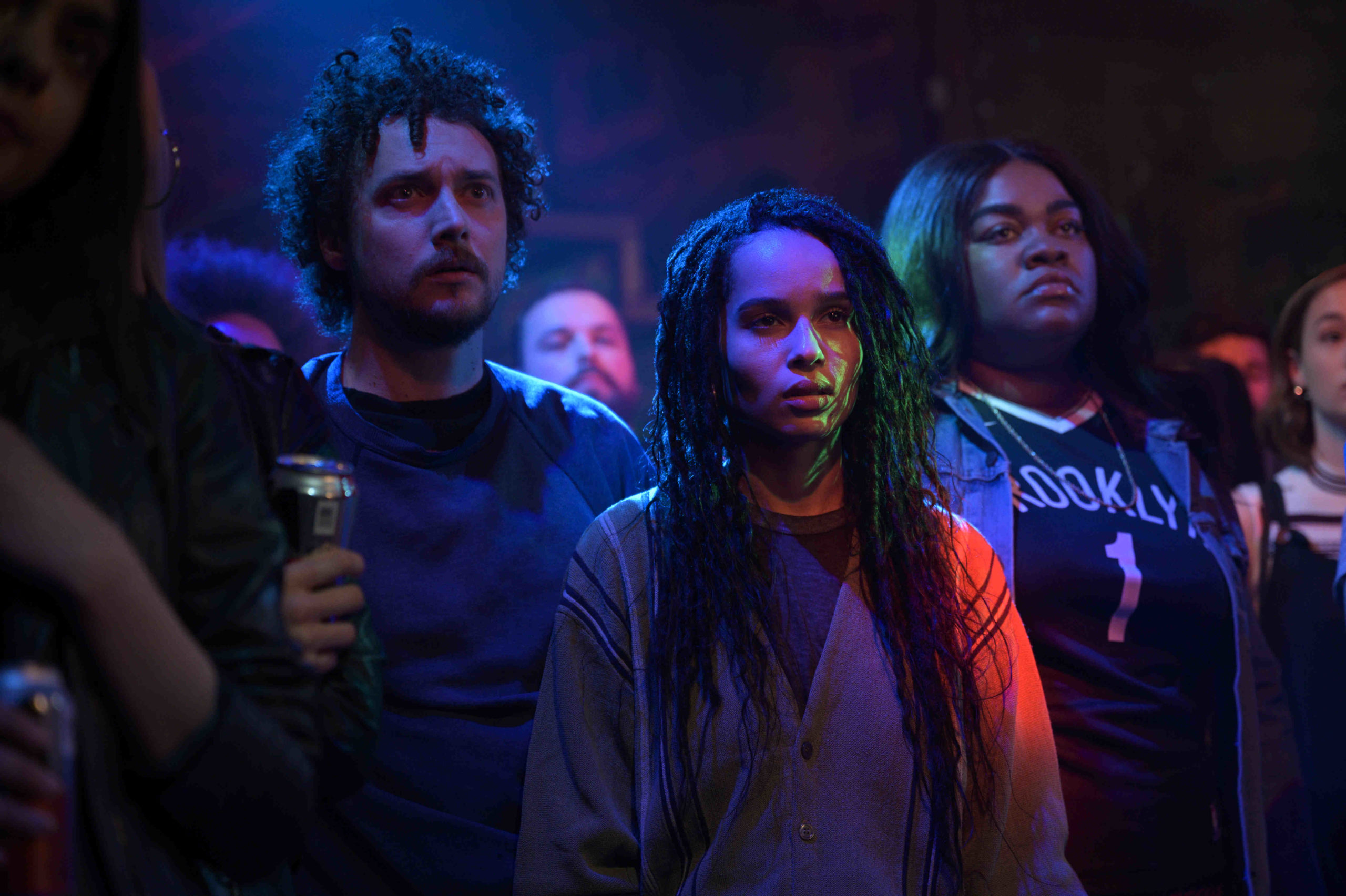
There are clearly a lot of compelling characters inhabiting the world of this High Fidelity. However, I’d be remiss if I didn’t mention how distinct and fleshed out the world is beyond the characters themselves.
The updates to the show are clever and apt. In fact, I’d go as far as to say that the sendup of influencer culture (because of course, Charlie, the absolute worst of Rob’s exes has been reimagined as a social media influencer, Kat) is one of the funniest, most pointed observations I’ve seen in some time.
However, there are other delights too. While Rob’s friends bandied about the merits of cheesy music, like Stevie Wonder’s “I Just Called to Say I Love You, ” in this version, they debate the merits of supporting artists like Michael Jackson and Kanye, in light of their questionable personal and political choices.
And the music? Oh the music, thanks to some help from Questlove, is excellent. As an aside, interestingly, this version feels less elitist and snobbish in its musical choices and more judgmental about exactly how you engage with music and use it as a tool to connect with others.
Overall, High Fidelity is a success; while it initially feels like a cover of the original, it deviates and evolves as it goes on, providing smart updates, new directions, and wisely expanding on some ideas that were mere blips in the original (there’s a brilliant Parker Posey episode which has roots in the original but takes on a full new life here).
I’ll be playing this on repeat. I suggest you do the same.
What did you think of this season of High Fidelity? Did any episodes stand out for you? Share your thoughts in the comments below!
Critic Rating:
User Rating:
High Fidelity is currently available to stream on Hulu.
 Follow us on Twitter and on
  Instagram!
Want more from Tell-Tale TV? Subscribe to our newsletter here!
Cristina Iskander

Cristina is a Broadway enthusiast, book lover, and pop-culture fanatic living in New York City. She once won a Fantasy Bachelor contest (yes, like Fantasy Football, but for The Bachelor), and can banter about old school WB (Pacey + Joey FTW) just as well as Stranger Things and Pen15. She's still upset Benson and Stabler never got together and is worried Rollins and Carisi are headed down the same road, wants justice for Shangela, and hopes to one day walk-and-talk down a hallway with Aaron Sorkin.