
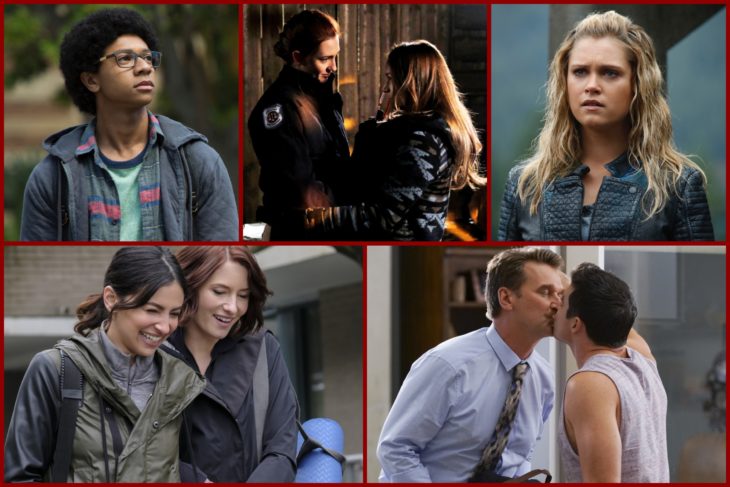
Tell-Tale TV Panel: LGBT+ Representation on Television
How has social media played a part in representation?
James: Twitter is a perfect example of this. Even personally, the number of people with whom I’ve interacted on Twitter has completely reshaped the way I view the world. Before then, other cultures were sort of theoretical and monolithic; I knew that other cultures had struggles within the concept of the white patriarchy, but before these cultures were attached to actual people, I never could have imagined the depth and breadth of how those struggles differ from my own.
Lizzie: I think, when used correctly, social media is a great tool, one that allows us to see life from the POV of other people, who are often, having a harder time than we might be having. We might never understand, but the amount of information social media gives us allows us to be more empathetic towards the plights of others, and it also allows us to connect with people who are different, make friends with people we might have never made friends with. That’s beautiful.
Candice: It seems like all I’m doing is agreeing with you guys, but you all make such great points. It can change people’s perspectives and help individuals empathize with others that they might not have had the understanding to empathize with beforehand.
Another way social media has played a part is by spreading awareness of the issues in representation in how the LGBT community is portrayed, that add to the dangerous “outsider” rhetoric, and helping to make a difference in the world. So many media corporations now think twice about misappropriated LGBT Culture, because there will be backlash on social media.
And when there’s backlash, there is negative feedback that keep people from consuming their products. Because of this, they lose money and make it a point to try and avoid future deficits. Social media has become a platform for activism and change and it’s so wonderful.
Lyra: Social media has given underrepresented groups a platform to speak up on and connect with others like them. It’s helped create communities who can use their collective power to change people’s minds, have their voice heard, and create content that speaks for them and is by them.
Samantha: Again I’m seconding you guys! Social media can be an amazing tool for representation both in our day to day lives and in the Television and Film media we consume. LGBTQ people can find so many others like themselves through social media, as well as finding and uplifting creators who are making those LGBTQ characters we love so much. Social media can also be used to push for more, and better representation in the shows we watch and to raise awareness about harmful tropes and stereotypes.
Brittany: I can’t agree more! Raising awareness is really the best thing about social media. It isn’t always smooth sailing, but seeing the results of constructive feedback is incredibly gratifying.
The more we talk to creators and encourage diversity, the more we will see the true beauty of society represented on our screens. The important part is to always try to educate if you have the means to — anger is a valid thing to feel and it’s expression on social media is cathartic, but it needs to be balanced with genuine helpful criticism.
Hillary: Social media platforms have become a major tool for building stronger communities brought together through fandoms. For instance, the #Earpers fandom has taken Twitter by storm and I don’t think I have ever seen a more positive group of people come together to support the show and each other.
I think that is just one specific instance that highlights the point that Lyra makes. These communities have real power when they come together! I think Brittany also makes a good point that the more we open up a dialogue with creators and encourage diversity, the more we still that represented on television.
What show, couple, and/or character is making an impact by doing representation right?
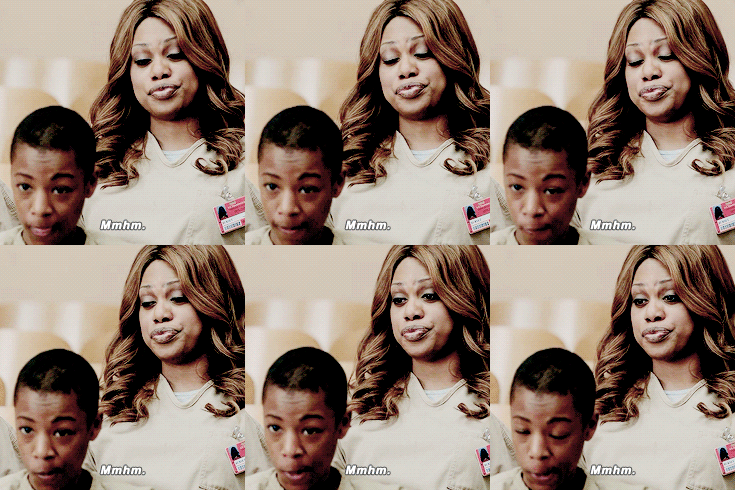
James: Orange is the New Black does a fairly decent job, I think, of covering the entire spectrum of sexuality, showcasing the sexual fluidity that often comes with human experience and doing so without painting anyone as depraved or deviant for doing so. They’re doing a sh-t job with Laverne Cox’s character, though.
Lizzie: I enjoyed One Day at A Time tremendously, not just because of Elena’s story, but because I know that story was based on the real-life story of one of the writers, and it’s important to have representation not just in front of the camera, but behind the camera. Diverse stories can only be told, in a truthful manner, by diverse writers, and knowing that a show like this is allowing not just the writers, but the directors and the producers to be diverse, makes all the difference in the world.
Candice: I’d have to say Steven Universe… all the way. I would say Sense 8, but I spoke about them already and SU deserves to be mentioned in this conversation. This show has made it a point to represent the LGBT community and do it in such a way that it is huge implications for the community.
Rebecca Sugar has created a metaphor where two cultures (The Crystal gems, representing the LGBT community, and the human world, represented by the cis, hetero community) must learn to accept one another’s differences and culture to survive.
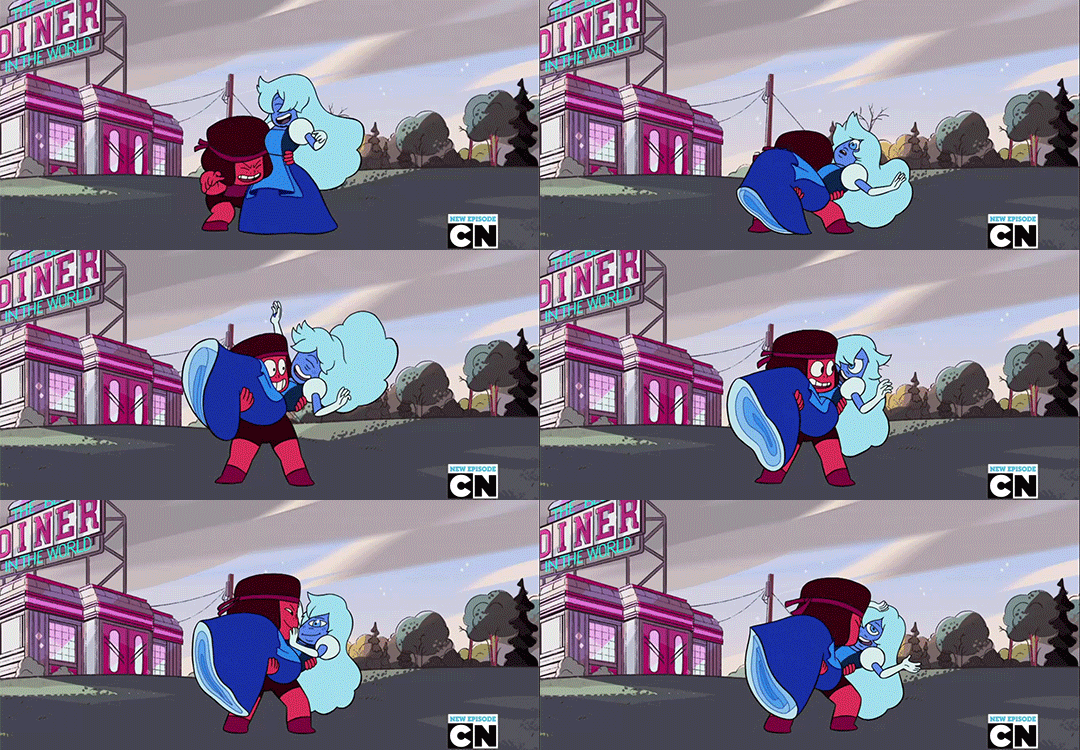
Anyone who is unwilling to change, has dire consequences. In this show, she normalizes the sexual liberation (the gems fusing with one another), same-sex relationships (the gems who stay fused) and bisexuality (Rose Quartz). There aren’t any stereotypes Sugar falls into and I think a large part of that is because she is a part of the community herself. She understands the importance in representation.
Lyra: Wayhaught, Freelin, WhiJarryl, and Sanvers are all impacting LGBT representation in a positive way. They are paving the way for more couples like this to be on TV and showing us how LGBT relationships aren’t any different from any other out there. They require just as much work as heterosexual relationships and go through the same joys, heartaches, and disappointments.
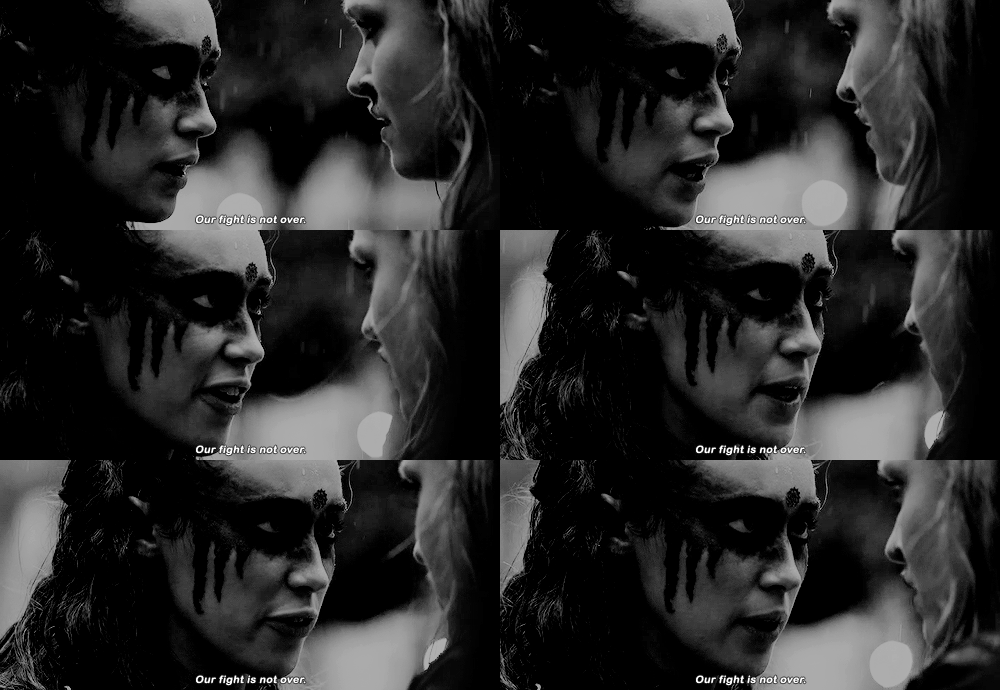
Samantha: Everyone has listed such excellent examples so far that I absolutely agree with! Since it hasn’t been mentioned yet, I’m going to put myself out on a limb here and add The 100 to this list. I know it’s a bit sacrilege to say The 100 and LGBTQ in the same sentence in a positive manner anymore, but hear me out.
What the show did to Lexa was absolutely reprehensible and there will always be room for improvement. But the show is still doing a wonderful job of showing the validity of Clarke’s bisexuality. Clarke is allowed to mourn Lexa and still take comfort from Niylah, and none of her relationships invalidate any of her past ones.
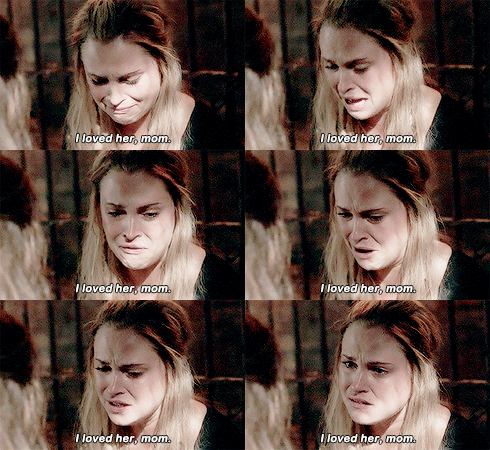
Additionally, The 100 has multiple LGBTQ characters and continually proves that the show is unafraid to show a variety of sexualities through characters like Niylah, Miller, Jackson, and even Murphy (and potentially so many others). Clarke and Lexa are iconic LGBTQ characters, and I’m genuinely grateful for them and all the other LGBTQ representation on this show.
Brittany: Seconding Sam! While Lexa’s death (and Root’s, and Poussey’s — I could go on) was the worst perpetuation of the Bury Your Gays trope, it busted open an entire movement that has had a direct, positive impact on the rest of media.
Now we have shows like Wynonna Earp deliberately subverting the trope with Wayhaught. I think Nomi and Amanita are a great example of diverse, normalized representation. Not only is their relationship trans inclusive, it also involves a woman of colour with a support network of LGBTQ mentors and parents. (#RenewSense8)
Hillary: I’m actually in the same boat with you both! So I can only echo what both Sam and Brittany have said about BYG trope and how it inspired a movement. One of those positive impacts was creating a pledge for industry people to sign to treat LGBTQ characters right.
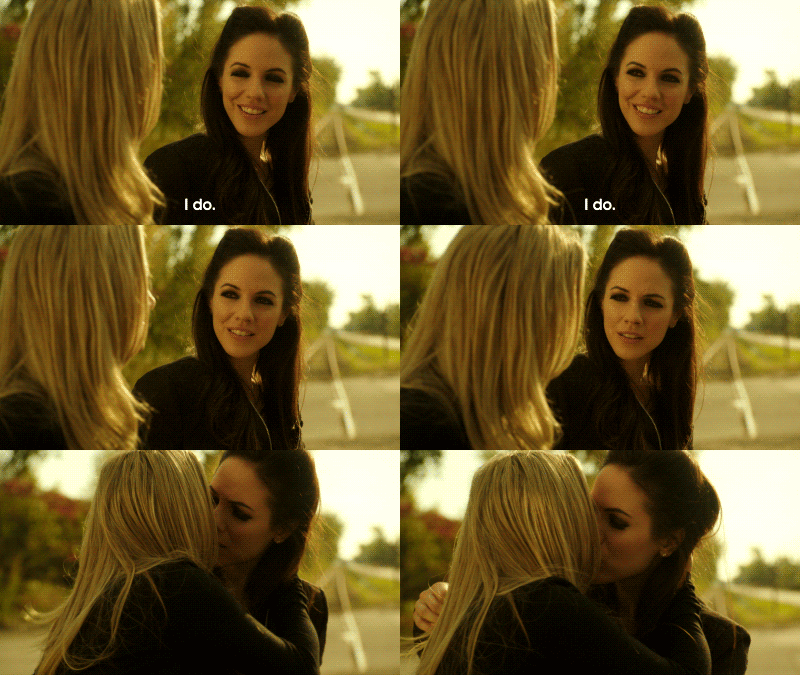
Of course I have to mention Wynonna Earp and the positive impact that #Wayhaught is having. I also think Grey’s Anatomy has done a great job at showcasing different stories within this community and the diversity on the show is on point making these characters look like the audience who watches every week. Lastly, I have to mention Lost Girl for Bo and Lauren. The show has a bi-sexual succubus lead with this super sexy lesbian scientist as her main love interest that tackled some hard-hitting humanity questions and opened the door for even more shows to follow suit.
What do you hope to see more of in the coming years regarding representation in television?
James: More trans and genderqueer representation. I know a great many trans and nonbinary people who have yet to see themselves portrayed on screen as something other than a joke or worse, some thing to be feared. With the murder rates of transgender WOC steadily increasing, it’s about time we expand the fight for LGBTQ visibility and acceptance beyond the L and the G.
Lizzie: I’d like to see more bi representation, and I’d like for it to be nuanced, because sometimes bi people get put into one box or the other, because they’re simpler to understand that way. I’d also like to see intersectionalism, I’d like to see, for example, a gay latino character on TV that’s not a stereotype, or a bi asian woman, for example. TV has come very far, but it still has a long way to go before everyone can feel represented.
Candice: I’d love to see more representation in general. I read an article that explained LGBT representation has actually decreased in recent years. This was shocking to me, because I figured with more representation, the wider spread of normalization and representation.
Apparently, that hasn’t been the case. And although more people are realizing the importance of supporting the LGBT community, too many people can still remain in their isolated little boxes ignoring their existence and remaining homophobic. That shouldn’t be the case. I can’t wait for the day when there is so much LGBT (and other minority) representation that these conversations obsolete. No need to talk about the need for more representation when it’s markedly equal.
Lyra: I think it’s really important to branch out into bisexual and asexual representation on TV. Both of these kinds of relationships have been underrepresented and misrepresented for much too long. It’s now the time to allow these stories to come to our screens and show others who might be feeling this way, that they are not alone and that there are others like them out there.
Samantha: I’m definitely seconding everyone here. We need to see more representation, especially of people who are underrepresented even within the LGBTQ characters we see on television. We’ve made great strides for white gay and lesbian men and women, but there are so many people who don’t see themselves at all.
We need more LGBTQ people of color, we need more trans characters (played by trans actors), we need more bisexual characters, and asexual characters. We need more LGBTQ people in writer’s rooms and director’s chairs and casting departments. Essentially, as James said, we need representation of the whole spectrum of sexualities and genders, not just a couple letters in an acronym.
Brittany: Everything. Is that too much to ask? In the next few years, I would really like to see more asexual representation on TV. Riverdale missed its chance with Jughead by deliberately choosing to ignore his canonically established identity — things like that have to stop.
Additionally, having more than one LGBTQ per show would be amazing. Sometimes it feels like certain shows or movies have the “token gay character” that is often underdeveloped. I would love to see depth and diversity on TV on both smaller cable shows, as well as big network shows. We’re certainly moving in that direction, but giving LGBTQ creators their own platforms would go a long way towards really showing the world how amazing and nuanced the community is.
Hillary: Couldn’t agree more with James and Sam. We need more representation that covers the whole spectrum of sexual orientation and gender identity! Candice brings up a good point that representation as a whole is actually lower than previous years, which is why I think we see fandoms flocking to support the shows that are doing it right.
I’m not sure why representation is such a hard concept for show writers, but they can’t all be Emily Andras or Shonda Rhimes! My hope is that more creators and writing teams realize that we as a community deserve better and we are worth investing in!
Stray thoughts:
James: I love Elena! And her grandmother’s Pope-based thought process for accepting her sexuality was brilliant.
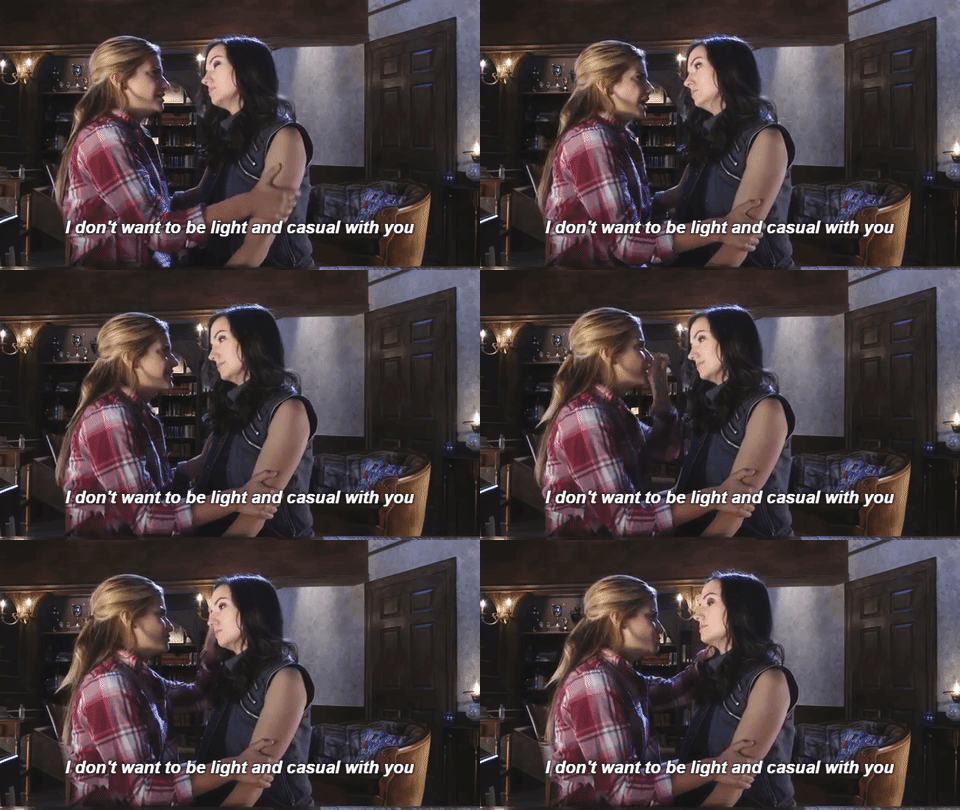
Lizzie: Before this ends, I just wanted to throw in my two cents for Carmilla, a webseries that a lot of you might not have heard of, but that does so much in terms of not just representation, but in terms of providing an engaging, interesting story for two very different women to meet, fall in love and then go on a journey together. If you haven’t – give it a chance. You won’t regret it!
Hillary: I was just about to say that! I have to give a shout out to amazing webseries like Carmilla and Nikki & Nora. Shows like this are just as important as some of the main stream ones we discussed on this panel, which is why I wanted to make sure they also got some love.
What are your thoughts on LGBT representation on television? Who are your favorite characters, and what do you hope to see in the coming years? Share with us in the comments below!
Follow us on Twitter @telltaleTV_
Want more from Tell-Tale TV? Subscribe to our newsletter here
Hillary Esquina

Hillary is television fanatic and spends most of her free time talking about all things television and pop culture, even if it’s just with baby padawan (her son) and her wife. Her current day job is working within the nonprofit sector, and she is pretty much in love with any show that has strong female characters. Never one to be boxed into any sort of genre, her show preferences range from Wynonna Earp and Dark Matter to One Day At a Time and Modern Family.