
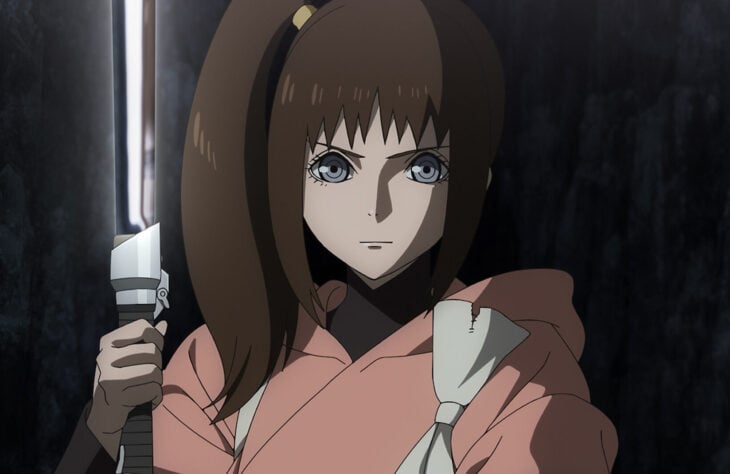
Star Wars: Visions Presents: The Ninth Jedi Review: A Daring Continuation That Strikes Hard
When it was announced that Star Wars: Visions‘ The Ninth Jedi would be getting its own series, I was personally ecstatic. The short film from Volume 1 not only did a good job with creating a new universe, but it successfully captured that classic Star Wars tone. With Star Wars: Visions Presents: The Ninth Jedi, there’s this new weight that it has to carry since it has the opportunity to flesh itself out.
Fortunately, in its first three episodes, The Ninth Jedi does that by allocating time to get viewers further acquainted with this world. There’s no Jedi or Sith Order; there’s only remnants of what was, with Kara and her allies trying to rebuild the Jedi. The big bad is Nawaam, who’s taken Kara’s father, Zhima, in hopes of being “better” than him despite misconstruing his beliefs.
Despite all of the world-building it must do, The Ninth Jedi is mostly effective in making Kara’s journey to becoming a Jedi compelling. This is partially due to the dynamics Kara builds with the new and returning characters as well as how Zhima fits into the narrative fold.
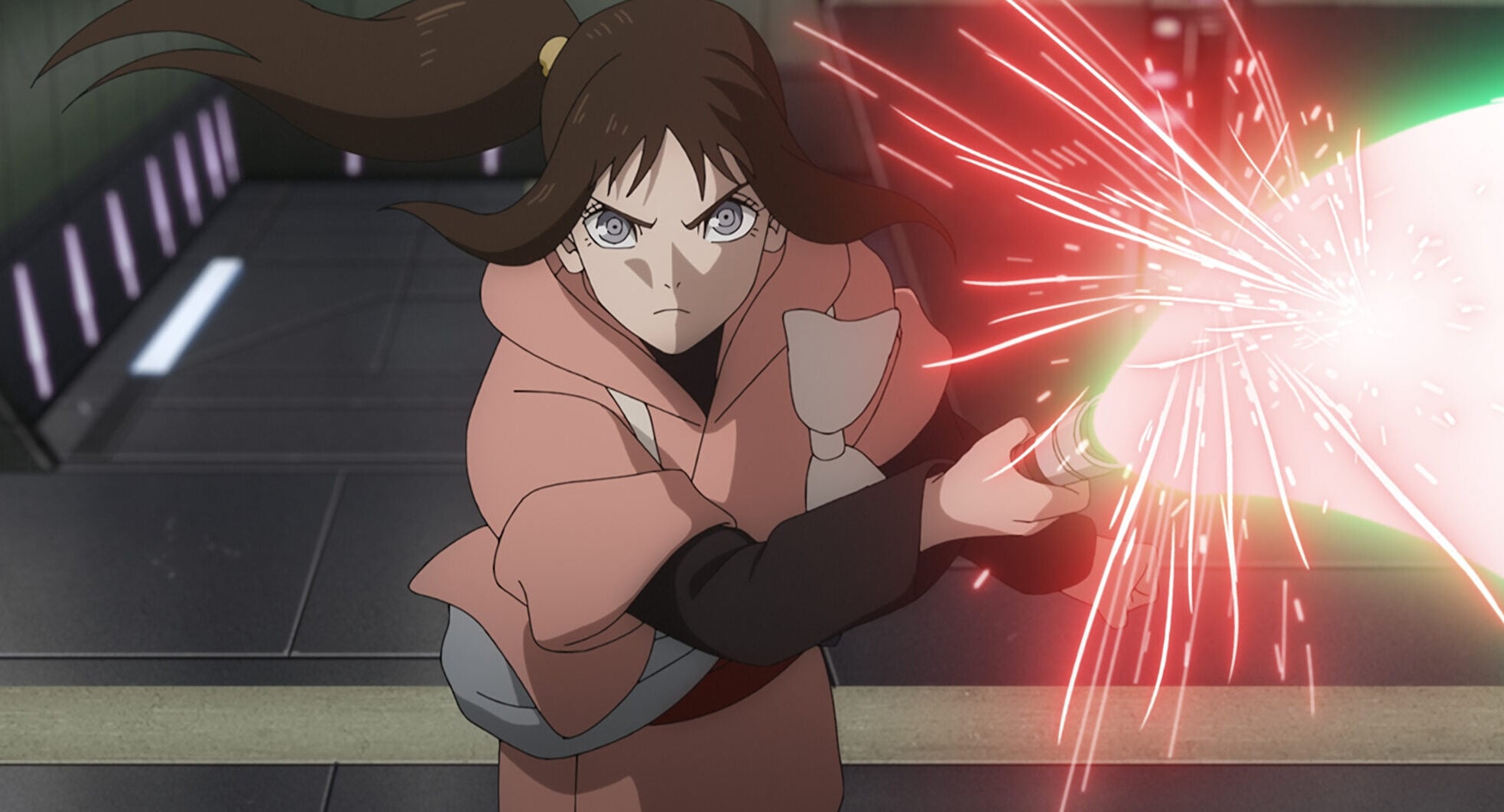
The family aspect of Kara and Zhima might be the most interesting thing The Ninth Jedi has to offer since this type of story hasn’t been explored in quite a while. Although Kara wants to grow up like her father, Zhima doesn’t want her to follow in his footsteps because of his own misgivings, which could be seen with the multiple flashbacks.
These flashbacks are tightly packed throughout the first episodes, but they provide great insight into Zhima’s psychology as well as his importance overall. He deeply cares about maintaining the Jedi ways of truth, but Nawaam is too focused on what he saw from not much. Plus, given everything Zhima’s experienced with his once friend-turned-traitor, you can’t help but feel bad for him.
All of this lies within the fact that Zhima doesn’t want Kara to be like him. Unlike the more experience Zhima, Kara is basically a youngling who’s still too focused on becoming a Jedi. Although it leads to some nice conversations with other characters like the elvish Tafflah, her youthful ignorance is what makes those powerful moments more impactful.
The Ninth Jedi certainly takes its time to get to those scenes with Kara, but past the season’s midway point, it truly starts to feel compelling. Watching Kara’s emotions go into overdrive and influence her attacks in motion have such incredible weight because of how restrained she’s kept herself.
Writer Mitsuyasu Sakai and the creative team intricately utilize Kara’se emotional build-ups at the right time to make you feel nervous for her. This is especially so by Episode 5 and Episode 6, where Kara’s hunted and kidnapped after being lost in space.
These two episodes are specifically Kara-centric, which are able to showcase what Kara’s experienced throughout her journey under the shade of the dark side. All the losses and pain that Kara’s been through at this point really drives home the fact that no one is immune to struggling.
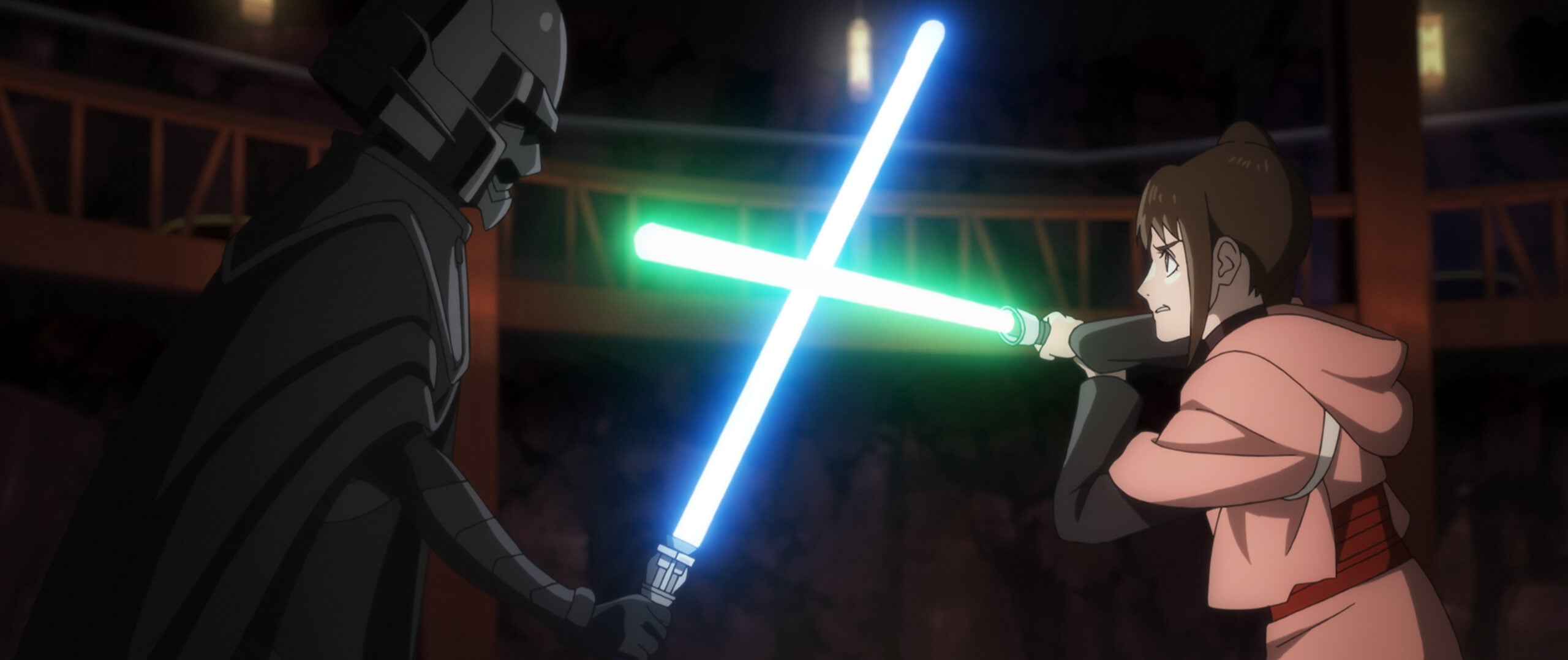
This is even further recognized by The Ninth Jedi‘s choice to uplife a specific Extended Universe mechanic: changing lightsaber colors based on one’s emotions. Yes, lightsabers change color to represent the person’s feelings at the time, which is very different from how viewers knew from Star Wars: The Acolyte.
However, the reason why this creative choice is more effective could be seen in these scenes with Kara and Zhima. It’s clear that their paths are in parallel with each other, given they’re father and daughter. There’s no good or bad way to find inner harmony; it’s a complex journey and the team behind The Ninth Jedi confidently recognize that idea.
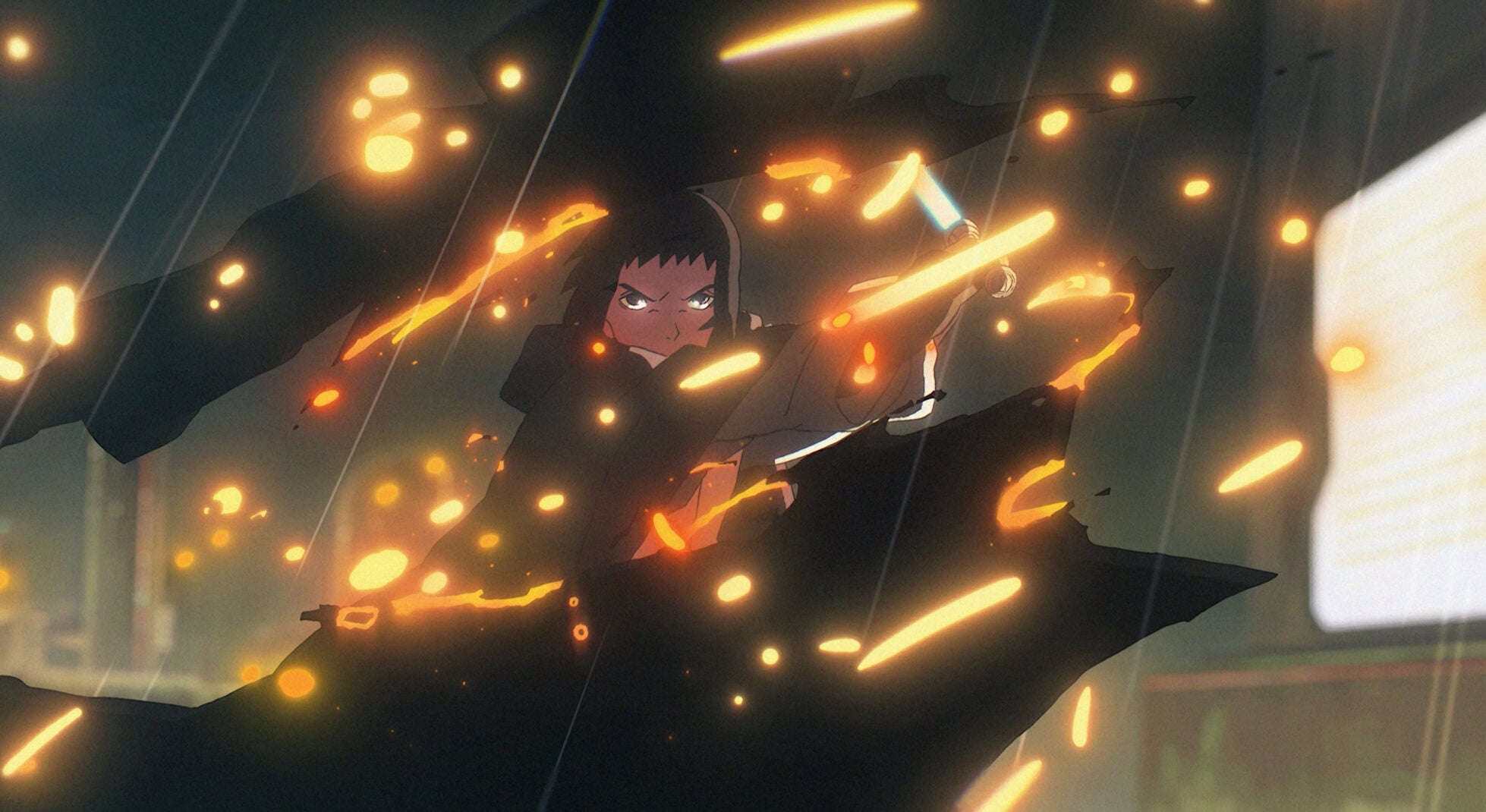
Aside from the character journeys, The Ninth Jedi‘s roster provide some fun as well. The biggest highlights come from Gramps and Kwana, who provide some tough love for the gang as they venture to rescue Zhima. Homen, who’s the only aspiring “alien” Jedi, unfortunately gets sidelined for the most part, but Juro proudly fulfills his role as a temporary guide for Kara.
As for the visuals, you can absolutely bet that Production I.G. did a stunning job with the fluid and colorfully intensive animation. Nearly every lightsaber combat sequence feels exciting to watch, especially with Kara’s and Nawaam’s. There’s a nice balance between the heavier action scenes and character-centric one-on-ones, which helps align viewers with who and what’s important.
This balance is further enhanced by the lightsaber blades changing, fitting how their respective character feels amidst gradual changes. Further driven by the fact that the morality of the Jedi’s ideals are grey, which certain Star Wars fans will pick up on, The Ninth Jedi beautifully presents itself as a piece worth harkening back to.
Star Wars: Visions Presents: The Ninth Jedi is a fascinating continuation of Production I.G.’s short film, digging into deep franchise lore to effectively create this riveting emotion-driven story.
Critic Rating:
User Rating:
—
All episodes of Star Wars: Visions Presents: The Ninth Jedi are now streaming on Disney+.
Follow us on X and on Instagram!
Want more from Tell-Tale TV? Subscribe to our newsletter here!
Chris Gallardo

Christopher Gallardo is an entertainment writer, critic, and member of New York Film Critics Online. While not running his own social channels, Chris can be found writing reviews and breakdowns on all things films and TV for multiple outlets. Plus, he loves Percy Jackson, animated films and shows, and Fallout! You can find him anywhere on social media at @chrisagwrites.