

Tell Me Lies Proves Toxicity is Central to its Narrative
Tell Me Lies certainly lives up to its name. The show’s roots lie in manipulation, emotional instability among its characters, and the messiness that can be life in college.
Tell Me Lies is a harsh reminder that we’ve easily become desensitized to real life atrocities. By placing toxicity at the narrative’s forefront, it not only subverts expectations surrounding character growth, but serves as a reminder of our inherent fascination with human horrors.
Character development is an integral element of nearly all shows. Watching a character fluctuate throughout a show, but still working toward becoming a better version of themselves, is typical.

Tell Me Lies forgoes this idea. Its characters go through a lot, that’s for sure, but it does away with the notion of pushing them to be morally good.
Instead it asks the questions: what happens when a character continues to choose wrong? What if they don’t learn? What does a character look like when they’re ruthless?
These questions culminate in a show that dissects the ease in which someone can turn corrupt. Most of the characters in Tell Me Lies are in desperate need of some self-reflection, but because they feed into each other’s toxicity, they continue to struggle with unresolved communication.
Like its predecessors (i.e., Pretty Little Liars and Gossip Girl), Tell Me Lies mainly takes place in the mid to late 2000s. Among these shows sharing similar titles and time periods, they’re also in a sweet spot with social media.
While toxicity is prevalent in Gossip Girl and Pretty Little Liars, both shows make it a point to have their characters become a found family. No matter the lies, fights, and scandals, the respective friend groups seem to find a way back to one another.

GRACE VAN PATTEN
However, Tell Me Lies quickly veers off into its own territory and arguably, offers a more interesting approach. Its characters orbit around one another, but the show doesn’t force them to get along. They’re all a hot mess and frankly, need to find people outside of their circle.
Evan points out his “friends” disdain for one another on Tell Me Lies Season 1 Episode 7, “Castle on a Cloud,” where the group convenes to celebrate his 21st birthday. However, little to no celebration occurs; in fact, everyone seems to be wrapped up in their own problems.
There’s an air of carelessness that lingers throughout Tell Me Lies. We want these characters to do something right for once, but it doesn’t happen.
As the show progresses, none of the characters make an effort to branch out beyond their toxic circle. Diana is the only one who seems to break away, and yet, she’s still slightly tethered to the group because of Pippa.
Additionally, Tell Me Lies has a nonlinear narrative which adds a heightened level of drama and suspense. Truthfully, it’s jarring to see these characters still connected to one another seven years later. It highlights how unwilling they are to move on.

CATHERINE MISSAL, GRACE VAN PATTEN
Furthermore, while social media is central to Pretty Little Liars and Gossip Girl, Tell Me Lies isn’t as reliant on it.
Sure, there are some major moments where it’s relevant. Namely, on Season 3 Episode 8, “Are You Happy Now, That I’m on My Knees?” when Lucy’s forced confession is leaked across Baird College.
This moment aside, the show’s toxicity does not solely exist within the confines of whatever is posted online. Thus, Tell Me Lies excels in its questions of morality and just how far an individual can go to get what they want.
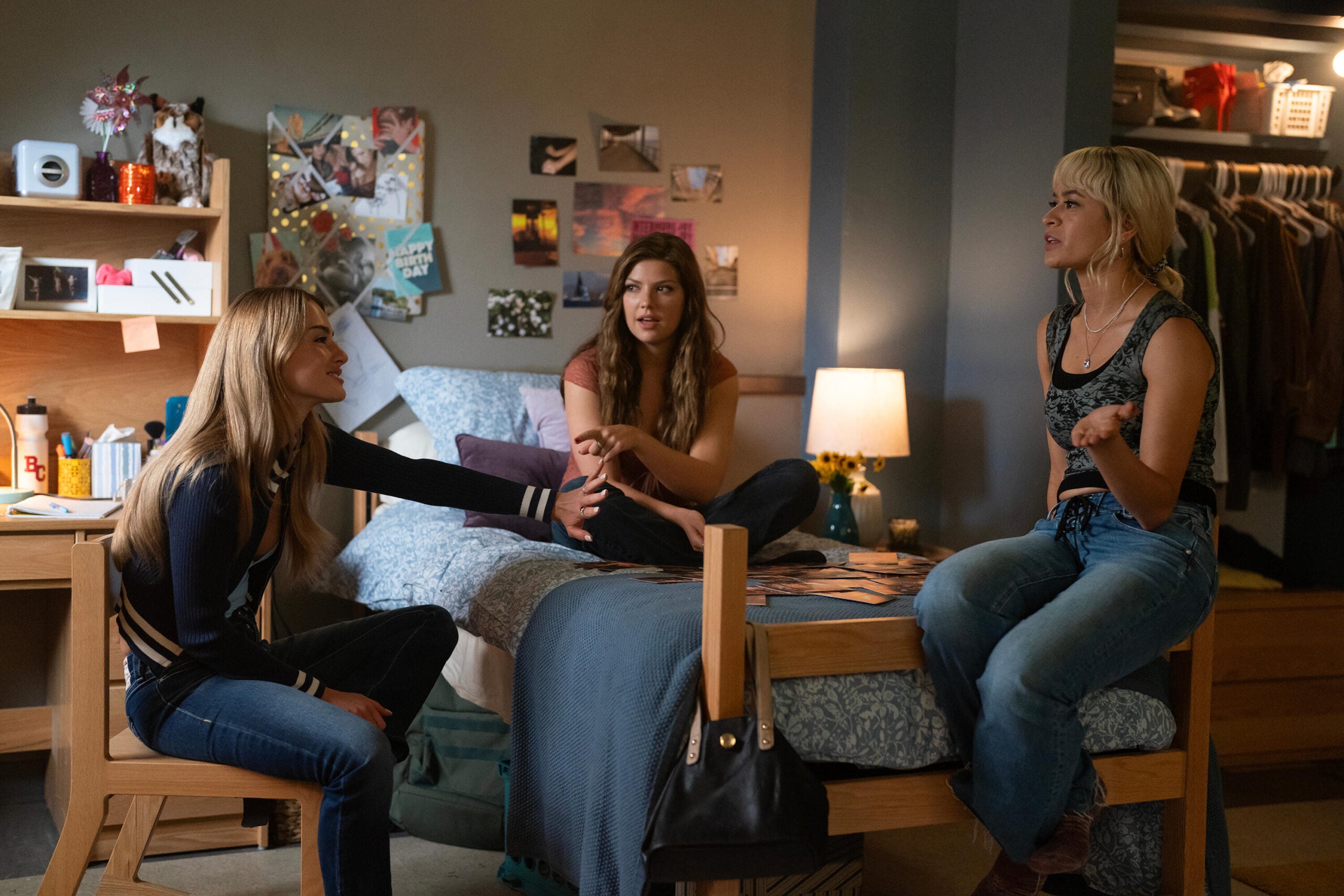
The core “friend group” — Lucy, Pippa, Bree, Diana, Stephen, Evan, and Wrigley — all cheat with and on each other throughout the show’s three seasons. To put it lightly, if one were to draw a diagram of who has slept with who, it would quickly become an entangled mess.
Every character on Tell Me Lies has their moments. Not a single character goes unscathed from the show’s toxicity. What’s more fascinating is that each character, for the most part, believes their own actions are correct.
(Disney/Josh Stringer)
GRACE VAN PATTEN, CATHERINE MISSAL, SONIA MENA
Lucy and Evan agree that it’s better to keep their drunken hookup on Season 1 Episode 10, “The Bedrooms of Our Friends,” a secret from Bree. Meanwhile, throughout Season 2, Bree sleeps with a professor and deems it a sound relationship (until it’s not).
And then, Pippa has no real qualms with dating Diana behind Wrigley’s back in Season 3. Funnily enough, Wrigley is also cheating. Surely if it’s mutual, it’s OK, right?
This is just the tip of the toxic iceberg that never melts on Tell Me Lies. While all characters contribute, there is only one who truly keeps it afloat.
We are undoubtedly talking about Stephen DeMarco.
From lying about causing a car accident to keeping an incriminating voice message for seven years, Stephen is scarily deceptive. It wouldn’t be right to describe his actions as out of control because he knows exactly what he’s doing.
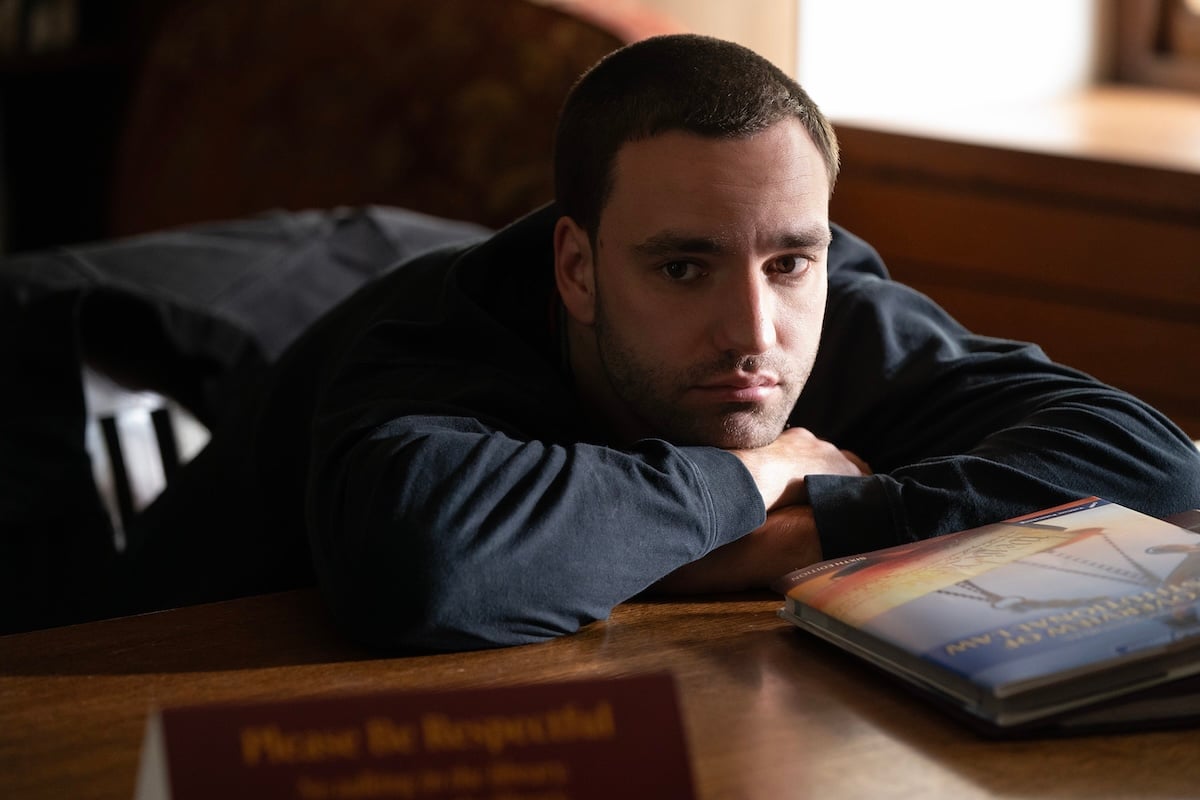
Meaghan Oppenheimer, the showrunner and creator of Tell Me Lies, describes in an interview with Variety the extent of Stephen’s influence on those around him.
Meaghan: He’s the poison that creates all the other mayhem. I think a lot of these people would not be as bad if it wasn’t for his influence.
So why does this make for good TV? It’s because to the characters, all of it is real.
Lucy’s life is already upended before she even steps onto the grounds of Baird College. When she meets Stephen, she doesn’t know the web of emotional abuse she’s about to experience for the better part of seven years. Later, when she starts to see Stephen’s manipulative self, it’s not as if she leaves him just like that.
In fact, Lucy’s inability to see Stephen’s behavior as black and white adds a layer of complexity to her character. On the show’s finale, Lucy still decides to get in Stephen’s car, thinking that it’ll be different this time, even though there’s been no indication he’ll ever change. She continues to cling to familiarity.
Lucy may not be as toxic of a character as Stephen, but she isn’t wholly innocent. Due to her connection with Stephen, it causes a rift in her life where her other relationships begin to suffer.
The viewer is privy to it all from an outsider’s perspective. Tell Me Lies paints a very real picture of the lengths a person can be capable of to have control over a situation. It’s so compelling because its narrative is bound to the ever-growing spiral of toxicity.
The show never leans away from the mess that is being human and only digs further into all the gross, ugly, and very real parts of existence that we may all harbor.
—
All episodes of Tell Me Lies are streaming now on Disney+ and Hulu.
Follow us on X and on Instagram!
Want more from Tell-Tale TV? Subscribe to our newsletter here!
Revati Gelda

Revati Gelda is a writer and journalist whose work focuses on the arts and their importance in today’s society. Her reporting has appeared in Hudson Valley Magazine, her alma mater’s newspaper Pipe Dream, where she served as Arts & Culture Editor, and more. Currently, she is an Assistant Poetry Editor for Decolonial Passage, a literary magazine.