
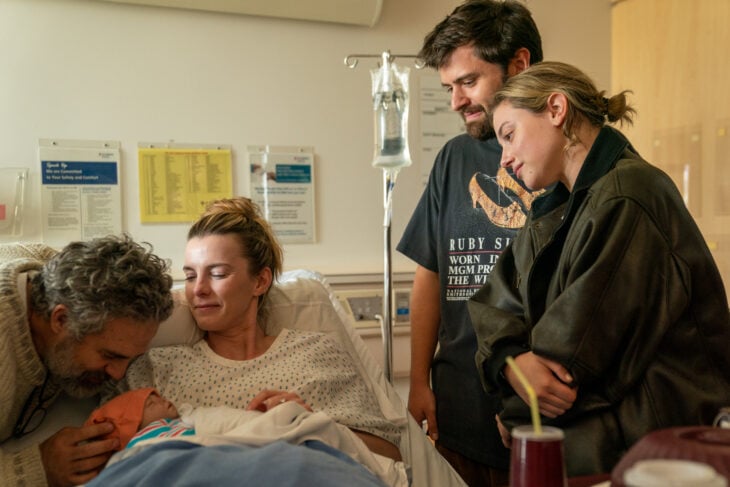
Cooper Raiff on the Hal & Harper Series Finale and How the Show Confronts Grief
Amidst all of the mainstream shows that have been released recently, there have been some indie-styled shows that really stand out. One of these series is Hal & Harper, which ended its run on a bittersweet and devastating note.
Hal & Harper centers on two siblings who try to live day by day despite their single dad making them grow up too fast. As a metaphorical representation, the siblings are, in reality, supposed to be very young. However, the series is grounded in exploring the complexities of loss and family.
Cooper Raiff, series creator and executive producer who also stars as Hal, reflected on the acclaim Hal & Harper has garnered throughout its run.

“It’s such a personal show, and I had such a long experience with it,” Raiff began. “Throughout the process of making it, I thought I was going to break beneath the weight of this love that I had for this family and putting it out into the world.”
“It’s been nice [to see] people send me stuff, but I find myself not reading it because I’m glad to hear that it’s meaningful to people.”
Given how Hal & Harper was produced through an independent platform, Raiff remains very thankful for the opportunity that was given to him. Though he faced some developmental difficulties, Raiff also described how he overcame those hurdles.
“The craziest part is [that] it was extremely hard to make an independent TV show,” Raiff explained. “I didn’t think it would be because, like making independent movies, I thought it would be the same kind of thing. It turns out it was very hard to sell the show.”
“Knowing that people are actually seeing it, that has been life-changing in a way. It’s like indie TV can exist, and it can be different.”
“I was always thinking of it as, ‘Oh, it’ll just be something on Netflix that is different than the other shows on Netflix.’ It being on Mubi has been this profound thing, like, ‘Of course it’s on Mubi! It’s on the only streamer that it could be on,'” Raiff added.
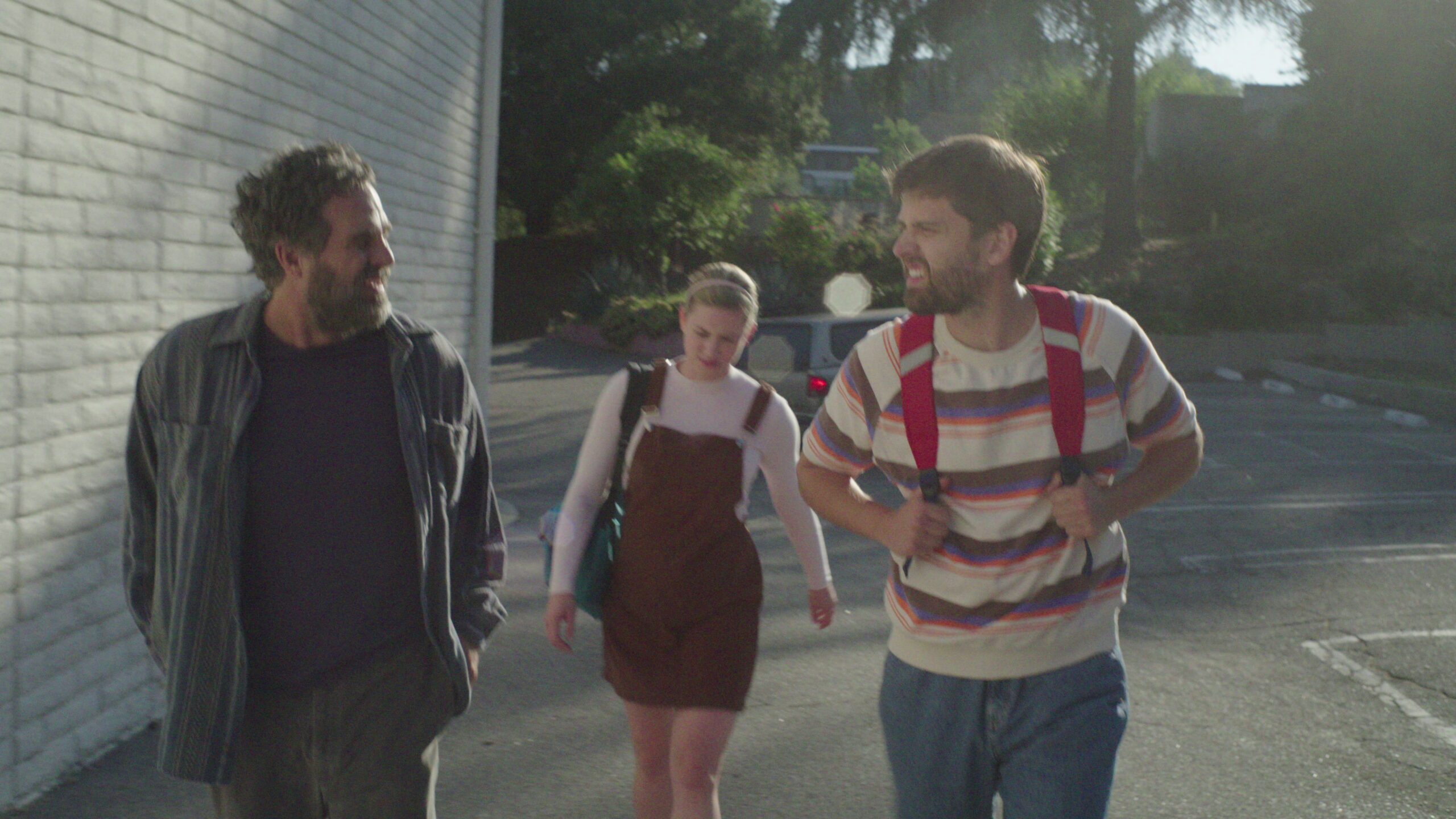
The concept of grief and loss plays an important role throughout Hal & Harper as it serves as the catalyst for some of the most devastating moments between the family. Raiff recalled how filming the familial scenes ultimately transformed his views on the grieving process.
“Hal & Harper made it clear to me that time and healing aren’t linear, but more cyclical,” Raiff said.
“They are almost like if you think of time as a loop, and you’re getting closer to the truth by the loop being smaller. If you think about the loop as if you try to be intentional about the loop, then that’s the thing that I learned editing Hal & Harper.”
“It wasn’t clear to me when I was writing the script that we were going to do as many cuts back and forth as I did in the edit. It all had to do with this thinking of time as a loop, but also how grief can only really be experienced if you know that everything’s going to be okay.”
Raiff also noted how adults and kids differed in their own process of grieving and how it played a role in the show’s development. “Their parents are forgetting to tell them that everything’s going to be okay, and it’s more confusion than anything.”
“That’s what I tried to lean into a lot with the editing. I think grief is very, very confusing, but grief also needs the kind of pure notion of everything is going to be okay.”
With grief being one of the main themes of Hal & Harper, there are some extremely heartbreaking — yet satisfying — scenes. One of these scenes includes Hal and Harper’s dad learning to move on from the death of his wife, which Raiff recalls being a technical challenge for him.
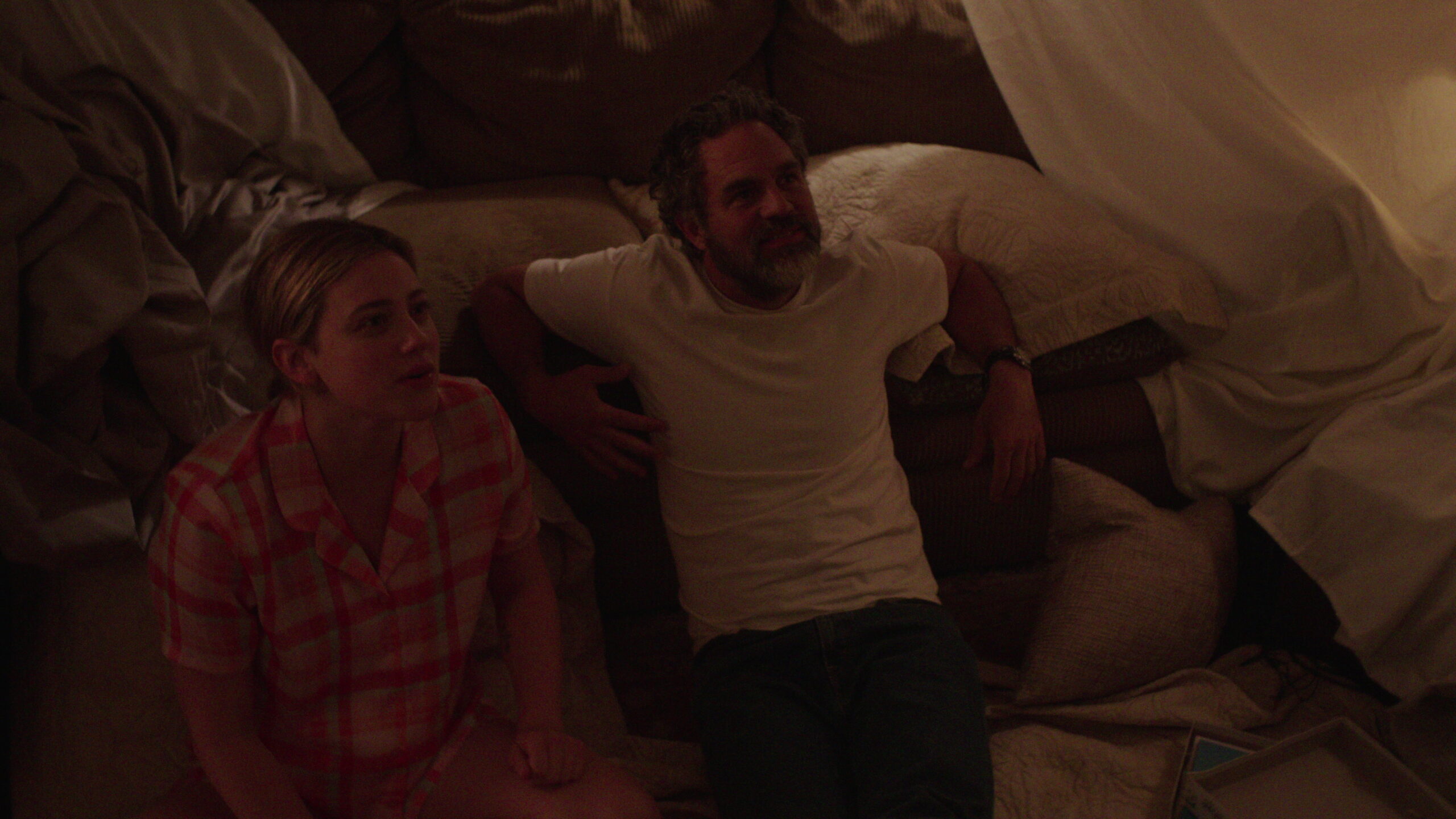
“It came to me, and I didn’t really understand it,” Raiff recalled. “There’s a similar moment in the first movie I made where it was a ghost, but it’s not a ghost. Filming it was really technically difficult.”
“You had to have both cars going at the same speed, and it was very difficult. I really wanted the car to feel a little further away. I was trying to get them to change lenses, but, for safety reasons, we just couldn’t. The car had to be closer.”
“It was a really difficult day, but it’s an emotional part of the show,” Raiff continued. “It’s just showing that she’s just always there, and he can’t save her. He can’t get her attention until he really lets her go.”
Another heartbreaking scene occurs during the finale of Hal & Harper, where the two siblings eventually separate on their own terms. Raiff recalled what it was like to balance the grounded tone, both through his performance and the script.
“I just tried to be truthful about how desperately hard it was going to feel,” Raiff noted. “The catharsis of love without fear is just as good as life gets; it was always going to be about that at the end of the day.”
“It was always going to be Hal saying sorry and that he understands,” he continued. “Only without that fear, you can let your sister go, but also you can let the grief start to settle in and be truthful and say the word ‘mom’ out loud.”
“He’s finally able to say he’s thinking about mom too, and that just comes with the lack of fear.”
—
All episodes of Hal & Harper are currently streaming on MUBI.
Follow us on X and on Instagram!
Want more from Tell-Tale TV? Subscribe to our newsletter here!
Chris Gallardo

Christopher Gallardo is an entertainment writer, critic, and member of New York Film Critics Online. While not running his own social channels, Chris can be found writing reviews and breakdowns on all things films and TV for multiple outlets. Plus, he loves Percy Jackson, animated films and shows, and Fallout! You can find him anywhere on social media at @chrisagwrites.