

Law & Order Season 25 Episode 3 Review: White Lies
Medical ethics are the focus of Law & Order Season 25 Episode 3, “White Lies,” when Nolan and Samantha discover bombshell evidence during their prosecution of Kevin Goodall, a researcher at a pharmaceutical company.
The state accuses Goodall of murdering Tom Hardiman, a controversial investment fund manager looking to fire the CEO of WellPoint Therapeutics, Norm Munson, and modify the company’s objectives.
However, medical ethics does not become a prominent theme on “White Lies” until much later in the episode, as the narrative follows Detective Riley and Lieutenant Brady’s investigation into Hardiman’s gruesome death.
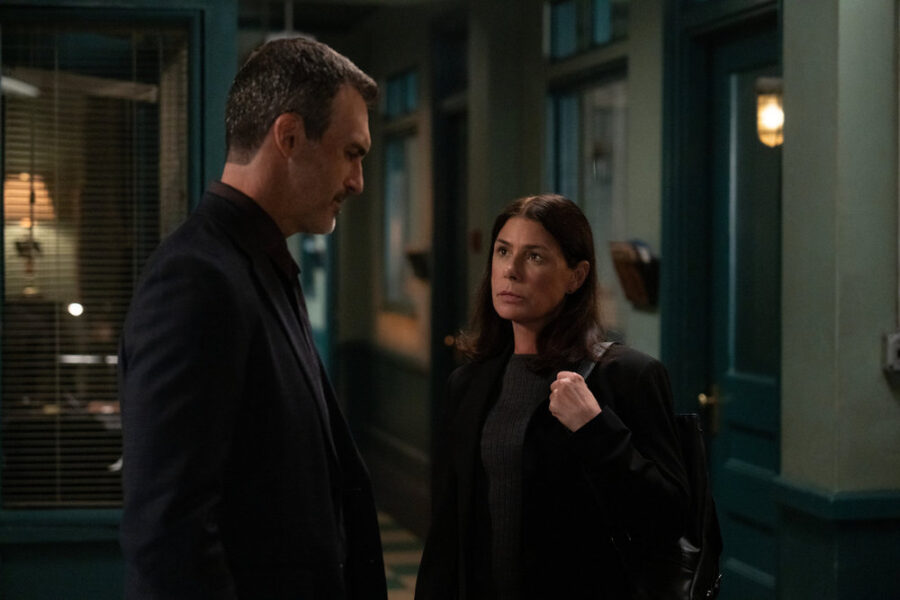
Tom Hardiman has no shortage of enemies, which creates a lengthy suspect list that Riley and Brady must examine.
Unfortunately, this investigation takes up half the episode, establishing a stale storyline that only picks up once the murder trial begins.
Riley and Brady’s investigation could be more exciting if the ADA’s office were more involved or if the narrative included an intriguing plot twist. However, the real twists only occur in the latter half of “White Lies,” when the assistant district attorneys prosecute Kevin Goodall for Tom Hardiman’s murder.
We should not discredit Reid Scott and Maura Tierney’s performances, but their characters investigating a dull victim’s murder can only do so much for the narrative.
Law & Order should use Connie Shi’s character more, as Detective Violet Vee always introduces a new piece of evidence in the investigation.
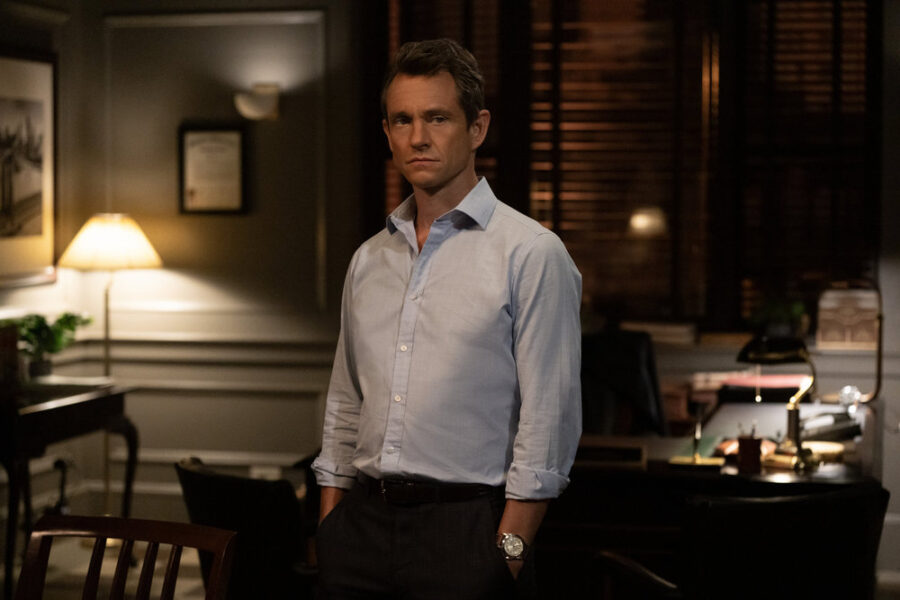
Thankfully, “White Lies” picks up once Kevin Goodall’s trial begins.
Nolan and Samantha must uncover Goodall’s motive, which becomes their sole hope of securing a conviction once his DNA is no longer admissible. Nolan and Samantha’s investigation leads to the discovery of Norm Munson’s dementia and, subsequently, Goodall’s daughter’s battle with Batten disease.
These shocking twists underscore the episode’s theme of medical ethics and significantly complicate the case.
Now, the narrative portrays Kevin Goodall as an emotional and desperate father willing to kill for his child. After all, if Hardiman succeeded in informing the board about Munson’s dementia, it would lead to Hardiman’s takeover of WellPoint Therapeutics and cutting the funding for the Batten disease trial.
Ironically, killing Tom Hardiman is Goodall’s best chance of saving his daughter. It is an act of selfless love in Goodall’s eyes, a selfish and cruel act in Hardiman’s family’s eyes, and a crime under the law.
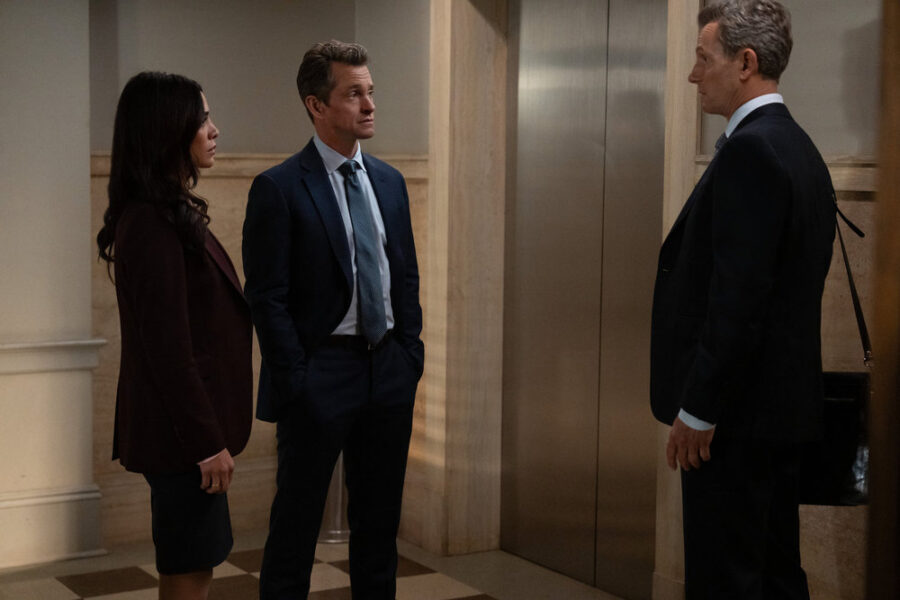
The case becomes even more complicated when Nolan and Samantha must decide how to proceed with their prosecution. Should they reveal Munson’s dementia to serve justice, or should they leave the secret alone, which would kill their case and let a killer walk free?
In doing so, Nolan and Samantha could save hundreds of children.
Nolan and Samantha’s dilemma is the highlight of “White Lies,” as the episode thoroughly explores the medical ethics of the situation. Law & Order’s best episodes often explore issues with no clear-cut answer. No matter what Nolan and Samantha decide, people will get hurt, and where is the justice in that?
Alas, Nolan is a predictable character. He accomplishes tasks by the book and refuses to color outside the lines, regardless of whether it is the morally right thing to do.

Therefore, it comes as no surprise that he compels Norm Munson to the stand to expose his illness, effectively demonstrating Goodall’s motive for murdering Hardiman.
However, Nolan and Samantha effectively juxtapose each other.
While Nolan is a character who follows the rules vigilantly, Samantha is unafraid to break them, especially if she believes she is doing the right thing. Their differing personalities are one of the show’s biggest strengths and the best tool for exploring ethical dilemmas.
However, Nolan is the first chair in the case, and he has the final say on how to approach this scenario. It is a heartbreaking scene, especially with the melancholic score in the background.
Law & Order always knows how to tug at heartstrings, and “White Lies” is no exception.

Hugh Dancy’s performance as his character questions Norm Munson is easily the episode’s highlight.
The tortured look Nolan portrays as he interrogates Munson shows that, no matter how he feels, he will continuously pursue justice according to the written law, even if he thinks it is wrong.
“White Lies” leaves Norm Munson’s fate up in the air, a fitting narrative decision after Goodall’s case is put to rest when he pleads guilty. The best storylines often leave a few loose ends, and the CEO of WellPoint Therapeutics is the loose end of this episode.
Nolan Price: He was willing to give up his freedom, his whole life, for his daughter . . . for the greater good.
It is a risky narrative decision to leave a crucial element unresolved, but it is the only satisfying conclusion. It leaves the ethical question to the audience, allowing the viewers to imagine the right course of action regarding Norm Munson’s fate.
Despite a slow start, Law & Order successfully pulls off a compelling episode with complex characteristics and heartrending implications.
What did you think of this episode of Law & Order? Share your thoughts in the comments below, and don’t forget to leave your own rating!
Critic Rating:
Audience Rating:
Law & Order airs on Thursdays at 8/7c on NBC.
Check out our latest TV recommendations, updated weekly!
Want more from Tell-Tale TV? Subscribe to our newsletter here!
Sarah Novack

Sarah has been a passionate writer and blogger about various forms of media for as long as she can remember, and her favorite method of expressing this passion is through writing and discussion. She loves way too many TV shows, books, and movies, specializing in book-to-screen adaptations, fantasy, sitcoms, and procedurals.