

The Orville Season 3 Episode 5 Review: A Tale of Two Topas
The Orville sure isn’t shying away from dramatic or serious subject matter. They’ve rarely shied away from this type of subject matter, but it’s certainly more pronounced in the Hulu era.
On The Orville Season 3 Episode 5, “A Tale of Two Topas,” Bortus and Klyden’s son Topa is struggling with his identity. Kelly, as Topa’s mentor, decides to get involved, which has both ship-wide and galaxy-wide implications.
Those who are well versed in the lore of The Orville know that Topa was born female, but that females are rare and forbidden in Mochlan culture. So Topa was previously changed from a female to a male as a baby (therefore, without her consent).
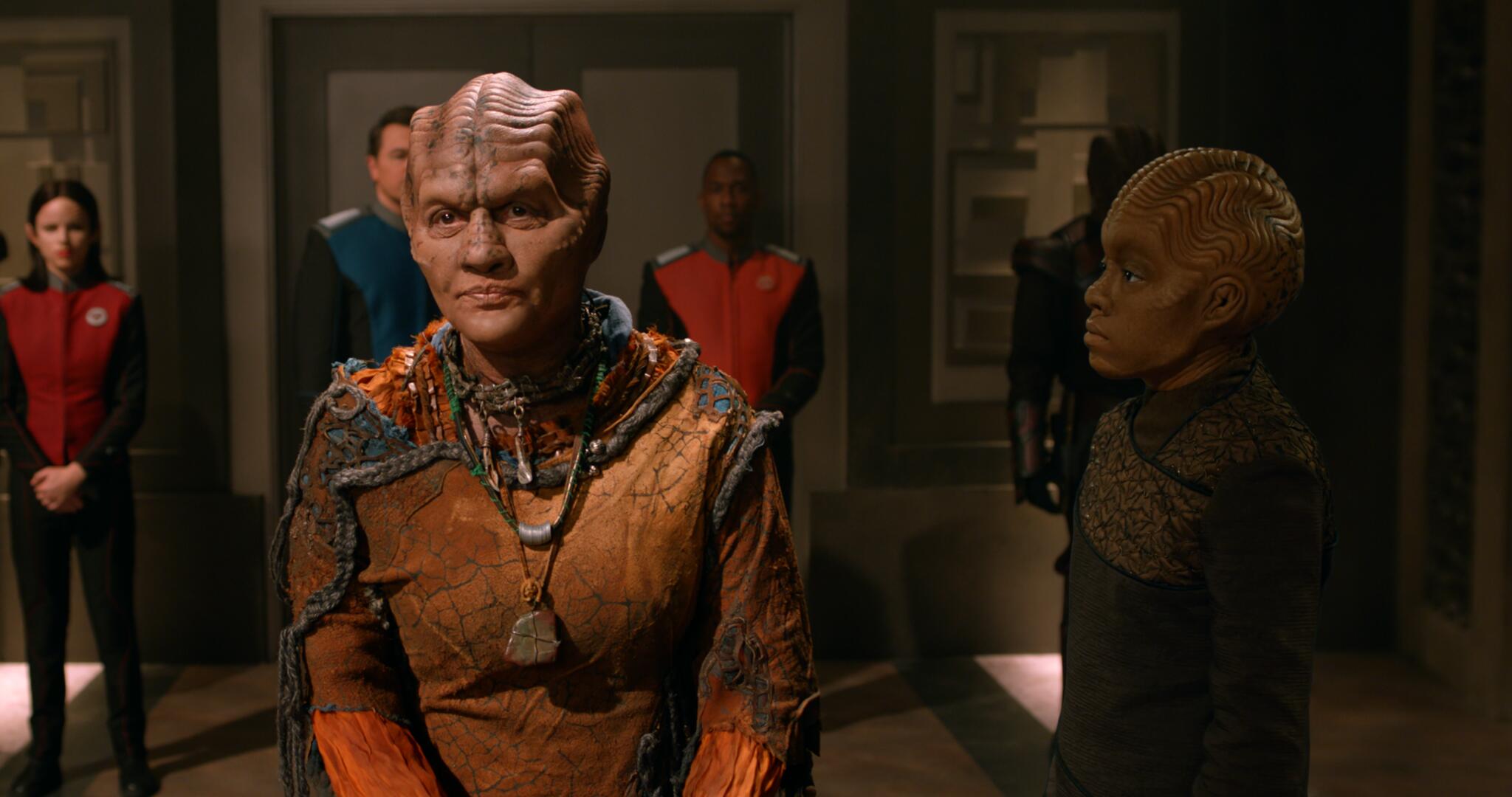
Topa’s story is revisited on “A Tale of Two Topas,” and the depictions are truly powerful. A child feeling helpless and struggling with their identity, and the spectrum of responses from the adults around them.
Each role that an adult character takes on has a powerfully realistic bent. Kelly is Topa’s mentor and advocate. Klyden is the parent completely stuck in his own beliefs and bigotry.
Bortus, on the other hand, has ingrained beliefs that are clearly being challenged. But he and Klyden react in opposite ways — Bortus airs on the side of loving his child no matter what.
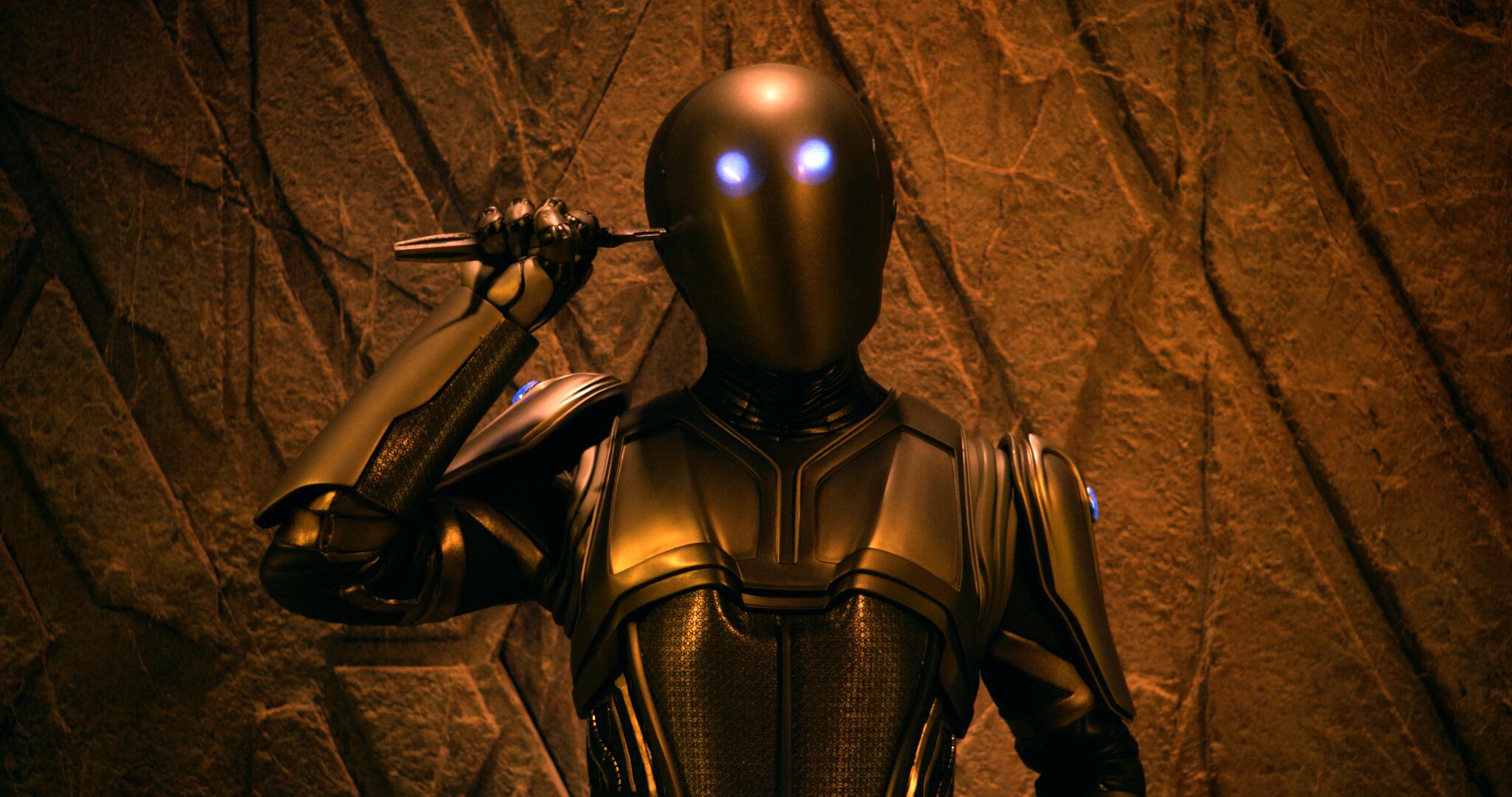
Playing an alien character from a different culture is extremely difficult, but “A Tale of Two Topas” is a wonderful showcase for Peter Macon and Chad Coleman. They masterfully play two sides o parenting a child struggling with their gender identity. Macon’s performance is moving and Coleman’s frustrating — and that’s exactly how you’re supposed to react.
“A Tale of Two Topas,” is meant to tell an emotional story and foster empathy and compassion for those who might be experiencing a similar crisis as Topa. To that end, mission accomplished!
However, while the metaphor is clear, it doesn’t perfectly fit. Most real, human kids experiencing Topa’s crisis were not altered as children without their consent. Because Topa was actually born female — it softens the metaphor.
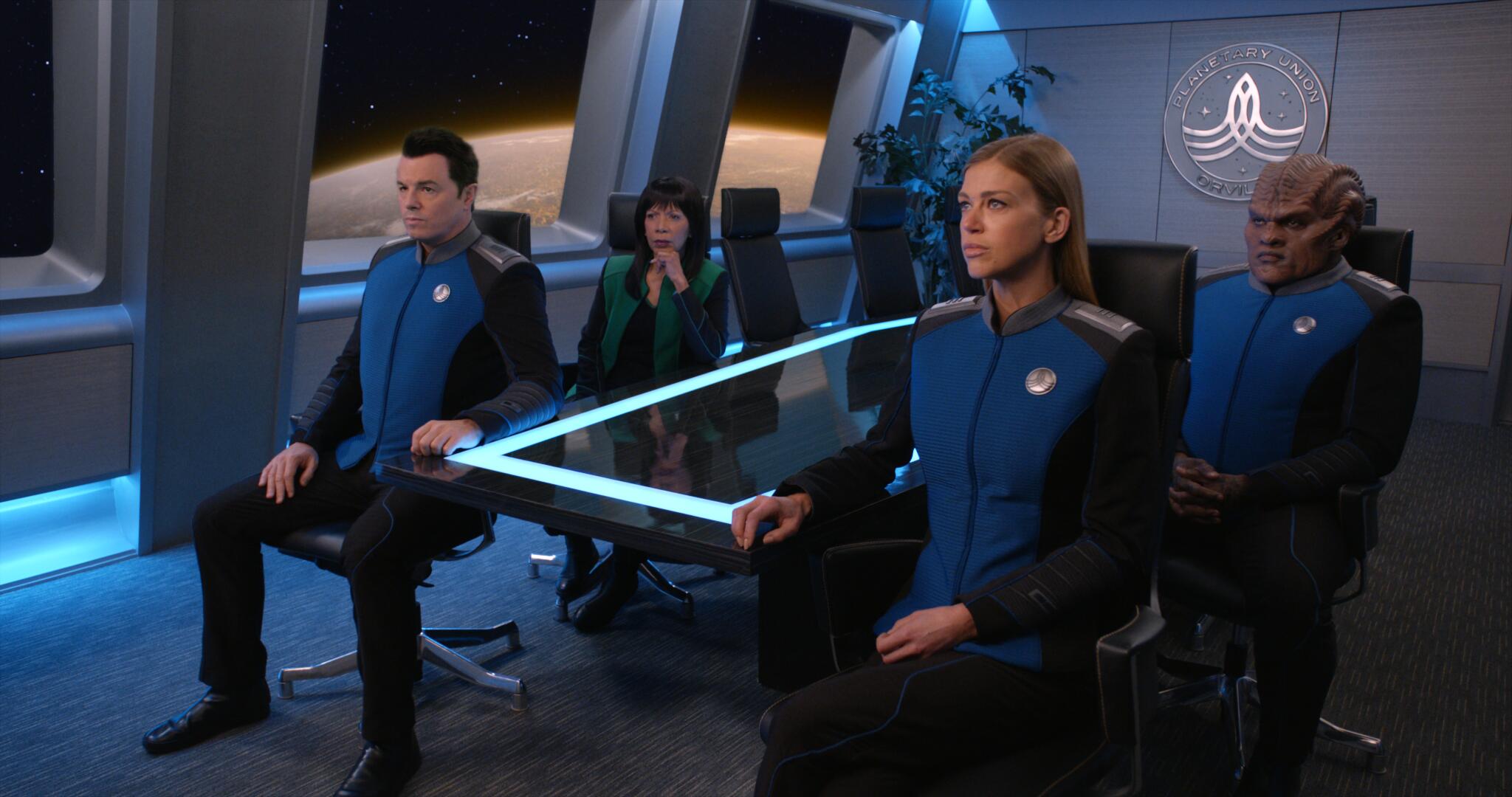
The fact remains, though, that the softened metaphor is still extremely powerful. While imperfect, it allows people along the political spectrum to invest in the characters without getting caught up in a one-sided, preachy ordeal. “A Tale of Two Topas” avoids the biggest pitfall of political television in that it does not come across as even slightly preachy.
A few stray thoughts:
- Some of the episode content is extremely random – like Gordon having a reaction to food he knew better than to eat. Scott Grimes is a treasure.
- Adrianne Palicki is great on this show, and Kelly Grayson is a bona-fide warrior. It’s enjoyable to watch her embarrass some angry dudes on this episode.
- “Put some pants on and we’ll call it a day”
- It’s also smart to acknowledge the political implications of a story like this, which The Orville does through the union meddling. Still not a perfect metaphor, but a good one.
What did you think of this episode of The Orville? Share your thoughts in the comments below!
Critic Rating:
User Rating:
New episodes of The Orville stream Thursdays on Hulu
 Follow us on Twitter and on
  Instagram!
Want more from Tell-Tale TV? Subscribe to our newsletter here!
Nick Hogan

Nick Hogan is an experienced podcaster and writer (particularly on media topics), who loves discussion and analysis of TV and is always looking for new shows to watch. He is also a parent who loves buffalo wings, blowing raspberries, and his beloved Cincinnati Reds.
6 comments
With this series McFarlane should get the emmy he has so long deserved. He is succeeding in teaching without preaching, Dr. Who could learn from him! Can’t believe this show may not get renewed.
At the end of every episode I think, ok, this is the best it has ever been, it is impossible to top this. But then the next episode arrives and it does top the previous one. To coin Tevye on Fidler,”Where does it end…”
It does seem to me that the writing room has thrown away the sentence impossible to top.
Go Orville, you make my week – at least for five more episodes.
horrible…
The review, or the episode?
It keeps getting better. Loved the metaphor. Leave kids alone. Let them decide for themselves who they want to be when they grow up. It goes both ways for parents who are forcing they kids to identify as non- binary. Let the child grow and come to that reality if so.
Children should define themselves, binary/non-binary are not fixed points but descriptions of a position on a scale, one’s position on the scale is subjective but one’s truth. It isn’t for society to force a definition upon, one but for one to acclimate to one’s own truth, whatever that may be.
Comments are closed.