
Pachinko Review: Chapter Five (Season 1 Episode 5)
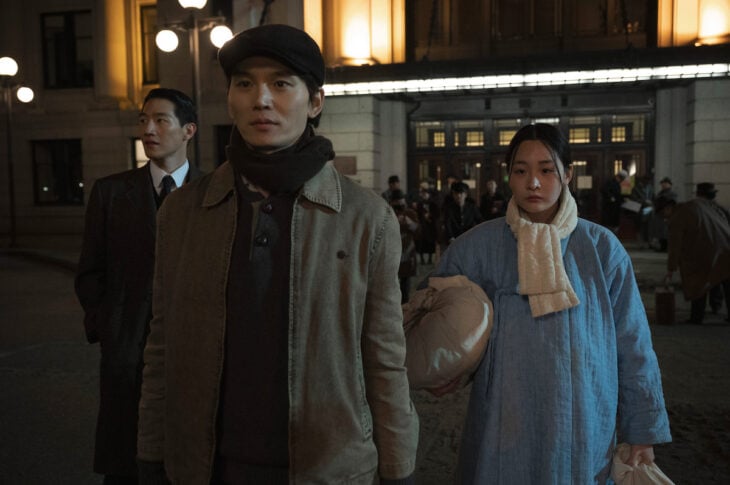
Sunja and her new husband arrive in Osaka in Pachinko Season 1 Episode 5, “Chapter Five,” and must learn to adjust to a very different kind of life than they expected.
One of the best–and often most uncomfortable–parts of Pachinko is its unflinching honesty about the difficulties inherent in the Korean immigrant experience. Sunja arrives in Japan to find herself and her new family forced to live in near-squalor, with pigs roaming their neighborhood streets and defecating outside their door.
Their new Japanese countrymen hate them, and there is too little work for the dozens of families crammed in the dirty, run-down section of the city, which is naturally the only part of Osaka where people will rent to Koreans.
Neither Sunja nor Isak appear as though they were expecting these kinds of living conditions, yet they remain grateful to Isak’s brother Yoseb and his wife Kyunghee, who they later learn went into debt to loan sharks to pay for their passage to Japan.
Yet, there’s still plenty of warmth to be found here, as evidenced by Isak and Sunja’s heart to heart their first night in Osaka, where the two vow to try their best to make a genuine life together despite the…let’s just call it unconventional circumstances of their marriage.
 Pachinko – Photo Courtesy of Apple TV+
Although Sunja initially struggles in Osaka — she desperately misses her mother and the home she left behind, even breaks down sobbing when some of her clothes are washed as they won’t smell like home anymore — it’s immediately apparent that she’s the one with inner steel in her family.
Kyunghee comes from a more sheltered background, Isak has always been sickly, and Yoseb clearly means well, but also seems overly concerned with things like tradition and societal expectations. Perhaps it’s the fact that Sunja’s already having the baby of a man she’s not married to, but she seems much more interested in surviving.
It’s Sunja who decides to sell the watch Koh Hansu gave her to pay off the family debt. It’s Sunja who’s willing to bear the brunt of Yoseb’s anger about the women of the family stepping up to pay off his debt. And it’s Sunja who seems like the strongest person in the family she’s just joined, despite her tears.
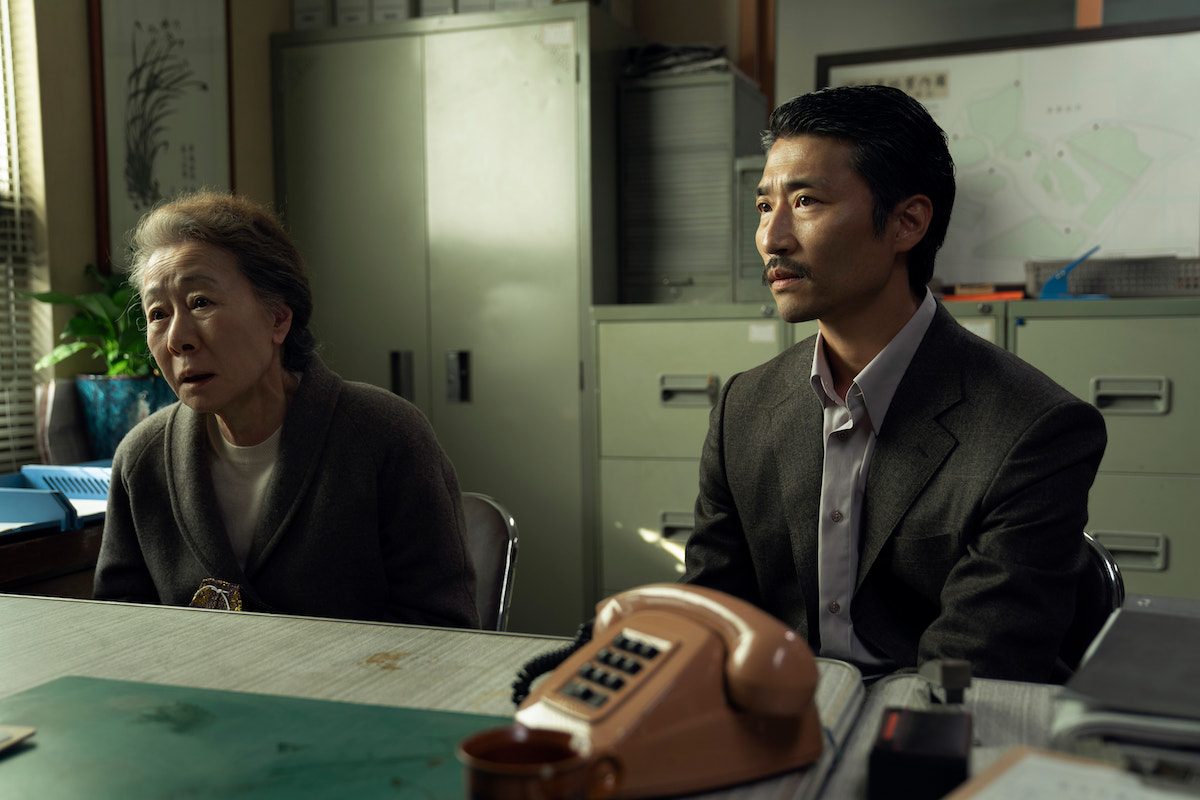
Interestingly enough, the present-day storyline featuring Sunja’s return home to Korea doesn’t appear in Min Jin Lee’s novel, nor does her emotional reunion with Bokhee. (In the book, both Sunja and her mother assume that the servant girls who used to live with them are dead, and likely ended up victims of human trafficking during the war.)
This addition may well be meant to give Oscar winner Youn Yuh-jung more to do — older Sunja’s story is largely seen through Solomon’s perspective in later chapters of the book — but there’s some truly beautiful symmetry in the way that Pachinko intercuts her return to Busan as an elderly woman with her arrival in Osaka as a young girl.
It is, perhaps, the closure she’s been waiting for all her life, and Yuh-jung’s face subtly and expressively captures the riot of her conflicting emotions: Joy, at coming home again at last, but no small amount of regret about all the years she spent away from it, and the choices she had to make along the way.

Most of Solomon’s subplot in this episode isn’t in the book either, though it does touch on one major supporting character from the novel, a man named Haruki who was once Mosazu’s best friend, in an intriguing way.
A closeted gay man, in the book Haruki never reveals his sexual orientation (though his wife does follow him to a park where she sees him with a male escort) and he certainly doesn’t abandon his wife and developmentally disabled brother to live with a group of similar societal outcasts in the city’s worst neighborhood.
Yet, Pachinko seems to view this as a natural extension of his story — a bold, admirable decision, a choice to be true to himself and chase his own happiness in a way his culture and family had never taught him was possible.
Perhaps that’s the lesson Solomon’s meant to take from this meeting? (I’m intrigued by the way that extending Solomon’s story out over the course of the series versus the final section of the novel is changing and seemingly trying to deepen its meaning.)
Stray Thoughts and Observations
- The way that this episode contrasts the technological advances happening in Osaka (the new subway!) with the poverty that Koreans are forced to live in is so well done. (And painful to watch.)
- We are five episodes into Pachinko and the show has still yet to admit that Sunja had two sons. Her eldest, Noa, is technically the son she’s pregnant with when she arrives in Japan and his existence is a big piece of the reason that Koh Hansu keeps coming back in and out of her life. Perhaps the show has decided its first season has enough tragedy without getting into all that just yet, but it’s…let’s just say not what I expected.
- Other things that are not in the novel: Solomon’s female colleague Naomi, and I am not sure whether Pachinko means for her to be a cautionary tale or a warning for Solomon about the insidious nature of anti-Korean sentiment even in supposedly more “modern” times, but wow every scene they share is so uncomfortable.
- We are not talking enough about how incredible this show’s opening credits are. Just such a perfect mix of old and new, color and joy–with a banging soundtrack too.
What did you think of this episode of Pachinko? Share your thoughts in the comments below!
Critic Rating:
User Rating:
New episodes of Pachinko stream Fridays on Apple TV+.
 Follow us on Twitter and on
  Instagram!
Want more from Tell-Tale TV? Subscribe to our newsletter here!
Lacy Baugher

Lacy is a pop culture enthusiast and television critic who loves period dramas, epic fantasy, space adventures, and the female characters everyone says you're supposed to hate. Ninth Doctor enthusiast, Aziraphale girlie, and cat lady, she's a member of the Television Critics Association and Rotten Tomatoes-approved. Find her at LacyMB on all platforms.