

Moxie Review: An Empowering Coming-of-Age Story Everyone Can Rally Behind
Netflix’s latest young adult adaptation, Moxie, directed by Amy Poehler, is not your typical teen rom-com.
Moxie is a high school coming-of-age story with a battle cry for accountability. It will entertain you with young love and drunken late-night shenanigans, but it will also make you angry for all the reasons that count.
The film follows teen wallflower Vivian (Hadley Robinson) as she quietly navigates the trials of high school. But Vivian’s story isn’t about falling in love with the football jock or gaining popular status. No, this protagonist’s journey, guided by her once teen-activist mother (Poehler), is one of revolution and finding a voice for young girls everywhere.

Moxie will draw you in with what seems to be another generic teenage rom-com formula thanks to an expensive-looking highschool and a camera that hangs off the lead jock’s chiselled features a second too long as the plain jane protagonist looks on.
Then, slowly and meticulously, this film begins to build on the more important premise facing these young adults. You start to shift uncomfortably in your seat when that same jock interrupts Lucy in class and corners her in the cafeteria. You feel mild outrage as the girl’s soccer team is overlooked during the first pep rally.
The sense of passive enjoyment and whimsy these films normally generate is replaced by a burning in the back of your throat and jolting nausea of familiarity as sexism rears its ugly head more and more, forcing Vivian to acknowledge the type of story she is leading here.
The majority of the events portrayed in this film are grounded in realism, including a list that ranks students from most bangable to best ass. These lists continue to be common practises even in the smallest of high-schools.
All of this plays to a plot that builds on its message in every act, constructing a powder keg of emotions so effective that when it finally detonates we are left with a satisfying enough experience to desire more projects as unique as this.

It’s hard to believe a genre of films that have done so much to put girls at the forefront still struggles to give them the treatment they deserve. It’s no secret the coming-of-age story hasn’t always viewed its protagonists as revolutionists, and put far too much emphasis on the sexual acts of becoming a woman.
Moxie looks to shift that narrative by demonstrating that coming-of-age doesn’t have to limit itself to the typical tropes of womanhood and high school hierarchies.
Instead, this film sheds light on the toxic masculinity and inequality that runs rampant in our society, and in teen films too. The takeaway being: girls can become powerful women in more ways than one, and when women make space for each other they can amplify their voices to define a generation.
It’s a powerful sentiment that is backed up by an ensemble of strong, smart, fleshed-out, female leads at every turn.
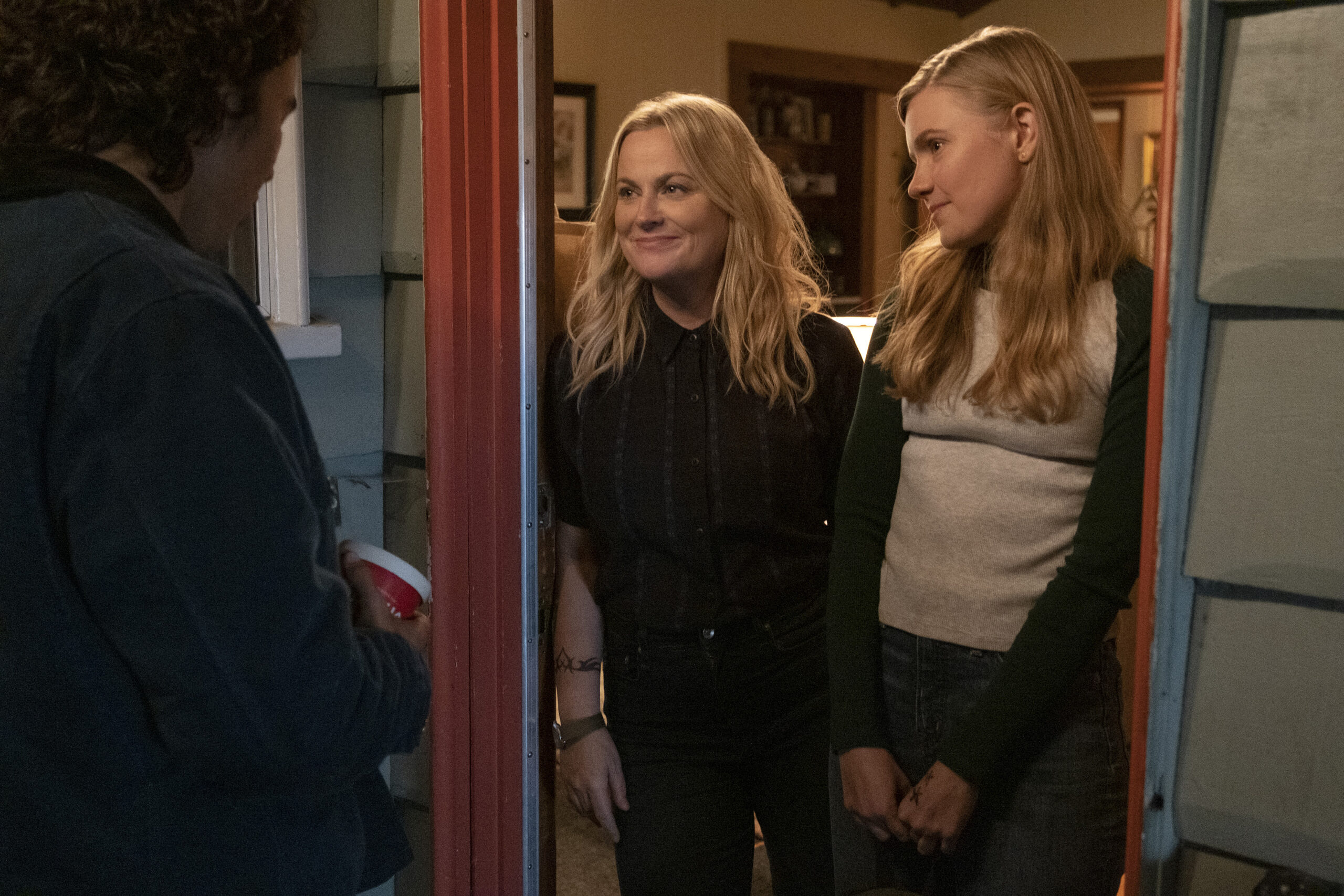
The power this film grasps is rarely shoved to the side for romance and popularity, despite granting these highschoolers the ability to be real people with real flaws and really big crushes.
Moxie reminds us that these kids have the power to change the world, but they’re still just kids. They reserve the right to that innocence, while also demanding accountability from the adults around them.
The characters themselves are not the sugar-coated adult versions of teens we’ve come to accept on our screens, their realistic teens with arcs and quirks we can rally behind. This swirl of compelling personalities allows this massive ensemble of young actors to bounce dialogue off each other with ease.
It’s hard to pick a standout when a cast is this colourful and fun to rally behind. Inclusivity is an important part of this, as Moxie attempts to make room for the Black, trans, and disabled communities while encouraging the men to step up. These collective differences allow many of these characters to shine as one unit.

I’m compelled to praise the relationship between Vivian and Seth for not only being incredibly adorable but for also demonstrating how boys can be allies for girls in these conversations.
Sure, Seth is a little too perfect in this regard. But hey, a girl can appreciate what he stands for while also thinking his unwavering solidarity for women issues is real hot. I won’t go to bat for that funeral date though — that was really weird, Seth!
I love the contrast between Lucy and Vivian. Lucy is this strong feminist icon who doesn’t back down, but who could still use the support of the woman around her. Vivian, on the other hand, keeps her head down and has to learn the value of being that strong presence for other girls when they need to be heard.
On top of these female friendships, Moxie pays homage to the teen coming-of-age stories by stacking the film’s cast with established actors from the genre. This tactic gives younger viewers familiar faces to gravitate towards when dealing with the premise’s difficult subject matter.
After‘s Josephine Langford is a prominent presence throughout the film, conveying the plot’s darker issues behind a smokescreen of facial expressions. Nico Hiraga brings a Booksmart familiarity to his role as adorable skater boy Seth, and Alycia Pascual-Pena’s powerful portrayal of Lucy is right off the cusp of her role in the Saved By the Bell reboot.
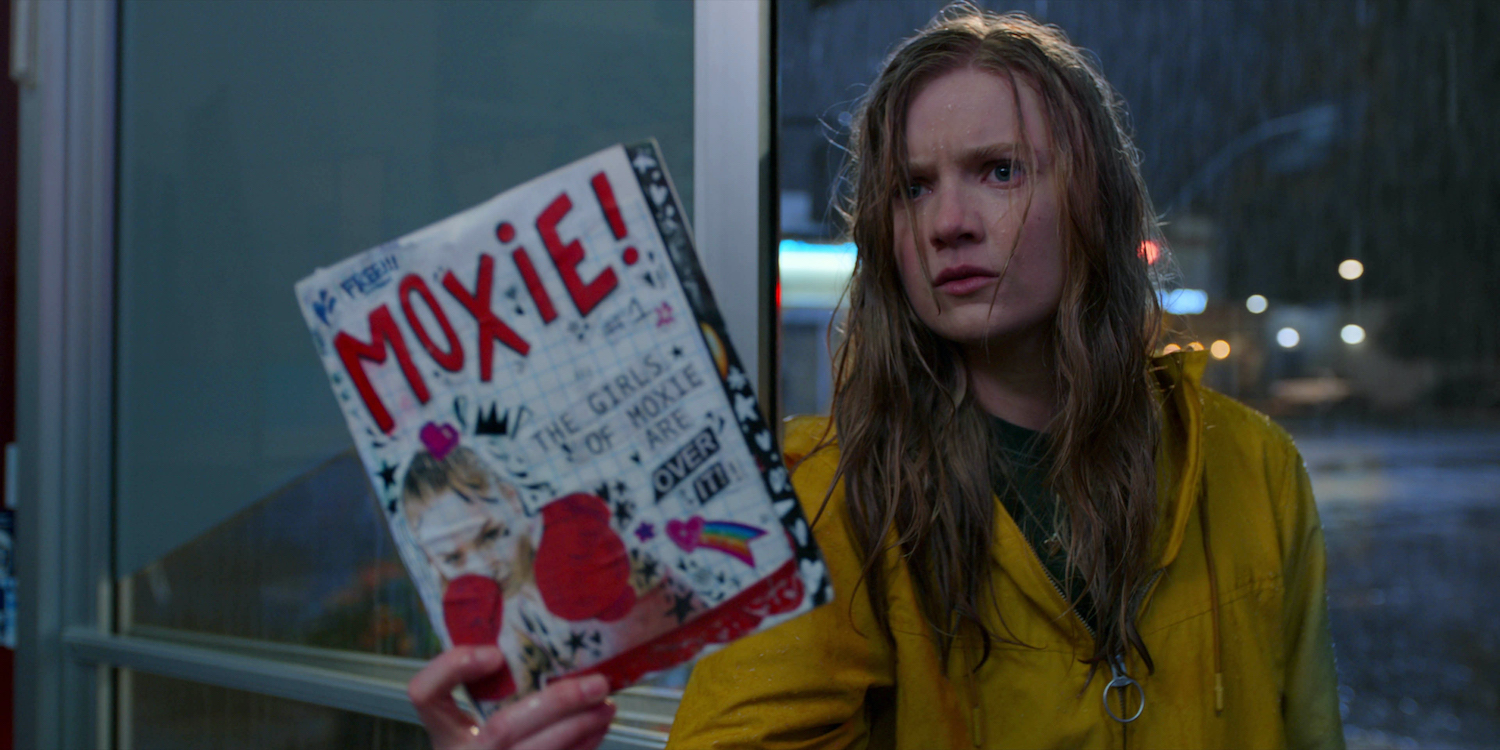
This film may lose sight of its agenda and lose itself in that agenda at times too, but an amped-up rock soundtrack and persistent accountability eventually get the pacing back on track.
The more outlandish scenes, like a school-wide truth session, come only when this film needs to craft a cinematic-enough ending to this dramedy. It’s not as compelling and a tad bit preachy, but it is easier to suspend belief once we are invested in the cause.
I praise this film for not standing for one individual voice and for tackling various forms of racism, sexism, homophobia, harassment, and discrimination. Yet, still ensuring the genre’s successful formula is there to cling to when exploring these harsher realities of growing up.
Moxie stays standing if only to make sure its message is heard in the sea of content competing for our attention.
—
What did you think of Moxie? Share your thoughts in the comments below!
Critic Rating:
User Rating:
Moxie is streaming now on Netflix.
 Follow us on Twitter and on
  Instagram!
Want more from Tell-Tale TV? Subscribe to our newsletter here!
Alicia Gilstorf

Alicia is a Rotten Tomatoes Certified Critic and a Critics Choice Association member. She credits her passion for TV to workplace sitcoms, paranormal dramedies, and coming-of-age stories. In her free time, Alicia loves to curl up with a good book and lose herself in a cozy game. Keep a lookout for her coverage of Ghosts. You can also find her work on Eulalie Magazine and Cool Girl Critiques. Follow Alicia on social media: @aliciagilstorf