

The Spanish Princess: Why Margaret Tudor Deserves Her Own Period Drama
The finale of the Starz period drama The Spanish Princess earlier this year not only marked the end of a season but the end of an era as well.
Because the Season 2 finale serves not only as the conclusion to this particular series but also to the triptych of female-fronted Tudor history dramas — which includes The White Queen and The White Princess — based on Philippa Gregory’s bestselling novels have that proved so popular on Starz in recent years.
This is a shame for many reasons, not the least of which being that Emma Frost and Matthew Graham’s trio of shows are smart, thoughtful, and, above all, feminist tales about the sort of women history is too often happy to sweep under the rug.
There are so many other complicated Tudor-era women who deserve not just a similarly powerful and redefining spotlight, but a real reckoning with the ways we remember them now — Katherine Howard, Mary Tudor, and Jane Grey are three that instantly spring to mind.
Incidentally, they all also happen to feature in books that are part of Gregory’s Tudor series.
But another worthwhile candidate played a significant role in The Spanish Princess and deserves the chance to have her story told more fully: Margaret Tudor, Queen of Scotland.

It’s true that Margaret Tudor — primarily referred to as Meg in the show — does play a major role in The Spanish Princess, particularly during the show’s second season.
But that series is the first and foremost a show about Catherine of Aragon and though Meg is given several great moments, it can’t possibly spend as much time on her as her story warrants, even if it wants to do so. (Which it clearly kind of does.)
Instead, The Spanish Princess decides to cast Meg as Catherine’s dark shadow, and her life becomes something of a cautionary tale as she fights to keep her thrones and her sons in the face of clans who refuse to accept her.
But the real-life story of Margaret Tudor was much more complicated — and even more controversial — than it was depicted as on the show. And it would make a positively thrilling series in its own right.
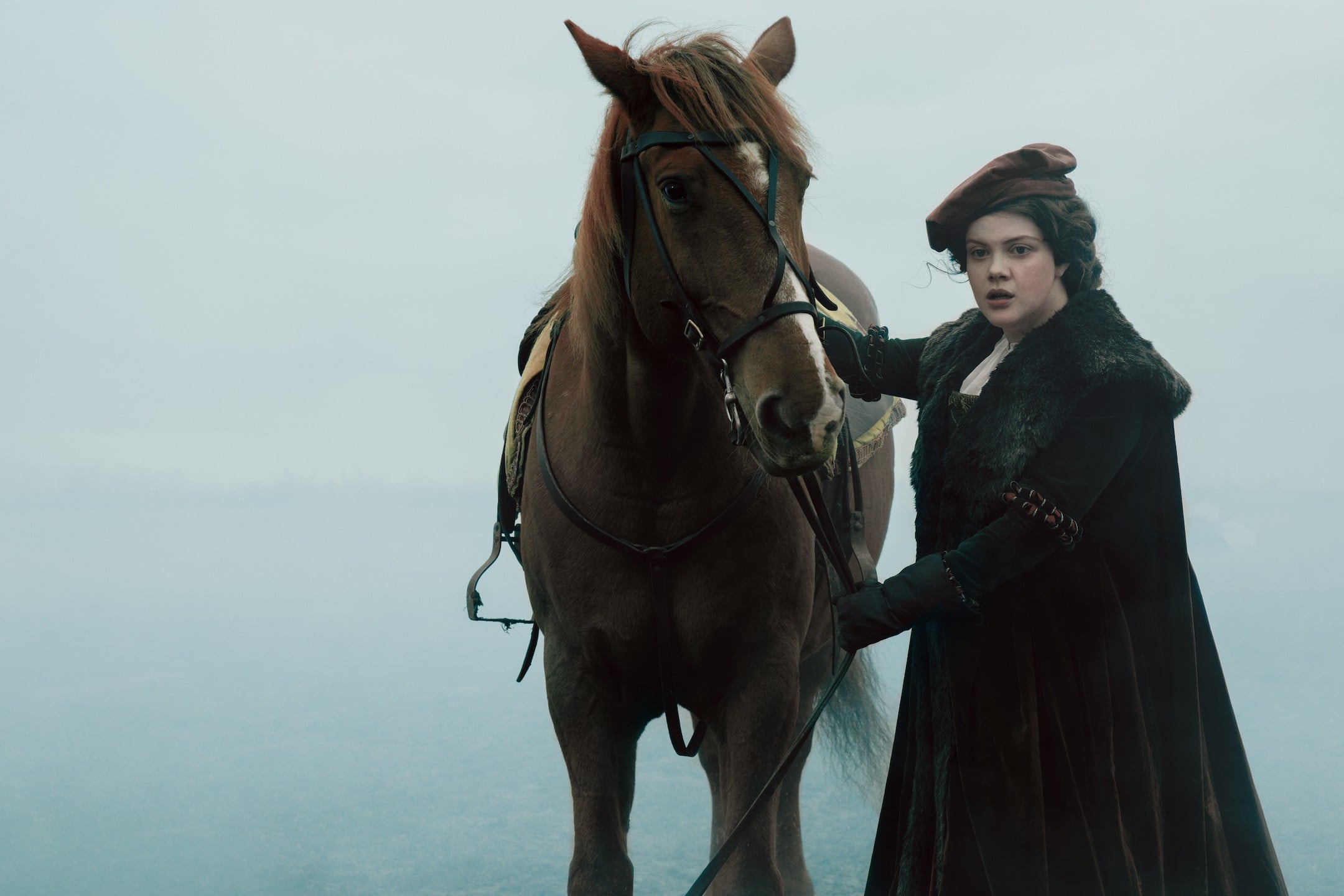
The story of Margaret Tudor is a tale of a woman who spent her life straddling two countries and equally torn between her duty and her heart. In the span of just a few episodes, The Spanish Princess tries to do right by her the Tudor princess that history most often forgets, reinventing her as a she-wolf of Scotland set on protecting her sons and their legacy.
In fact, she gets to end the series triumphant, as the show recounts the dramatic events in which she turns the guns of Edinburgh Castle and Holyrood House on her erstwhile husband Archibald Douglas, the Earl of Angus, who is threatening to once again depose her and take control of her son.
But while this is all very exciting, The Spanish Princess only scratches the surface of Margaret’s life. (Which would, incidentally, turn out to be incredibly impactful — it is her great-grandson James VI who will one day rule a united England and Scotland.)
And it’s one that deserves to be told fully.

The real story of Margaret Tudor is one that isn’t often recounted, because it centers so fully on a woman trying to own her own power, control her own heart and dictate the course of her own future. She attempts to wrest control of her son and her country from the cabal of old clan leaders who had always run it, and assumed they always would.
(We all know how men feel about women who challenge existing power structures.)
Yes, she makes the sort of poor choices that would only be equaled by her granddaughter, Mary, Queen of Scots, who follows in her footsteps in so many other ways, from her romantic decisions to her failed power plays. (Truly a parallel worth exploring.)
But The Spanish Princess doesn’t go into great detail about Margaret’s personal tragedies, or the strength she must have needed to survive them.
She was held prisoner in StirlingWhen she was forced to flee Scotland for England, she was pregnant with her daughter Margaret Douglas, the same child who was immediately taken away from her when she returned. (And with whom she would remain separated from for most of her life.)
Her son Alexander died while in the Duke of Albany’s custody, and her tumultuous obsession with Angus would haunt her for the rest of her days.

Unlike in the series, which sets the two spouses pretty clearly at odds with one another by the end of Season 2, their real-life relationship was much messier, as the two fought and reconciled repeatedly.
The payback for her triumphant Edinburgh Castle stunt was that Angus kidnapped her son James and held him captive for three years. The boy eventually escaped by dressing as a servant and riding to his mother at Stirling Castle. Angus escaped to England, where Henry took him in because the patriarchy is nothing if not predictable.
In fact, her brother Henry is often as awful to Margaret over the course of her life as any of the men she married. From withholding her portion of her brother Arthur’s inheritance to openly backing Angus as de facto ruler of Scotland, Henry clearly doesn’t see his sister as an equal, even though she is a queen in her own right of a country whose support he ought to be courting.
Not to mention he seemed to delight in shaming her publicly for things he himself is frequently guilty of, like adultery.

Though Margaret ultimately succeeded in getting her marriage to Angus annulled in 1528, she never let go of the man she’d thrown over so much to have. She married for a third time — another disaster — but ultimately attempted to dissolve that relationship as well, so that she might (you guessed it) return to Angus.
Her last words were even about the man. Yes, even after he betrayed her, kidnapped her children, drove her from her own country and conspired against her with her own family, she urged the king her son to be “gracious” to Angus and begged God for forgiveness for her treatment of him.
If that’s not the kind of story that deserves a really rich, complicated treatment of its own on our screens, I don’t know what is.
Part tragedy, part triumph, and part self-inflicted disaster, Margaret Tudor’s life is certainly worth exploring in greater detail than The Spanish Princess had space to include. The show wasn’t called The Scottish Queen after all.
But here’s hoping one day there might be a show that is — one that gives this fierce, selfish, flawed woman her due.
—
The Spanish Princess is available on Starz.
 Follow us on Twitter and on
  Instagram!
Want more from Tell-Tale TV? Subscribe to our newsletter here!
Why ‘The Spanish Princess’ Is Exactly the Kind of Period Drama We Need More Of
Lacy Baugher

Lacy is a pop culture enthusiast and television critic who loves period dramas, epic fantasy, space adventures, and the female characters everyone says you're supposed to hate. Ninth Doctor enthusiast, Aziraphale girlie, and cat lady, she's a member of the Television Critics Association and Rotten Tomatoes-approved. Find her at LacyMB on all platforms.