

The Crown Season 4 Review: A Royal Three-Ring Circus of Drama and Conflict
The much anticipated fourth season of The Crown is here and it brings the drama with the Iron Lady and the People’s Princess joining the Queen in the spotlight.
The addition of these two women, one widely hated and the other universally loved, allows for a more linear approach, providing throughlines that buttress the already strong episodic structure of the series. Queen Elizabeth II is still at the center, but more as a royal ringmaster to a three-ring circus of drama and conflict.
The Crown is historical fiction viewed through the lens of the royal family and that continues to be the case on Season 4 but with more pronounced story arcs that focus on Margaret Thatcher and Princess Diana. The powerful performances given by Gillian Anderson and Emma Corrin, respectively, alongside the remarkable returning cast make this deviation successful.
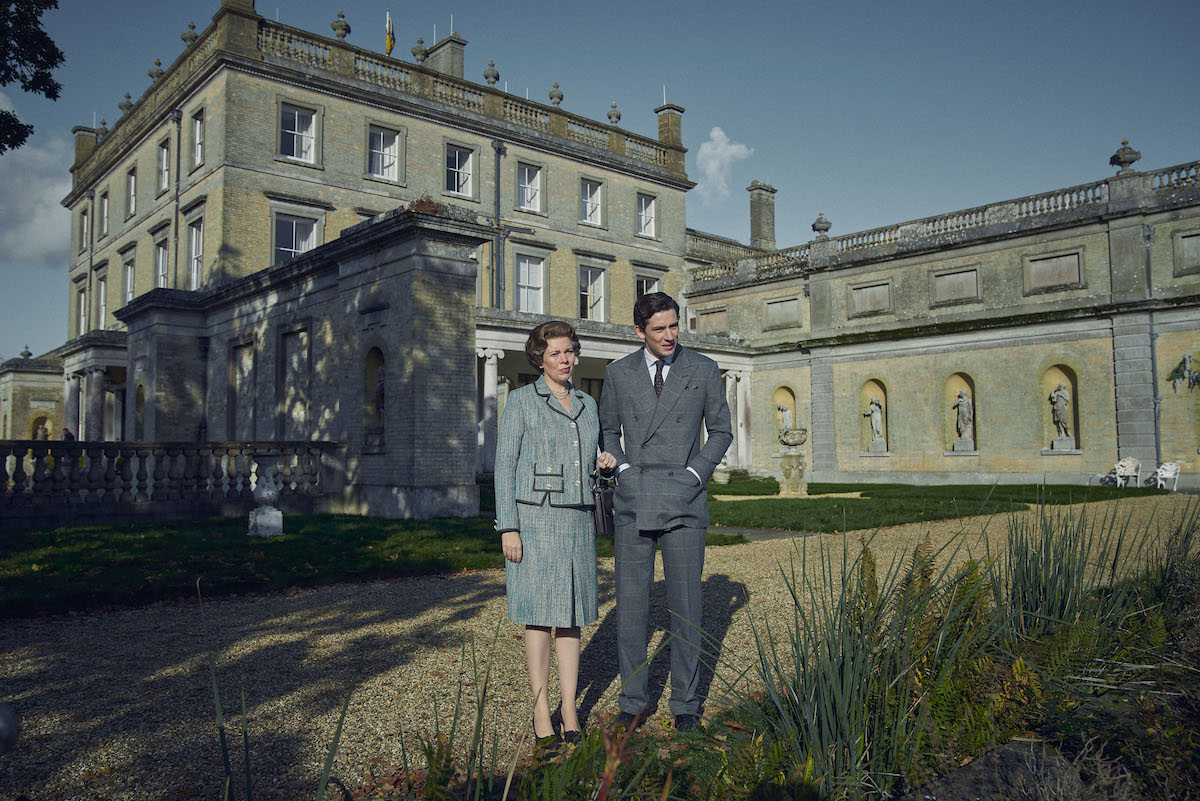
Olivia Colman is in her second (and sadly, final) outing as the monarch. She spends the season going head to head with Thatcher and trying to keep her family in check, making sure they’re toeing the company line. Just like the Queen’s job, Colman’s is a tough role, but one she does with impressive ease.
She is meant to ground the chaos and the tension, and be that calm, stoic figurehead that hides the cracks. Colman portrays all the facets of this simple woman in a complicated position.
There are only a few storylines that are solely Queen-centric, however, her presence and influence are felt at all times. “She’s the oxygen we all breathe,” describes Philip.
Claire Foy commendably laid the groundwork on Seasons 1 and 2, and Colman effortlessly assumes the role. Together they have created a character that feels omnipresent which is vital to Season 4 in particular. Since there are storylines that move us away from Elizabeth, most notably the Charles and Diana saga, a solid anchor is needed so things don’t veer off course.
It’s a delicate balance and requires precision in the writing as well as gripping performances from the supporting cast so we don’t feel lost at sea without our Queen. Fortunately, the writing is top-notch and the actors are a talented bunch, so the missteps and oversights are few and far between.
The Crown Season 4 Episode 7, “The Hereditary Principle,” is a prime example of where it works. There are only a handful of scenes with Elizabeth, but I am happy to take a sojourn with Princess Margaret, especially when the subject matter highlights mental health.
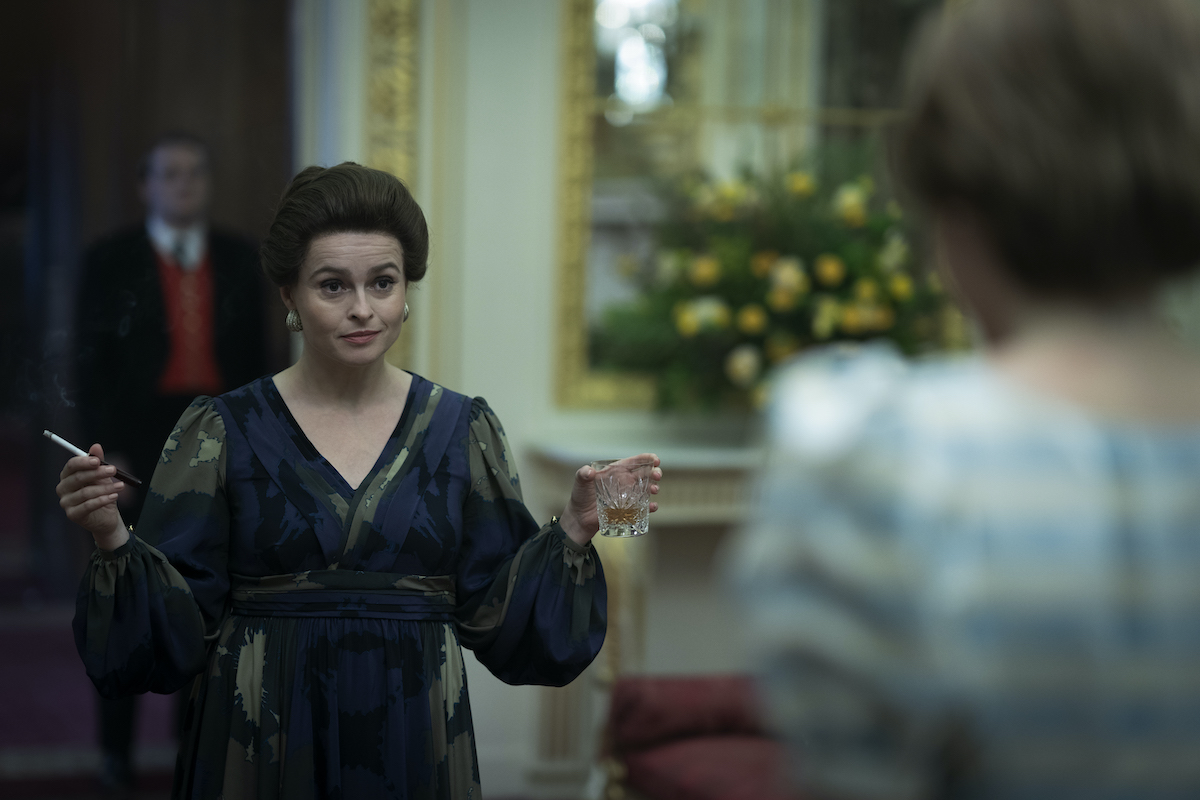
Like what Foy and Colman do with Elizabeth, Vanessa Kirby and Helena Bonham Carter forge a tragic character with loads of heart and grit and pain. Watching Margaret suffer setbacks and despair is heartbreaking—her sadness is understandable and rational—one need not be a royal to experience these emotions with her.
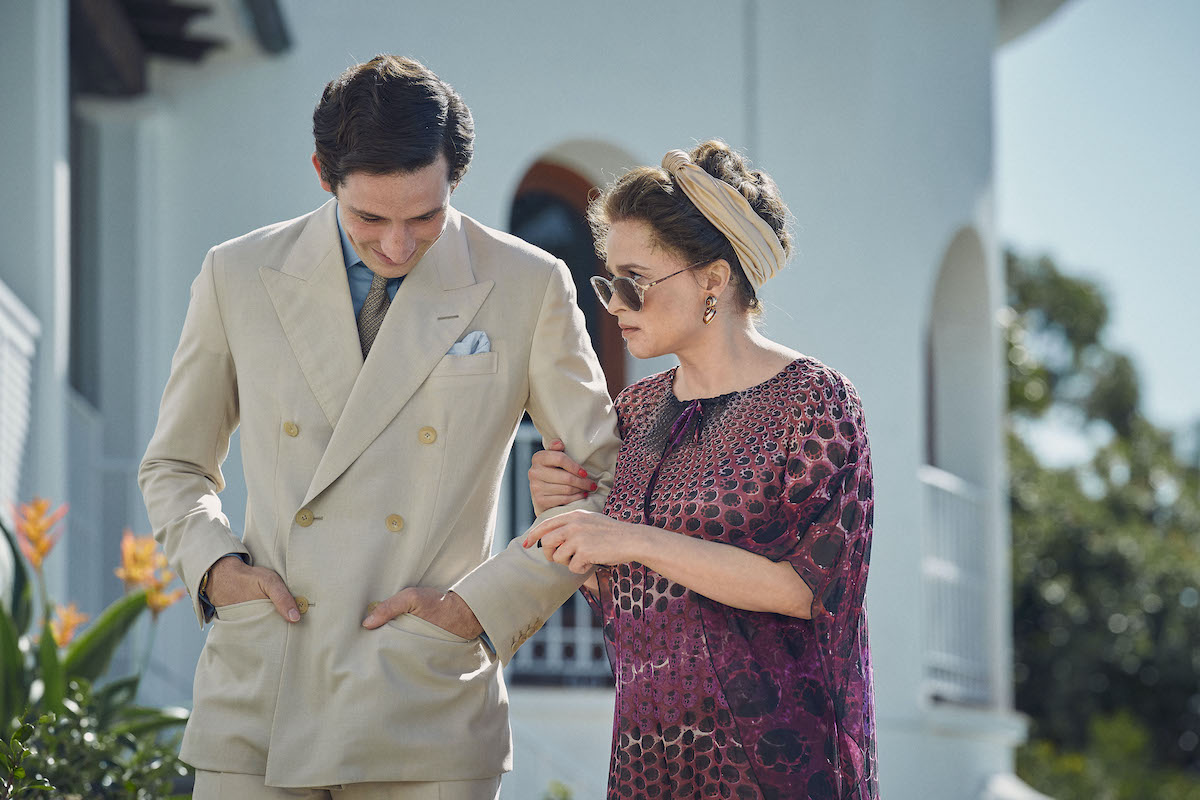
There are times that the focus on the Prince and Princess of Wales nears overindulgence, but their story is so complex and the actors so captivating that it doesn’t appear too divergent. Showrunner Peter Morgan has created a flexible structure that can withstand this type of storytelling.
Even those that don’t know much about the royal family know about the troublesome marriage between the heir to the throne and his princess. There is immense pressure to get it right. Emma Corrin and Josh O’Connor as Diana and Charles are up to this task and are able to carry this heavy and fraught storyline.
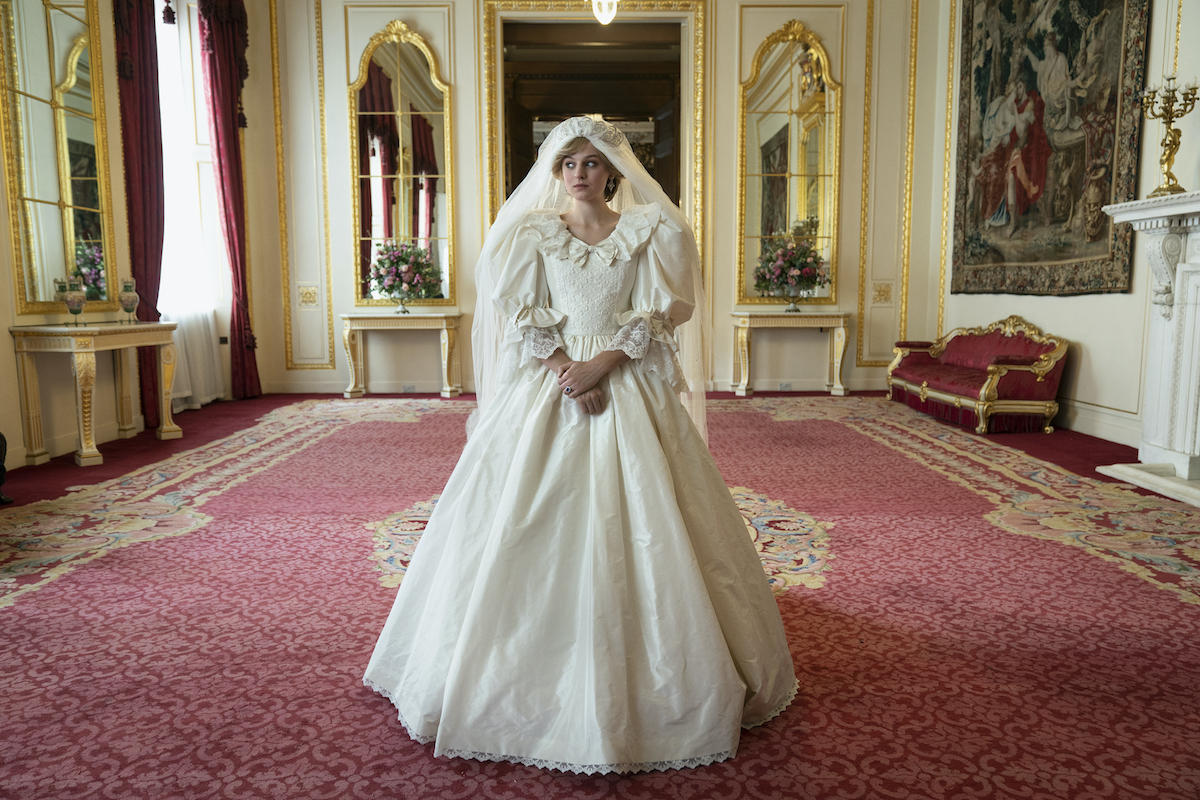
Corrin is a revelation, fully embodying the gentle spirit and humanity of Lady Diana.
We meet her as a young girl, innocent and unsuspecting of the ugliness behind the fairytale facade. We watch her struggle with an eating disorder. We see her treated poorly by her husband and dismissed by her new family.
Diana grows up in these conditions. She becomes a mother and clings to baby William as if he is her only lifeline while on their tour of Australia. She gets love and attention from the public, and she gets it by just being her kind, charming self.
Many shots throughout the season depict Diana’s emotional spiral.
On The Crown Season 4 Episode 3, “Fairytale,” Diana bungles her greetings to the royals. It’s like she is thrown to the wolves. The camera circles her, she spins, disoriented, and they all stand around laughing and judging.
This technique shows up quite a lot. Dizzying shots of spiral staircases. Diana herself dancing and spinning, even rollerskating around the palace.
On The Crown Season 4 Episode 6, “Terra Nullius,” there’s an aerial angle of Diana encircled by an adoring throng of fans as Charles gets pushed to the side. Then at the end of the tour, they go their separate ways. An overhead shot of an umbrella dissolves into the center of a rotary phone where Diana makes an appointment to see the Queen, at which they have differing opinions on the success of the tour.
All of these visuals are effective in creating an unsettling atmosphere surrounding Diana.
Queen Mother: And when she bends, she will fit.
Elizabeth: And if she doesn’t bend, what then?
Margaret: She will break.
Her journey is incredibly lonely, and the unfairness of it all is palpable with the way Corrin plays her at every stage and how rotten O’Connor makes Charles.
On The Crown Season 4 Episode 9, “Avalanche,” Charles cruelly ignores Diana, essentially forcing her hand to seek out male companionship so he can have his way out of the marriage. It’s deliberate and manipulative, and it works.
When he is told that she has been seeing other men again, the camera pushes in on him with ominous music swelling, and I fully expect him to break out in an evil grin. He doesn’t, but the moment is, nonetheless, very dark—almost sinister.
That’s how the penultimate episode of the season ends.
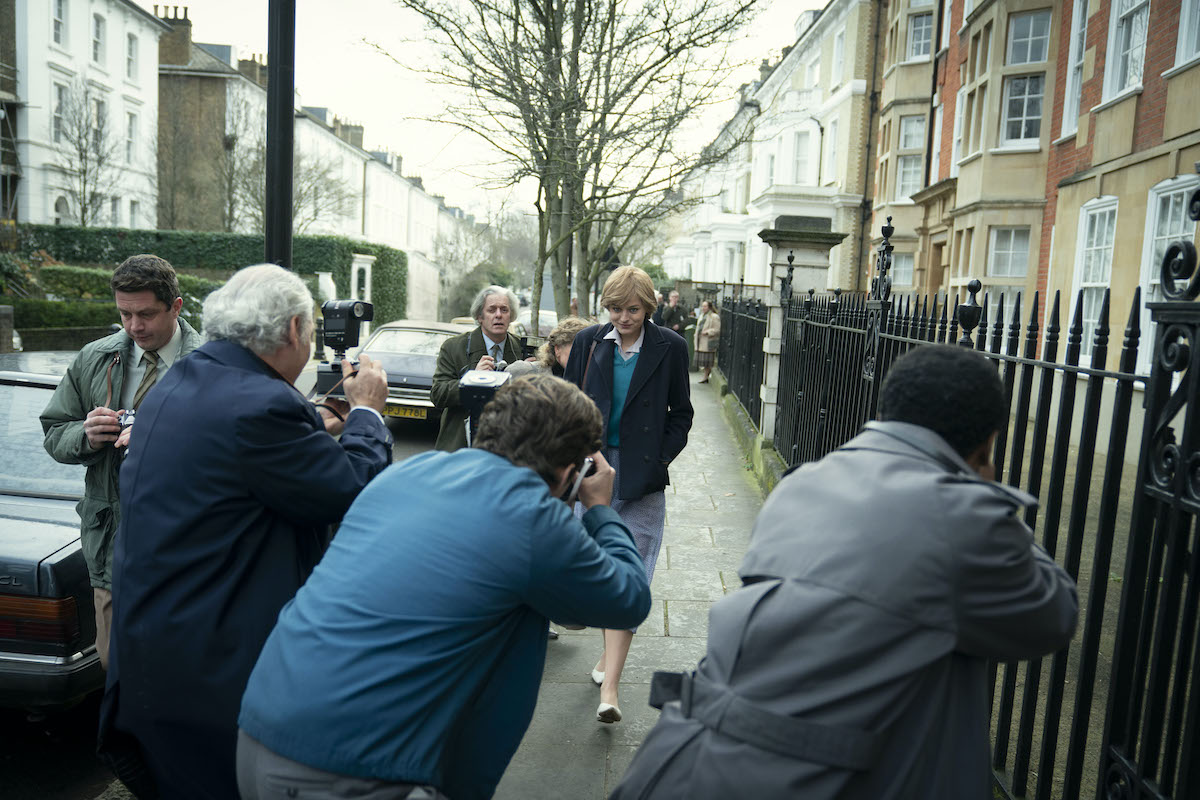
Going into the finale, one gets the sense that no matter what Diana does, she will not get one ounce of compassion from him or his family. However, she is able to gain confidence and strength along the way despite her circumstances and starts sticking up for herself.
The greatest act of service that I can give to the Crown as princess is not to be some meek little wife following the great prince around like some smiling doll, but to be a living, breathing, present mother, bringing up this child in the hopes that the boy that will one day become king still has a vestige of humanity in him.
The final shot of the season shows this confidence and the underlying rage.
It’s a really interesting (and rather shocking) move to end it on Diana—one that makes me question the direction the series will take in its final two seasons. The Queen has always been the center, and this shot signals a deliberate focus shift away from her.
It could be that I am sad to say goodbye to this cast that this irks me. Or perhaps it’s the preceding conversation between Philip and Diana about being outsiders, and the decision to end such a significant season on the outside of the inner circle we have been watching since the beginning.
I’m even kinda miffed at myself that the Diana/Charles storyline is dominating this review, but that is representative of the season.
The Thatcher content doesn’t pull quite as much focus because her dealings are often with the Queen. And I have to say, the scenes between Anderson and Colman are the standouts of Season 4.
The hype leading up to the premiere was full of concern that Anderson would make Margaret Thatcher, Milk Snatcher a sympathetic figure. I am pleased to report that she does no such thing. Anderson plays the prime minister as a straight-up villain.
And what a deliciously evil portrayal it is.
Anderson has fine-tuned the distinct mannerisms of the politician. The voice is not overly exaggerated—she speaks firmly and with conviction. It makes her lack of speech in her final scene with the Queen all the more compelling.
The way she is always leaning forward even when walking denotes her hardworking nature. A cabinet member tells her she is trying to move too fast and she responds, “That is because I am in a hurry.” She wants to do as much damage to the country as humanly possible while she is in office.
It’s no surprise to hear her say that she thinks women aren’t suited to high offices on account that they’re too emotional because the internalized misogyny is strong with this one.
Despite her accomplishment in breaking a glass ceiling, the woman is no feminist icon, and I don’t get the sense that the show is trying to impress upon that—either through the writing or Anderson’s interpretation.
The Crown calls for the actors to portray real life events without being privy to the internal commentary of these figures. The challenge is to play it as truthfully as possible, regardless.
Showing the prime minister going through personal heartache isn’t an appeal to make the viewer feel sorry for her. Anderson’s portrayal of Margaret Thatcher feels authentic and believable because she acknowledges the humanness of her.
Note, I didn’t say “humanity.”
There’s a line from The Fall, another Gillian Anderson series, where her character, the iconic Stella Gibson, discusses a serial killer. “Men like Spector are all too human, too understandable. He’s not a monster, he’s just a man.” It feels like this is how Anderson approaches Thatcher.
And as a result, she comes off as absolutely terrifying.

The Crown Season 4 Episode 2, “The Balmoral Test,” is the most solid episode as a whole. The three rings of the circus are balanced quite well, and it succeeds as a concise, rounded piece of storytelling.
The contrast between Thatcher failing and Diana passing the test with flying colors is potent and effective.
It is cringey yet satisfying to see the prime minister out of her comfort zone and harshly judged. It’s also nice to see Diana shine among the family before they start tarnishing her spirit. Having the royal family all together in their element is always a good time (for the viewers, perhaps not so much for the characters) and strengthens the episode.
The final episode is titled “War.” The entire season has felt war-like with battles and ambushes and counter-attacks. It’s more imbued with heaviness and misery and conflict than any other season.
I mean that in a good way.
The Crown takes addictive soap opera drama and elevates it to grand, cinematic heights with picturesque locations, opulent sets, well-researched costumes, and a moving score.
In other words, it’s a super classy, highbrow spectacle with a generous dash of history.
Stray Observations:
- Peter Morgan loves a good stag metaphor.
- Diana meets Camilla at a restaurant called Menage A Trois because why not.
- The Queen’s storyline on Episode 4, “Favourites,” is hysterical. She meets with all her children and decides she doesn’t like any of them.
- Mark Thatcher seems insufferable. No wonder he’s Margaret’s favorite.
- Episode 5, “Fagan,” has a great post-punk soundtrack with Joy Division, The Specials, and The Cure. However, the most notable and apt song plays over the end credits: “Whine and Grine/Stand Down Margaret” by The English Beat.
- “Did you just call me common? And old?”
- Claire Foy’s cameo reprising the young Queen Elizabeth is such a special treat!
- Royals love to compare things to abdications.
What did you think of this season of The Crown? Share your thoughts in the comments below!
Critic Rating:
User Rating:
The Crown Season 4 is currently streaming on Netflix.
 Follow us on Twitter and on
  Instagram!
Want more from Tell-Tale TV? Subscribe to our newsletter here!
Erin Allen

Erin is a former script supervisor for film and television. She's an avid fan of middle aged actresses, dark dramas, and irreverent comedies. She loves to read actual books and X-Files fan fiction. Her other passions include pointing out feminist issues, shipping Mulder and Scully, and collecting pop culture mugs.