
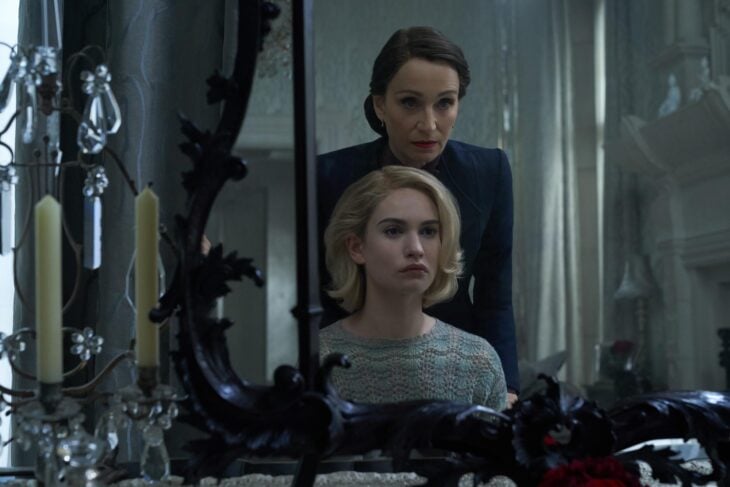
Rebecca Review: Netflix’s Remake is a Misguided Mess
“Last night I dreamt I went to Manderley again” is one of the all-time great opening lines in fiction.
That Netflix’s new Rebecca manages to somehow make you wish it wasn’t by the end of its version of this familiar story is a fairly singular accomplishment. Too bad it just isn’t a good one.
Many viewers will likely watch Netflix’s Rebecca and take as its primary lesson that perhaps it’s better to leave well enough alone when it comes to the work of Alfred Hitchcock. This is a fair point, generally. I mean, I’m not sure that anyone was clamoring for another version of his fairly definitive 1940 interpretation of Daphne du Maurier’s novel.
But that’s not the reason this Rebecca is terrible. In fact, in this movie, you can see the bones of a better — though much different film — one where a generically attractive white couple travels around Europe and goes on a series of charmingly bland adventures together.
That the duo seems to have wandered into a remake of du Maurier’s dark Gothic story instead feels almost accidental.

The fundamental problem with director Ben Wheatley’s new Rebecca is that it deeply misunderstands the story it’s telling. Wheatley’s version spends the first fifteen minutes of the film on the whirlwind romance between Maxim de Winter and the audience proxy/general cipher that ultimately becomes his second wife, sending them on dates, bathing them in golden light as they have sex on a beach, and generally positioning them as a pair whose relationship we’re meant to invest it.
This Rebecca desperately wants us to like the de Winters, to root for them, and to feel relieved when the big twist comes at the end of the story that allows them something like a literal Pyrric victory. But the thing is…the gut-punch of du Maurier’s novel is that these are both two generally awful people, but that’s precisely what makes them interesting.
Unfortunately, Wheatley’s movie seems more interested in framing its protagonists as sympathetic than anything else, to its detriment.
In this film, the second Mrs. de Winter, still never given a name, is reframed as the story’s plucky emotional center, struggling against the pressures of measuring up to a life she’s never been prepared for and a dead woman she can’t escape, but loyally loving her man all the while.
The new Mrs. de Winter must, of course, live in the shadow of the old one — the titular Rebecca, a woman beloved by all who was beautiful, fascinating, and strong. A natural horsewoman, a keen sailor, a master event organizer, it seems as though everyone adored her, so much so that her replacement will always be weighed and found wanting, no matter who she was.

Lily James, to her credit, is as charming as she can be as the second Mrs. de Winter, playing the sort of wide-eyed rags-to-riches orphan princess routine we’ve seen her do before. But this character was never meant to be particularly interesting or admirable or even entirely sympathetic, not truly, and her scrappy stand by your man energy fits strangely within this world.
And between giving her a spine that doesn’t really exist in the source material and largely erasing the more petty, materialistic aspects of her character, this Rebecca adaptation largely builds itself a new heroine out of whole cloth. Who is this woman? And what other novel did she wander in from?
On the flip side of the relationship, Armie Hammer is attractive enough that the film decides to remake its Maxim de Winter as a hunky dreamboat, and to essentially forgive him for being a monster who resented and then murdered his first wife.
The film does as much work as it possibly can to blame Rebecca for her own death, pretty much having her do everything save pull the trigger for Maxim herself. In du Maurier’s novel, the story acknowledges not just that Maxim de Winter is a monster and his new wife is a cipher, and we’re meant to ask ourselves not just what happened to Rebecca, but who she really was.
This is supposed to be a story about gaslighting, obsession, class, and the things the rich are allowed to get away with. Instead, it’s a romance with dark moments, but one in which the couple ultimately finds their happy ending by covering up a violent crime together. Ain’t love grand??
The one bright spot in this adaptation is Kristin Scott Thomas, who plays the foreboding Manderley housekeeper Mrs. Danvers with sharp-eyed, flinty perfection. She’s so good in this role, and steals the film so completely that you can practically hear Ryan Murphy calling up Netflix with a pitch for a Ratched–style prequel series based on her co-dependent friendship with the boss who still rules her life, even after her death.
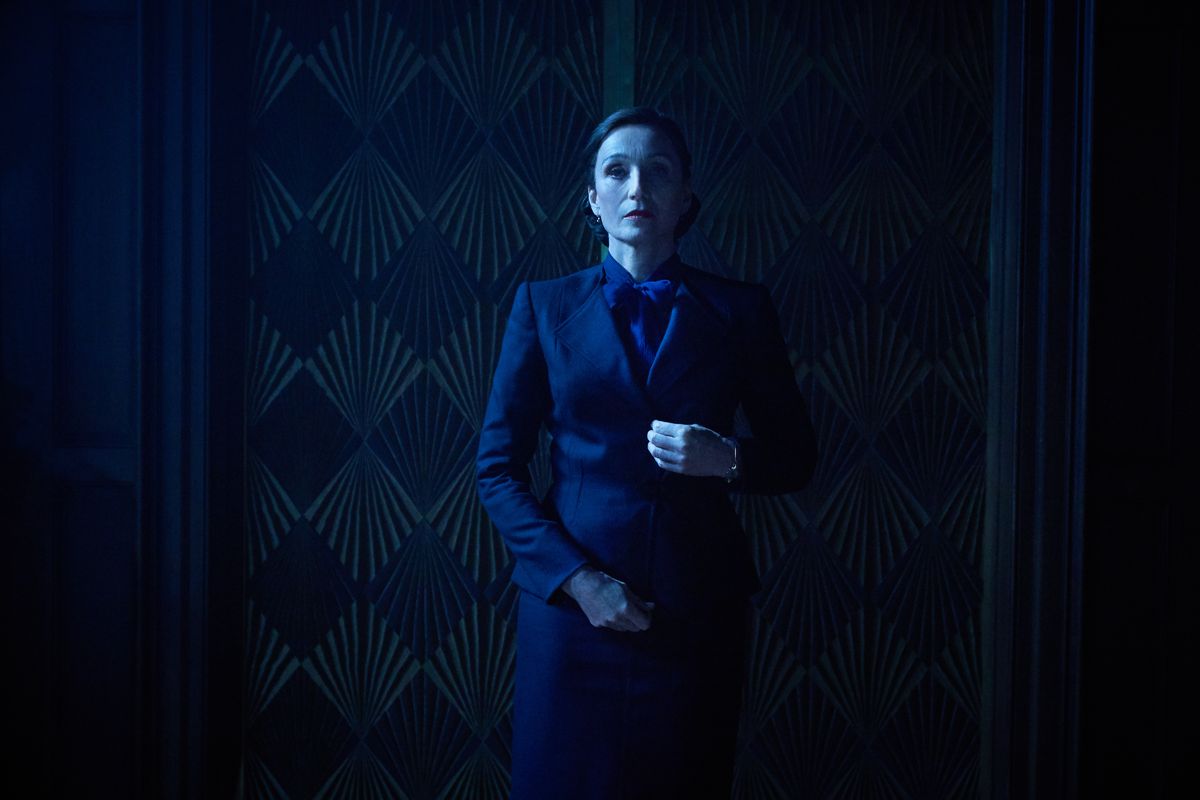
Thomas, to her credit, realizes she’s supposed to be in a Gothic horror story and behaves accordingly — lurking in corridors, maintaining her dead mistress’ immaculate bedroom suite like a mausoleum, quietly setting her new mistress up for public humiliation, attempting to talk her into suicide.
Mrs. Danvers is honestly the only part of this film I would have happily watched more of — the scene where she’s waxing nostalgic about Rebecca even as she rips a hairbrush through the new Mrs. de Winter’s hair is perfection.
Her intensity feels like a living thing, powered by the sort of seething rage that could have fueled any number of subplots. Unfortunately, Thomas’ performance is the only part of this movie that feels anything close to urgent.
The rest of this Rebecca seems perfectly uninterested in being or doing anything particularly exciting or thoughtful. It’s beautiful to look at — full of Instagram-worthy sets, lush scenery, and forbidding Gothic landscapes — but it ultimately has little to say.
Stray Thoughts and Observations
- This Manderley is ugly. There, I said it. And other than the joy of being insanely rich enough to afford to live there, I have no idea why so many people are so obsessed with this place.
- The decision to make Mrs. Danvers’ fate clear is a mistake, in my opinion, but there is something like wisdom in her final words to Mrs. de Winter. (Even if it doesn’t feel as though the film sees it that way.)
- Anne Dowd’s fantastically over the top performance as the future second Mrs. de Winter’s employer — a snotty classist who loves to refer to our heroine as staff and mock her aspirations of a live above her station – and I was genuinely sad to see her leave the screen.
- The beginning scenes of the movie are so focused on class — the sequence where our protagonist is denied entrance to breakfast alone because she’s “staff” — that it’s very jarring that the rest of the film virtually drops it beyond Danvers’ constant insistence that the second Mrs. de Winter doesn’t belong. There was something very interesting worth poking at here.
What did you think of Rebecca? Share your thoughts in the comments below!
Critic Rating:
User Rating:
Rebecca is now streaming on Netflix.
 Follow us on Twitter and on
  Instagram!
Want more from Tell-Tale TV? Subscribe to our newsletter here!
10 Essential Elements That Make Romantic Comedy TV Shows Great
Lacy Baugher

Lacy is a pop culture enthusiast and television critic who loves period dramas, epic fantasy, space adventures, and the female characters everyone says you're supposed to hate. Ninth Doctor enthusiast, Aziraphale girlie, and cat lady, she's a member of the Television Critics Association and Rotten Tomatoes-approved. Find her at LacyMB on all platforms.