
How ‘Dark’ Uses Time Travel to Weave an Epic Family Saga
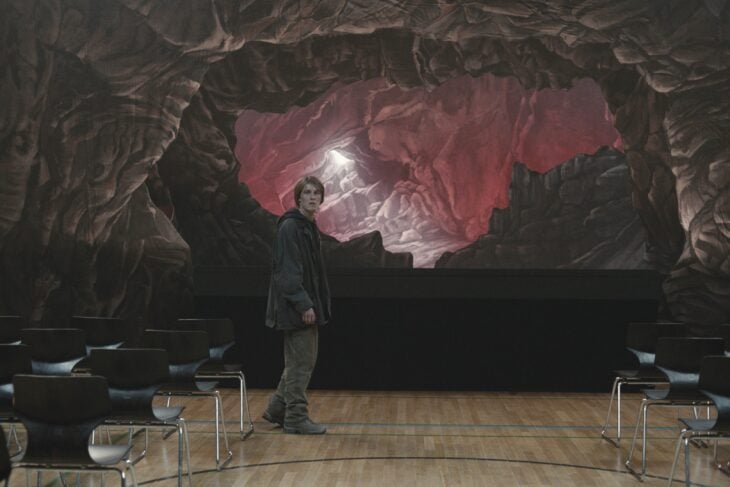
In describing the first season of Netflix’s original series Dark, most people will reach for the usual references to small-town supernatural mysteries: Twin Peaks and The X-Files, perhaps with a side of Lost.
What makes Dark unique is the way it uses its sci-fi premise to weave not just a derivative puzzle box mystery, but a family saga about the impacts of trauma left unaddressed and passed down to subsequent generations.
With plot points as massive as wormholes, time loops, and a nuclear apocalypse, it would be easy for an emotional narrative to get lost amid the spectacle of the show’s biggest moments. But Dark smartly grounds itself in specificity, leaning on the tried and true wisdom that it’s the detail rather than the breadth of a story that resonates most with an audience.
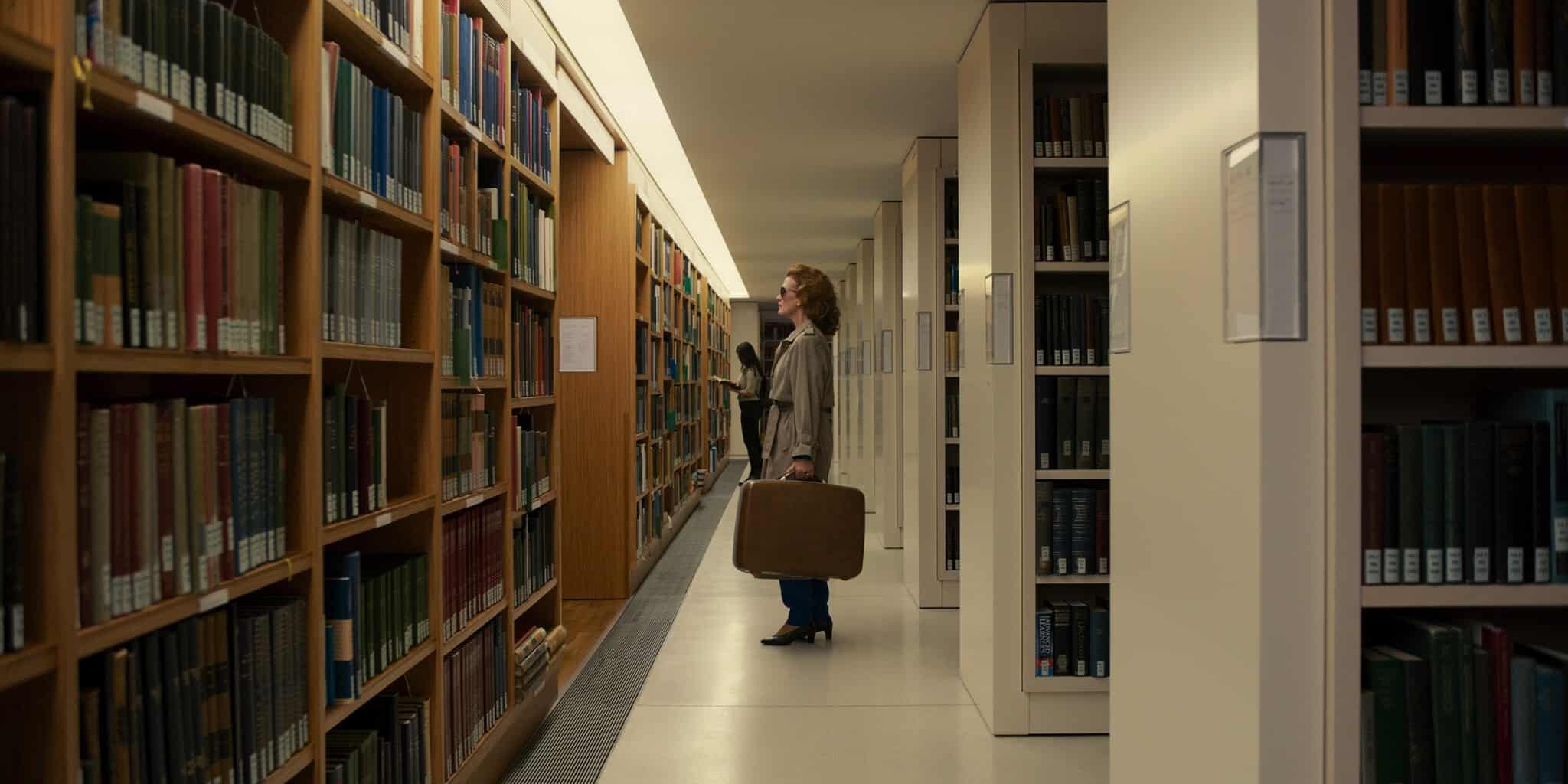
That specificity begins with the town of Winden itself.
We get to know Winden well over the course of the show’s three seasons, from its forested landscape to the houses of its most prominent families.
Those homes are the show’s primary theater of family drama, and using time travel as a plot device allows us to see what unfolds within them across more than a century of inhabitance.
In the Nielsens’, for example, the living room in which Tronte and Jana hold their son’s wake is the same room in which, twenty-five years later, Ulrich and Katharina celebrate their anniversary together. It’s also the room where they argue about Ulrich’s infidelity, and where their daughter accuses Katharina of neglecting her children.
Three generations worth of hope, disappointment, joy, and tragedy unfold within the same physical space, and those moments are layered on top of one another until they seem to exist concurrently.

This layering heightens the impact of each scene, adding context and history to every interaction between the characters. Katharina discovering Ulrich’s infidelity, for example, becomes more painful when you realize that Ulrich’s parents had essentially the same conversation thirty years prior.
It’s not the time loop in Winden that creates these cyclical patterns of behavior — it’s the usual confluence of nature and nurture. Whether Ulrich’s decisions are a result of personal choice or of subconsciously modeling his behavior after his father’s, they are entirely non-supernatural.
Thus, while the Nielsens may be living under extraordinary circumstances, it’s the ordinariness of their problems that helps ground the show and make it relatable for the audience. But the characters’ ability to travel through time, to see how these similar problems impacted other family members before and after them, lends each narrative even more emotional weight.

In terms of character development, Dark has a uniquely specific focus on the rifts and divisions between different generations of family members.
Magnus: You don’t actually know your parents, do you? What they were like as kids or teenagers. You’re a family, but you don’t really know anything about each other.
The difference between how a child and a parent see the world, between how they view themselves and one another, can create the sense that they exist in separate universes rather than a shared one. It doesn’t take a time machine to demonstrate that father and son live in alternate realities.
But the question of how that divergence occurs — how a person loses their adolescent sense of self and gradually gains a different one — is where time travel becomes crucial to the show’s storytelling. It allows us to see the younger and older versions of the same character interact and hash out their differences.
Adam, for example, acts sometimes as Jonas’s nemesis and sometimes as his ally, but his greatest importance to the story is the fact that he’s also Jonas’s future self.

The idea that such an earnest, well-intentioned person could evolve into a master manipulator is difficult to fathom, but what’s even harder to comprehend is Adam’s callous treatment of his younger self.
He tries to trick Jonas into believing that he can change his past, placing the entire burden of the task — and the shame of not completing it — on the version of himself that’s least equipped to handle the pressure.
It’s a clear metaphor for the way people sometimes deal with trauma by blaming themselves for whatever caused it. The adult looks at something that happened to them as a child and curses their inability to go back in time and change it. Then the anger they feel toward the past gets turned inward, morphing unhelpfully into self-resentment.
Adam: Isn’t it peculiar that we feel the most repulsion for the very people who are most similar to ourselves?
The circumstances that surround growth and transformation in Dark‘s universe are extreme, but if you take the show’s complex storytelling mechanics and distill them down to their essence, what you have is a narrative about the way trauma is accumulated and passed between back and forth between the generations of a family.
The child often repeats the parents’ mistakes, following the patterns of behavior laid out for them; at the same time, they are expected to break the cycle of those misdeeds. It’s an impossible task, and one that only serves to heighten the tension that already exists in the generational gap between characters.
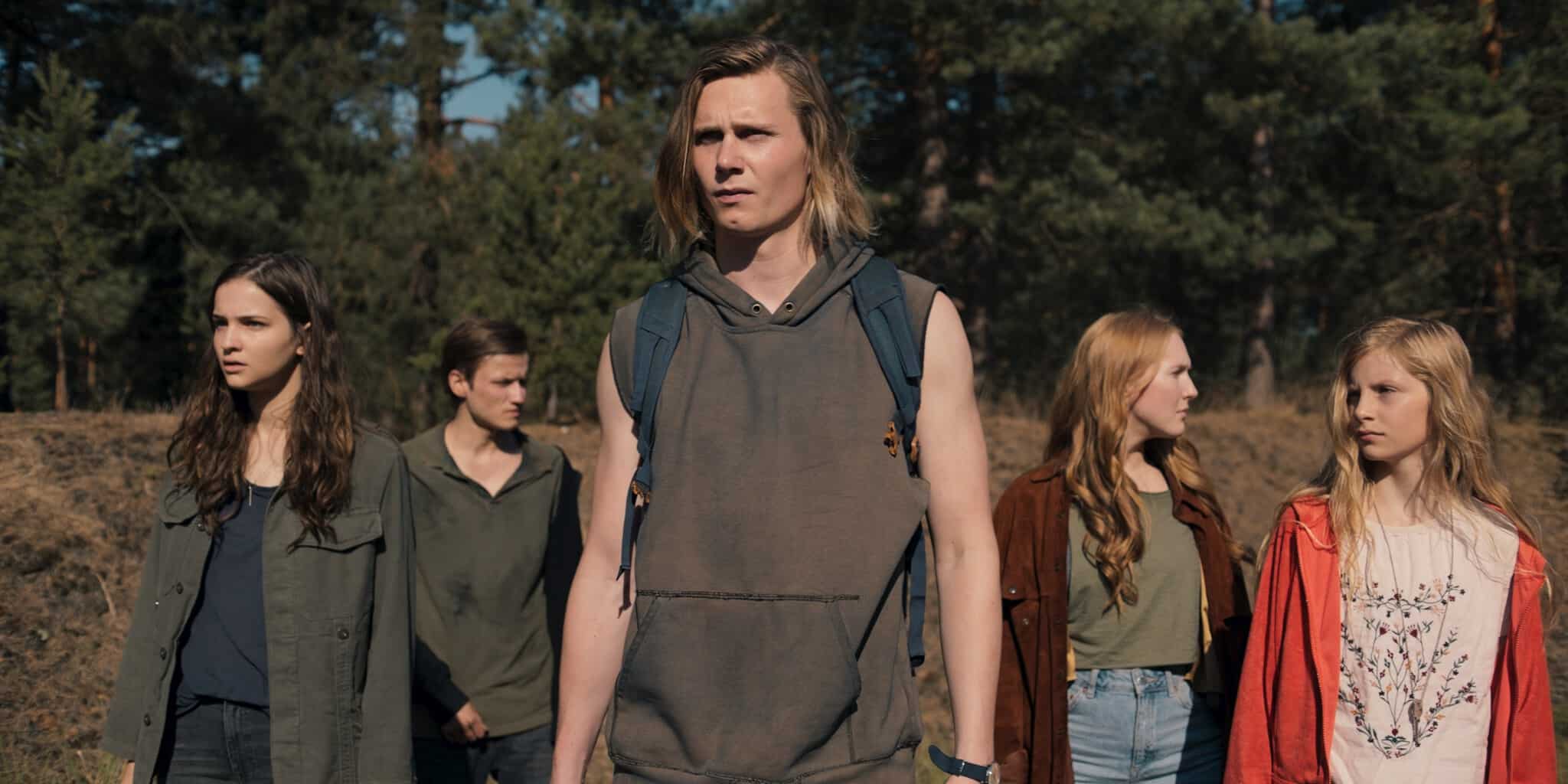
Accordingly, the most beautiful scenes of the show are the ones in which family members with contrasting perspectives manage to find moments of shared understanding.
The image of Charlotte and Elisabeth pressing their foreheads together, an intense and wordless gesture of love, becomes even more breathtaking with each reveal about their somewhat disturbing family history.
Likewise, when Jonas embraces his father and forgives him for concealing the truth of his identity, that gentle act stands in stark contrast with Jonas’s longstanding anger at what he perceived as an act of paternal abandonment.
These scenes are a balm for any viewer who has felt frustrated by the inability to see eye-to-eye with an older family member, or has in any way struggled with the vast chasm of experiences that separates people of different generations. Any moment when we’re able to bridge that gap feels like a gift.

Unlike the characters on Dark, we’ll never be able to literally relive the past in order to understand what our family members have been through; we also can’t know what will happen in the future of our own lives that might alter our perspective, reshaping the kind of person we become.
But what the show posits is that every version of ourselves, from the child we were to the adult we are becoming, is simply doing what’s needed in order to make it to the next moment.
The cycle of trauma that encircles the families of Winden is only furthered by any attempt — whether based on shame, cruelty, or justifiable frustration — to force their younger selves to act differently. No one can change the past, no matter how desperate they are to do so.
The only moment we can change is the one that comes next, the precipice of which we are always poised upon.
Dark encourages us to have compassion for whatever clumsy manner in which we step forward.
—
All seasons of Dark are now streaming on Netflix.
 Follow us on Twitter and on
  Instagram!
Want more from Tell-Tale TV? Subscribe to our newsletter here!
Ariel Udel

Ariel fell in love with storytelling on the night Flight 815 crashed on a mysterious island, and has been blogging about television ever since. She has an affinity for messy female anti-heroes and an enduring love of Battlestar Galactica, Xena: Warrior Princess, Lost, and Halt and Catch Fire.
One thought on “How ‘Dark’ Uses Time Travel to Weave an Epic Family Saga”
I love this series. It was difficult to get into and stay focused because of the sci-fi elements. However, taking your time with the show, much like a poem, becomes glaringly real. This show has helped me, maybe not get all the answers I need, but articulate what I am currently going through with familial trauma. Thank you for your article.
Comments are closed.