

On Becoming a God In Central Florida Review: The American Dream (Season 1 Episodes 1-5)
On Becoming a God in Central Florida stars Kirsten Dunst as Krystal Stubbs, a water park employee and former pageant queen who faces financial ruin after her husband Travis (Alexander Skarsgård) wastes their savings on a pyramid scheme.
When she finds herself fighting to save their home from foreclosure, Krystal decides to earn back the money by working the scheme herself.
The show’s premise is a familiar one — think Breaking Bad, but instead of Walter White and crystal meth, it’s Kirsten Dunst and endless boxes of scratchy, single-ply toilet paper.
Despite the narrative similarities, On Becoming A God In Central Florida is so much more than a copy of other cable dramas. It’s a wild, dark satire about America’s near-religious fervor for the dream of self-made success.
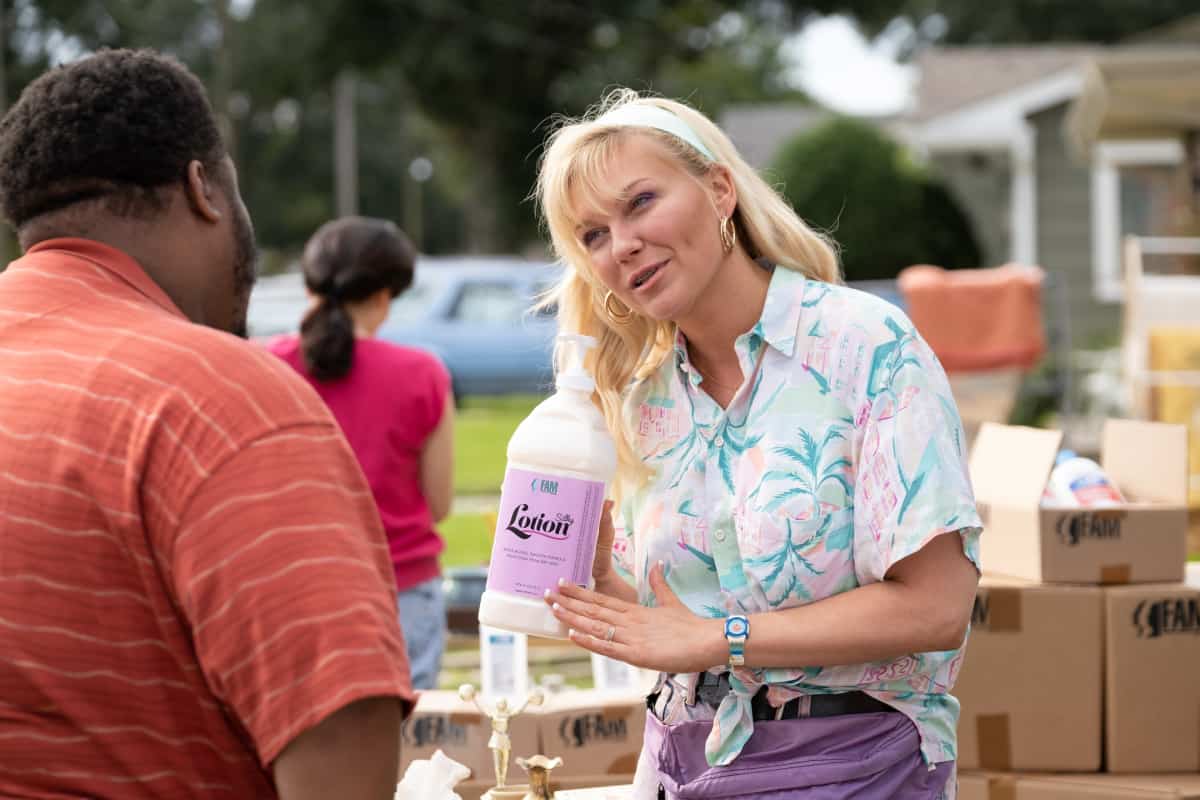
The show uses FAM as an allegory for the rigged game of American capitalism and seeks to understand why people would support a system that is so transparently broken.
Its best example is probably Ernie, the most gentle and lovable of the main characters.
Watching Ernie become involved with the pyramid scheme is simultaneously sweet and heartbreaking. Before joining FAM, he prayed for God to give him a sense of purpose — and as he gives a sales pitch to a group of immigrants assembled in his living room, it’s clear that he believes he has found it.
Of course, recruiting these people will do them far more harm that good, but Ernie doesn’t see that. He’s too trusting to realize that he himself is already being exploited, that his kindness and selflessness make him an easy target. He is a willing tool that Krystal and Cody can use to their own benefit.
The tragedy of FAM is that people like Ernie are tricked into believing in a system that runs counter to their values. He thinks he’s helping people, but he’s really doing the opposite.
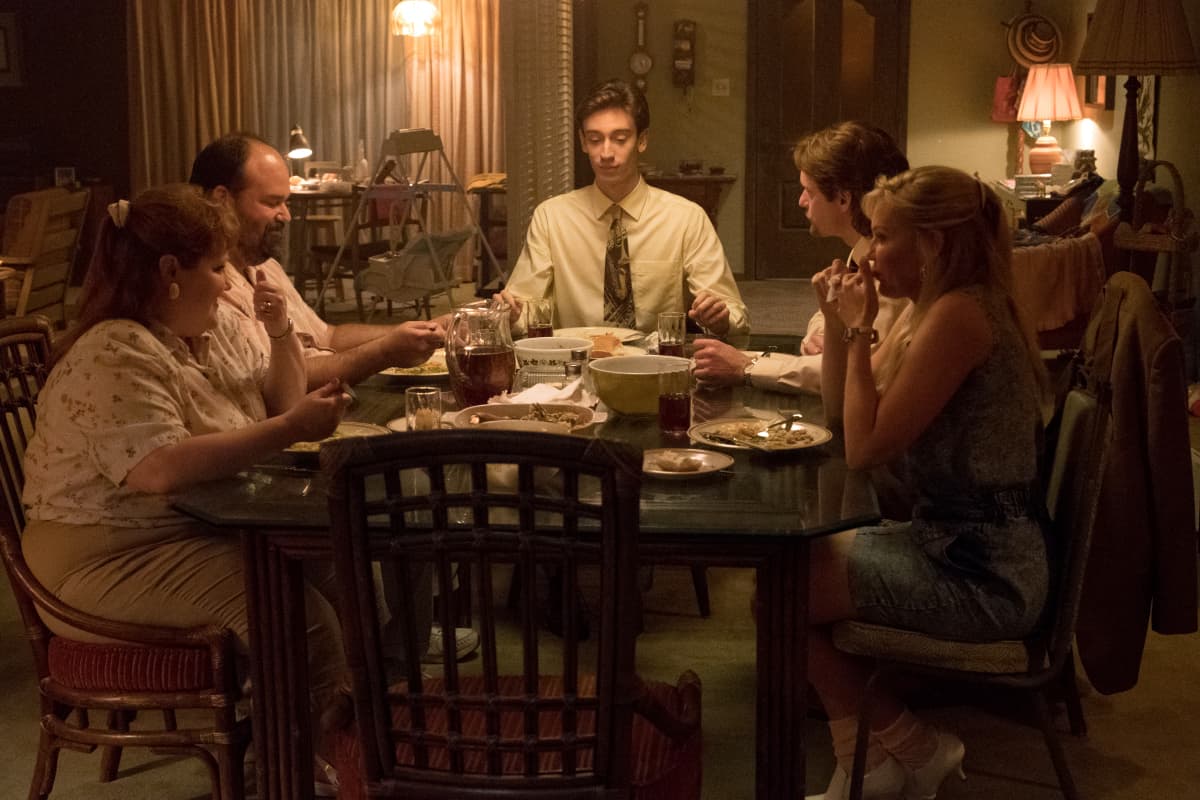
While many of the show’s big moments are genuinely moving, it’s also not afraid to get weird and playful.
The scene in which Krystal re-creates her winning pageant routine, a dance that involves maneuvering two mannequins to mimic her own choreography, is hilariously over-the-top.
It’s a visual spectacle incongruously set in the same garage where she recently skinned an alligator, and the juxtaposition of those two images — death, and razzle-dazzle — helps the show strike a unique comedic tone.
However, there are are also scenes that veer too far into oddity for oddity’s sake. There are dream sequences and fever-induced visions that might feel at home in a David Lynch production, but are aimless and ill-fitting here.
One sequence in particular, in which Krystal stumbles down the road in a dehydrated daze while the world around her spins and glimmers in strange hues, goes on far too long and had almost no narrative payoff.
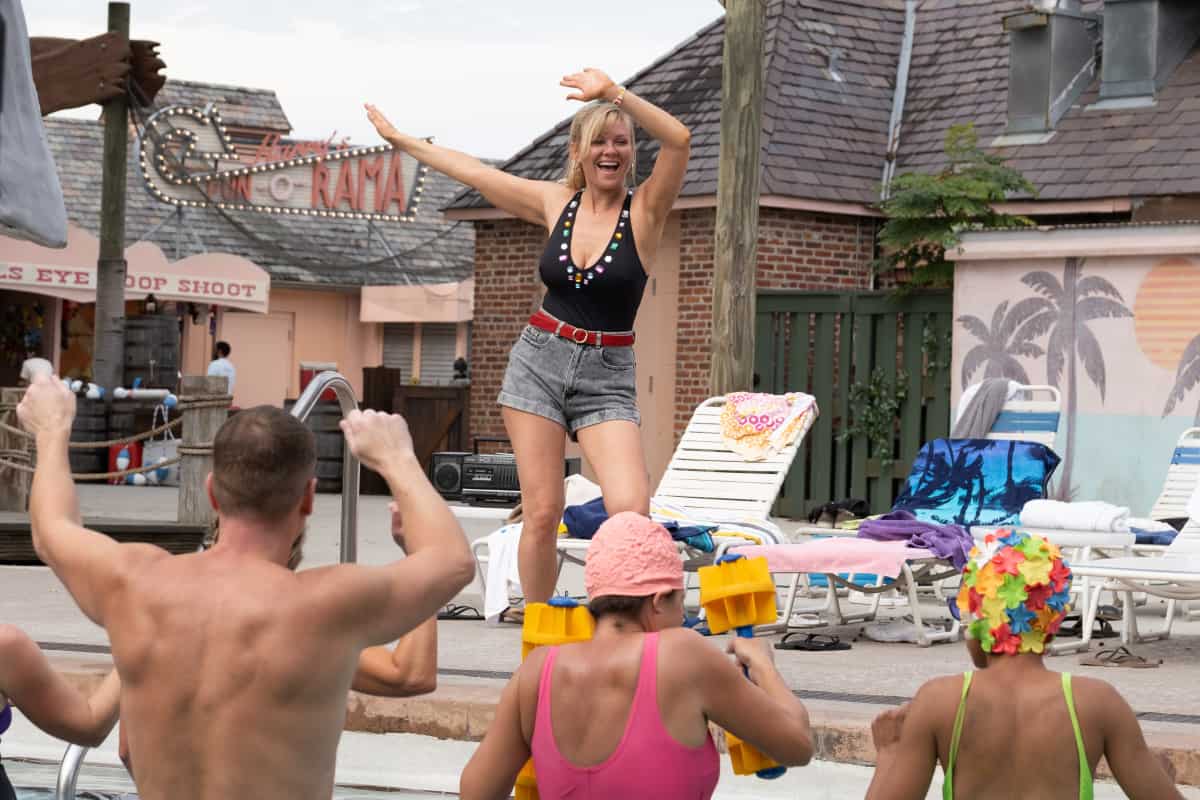
Through the first five episodes, the best part of the show is Kirsten Dunst’s consistently excellent performance.
As Krystal, she gets to do a little bit of everything — she swears and smokes and swaggers, but she also teaches jazzercise and deploys her charms upon unsuspecting FAM members.
Dunst imbues her character with sharpness and ferocity, while still leaving the door open for moments of vulnerability. It’s a joy to watch her inhabit such a multi-dimensional character.
Cody, played by Canadian actor Théodore Pellerin, has an eager, bouncy energy that provides the perfect foil to Krystal’s more grounded demeanor.
As a character, though, Cody is much less compelling. We haven’t yet seen enough of his backstory to know what really motivates him, but there doesn’t seem to be much behind his phony smile besides greed and immaturity.
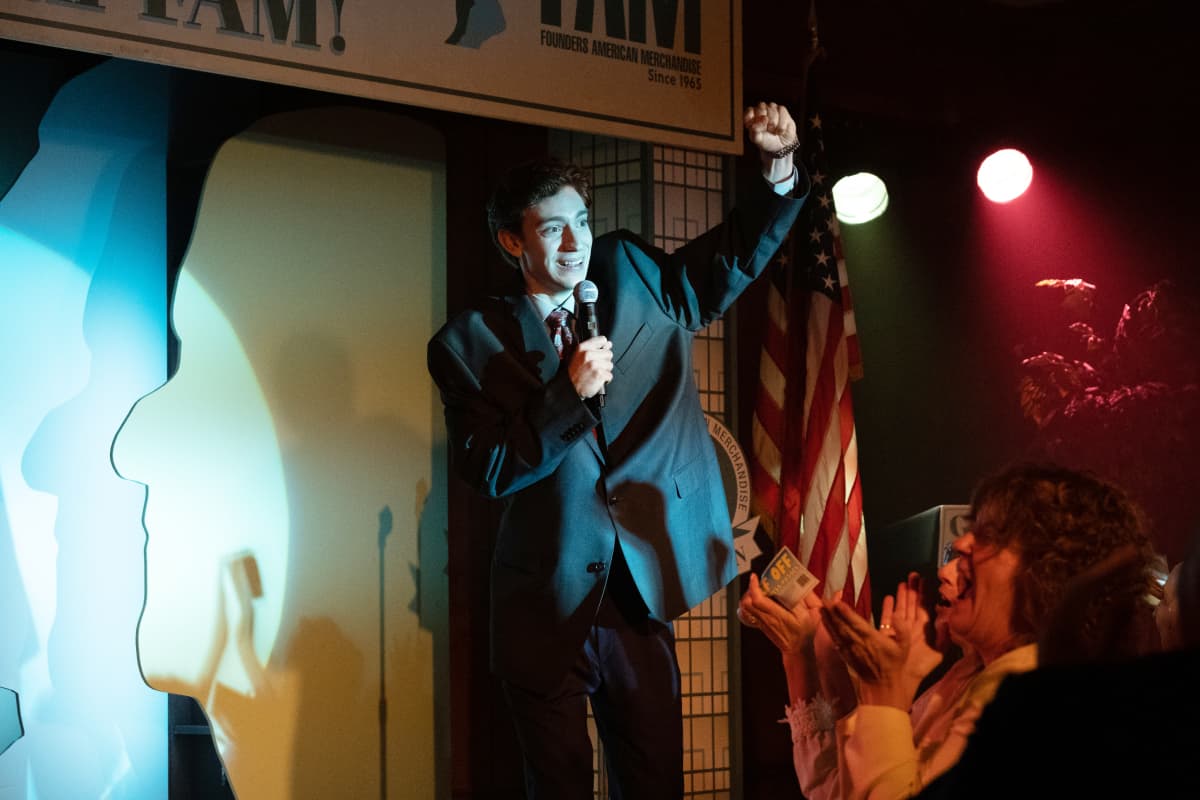
His submissiveness toward Krystal — who is at least ten years his senior — makes for an interesting dynamic, but the character is still too bland and underdeveloped to carry a scene on his own.
Halfway through the season, it’s unclear how long the show can keep going before it runs out of plot to drive its characters forward.
At some point each of them will have to reckon with the consequences of joining FAM — the toll that it takes upon their relationships with friends and family, along with the impossibility of making any money to reward them for their efforts — and once that happens, it’s not certain that will be much story left to tell.
For now though, On Becoming A God in Central Florida is a compelling examination of why so many believers would adhere to such a corrupt system, in which otherwise well-meaning people profit from the suffering of others while closing their eyes to the costs.
What did you think of the first few episodes of On Becoming a God in Central Florida? Share your thoughts in the comments below!
Critic Rating:
User Rating:
On Becoming a God in Central Florida airs Sundays at 10/9c on Showtime.
 Follow us on Twitter and on
  Instagram!
Want more from Tell-Tale TV? Subscribe to our newsletter here!
Ariel Udel

Ariel fell in love with storytelling on the night Flight 815 crashed on a mysterious island, and has been blogging about television ever since. She has an affinity for messy female anti-heroes and an enduring love of Battlestar Galactica, Xena: Warrior Princess, Lost, and Halt and Catch Fire.