
The Twilight Zone Review: A Wonderful Journey Into the Mind
The Twilight Zone returns with a massive undertaking: the hopes of living up to its predecessor. It’s a tall order, such a classic icon of television that holds an impact still felt to this day.
The first four episodes are all about the human condition. Each one tells a story of someone in a situation meant to comment on something larger than themselves, where morality or society as a whole is to be looked upon and studied.

There are elements of the need for more, the need for protection, the need for safety, all that play out and tell something of its lead characters as well as the world they find themselves in, a world close to our own.
It’s still a supernatural and science fiction series, to be sure. But it is in the look at what someone does in a certain set of circumstances where the show finds its most power. Its characters are locked inside ideas, and are doomed to be the lesson of these ideas.
The lesson of each episode is plainly spoken and delivered by the Narrator, but there’s always nuance in its delivery, the way the episodes unfold telling a significant and memorable story with meaning behind every decision.

And of these four episodes, there is not a dud among them. Each have something powerful to say, and do so with the vigor and excitement this series deserves. Some may say something better than others, but there’s something special in all of them.
The cast is spectacular, with great actors like Kumail Nanjiani, Adam Scott, Sanaa Lathan, Greg Kinnear, and Steven Yeun as the leads in their respective episodes. Each performer adds gravitas and purpose to their roles, where they act as catalysts to strange situations and get to play in a vast playground.
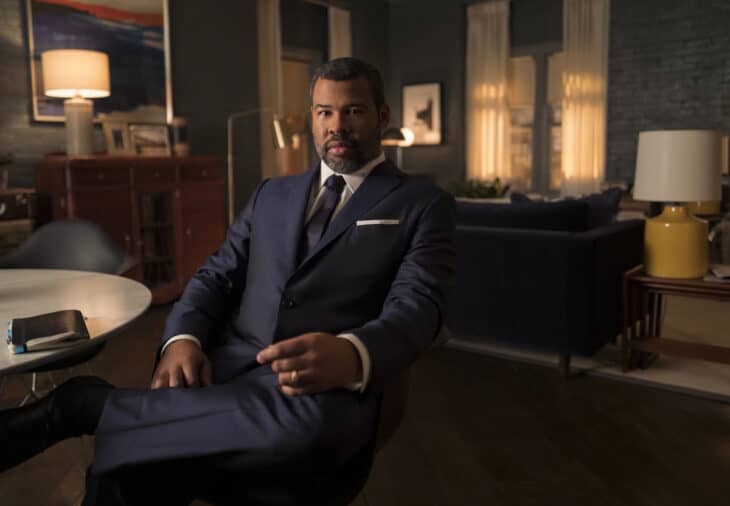
Jordan Peele’s Narrator is a steady hand, whose comments on the before and after is a gentle reminder of the moral and unjust world these characters find themselves in. His visits are quick but hold weight, and a quick flick of an eyebrow or dry line reading gives Peele’s appearances some personality in what amounts to setting up the story.

The production is gorgeous, using light and shadow to immaculately hide and obscure, and to draw the eye to what it wants you to see. The series basks in the art of suggestion, careful to never show too much and to keep your imagination running while the production design work is on display.
From the camera gliding over the passengers of flight 1015, to the well-lit stage Nanjiani takes, to the flashing red and blue lights tearing down Alaskan roads, there’s an exciting visual flair to the episodes. The main sets may be simple, but they hold so much character and are always visually interesting.
A minuscule detriment, in the ocean of positives, is of its characters never questioning the circumstances they find themselves in. They are prisoners of circumstance, of fate throwing them to strange conundrums that they must fight their way out of, but never question why.
It’s a minor complaint, but something that comes up in watching the show.

The Twilight Zone comes back to television at a time where allegories and stories with morality at their center are needed more than ever. Its messages may be bleak at times, but there’s still hope in there, even if the endings tend to snatch it away most times.
The hope is in humanity, and the show has plenty of that to spare.
What are your hopes for The Twilight Zone? Share your thoughts in the comments below!
Critic Rating:
User Rating:
The Twilight Zone streams weekly on Thursdays starting April 11, on CBS All Access. The first two episodes are available April 1st.

Want more from Tell-Tale TV? Subscribe to our newsletter here!
Stranger Things 3 Trailer: 17 Reasons to Get Excited About the New Season
Kevin Lever

Kevin Lever has been following television closely for most of his life, but in starting to cover it, he has grown a further appreciation. He strives to give the blockbusters their due, and give the lesser known shows a spotlight to find more fans.